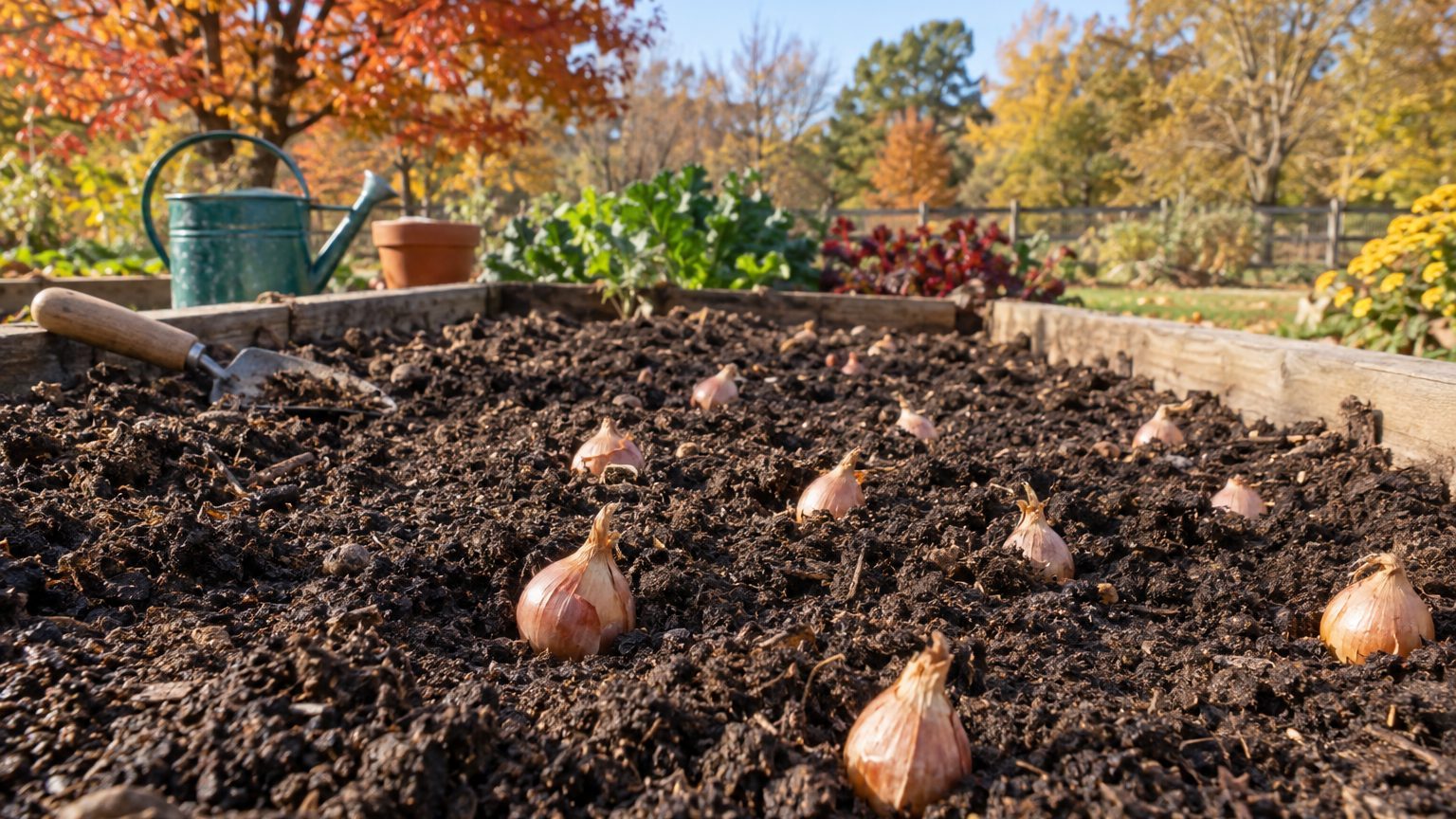

In the low desert, plant shallots in fall, not spring. Phoenix almost never freezes, so no last-frost date can anchor a calendar here. Summer heat is the clock that matters, and shallots need to be well established before it arrives. In the high country, frost dates still rule. This page gives the statewide picture, and your county extension office holds the exact dates.
The short answer for Arizona
Low desert gardeners should plant shallots in the fall and let them grow through a mild winter, because heat ends the season here, not cold. A frost-based calendar does not exist for this part of the state, and trying to build one produces bad advice. This page does not carry a county-verified sowing window, so it gives you the logic and the limits. For the full growing picture, start with Growing Shallots in Arizona.
What the frost numbers are a probability of
The frost facts for Phoenix come from NOAA’s 1991-2020 Climate Normals and daily records for the Phoenix station. They read like this: no freeze in most years, and a rare cold snap can bring 32°F between late December and mid January. The first fall frost has no reliable date at all. Phoenix reached 32°F in only 6 of 30 springs, and NOAA lists the frost-free season as 365 days.
Those figures are a probability of a freeze event in any given year. They are not a date you can plan around. A normal last-frost date works when frost reliably arrives and departs on a schedule, and in the Phoenix area it does neither. Treat the numbers as risk, not as a countdown.
Why winter is not the problem
The mean daily minimum of the coldest month in Phoenix is 45.3°F. That is the figure that decides whether a plant survives winter at all, and 45.3°F is nowhere near threatening for a hardy allium. Shallots sit through a winter like that without protection in most years.
So the calendar gets built from the heat side. Plant when the worst of summer has eased enough for roots to establish. Then let the bulbs grow through the cool months and finish before the next hot season builds. The planting date is set by when your soil and air cool down, and that varies by neighborhood, elevation and exposure more than by any date printed in a guide.
If you are reading this in early October, you are already in the season this page describes. Confirm local dates before you order sets, and choose varieties with the desert in mind. The Best Shallots to Grow in Arizona covers that side.
What will not work here
Waiting for the last frost to pass is the first habit to drop. Gardening guides written for colder states say to plant “after the danger of frost,” and in the low desert that danger is absent in most years. A gardener who follows that rule literally ends up planting in spring, straight into rising heat, with a short window before summer shuts the crop down.
Spring planting in the low desert
Spring planting gives the bulbs the least time of any option. Warm soil and warm air arrive fast, and the plants are pushed toward finishing before they have built much of a bulb. Shallots that go in late can end up small, and the harvest often disappoints. Spring planting is not impossible in every corner of Arizona, but in the low desert it works against the climate instead of with it.
Summer planting and weekly watering
Planting during the hot months fails for a different reason. Soil that is hot to the touch stresses fresh sets, and then the monsoon season brings humidity and sudden wet spells that invite rot in sets sitting in heavy or poorly drained soil. Put sets in the ground only after the heat has broken, not because a calendar page says it is time.
A once-a-week watering routine borrowed from a milder state is another quiet failure. Shallot roots are shallow, and warm early-fall days can dry a desert bed faster than a weekly schedule assumes. Check the soil instead of the calendar. Overcorrecting with daily light sprinkles is no better, since it keeps the surface wet and the bulb zone uneven.
Importing frost habits
Heavy mulch laid on for freeze protection, frost cloth bought in October, and a hard stop on planting at the “first fall frost” are all solving a problem most Phoenix-area gardens do not have. With a freeze reaching 32°F in only 6 of 30 springs, one cold night should not drive your whole plan. Keep a light cover handy for the rare cold snap, and spend your effort on heat and water.
The reverse mistake happens at altitude. Flagstaff and the high country freeze hard, and a low-desert fall calendar applied there can put sets into ground that is about to lock up. Those gardens need the frost-based logic the low desert can skip.
What changes across Arizona
Arizona has no single answer for shallots because it has no single climate. The USDA Plant Hardiness Zone Map 2023, built on 1991-2020 normals, places the state across zones 4b to 10b. That system rests on one variable only: the average annual extreme minimum temperature. A spread that wide means a gardener in one corner of Arizona and a gardener in another may be working under completely different rules.
The same caution applies to the Phoenix figures above. They are a reference for the low desert, not a statewide norm, and other parts of Arizona differ from them. Use them to understand the low-desert logic, then adjust for where you actually garden.
| Factor | Low desert (Phoenix reference) | High country (Flagstaff area) |
|---|---|---|
| Freeze risk | No freeze in most years; rare 32°F cold snap, late December to mid January | Hard freezes are part of the climate |
| Frost-free season | 365 days (NOAA) | Short; confirm locally |
| What limits the crop | Summer heat | Cold and the length of the growing season |
| Calendar logic | Plant in fall as heat eases | Anchor to local frost dates |
If you garden in the north or at altitude, shift your thinking toward the frost-date approach used in colder states. Look up your area’s typical spring and fall freeze dates, and plan around a shorter, colder season. A cold-ground fall planting, a spring planting as soon as the soil can be worked, and variety choice all become more important the higher you go.
To find where your own garden falls, use the USDA Plant Hardiness Zone Map and look up your location. This page cannot tell you which zone you are in, and a zone alone will not set your planting date anyway. It only tells you how cold the worst winters get.
Where to check this for your own county
Your state extension service is the best next stop. University of Arizona Extension is the land-grant extension system for the state, and its county offices are where local planting knowledge actually lives. A page like this one can only describe a state that runs from desert basins to mountain towns. Your county office works with your climate.
Look for two things when you get there. The first is a local vegetable planting calendar for your county or elevation, ideally one that lists alliums or onions, since shallots are closely related and the timing often tracks. The second is a list of varieties trialled in your county, meaning grown and evaluated under local conditions rather than recommended from a catalog. A trial result from a similar elevation tells you far more than a variety description written for a national audience.
If the calendar for your county does not mention shallots by name, ask about onions and garlic. Many extension offices, including Master Gardener volunteers working through them, answer questions like this directly. Ask which planting month they would pick for your area and why.
A county recommendation beats a state one. This page is the state one: a framework built from Phoenix climate records and a hardiness map that spans more than six zones. It can tell you why fall beats spring in the low desert and why altitude flips the logic. It cannot tell you the week to plant in your valley. When the two disagree, go with the county, and treat anything on this page as the explanation, not the date.
Checking this against your own garden
Your own observations outrank every date on this page, because your yard has its own climate inside the county’s climate. Three signals are worth watching, and none needs equipment.
Soil warmth by feel. Dig a handful from a few inches down in mid-afternoon and hold it. If it feels distinctly warm in your palm, the bed is still holding summer heat and sets will struggle. A bed that feels merely cool or neutral is ready. A bed against a south-facing block wall will stay warm weeks longer than an open one, and that gap is your microclimate talking.
The first green shoots. After planting, note how many days pass before leaves appear, and how evenly. Quick, uniform emergence says the bed’s temperature and moisture suit shallots. Patchy or slow emergence points to uneven watering, a hot spot or compacted soil. Keep a note, because next year it becomes your own calendar.
The first flower stalks. Shallots that send up a flower stalk in spring are telling you the plant read the season as over and shifted out of bulb-building. If stalks appear early in one bed and later in another, the early bed is the hotter spot, often because of reflected heat from pavement or walls. Plant that bed earlier next fall, or move shallots to the cooler side of the yard.
Write all three down once a year. After two seasons, your own notes will be a better county-level calendar than any published one.
Common questions
Can I plant shallots in spring in Phoenix?
You can, but it works against the climate. Heat arrives quickly, leaving little time to build bulbs. Fall planting gives the plants the cool months to grow, which is why it is the better bet in the low desert.
Do I need to protect shallots from frost in the low desert?
Rarely. Phoenix reached 32°F in only 6 of 30 springs, and the rare cold snap falls between late December and mid January. Keep a light cover on hand for those nights, but do not build your plan around it.
Is there one planting date for all of Arizona?
No. The USDA Plant Hardiness Zone Map 2023 puts the state across zones 4b to 10b. Low-desert gardeners plan around summer heat. High-country gardeners plan around hard freezes, much like gardeners in colder states.
Which shallot varieties should I look at?
Start with The Best Shallots to Grow in Arizona, then ask your county extension office which varieties have been trialled locally. A variety that has been grown in your own county’s conditions is a safer pick than one that merely sounds right on the packet.