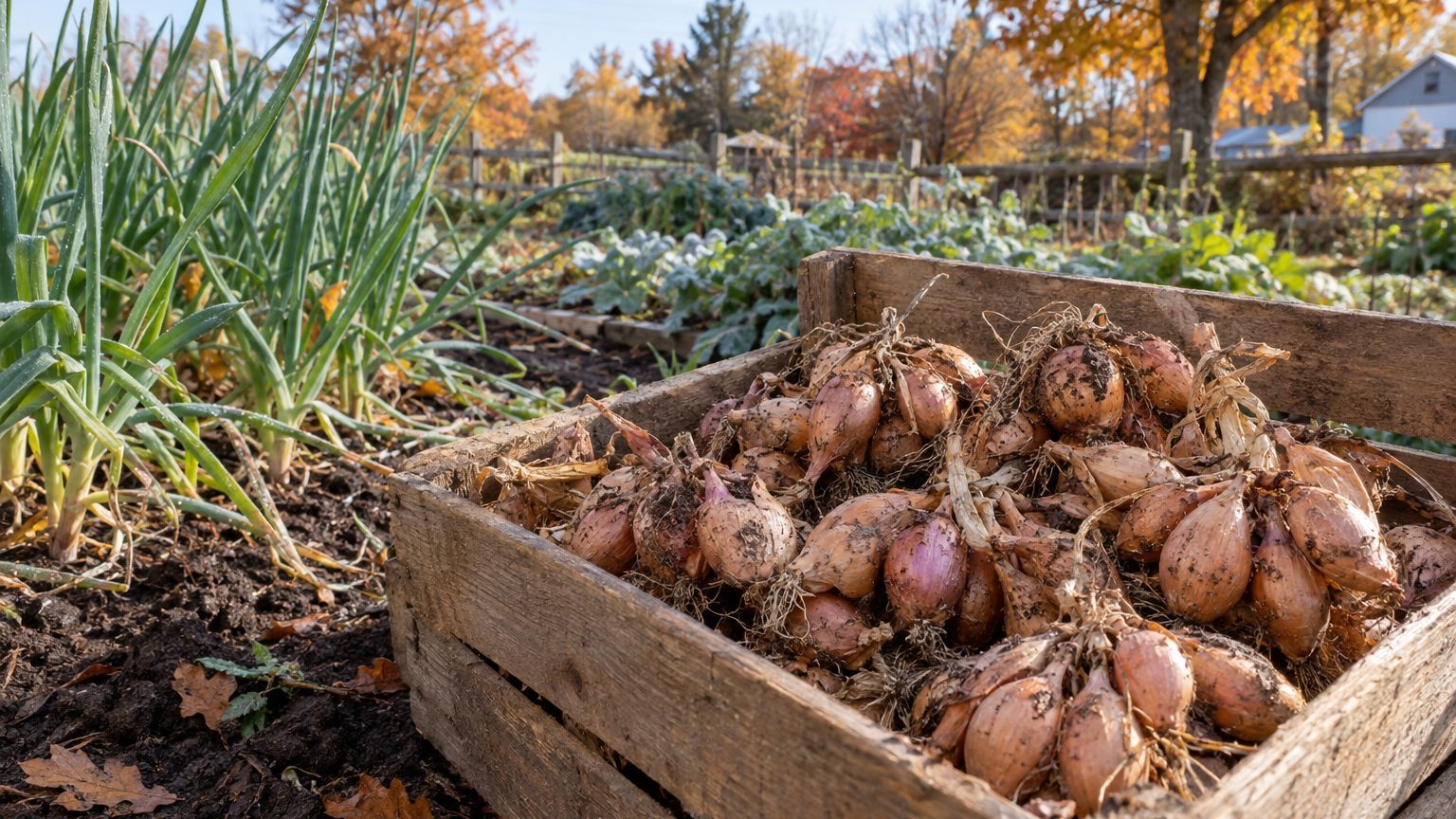

Plant multiplier shallots, the kind grown from small bulbs rather than seed, and put them in the ground in fall. Delaware’s mild winters and a frost-free stretch that runs into late October or early November suit that routine. Spring planting works too. Seed-grown shallots are the riskiest choice here. The sections below explain the reasoning and where it breaks down.
The short answer for Delaware
The best type for most Delaware gardens is a fall-planted multiplier shallot. A multiplier is a single bulb that splits into a cluster of five or more at harvest, so a handful of sets becomes a season’s worth of kitchen shallots. Fall planting lets the roots establish while the soil is still workable, and the plants take off the moment spring warms up. That head start matters because Delaware shallots have a deadline: they need to finish bulbing before the summer heat arrives. For the full planting routine, see Growing Shallots in Delaware.
The numbers behind the recommendation come from the reference station, Wilmington. NOAA’s 1991-2020 Climate Normals put the last spring frost at April 3 to April 14, and the first fall frost at October 26 to November 7. Those are 32°F freeze probabilities in the 30-70% band. That means the dates mark the stretch when the odds of a freeze at that station sit between 30 and 70 percent, not a guaranteed cutoff. The coldest month averages a daily minimum of 25.6°F, which is cold enough to freeze the soil surface but well within what a mulched shallot bulb tolerates.
These are airport figures, and your garden is probably not at the airport. Suburban and rural plots typically see the last spring frost one to two weeks later, and the first fall frost one to two weeks earlier. A gardener outside the city should shift every date on this page accordingly.
Choosing by type
The choice comes down to three types, and Delaware’s season favors them in this order.
| Type | When it goes in | Fit for Delaware |
|---|---|---|
| Fall-planted multiplier sets | Fall, after the soil cools but before it freezes hard | Best overall. Early roots, early harvest before summer heat |
| Spring-planted multiplier sets | As soon as the ground can be worked, near the last-frost window | Reliable if planted early. Loses ground every week it is delayed |
| Seed-grown shallots | Started indoors or sown early in spring | Workable but tight. Needs a long, cool growing stretch the season rarely offers |
One gap to flag: this page does not have a University of Delaware trial list ranking named cultivars for the state. So it sticks to type, which is the decision that matters most anyway. Within a type, buy sets labeled for fall or spring planting from a seller who ships on a Mid-Atlantic schedule. The When to Plant Shallots in Delaware page covers the dates.
What will not work here
Late spring planting fails first. A shallot set pushed into the ground in May has a few cool weeks at best before Delaware’s heat shuts down bulb growth. The plant switches from building leaves to finishing, and the bulbs come out small. With a last frost as early as April 3 to April 14 at the reference station, there is simply no reason to wait. Spring planting is possible in the first workable weeks, and gardeners who skip them give up the best part of the season.
Seed-grown shallots are the second casualty, at least for beginners. Starting from seed means growing a seedling indoors, hardening it off, and transplanting it into soil that is already warming. The plant then has to size up a bulb in the same compressed window that fall-planted sets spent months preparing for. In a place with a last frost in early-to-mid April and warm weather close behind, there is little slack. Experienced growers pull it off. First-timers get thin, grassy plants.
Planting too early in fall is a quieter failure. If sets go in while the soil is still warm, they send up green tops that winter then burns back. The first fall frost window of October 26 to November 7 is the reference point: you want roots, not a tall green shoot, going into the cold. Wait until the soil has cooled, and treat the airport dates as the early edge, because a rural garden usually freezes sooner.
Humid Mid-Atlantic summers punish crowding. Shallots packed tightly hold moisture around the necks and bases, which invites fungal disease just as the tops start to fall over. Give each set room, and give the cluster room to grow as well, since a multiplier that starts as one bulb ends up as several. Then stop watering as the tops yellow, because wet soil at the end of the season ruins storage life faster than almost anything else.
What changes across Delaware
Delaware is a small state, but it is not one garden. The USDA Plant Hardiness Zone Map (2023 edition, built on 1991-2020 normals) lists the state as 7a to 8a. That spread rests on one variable only, the average annual extreme minimum temperature, so it says how cold the worst nights get and nothing about summer heat, rainfall or frost timing. There is no single answer for the whole state. The reference city figures on this page describe Wilmington, and other parts of the state differ.
In practice, the northern end of the state tends to run colder and the southern end milder, and growers near the coast often see a different pattern than inland. Treat that as a general tendency, not a ruling on any particular yard. A reader in the cooler north should lean toward earlier spring planting and a thicker winter mulch on fall sets. A reader in the milder south can plant fall sets a little later, since the soil takes longer to chill, but should expect the heat to arrive sooner and plan for an earlier harvest. Fall-planted multiplier sets stay the default in zone 7a and in zone 8a alike.
Nobody can tell you your zone from a web page, and this one will not try. Look up your own ZIP code on the USDA map and read the zone there. Then remember that a zone only speaks to winter minimums. It will not tell you when your soil is workable or how early the summer heat ends bulbing in your yard.
Where to check this for your own county
The best source for your county is University of Delaware Cooperative Extension. It is the state’s land-grant extension service, and its staff work with gardeners in each of the state’s counties. Extension offices field planting questions all year, and their advice rests on local trials and local weather records, not a national average.
Two things are worth looking for there. The first is a local planting calendar for onions and other alliums, since shallots are close relatives and the same frost and soil logic applies. The second is any record of which varieties have been trialled in your county, along with notes on which ones held up in local disease pressure. If the site has a master gardener helpline or a county contact, ask directly which shallot types people in your area grow successfully and when they plant them.
Be clear about what this page is. It is the state-level view, built on reference-city climate normals from one airport station. A county recommendation beats a state one every time, because counties differ in soil, drainage, frost pockets and microclimate. Where the extension service and this page disagree, go with the extension service. Calendars from other states will not help either, since they are written for their own climates and species.
Checking this against your own garden
Your own yard outranks every date on this page. Three observations cost nothing and tell you more than a regional average can.
Soil warmth, by feel. In spring, push your hand a few inches into the bed. If the soil is cold and clings in a wet clump, it is not ready, whatever the calendar says. If it crumbles and feels cool but not icy, sets can go in. In fall, do the same test: soil that still feels warm means wait. A bed that warms early marks a sheltered, sunny spot. One that stays cold late is a slow bed, so shift your dates later there.
The first green shoots. With fall-planted sets, note the day green tips break through in late winter or early spring. That date is your yard’s real start of the season. If tops showed up before winter, you planted too early or the bed is unusually mild. If they come late, the bed is cold, and you can plan the next fall’s planting a bit sooner to compensate.
The tops falling over. When the green leaves yellow and flop, bulbing is finishing, and that tells you how fast summer heat ends the season where you garden. Write the date down. Next year, count backward from it to decide when to plant, and watch how it lines up with your first hot stretch. Two seasons of dates will give you a calendar for your yard that no state page can match.
Common questions
Can I plant shallots from the grocery store?
Sometimes they sprout, but store shallots are often treated or stored in ways that hurt performance, and you do not know what type they are. Sets sold for planting are the safer route, and they are bred and labeled for growing, not cooking.
Should I plant shallots in fall or spring in Delaware?
Fall is the better default, because roots establish early and the crop finishes before summer heat. Spring works if you plant in the first workable weeks. Waiting until May is the mistake to avoid.
Do I need to protect fall-planted shallots from winter cold?
A light layer of straw or shredded leaves is enough. The coldest-month mean minimum at the reference station is 25.6°F, which dormant bulbs handle. Drainage is the bigger worry, since waterlogged soil rots sets.
Are the frost dates on this page the dates for my garden?
No. They come from the Wilmington airport station, as 32°F freeze probabilities in the 30-70% band. Suburban and rural gardens typically see the last spring frost one to two weeks later and the first fall frost one to two weeks earlier, so check your own county with the extension service.