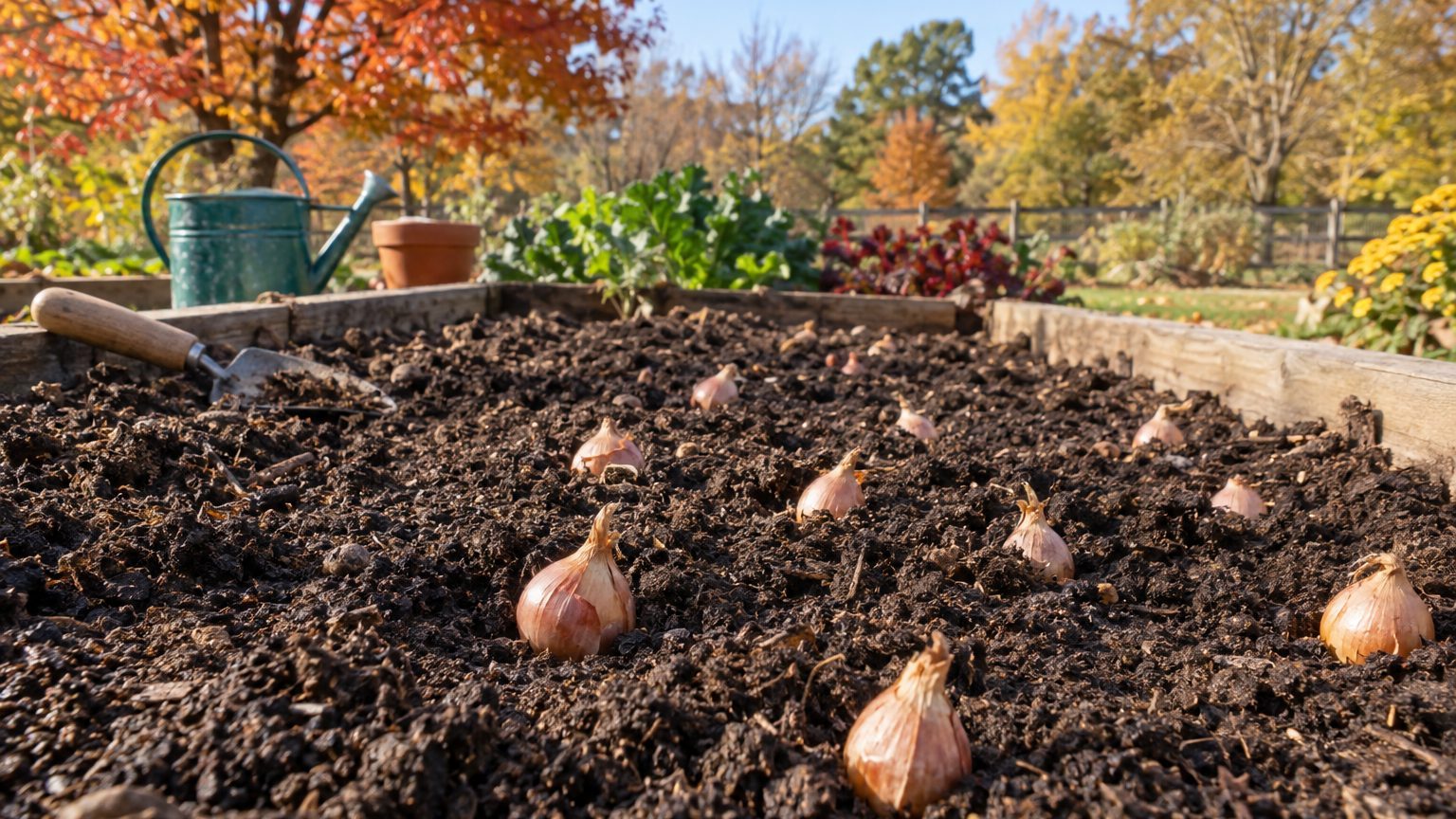

Connecticut gardeners can plant shallots twice a year: in fall, a few weeks before the ground locks up, or in early spring, as soon as a handful of soil crumbles instead of smearing. Fall planting gives the bulbs a head start. Spring planting skips the winter gamble. The frost dates below anchor both windows, but they come from a coastal station, and that changes the answer for much of the state.
The short answer for Connecticut
On the Connecticut coast, the spring window opens around April 2 to April 12, and the fall window closes around October 28 to November 10. Those dates come from the NOAA NCEI 1991-2020 Climate Normals for the Bridgeport station, and they are probabilities of a 32°F freeze, not calendar promises. Each span marks where the odds of a freeze sit between 30 and 70 percent. In spring, a freeze after those dates is still a real possibility. In fall, a freeze before them is too.
Frost dates matter less for shallots than for tomatoes or peppers, because shallots are cool-season bulbs that shrug off light frost. What the dates really mark is timing. In spring, you want roots growing in cool soil before the weather turns warm, so you plant when the ground is workable, often right around that early April window and sometimes a little before. In fall, you want roots established while the soil is still above freezing, with only a short green shoot above ground. Plant too early and the tops race ahead. Plant too late and the roots have no time to anchor.
Winter cold is the second number to know. The mean daily minimum of the coldest month at Bridgeport is 24.4°F. That is an average night low, not the record low, so individual nights run colder. It is cold enough that a fall-planted bulb does better under a layer of mulch than bare to the sky.
This page does not have a tested shallot planting date for every Connecticut town, and it won’t pretend to. For the full growing sequence, from curing to storage, start with Growing Shallots in Connecticut. For which types suit the state, see The Best Shallots to Grow in Connecticut.
What will not work here
The most common failure is borrowing the coastal dates for an inland garden. Bridgeport sits on Long Island Sound and is the mildest part of the state. Inland and northwest Connecticut freeze noticeably earlier in fall and later in spring. A gardener in the hills who plants on the first of November because “the frost date is October 28 to November 10” may be putting bulbs into frozen or nearly frozen ground. Roots need open soil to grow into.
The reverse mistake is waiting for the frost-free date in spring. With a last-freeze window of April 2 to April 12 on the coast, anyone who holds off until they feel safe loses the cool weeks the roots want. Shallots planted late have to form bulbs as the weather warms, and the harvest tends to shrink as a result. Because the freeze odds are only a probability, you will not hit a perfectly safe day anyway. Established shallot shoots generally take a light freeze fine.
Planting fall shallots too early also causes trouble. If warm autumn weather coaxes tall green tops, those leaves go into winter with little protection, and a mild October followed by a hard November can set them back. The coastal fall window of October 28 to November 10 is a reminder that the cold usually arrives later than people expect on the shore and sooner than they expect inland. Watch your own ground, not just the date.
Bare, unmulched fall plantings are the third trap. An average coldest-month minimum of 24.4°F means plenty of nights fall below that. Winters that swing between freezing and thawing can heave shallow bulbs out of the soil, leaving them sitting on the surface. A few inches of loose mulch such as straw or shredded leaves goes a long way toward preventing it.
And soggy ground is a quiet killer. Early April soil that still holds water will rot bulbs set in it, so wait for a day when the bed drains and crumbles.
What changes across Connecticut
The USDA Plant Hardiness Zone Map (2023 edition, built on 1991-2020 normals) places Connecticut in zones 6a through 7b. That is four half-zones inside one small state, so there is no single answer. The system rests on one variable, the average annual extreme minimum temperature. It tells you what winter cold a plant must survive, not when to plant.
Keep that distinction in mind. Hardiness zone and frost dates answer different questions. The zone range says the state’s coldest hill towns and its warmest shoreline differ in winter lows by several steps. The frost dates here describe one coastal station. Neither gives you a planting day for a specific backyard.
If you garden in the north, the northwest corner, or at higher elevation, treat the Bridgeport dates as the earliest end of the spring range and the latest end of the fall range. Shift spring planting later and fall planting earlier. The page does not have a measured offset for each town, so the useful habit is to let your own ground set the date, and to plant fall shallots with enough lead time that roots can grow before it freezes.
Gardeners near the Sound can lean the other way. The coast has the longest runway, and fall planting can stretch toward the October 28 to November 10 window. Even there, microclimates matter. A sheltered, south-facing bed behaves differently from a low spot where cold air pools.
To learn which zone your address falls in, use the USDA map and enter your ZIP code. Don’t guess from the state range. A neighbor ten miles away, or a few hundred feet higher, may be in a different half-zone from you.
Where to check this for your own county
A county recommendation beats a state one, and this page is the state one. The best next stop is UConn Extension, the land-grant extension service for Connecticut. Its staff and publications are based on local trials and local weather records, which no statewide summary can match.
Look for three things there. The first is a local planting calendar for alliums (shallots, garlic, onions) or for vegetables generally, ideally one that names your county or region. The second is any list of varieties that have been trialled in your area, since a type that thrives on the coast may struggle in the uplands. The third is frost and freeze information for a station near you, which is far more useful than a station an hour or two away.
Extension calendars are usually written crop by crop, not as one universal chart. If you find a calendar, check that it covers the crop you are actually growing, shallots or at least onion-family bulbs, and not some other vegetable. A lawn or tomato schedule will point you in the wrong direction.
If the extension office has no shallot-specific page, ask. Extension staff and master gardener volunteers field these questions all the time, and a short call can save a season. This page does not have county-level shallot data, so it stops where the state-level facts stop.
Checking this against your own garden
Your own observations outrank every date above. Three are worth watching, and none requires equipment.
Soil feel. Squeeze a handful from a few inches down. If it forms a wet, sticky ball, wait. If it breaks apart when you poke it, the bed is ready. Beds that reach that point early in spring are your warm, well-drained spots, and the ones that lag are your cold, wet corners. Note which is which, and plant the early bed first next year.
First true leaves. When fall-planted shallots send up their green tips, or when spring plantings show their first true leaves, write down the date. If the tops appear early and tall in fall, your garden runs warm and you should plant later next time. If spring shoots show up late, your site holds cold longer than the coast does.
Where frost lingers. On a clear, cold morning, look at where white frost sits on the lawn and where it has already melted. Frosted patches mark pockets of cold air, and the bare patches are warmer ground. Shallots in the frosty spots will start later in spring and face earlier hard freezes in fall.
Common questions
Can I plant shallots in spring in Connecticut?
Yes. Plant as soon as the soil is workable, which on the coast is around the April 2 to April 12 freeze window and later inland. Shallots tolerate light frost, so you do not need to wait for it to pass.
Is fall or spring planting better?
Both work. Fall planting gives roots a head start but needs mulch and good timing. Spring planting is simpler and avoids winter heaving. Your site and your tolerance for risk decide it.
Do the Bridgeport frost dates apply to my town?
Only near the Sound. Bridgeport is the mildest part of the state, and inland and northwest Connecticut freeze earlier in fall and later in spring. Use the dates as the earliest spring and latest fall limits.
What does the October 28 to November 10 range actually mean?
It is the NOAA 1991-2020 range where the chance of a first 32°F freeze falls between 30 and 70 percent at the Bridgeport station. It is a probability band, not a guaranteed date, and the first freeze can come earlier or later.