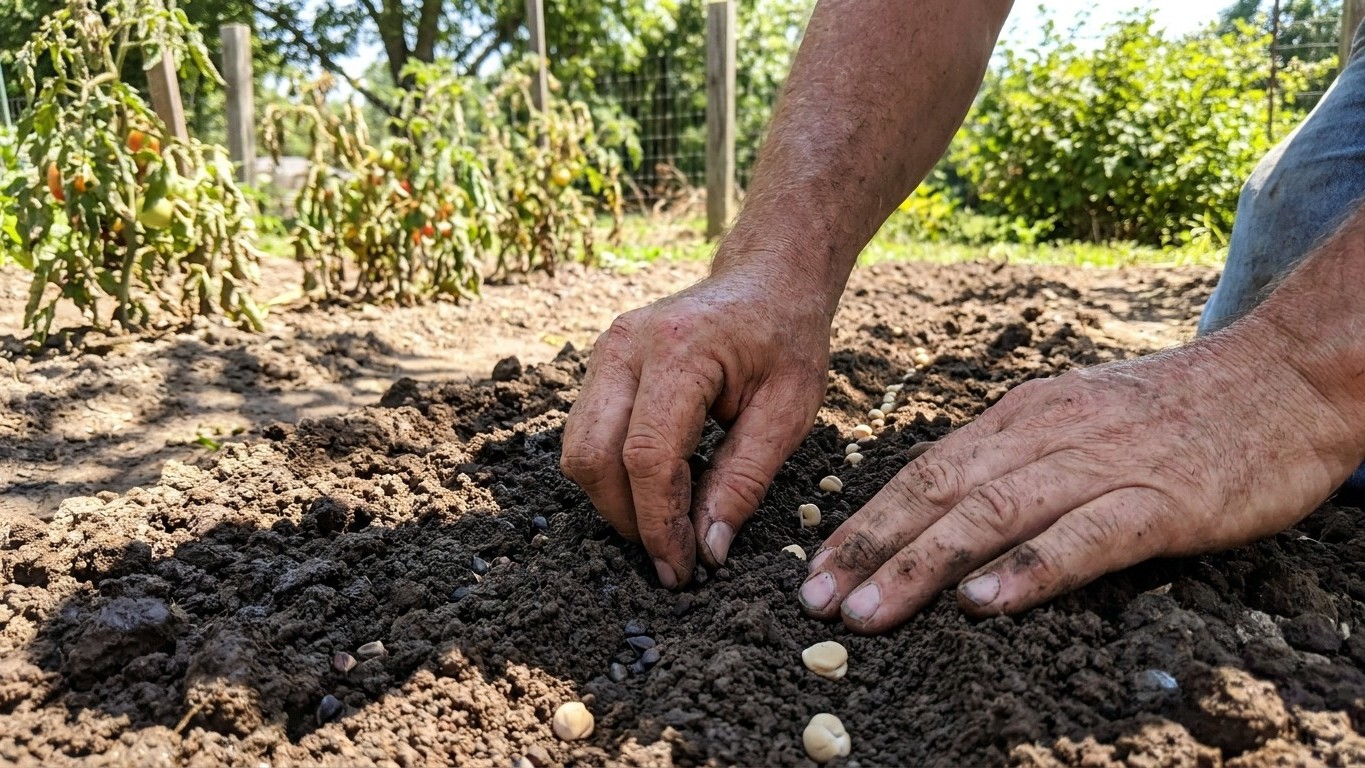

Arkansas gardens in July run hot and fast: soil temperatures well above the range that stalls cool-season seeds, months past the last frost window of March 12 to March 28, and months before the first fall frost arrives between November 7 and November 20. This is the month for heat-loving direct sowing, fast successions, and the first seeds of the fall garden started under cover.
What goes in the ground in July

Soil temperature, not the calendar, decides what germinates this month. Arkansas topsoil in July commonly sits in the 80s and can push past 90°F in full sun, and that heat is exactly what southern peas, okra, and sweet potato slips want. It is also exactly what stops lettuce and spinach seed from sprouting at all: most lettuce varieties go dormant above roughly 80°F, so those crops wait for the fall sowing window covered below.
Direct-sow candidates for July in Arkansas include:
- Southern peas (cowpeas, black-eyed peas, crowder types), which thrive in heat that would stress snap beans
- Okra, still workable from seed early in the month for a strong fall harvest
- A second planting of bush beans in the first half of July, timed to mature well before the November frost window
- Sweet corn, in the northern part of the state, if planted in the first week or two of the month
- Winter squash and pumpkins, counting backward from the earliest expected frost date of November 7 to make sure they finish before cold arrives
The gamble crops are anything with a long maturity window planted late in the month. A pumpkin variety needing 100 days, sown July 25, is racing the November 7 frost date with almost no room for a cool, wet stretch. If the seed packet’s days-to-maturity plus a two-week buffer pushes past early November, that planting belongs in a cold frame conversation, not the open garden.
Garlic has no place in a July planting list here. Fall garlic goes in months later, after the heat breaks, and anyone tempted to tuck cloves into July soil should hold them in a cool, dry spot instead.
What to start under cover
July is when the fall brassica garden begins, and the math runs backward from the first fall frost rather than forward from today’s date. Broccoli, cabbage, and cauliflower typically need 60 to 80 days from transplant to harvest. Counting back from the earliest frost date in the range, November 7, means transplants should be in the ground by roughly mid-to-late August, which puts seed-starting for those transplants squarely in early-to-mid July.
Start these under cover, out of the harshest midday sun, in trays or a shaded nursery bed:
- Broccoli and cabbage for fall transplanting
- Cauliflower, which is less forgiving of heat stress at the seedling stage than broccoli
- Brussels sprouts, on the early end of July given their longer season
The two ways this goes wrong are mirror images of each other. Start too early in the peak of summer heat and seedlings stretch into leggy, weak transplants or bolt before they ever reach the garden. Start too late and the young plants run out of daylight and cool weather before they size up, leaving small heads or none at all when the first frost, arriving anywhere from November 7 to November 20 depending on the year, shuts the season down. Splitting a sowing across two dates roughly ten days apart hedges against both outcomes.
What is ready to pick
July is one of the fullest harvest months in Arkansas. Tomatoes are coloring up, peppers are sizing, and summer squash and cucumbers need checking every day or two, since both go from perfect to oversized in what feels like a single afternoon. Okra pods should come off at 2 to 3 inches long; anything bigger turns fibrous fast. Green beans planted in spring are still producing if picked regularly, and picking is what keeps the plant setting new pods instead of pouring energy into mature seed.
Southern peas started earlier in the season may already be filling pods by late July, and the pods tell their own story: shell peas when the pods feel full and the seeds inside have color, snap types while the pods are still tender enough to bend without snapping stringy.
On the fruit side, blackberries are typically finishing their run, and the test is simple: a ripe berry is dull black, not shiny, and pulls free with almost no resistance. Blueberries in most of the state are wrapping up as well. Watermelon and cantaloupe are approaching ripeness for gardeners who planted early; a cantaloupe releasing from the vine with a light tug (slipping) is the clearest sign, while a watermelon’s dulling skin and a hollow sound when thumped are the more reliable, if less exact, cues.
The jobs that matter this month
Water management is the single job that determines whether the rest of July’s crops make it. Deep, infrequent watering, aimed at the root zone rather than a light daily sprinkle, encourages roots to grow down instead of staying shallow and heat-stressed. A 2 to 3 inch mulch layer around tomatoes, peppers, and squash holds that moisture and keeps soil temperatures from spiking, which matters directly for the germination problems described above.
Succession sowing keeps beans, squash, and cucumbers producing instead of petering out mid-summer; a new short row every two to three weeks through July extends the harvest well into fall. Staking and caging tomatoes needs to happen now if it has not already, before the plants sprawl into a tangle that is nearly impossible to untangle later without breaking stems.
Pest scouting earns its keep in July more than almost any other month. Squash vine borer moths are active, and the first sign, a small hole with sawdust-like frass near the base of a squash plant, is the window to act before the vine collapses. Japanese beetles show up on beans, okra, and fruit trees, and stink bugs move into southern peas and tomatoes as pods and fruit form. Checking the undersides of leaves every few days catches problems while hand-removal or targeted treatment still works.
Garlic and onions planted the previous fall or spring should be harvested and curing by early-to-mid July if that has not happened yet; leaving mature bulbs in the ground too long in Arkansas heat invites splitting and rot.
What not to do in July
The most common mistake is treating July soil heat as an invitation to plant something it will not support. Lettuce, spinach, and other cool-season greens sown directly into July’s warm soil largely will not germinate, and forcing the issue wastes seed and a slot in the bed better used for southern peas or a fall brassica start. If cool-season greens are wanted for fall, they belong in a cooled, shaded starting tray now, not the open ground.
Skipping mulch is the second classic error. Bare soil in Arkansas July sun can swing 15 to 20 degrees hotter at root depth than mulched soil, and that swing stresses shallow-rooted vegetables even when watering is otherwise adequate.
Heavy nitrogen feeding on tomatoes, peppers, and squash once they are flowering and setting fruit is another trap. Nitrogen late in the fruiting cycle pushes leafy growth at the expense of the fruit itself, leading to lush plants with disappointing yields. A balanced or lower-nitrogen feed, or none at all if the soil was well prepared earlier in the season, generally serves fruiting crops better through mid-summer.
Leaving ripe produce on the vine “for one more day” also costs more than it seems. Overripe squash, cucumbers, and beans signal the plant to slow production, and rotting fruit left in place draws the same pests already being watched for above.
Checking this against your own county
Arkansas covers hardiness zones 6b through 8a on the USDA Plant Hardiness Zone Map, and that range alone says the state does not move on a single calendar. The cooler Ozark and Ouachita highlands in the north and west lag behind the Delta and the south of the state by real weeks, not days, and elevation shifts frost timing within short distances. A state-wide July guide is a starting point, not an instruction for a specific garden. The University of Arkansas System Division of Agriculture Cooperative Extension Service publishes county-level guidance and a state planting calendar built for these local differences, and it is worth checking against the dates above before committing seed to the ground.
Common questions
Is July too late to plant tomatoes in Arkansas?
Transplanting a new tomato in July is a stretch for a full-size crop given how close it pushes toward the first fall frost window of November 7 to November 20, but a fast-maturing determinate variety can still work in the southern half of the state if set out in the first week or two of the month.
Can I still plant sweet corn in July in Arkansas?
Yes, in the northern part of the state and only if sown in the first one to two weeks of July, since sweet corn needs roughly 60 to 90 days depending on variety and must mature before the first fall frost.
Why won’t my lettuce seeds sprout in July?
Most lettuce varieties go dormant and refuse to germinate once soil temperature climbs into the 80s, which is typical for Arkansas topsoil in July; starting seed indoors in a cooler spot and transplanting once temperatures ease is the more reliable route.
When should fall broccoli seeds be started in Arkansas?
Counting back from the earliest fall frost date of November 7, and allowing 60 to 80 days from transplant to harvest plus transplant time, early-to-mid July is the general starting window for fall broccoli seed under cover.