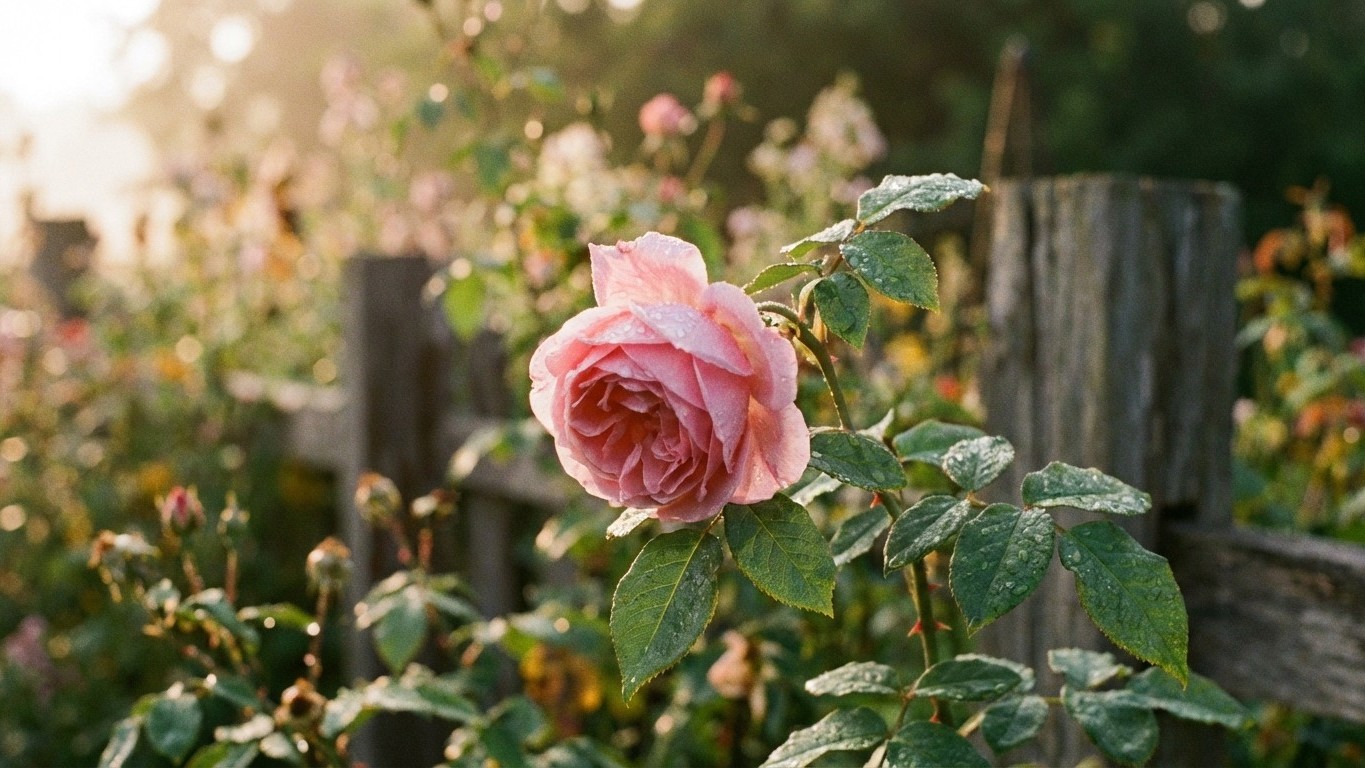

Pick shrub roses and old garden types that have already proven themselves in heat, humidity and uneven winters, and skip the fussy hybrid teas unless you enjoy a spray schedule. A short list of tough names bloom through July and August, come back after most winters and don’t demand constant care. Six of them are covered below, along with a way to judge any other rose against your own yard. For the day-to-day routine, see growing roses in Arkansas.
What this comes down to in Arkansas

At Little Rock, the last spring freeze (32F) falls between March 12 and March 28, and the first fall freeze between November 7 and November 20. Those dates come from NOAA NCEI climate normals and mark the band where a freeze is neither unlikely nor certain. A rose therefore gets a long season, and what separates the survivors from the casualties is summer heat, humidity and the occasional hard winter.
The state spans USDA hardiness zones 6b to 8a. That system rests on one variable, the average annual extreme minimum temperature, so it says nothing about humidity or summer nights. The six below are therefore ordered from most cold-tolerant to least, which shows where the line falls between the Ozarks and the southern half of the state. Catalog hardiness ratings vary by grower, so treat the order as approximate.
The Fairy
A low, spreading polyantha, typically two to three feet tall, with sprays of small pink flowers that arrive later than most and keep coming into fall. It tolerates cold far beyond anything Arkansas delivers. It suits borders, slopes and containers, and it forgives some neglect.
Carefree Beauty
Bred in Iowa for winter toughness, which gives it a wide cold margin here. It grows four to five feet tall with large, soft pink semi-double blooms that repeat through the season. It is a good pick for the cooler Ozark side of the state.
Knock Out
The best-known landscape rose in the country, typically three to four feet tall and wider in warm climates. It repeat-blooms without deadheading and is rated hardy well below Arkansas winters. It handles heat and has solid black spot resistance, but nothing is immune. Rose rosette disease has hit Knock Out plantings across the South and Midwest, so give plants room and don’t line up a whole hedge of one rose.
Belinda’s Dream
A pink, many-petaled shrub bred in Texas for heat and humidity. It grows four to five feet tall and produces classic, fragrant, repeat-blooming flowers on a plant that looks like a garden rose but behaves more like a tough shrub. It is a strong choice for gardeners who want the old-rose look without the fuss.
Old Blush
A China rose that has been grown in Southern gardens for generations, usually three to five feet tall, with pink flowers that deepen with age and bloom from spring until frost. It loves heat. In a hard winter in the northern counties, expect tip dieback or a cut-back to the base, followed by regrowth.
Mutabilis
Often called the butterfly rose for single flowers that open yellow, turn pink, then fade to crimson on the same bush. It grows four to six feet tall or more and is happiest in the warmer southern and eastern parts of the state. At the 6b end of the zone range it sits at the edge of its limit and needs a sheltered spot. Pair it with the advice in Protecting Roses Through a Arkansas Winter.
Working it out for your own garden
Start with the zone. Find your hardiness zone under the USDA system, then compare it with the grower’s rating for the rose you want. A rough rule: look for at least one zone of margin. Knock Out, rated hardy well below any Arkansas zone, clears that bar everywhere in the state. Mutabilis is commonly rated around zone 7. Little Rock falls inside the 6b to 8a range, but a garden at the 6b end sits at or beyond the rose’s limit. That doesn’t rule it out. It means planting it against a south-facing wall, mulching the crown and accepting some winters of dieback.
Time comes second, and the frost window does the arithmetic. A container rose planted just after the last spring freeze (March 12 to March 28 at Little Rock) has roughly seven to eight months before the first fall freeze (November 7 to November 20). That’s enough for roots to settle before winter. For fall planting, a common rule of thumb is to finish about six weeks before the first freeze. Six weeks before November 7 is September 26, and six weeks before November 20 is October 9. The result is a late-September to early-October deadline, not one date.
Both figures are 32F freeze dates for Little Rock.
| Rose | Typical height | Cold margin in Arkansas | Best placement |
|---|---|---|---|
| The Fairy | 2 to 3 ft | Very wide | Anywhere in the state |
| Carefree Beauty | 4 to 5 ft | Wide | Anywhere, especially the north |
| Knock Out | 3 to 4 ft | Wide | Anywhere, with spacing |
| Belinda’s Dream | 4 to 5 ft | Comfortable | Anywhere |
| Old Blush | 3 to 5 ft | Thinner in the north | Central and southern areas |
| Mutabilis | 4 to 6 ft or more | Marginal at the cold end | Sheltered sites, south and east |
What changes across the state
Arkansas is not one climate. The Ozark and Ouachita highlands in the northwest and west-central areas run noticeably colder in winter, and spring arrives later there than in the lowlands. The Delta in the east and the southern counties are warmer and far more humid. The spread between 6b and 8a is the same difference in practice: it separates a gardener who loses a China rose in a hard winter from one who prunes it back every March and thinks nothing of it.
The Little Rock dates sit between those extremes, so shift your expectations rather than the numbers. In the highlands, favor the cold-hardy end of the list (The Fairy, Carefree Beauty, Knock Out) and treat Old Blush and Mutabilis as projects. In the south and east, the whole list is open, and the challenge flips from cold to humidity.
Humidity is where the lowlands bite. Warm, wet nights keep foliage damp and raise disease pressure, which is why disease tolerance matters as much as cold margin there. The state’s rose diseases get their own page, Rose Diseases in Arkansas: What the Climate Here Actually Brings. Soil changes too: heavy clay in much of the Delta, thinner and rockier ground in the hills. Both reward raised planting spots and good drainage over any particular cultivar.
The mistakes this state punishes

Buying from the photo is the most common one. A hybrid tea in a catalog looks wonderful, but in the humid lowlands it often needs constant spraying to keep its leaves. Most gardeners who want low effort are better off with the six above.
Pruning early after a warm spell is the second. A mild February tempts people to cut and feed, and the plant responds with soft new growth right before a March freeze. With the last 32F freeze falling between March 12 and March 28 at Little Rock, and a later freeze possible, wait until the danger has passed in your area before the heavy spring pruning.
Planting too late in fall is the third. A rose set out in November has little time to grow roots before the first freeze (November 7 to November 20 at Little Rock). It heaves in freeze-thaw cycles and often dies the next summer. Use the late-September to early-October deadline from the section above, or wait until spring.
The fourth is ignoring cold margin. Putting a marginal China rose in an exposed northern yard is a gamble, and putting it in a protected spot turns the same gamble into a reasonable bet. Last is a monoculture. A long row of one rose, Knock Out especially, hands rose rosette a perfect path. Mix varieties, space them and remove any plant with distorted red growth and unusual thorniness right away.
Checking this against your county
A state-wide figure is a starting point, not an instruction. Your county’s frost dates, soil and microclimate can differ from Little Rock’s. Contact your county office of the University of Arkansas System Division of Agriculture Cooperative Extension Service for local advice, and use the state rose guide, Growing Roses in Arkansas, for the rest of the routine.
Common questions
Are Knock Out roses still a safe bet in Arkansas?
They remain one of the easiest choices for heat, cold and black spot resistance. The caution is rose rosette disease, which has affected them across the South and Midwest. Space plants, mix in other roses and remove any plant that shows symptoms.
Can I grow hybrid teas here?
Yes, but expect more work. Humid summers push disease pressure up, so hybrid teas need regular care and good airflow. If you want low effort, shrub roses and old garden types hold up better.
Which of these roses is best for the Ozarks?
The Fairy, Carefree Beauty and Knock Out have the widest cold margins. Belinda’s Dream is a comfortable middle option. Old Blush and Mutabilis are possible in a sheltered spot but may die back in hard winters.
Does frost after planting kill a new rose?
A late freeze can burn tender new growth, but an established rose usually regrows from healthy wood. The 32F dates for Little Rock are March 12 to March 28 for spring and November 7 to November 20 for fall.