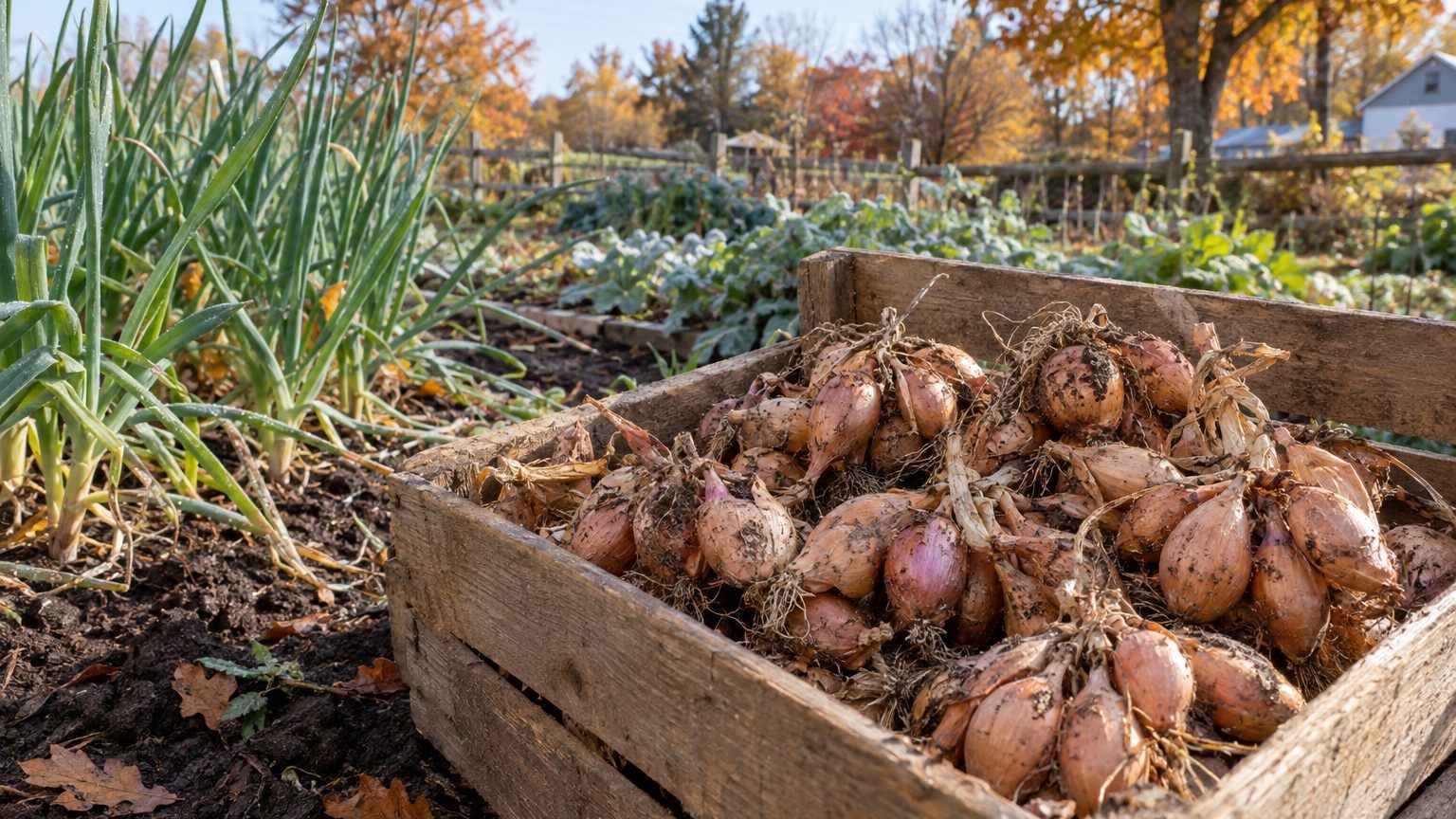

For most Arkansas gardeners, the best shallots are multiplier types grown from bulbs and planted in fall, not seed-grown types started in spring. A fall start gives roots months to settle in before the crop sizes up. Spring-planted bulbs work as a backup. Seed-grown shallots are the gamble. The reasoning comes down to the frost dates and winter lows below.
The short answer for Arkansas
Why fall-planted multipliers lead
A multiplier shallot is a single bulb that divides underground into a cluster of new bulbs. It is the type most home gardeners picture, and in Arkansas it has one big advantage: time. The reference station for these numbers is Little Rock, and there the 32°F freeze dates are generous. The last spring freeze falls between March 12 and March 28. The first fall freeze falls between November 7 and November 20. Those are probabilities, not promises. Each range is the band where the chance of a 32°F freeze sits between 30 and 70 percent, so a hard freeze outside the band is still possible.
Tender plants run on a tighter clock. At the 36°F light-frost threshold, NWS Little Rock gives April 3 and October 31. Tomatoes and peppers in the next bed need those dates. Shallots do not, because they shrug off light frost, so the 32°F band is the more useful guide for them.
Winter is the other number. The mean daily minimum of the coldest month at Little Rock is 30.9°F. That is barely below freezing on an average night, and shallots handle it easily. A bulb set in the ground in fall has the cool months to grow roots, then pushes leaves in late winter and early spring while the weather is still on its side. For exact dates, the page on When to Plant Shallots in Arkansas does the sorting. The broader Growing Shallots in Arkansas guide covers the rest of the crop.
How the three types compare
| Type | When it goes in | How it fits Arkansas | Main risk |
|---|---|---|---|
| Multiplier bulbs, fall-planted | Fall, ahead of the first freeze band | Best match. Long root-building window, mild winters | Rot in waterlogged soil |
| Multiplier bulbs, spring-planted | As soon as soil can be worked, near the last-freeze band | Solid backup if fall slipped by | Less time before summer heat |
| Seed-grown shallots | Started early, transplanted in spring | Possible, but the schedule is tight | Heat arrives before bulbs finish sizing |
One gap to flag: this page has no county-level variety trial results for Arkansas. So it decides by type, not by cultivar name. Within the multiplier group, color and flavor are a matter of taste.
What will not work here
A short season does not defeat shallots in Arkansas. The long gap between the last spring freeze (March 12 to March 28) and the first fall freeze (November 7 to November 20) means the frost-free stretch runs well over half the year. The limiting factor is not the length of the season. It is how much of that season is cool enough for shallots to grow.
Late spring planting is the first thing that fails. A bulb set out in April or later has leaves to grow and a bulb to swell, and summer heat arrives before it finishes. Bulbs from late plantings tend to come out small.
Seed-grown shallots hit the same wall in a different way. They need weeks indoors before transplanting, and then the plants need to bulb up before the heat. That works in a cool-summer climate. In a state where the frost-free season is long but warm, the margin is thin. A gardener who wants to try seed should treat it as a side experiment next to a bed of bulb-grown shallots, not as the main crop.
Wet soil is the quiet killer. Arkansas has humid summers and, in many parts of the state, heavy soils that hold water through winter. Shallots planted in those conditions sit in a cold, soggy bed, and bulbs rot before they root. Two habits make it worse. One is crowding bulbs close together, which holds moisture and limits airflow around the leaves in a humid spring. The other is piling on thick, wet mulch right up against the necks. Raised rows or beds, loose soil, and generous spacing solve most of it.
What changes across Arkansas
Arkansas is not one garden. The USDA Plant Hardiness Zone Map 2023 puts the state between zone 6b and zone 8a. That is a spread of several half-zones, and it means there is no single right answer for the whole state. The hardiness zone is built on one variable only: the average annual extreme minimum temperature. It says how cold the worst nights get. It says nothing about summer heat, rainfall, or soil drainage.
For shallots, the cold end of the range matters less than for most crops. They are hardy plants, and even the colder parts of the state fall within their comfort zone. What shifts is timing. Every date on this page comes from the Little Rock station, so treat those dates as the reference point, not as a rule for every county. A gardener in the Ozarks or at higher elevation should expect a different pattern: a later spring thaw, an earlier fall chill, and a shorter stretch between them. The page does not have station numbers for the northern counties, so it will not invent them.
The practical shift for a northern or high-elevation reader is to plant on the early side of the fall window so roots establish before the ground gets cold, and to add a loose layer of mulch for winter. Spring plantings should go in as soon as the soil is workable. For a reader in the southern part of the state, the pressure runs the other way. Summer heat arrives sooner, so the spring backup plan has even less room, and fall planting matters more.
Nobody should guess their own zone from a state-wide range. The USDA map lets you enter a ZIP code and see which zone applies to your location. Check it, then compare your result against the Little Rock reference to see whether to move earlier or later.
Where to check this for your own county
The University of Arkansas Cooperative Extension Service is the place to go next. Arkansas has a county office system, so there is likely a local agent within reach of any garden in the state. A county recommendation beats a state one, and this page is the state one. It is built on a single reference station and a territory-wide hardiness range, and your county may differ in both.
Two things are worth looking for there. The first is a local planting calendar for onions and other alliums. Shallots are close relatives of onions, and a county or regional vegetable calendar will usually list the fall and spring windows that suit that area. The second is any record of varieties trialled in your county or a neighboring one. A trial tells you which shallots performed under local soil and weather, which is something no state-level article can do.
When you contact the office, bring specifics. Say whether you garden in clay, loam, or sandy soil, whether your beds drain well or hold water in winter, and whether you plan to plant bulbs or seed. An agent can then answer with your conditions in mind instead of reciting a general guide.
A caveat on what this page does not have. The facts behind it do not include an Arkansas-specific shallot calendar from Extension, and the only calendars in the source set cover lawn grasses in another state. Those are not relevant to shallots, so they are not used here. If Extension publishes a shallot or allium guide for your county, it outranks everything above.
Checking this against your own garden
Dates on a page are averages. Your garden has its own clock, and what you observe outranks any calendar. Two signs are worth watching, and none needs equipment.
Soil warmth by feel. In fall, push your hand a few inches into the bed. If the soil still feels warm like bathwater, it is early. When it feels cool and comfortable, roots will start. A bed that cools sooner than the neighbor’s is likely shaded or higher, and it can go in earlier. A bed that stays warm longer, such as one against a south wall, should wait.
The first green shoots. Note when leaves poke through after planting, and when they start growing again in late winter. A garden where shoots show early is a warm pocket. If yours lag a week or two behind a friend’s down the road, you have found a cold pocket, and your timing should lean earlier in fall.
Keep a simple note of these dates for a season or two. They become your own local calendar, and they are the thing to take to your county agent.
Common questions
Can I grow shallots from seed in Arkansas?
Yes, but it is the riskier route. Seed-grown plants need an early indoor start and then must bulb up before summer heat. Multiplier bulbs planted in fall give a bigger margin, so many gardeners use seed only as a side trial.
Should I plant shallots in fall or spring?
Fall is the better first choice, since roots can develop through the cool months. Spring planting is a reasonable backup if fall passes. Plant as early as the soil can be worked, near the March 12 to March 28 last-freeze band at Little Rock, though your own date may differ.
Will shallots survive an Arkansas winter?
Generally yes. The mean daily minimum of the coldest month at Little Rock is 30.9°F, and the state spans USDA zones 6b to 8a. Shallots are hardy plants. Wet, poorly drained soil is a bigger threat to them than cold.
Can I plant shallots from the grocery store?
You can, but results are unreliable because the origin and handling are unknown. Bulbs sold for planting are the safer purchase, and your county Extension office can point to sources that suit your area.