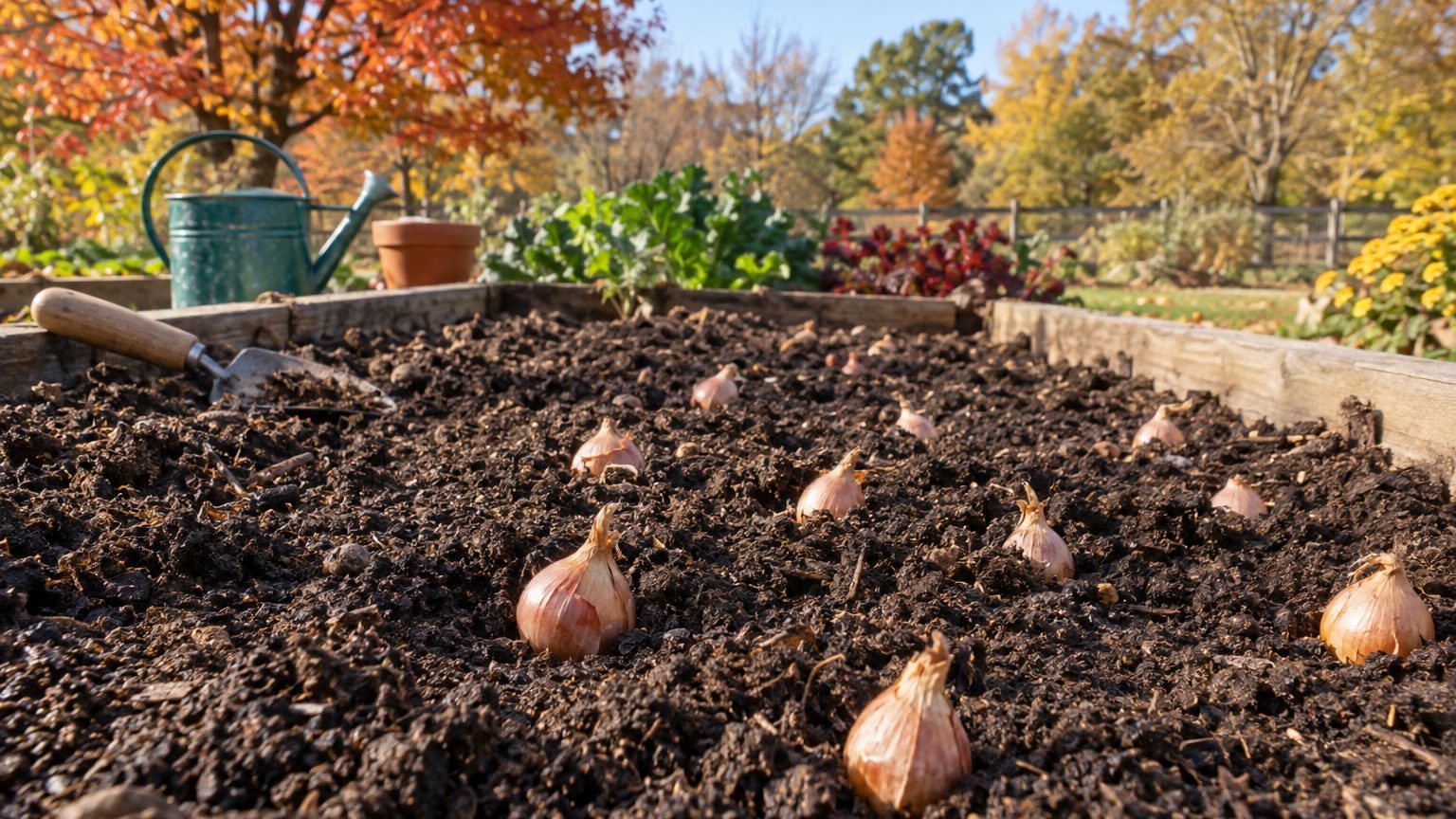

Arkansas gardeners have two planting windows for shallots. The first is fall, in the weeks leading into the first freeze, which NOAA’s 1991-2020 normals place between November 7 and November 20. The second is late winter into early spring, around the last freeze, between March 12 and March 28. Both ranges are odds, not guarantees, and shallots are hardy enough that neither date is a deadline.
The short answer for Arkansas
Plant shallot sets in fall, finishing by the early end of the November 7 to November 20 band, or in late winter once the soil is workable, which can happen before the March 12 to March 28 band closes. Fall planting gives roots time to establish before spring growth takes off. Spring planting works, but it hands you a shorter season before summer.
Those two bands deserve a precise reading. They come from NOAA’s NCEI 1991-2020 Climate Normals for the Little Rock reference station, and they mark the 30 to 70 percent probability band for a 32°F freeze. In spring, March 12 is the point where a later freeze is still more likely than not, and March 28 is where it has become less likely than not. In fall, a freeze has less than even odds of having arrived by November 7, and better than even odds by November 20. A freeze outside these dates can and does happen.
| Threshold | Spring | Fall |
|---|---|---|
| 32°F freeze, 30-70% probability band | March 12 to March 28 | November 7 to November 20 |
| 36°F light frost (NWS Little Rock) | April 3 | October 31 |
The 36°F row is the one tender crops live by. Tomatoes and peppers need those dates, and shallots do not. A shallot set shrugs off a frost that blackens a tomato seedling, so the 32°F band is the more useful guide here, and even that works as a rough clock rather than a hard stop.
In practice, fall planting means the weeks ahead of November 7, when the ground has cooled enough that sets root without pushing a lot of top growth. Spring planting means the first stretch of workable soil in late winter, ahead of or inside the March 12 to March 28 band. Our guide to Growing Shallots in Arkansas covers site, soil and care once the sets are in. This page covers timing only.
One limit on the data: this page has frost probabilities and winter minimums for the state’s reference station, but no rainfall or summer heat figures. Anything below about those conditions is general guidance, not a measurement.
What will not work here
Waiting for April 3 does not work. That is the 36°F light-frost date from NWS Little Rock, and it falls after the 32°F band has already closed on March 28. A gardener who treats it as the starting gun, the way you would for tomatoes, has given away weeks of cool-weather growth. Shallots need that cool stretch to build leaves, because each leaf becomes a layer of the bulb. Planting after the weather turns warm leaves little time to build them.
Planting too early in fall is the opposite mistake, and the winter numbers explain it. The mean daily minimum of the coldest month at Little Rock is 30.9°F. That is a typical winter night sitting just under freezing, not deep and sustained cold. Sets planted in a warm early autumn spell can send up a lot of green growth before winter, and that tender top is what a hard January snap burns back. The bulb usually survives, but you have spent its energy early. Aim for roots first, with only a modest tuft of leaf above ground.
Close spacing is the third failure, and humidity is the reason. Arkansas summers are muggy, and the shallot crop finishes in that weather as the tops die back and the bulbs cure. Crowded plants hold moisture in the canopy and stay damp longer, which invites fungal disease and rot at the neck. Give each set room for air to move between plants. If your soil is heavy clay, plant in raised rows or on a slight mound so winter rain drains away from the bulbs rather than pooling around them.
Choosing a variety by name alone also trips people up. Some shallot types are better suited to a mild, damp climate than others, and the right pick depends on your planting window. Our breakdown of The Best Shallots to Grow in Arkansas helps match the type to the season you can realistically give it.
Finally, a single statewide date will not work. Reading the table as a promise that March 28 is safe for everyone, everywhere in the state, treats a probability as a rule. Plenty of Arkansas gardens will see a freeze after that date in some years.
What changes across Arkansas
The USDA Plant Hardiness Zone Map (2023 edition, based on 1991-2020 normals) places Arkansas in zones 6b to 8a. That is four half-zone steps (6b, 7a, 7b and 8a), so there is no single answer for the state. The system is built on one variable, the average annual extreme minimum temperature, which tells you how cold the worst night of a typical year gets. It says nothing directly about frost dates or summer heat.
The dates and the 30.9°F winter figure above belong to Little Rock, the reference city. Treat them as a midpoint. Other parts of the state differ, and a garden in the north or at higher elevation sits toward the colder end of that zone range, while the south sits toward the warmer end. The Ozarks in the northwest and the lowlands in the southeast are very different places to grow an onion relative.
Here is how to shift. If you garden north or uphill from Little Rock, start from the Little Rock dates and move your fall planting earlier, so roots can establish before colder soil arrives. Move your spring planting later, because the soil may stay frozen or soggy longer. If you garden toward the south, the reverse applies: fall planting can run later, and spring planting will probably come sooner. I am not giving day counts for those shifts, because this page lacks the station data to support them honestly.
To find where you sit, look up your location on the USDA Plant Hardiness Zone Map and read your zone from there. Do not assume it from a neighbor’s advice or a seed packet, since packets often print a generic range. Once you know it, compare it to the 6b to 8a spread and see whether you lean cold or warm.
Where to check this for your own county
The best next stop is the University of Arkansas System Division of Agriculture Cooperative Extension Service. It is the state’s land-grant extension network, and it maintains offices that serve individual counties. Its horticulture staff know your local soil, your local disease pressure and your local weather quirks in a way a statewide page cannot.
Two things are worth looking for there. The first is a local planting calendar for onions and their relatives, ideally one that names shallots or at least bulb onions and garlic for your county or region. The second is any list of varieties trialled in your county, meaning plants that were actually grown and compared under local conditions rather than just recommended in general. A variety that thrives in a trial plot a few counties over is a much safer bet than one that looks good in a catalog.
When the extension’s county advice and this page disagree, trust the county. A county recommendation beats a state one every time, because it is built from narrower data and local experience. This page is the state version, a starting frame built from one reference station’s frost probabilities and a zone range. It is useful for getting oriented and for knowing which questions to ask. It cannot account for the creek bottom that holds cold air in your valley or the south-facing slope that warms two weeks early.
If you call or visit a county office, bring specifics: your approximate location, your soil type if you know it, and whether you want to plant in fall or spring. Ask what has worked for local growers and whether any recent seasons have shifted the usual timing.
Checking this against your own garden
Your own observations outrank every date above. Frost probabilities describe a station in Little Rock, not your bed, and three simple signals will tell you more about your microclimate than a table can.
- Soil warmth by feel. In fall, push your hand into the top few inches of soil in the morning. If it feels cool and slightly damp rather than warm, sets will root without racing into leaf. In late winter, soil that crumbles in your hand rather than smearing or sticking in a wet ball is ready. A bed that reaches this state earlier than your neighbor’s tells you it drains well and warms fast.
- The first green shoots. After fall planting, note when the first leaf tips appear. Shoots in a few weeks mean your site runs warm, so plant later next year. Shoots that hold off until late winter suggest a colder spot, where earlier planting helps.
- The first flush of spring bloom. Watch for early bloomers such as daffodils or redbud around your yard. If they open ahead of the local norm, your garden is a warm pocket. If they lag, expect later spring planting and later harvests.
Write the dates down for a season or two. A scrap of paper on the garage wall is enough. After two years you will have a calendar that is more accurate for your yard than anything printed here.
Common questions
Can I plant shallots in spring in Arkansas?
Yes. Plant as soon as the soil is workable, which can come before the March 12 to March 28 freeze band has passed. Shallots tolerate frost, so you do not need to wait for it to end. The tradeoff is a shorter season before summer weather arrives.
Which frost dates matter for shallots, 32°F or 36°F?
The 32°F dates (March 12 to March 28 in spring, November 7 to November 20 in fall) are the more useful guide. The 36°F dates, April 3 and October 31 from NWS Little Rock, are for tender plants that a light frost can damage. Shallots are not in that group.
Does my hardiness zone change when I should plant?
Somewhat. Arkansas spans USDA zones 6b to 8a, so gardeners in colder areas should lean toward earlier fall planting and later spring planting than the Little Rock dates suggest. Gardeners in warmer areas can lean the other way. Check the USDA map for your location.
Are these dates guaranteed?
No. They are probabilities drawn from 1991-2020 climate normals. A freeze after March 28 or before November 7 is possible in any given year, though less likely at the far ends of each band.