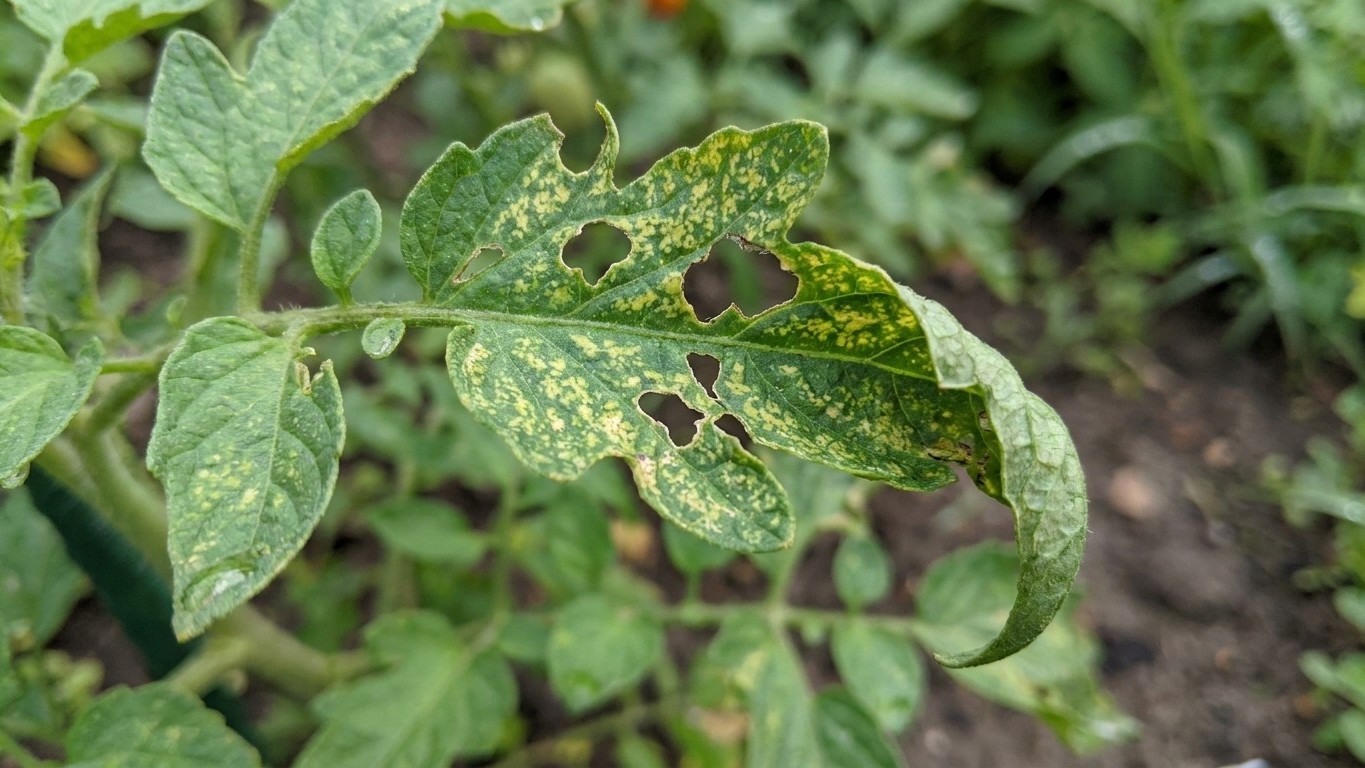

Nine insects and mollusks show up on potato in this region before the season’s done: Colorado potato beetle arrives first and does the most visible damage, followed by aphids, wireworms, cutworms, flea beetles, spider mites, grasshoppers, tomato hornworm, and slugs. Each one has a different entry point in the growing season, tied to how far the crop is past the last frost.
Which pests attack potato in British Columbia

University of Idaho Extension and WSU Extension document twenty species across garden and field crops in this region, but potato is only a host for some of them. The rest belong to other plants entirely, and naming them here would just muddy the diagnosis for a gardener staring at a chewed leaf.
The species that actually feed on potato are Colorado potato beetle, aphids, wireworms, cutworms (and the related cutworms-and-armyworms group), flea beetles, spider mites, grasshoppers, tomato hornworm, and slugs. Colorado potato beetle is the one worth checking for first, because it’s the species built specifically around nightshade foliage and it can strip a planting faster than anything else on this list. Tomato hornworm lands on potato for the same reason: it’s a Solanaceae feeder, and potato, tomato, pepper, and eggplant all belong to that family.
Everything else in the documented list feeds elsewhere. Cabbage maggot, imported cabbageworm, and imported cabbageworm-and-loopers stay on brassicas. Carrot rust fly needs umbellifers like carrot and parsnip. Onion maggot and onion maggot-and-onion-thrips work exclusively on the onion family. Pea leaf weevil is a legume specialist. Squash bug and western spotted cucumber beetle are cucurbit feeders, tied to squash and cucumber vines rather than potato foliage. Corn earworm and earwigs center on corn ears. Brown marmorated stink bug feeds mainly on fruiting crops and isn’t documented here as a potato pest.
That leaves a shorter, more useful list than the full twenty. It’s also a smaller set of things to actually watch for, which matters when a growing season is short and the plants only have so many weeks to bulk up tubers before frost ends things.
When each one shows up, and what it does first
Timing here has to be anchored to the season, not to a calendar month, because the frost date shifts across the province. Environment and Climate Change Canada’s climate normals for the VANCOUVER INT’L A station put the average last spring frost at March 18. That’s a mean, not a guarantee: in half the years on record, frost came later than that date, so treat it as the middle of a window rather than a safe planting cue. Upland and northern districts run weeks behind this coastal reference point, so a grower in the Cariboo or the Peace region is working from a different clock entirely.
Flea beetles are usually the first sign of trouble, showing up on young foliage soon after emergence and leaving small, rounded shot-holes across the leaf surface. Cutworms follow close behind, working at soil level on newly emerged seedlings and sometimes cutting a stem clean through overnight, so the first clue is often a healthy-looking plant that’s simply gone by morning.
Colorado potato beetle adults appear as plants reach several inches of growth, laying clusters of orange-yellow eggs on the undersides of leaves; the larvae that hatch from those clusters do the real defoliation. Aphids build up gradually through the vegetative stage, clustering on new growth and the undersides of leaves, and their presence is often noticed through sticky honeydew or curling leaves before the insects themselves are spotted.
Wireworms work below ground the entire time, tunneling into tubers rather than foliage, so the first evidence usually isn’t visible until harvest. Spider mites and grasshoppers tend to show up later in the season, as foliage matures and conditions turn warmer and drier, with mites causing a fine stippling on leaves and grasshoppers taking ragged bites from leaf edges. Slugs are most active in cool, damp stretches, often overlapping with the emergence period and again later if a wet spell follows harvest-adjacent weeks, leaving irregular holes in leaves and gouges in exposed tubers. Tomato hornworm shows up latest of the group, as a large caterpillar stripping whole leaflets once foliage is well developed.
Telling the damage apart from everything else
A chewed or discolored potato leaf has more possible causes than insects, and treating every symptom as pest damage leads to wasted effort. The detail that decides is where the damage sits on the plant and whether anything is actually moving when you look. A wilted leaf with no insects present on close inspection often points to water stress or a soil-borne disease, not a chewing pest.
| Symptom | Possible cause | What separates it |
|---|---|---|
| Small round holes across leaves | Flea beetles | Numerous tiny shot-holes, often on the youngest leaves first |
| Seedling severed at soil line | Cutworms | Check just below the surface near the stem for a curled larva |
| Defoliation with visible larvae or orange egg clusters | Colorado potato beetle | Egg masses and striped larvae are visible on leaf undersides |
| Yellowing, curling leaves, sticky residue | Aphids | Clusters of small soft-bodied insects on new growth or leaf undersides |
| Tunnels or holes inside harvested tubers | Wireworms | Damage is internal; nothing visible aboveground beforehand |
| Fine speckling, leaves turning bronze or dusty-looking | Spider mites | Use a hand lens; mites are barely visible to the naked eye |
| Irregular holes in leaves and slime trails | Slugs | Most active at night or after rain; trails are the giveaway |
| Uniform yellowing across whole plants, no chewing visible | Nutrient deficiency or drought stress | No insects present; damage doesn’t follow a chewing pattern |
That last row is the one growers miss most often. Uneven watering, a potassium shortage, or simple heat stress can all mimic early insect feeding, especially on the lower leaves of a plant. If nothing is moving on the plant and the damage is spread evenly rather than concentrated at leaf edges or margins, the cause is more likely environmental than an insect. A local extension office is the right place to confirm anything ambiguous rather than guessing from a photo.
What actually works here, and what is a waste of time
On a growing season built around a mid-March frost mean, timing matters more than any single treatment. A row cover set out at planting, before beetles or flea beetles have found the row, keeps far more damage out than anything applied after the fact. Once flea beetles or Colorado potato beetle adults have already located a planting, a physical barrier put on afterward does very little.
Handpicking beetle egg masses and larvae off leaves works well on a small planting, precisely because the season is short enough that a grower can catch the first generation before it multiplies. Crop rotation matters for wireworms and Colorado potato beetle both, since both overwinter in or near the soil where potatoes grew the previous season; moving the planting site breaks that cycle more reliably than any in-season response.
Certified seed potato is not a minor detail: uncertified seed carries virus, and that alone can undo everything else done right in a season. Starting with certified seed removes a source of stress that makes plants more attractive to aphids and more vulnerable to secondary damage overall.
What doesn’t help is guessing at a product without confirming it’s registered for use on potato in this province, or applying anything after damage is already extensive, since by then the insect responsible has often moved on or finished feeding. This site doesn’t recommend specific products or active ingredients, because registration and rates vary and only a local extension service can confirm what’s currently approved. Watering on a consistent schedule also matters more than most growers assume, since plants under drought stress draw spider mites and aphids in higher numbers.
Where to check this for your own county
The pest documentation behind this page comes from University of Idaho Extension and WSU Extension, both of which cover counties across the border in Washington and Idaho. Their county offices publish updated seasonal alerts, and growers near the southern part of British Columbia, especially in the Okanagan and Fraser Valley, are working in a climate close enough to those border counties that the same pest pressures and timing generally apply.
A province-wide list never describes one garden. Pest pressure shifts with elevation, rainfall, and how close a property sits to other host plants, so what’s documented at a state or provincial level is a starting point, not a diagnosis. A garden in a low, damp valley will see slugs and cutworms earlier and more often than one on a dry bench above it.
For anything specific to a property, the right next step is contacting the nearest extension office, whether that’s a county office across the border in Washington or Idaho, or a provincial agriculture office locally, and asking what’s currently being reported in the immediate area. Bring a sample or a clear photo if possible; a local agent can usually rule out disease or nutrient issues faster than a written guide can.
Common questions
Does British Columbia have its own extension service for potato pests?
The documented pest data referenced here comes from University of Idaho Extension and WSU Extension, both covering counties bordering British Columbia. Growers should also check with their local provincial agriculture office for region-specific confirmation.
Is the March 18 frost date safe to plant by?
No. It’s a mean date from Environment and Climate Change Canada’s climate normals for the VANCOUVER INT’L A station, meaning frost arrives later than that in roughly half of all years. Treat it as the middle of a window, not a guarantee.
Which pest does the most damage to potato in this region?
Colorado potato beetle is generally the most destructive, since it’s a nightshade specialist that can defoliate plants quickly once larvae hatch from egg clusters on leaf undersides.
Can uncertified seed potato cause pest problems?
Uncertified seed carries virus risk rather than insect risk directly, but virus-stressed plants are more vulnerable to secondary insect damage, which is why certified seed is worth starting with every season.