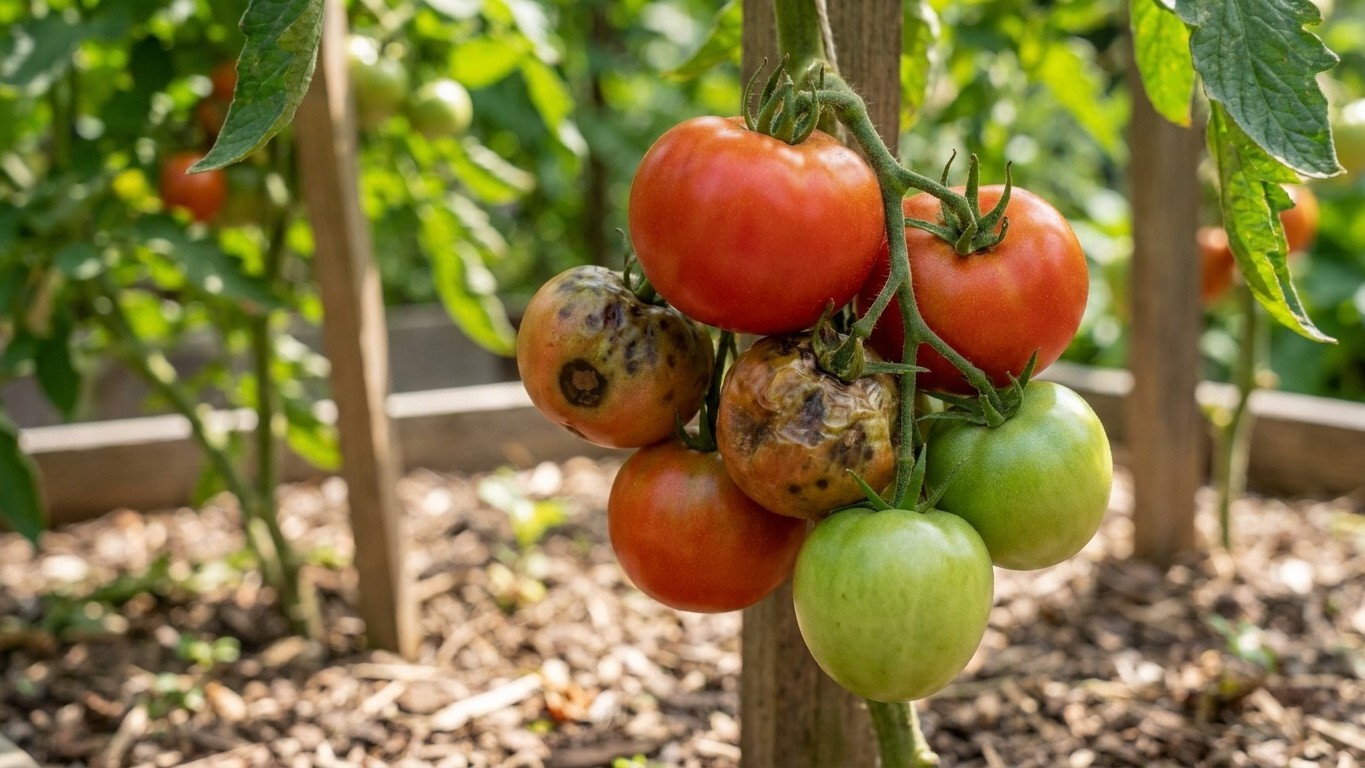

The short answer: pick British Columbia tomatoes before the first fall frost hits your specific location, not on a calendar date. On the coast near Vancouver, that average lands around November 10, but the BC interior and northern valleys run weeks earlier, and any single autumn can swing later or sooner than that average by a lot.
When to Pick Tomatoes in British Columbia
The number that matters here isn’t a date on a calendar. It’s the gap between your local growing conditions and the moment cold air actually settles in for good. At the Vancouver Int’l A station, Environment and Climate Change Canada’s 1981-2010 climate normals put the average first fall frost at November 10. That’s a mean, not a guarantee. In roughly half of all years, frost arrives after that date. In the other half, it comes earlier. Treat November 10 as the midpoint of a window, not a safe deadline to circle in red.
British Columbia isn’t one climate zone stacked into a single province-shaped box. The Lower Mainland and southern Vancouver Island sit in a mild, marine-influenced pocket. Natural Resources Canada rates Vancouver at 9a on the Canadian plant hardiness scale, a rating built from seven weather variables, not the single-variable system used south of the border. That 9a number describes Vancouver specifically, not the Okanagan, not the Peace River region, not the Kootenays. Move inland or north and the growing season compresses fast, sometimes by a month or more, which means your own first frost could show up well before the coastal average.
Reading the plant, not the calendar
Before frost ever enters the picture, tomatoes send their own signals. A fruit that’s begun to “break” color, showing the first blush of pink, orange, or red at the blossom end, will keep ripening once picked. Full-size green fruit with no color change yet is a tougher call: some will ripen off the vine, some won’t, and there’s no way to sort them by eye alone with total accuracy.
The practical approach for BC growers is to watch two things at once: the fruit’s own ripening signs, and the weather forecast for your specific district, not the provincial average. Environment and Climate Change Canada issues frost advisories at a local level, and those short-range forecasts are far more useful in late September and October than any long-term normal. If a frost warning shows up for your area, that’s the trigger to strip the vines, regardless of what a station 50 or 200 miles away is averaging. For general growing-season guidance specific to BC farms and gardens, the provincial agriculture ministry publishes resources at its agriculture and seafood site.
One more wrinkle worth knowing: a light frost doesn’t always kill a tomato plant outright, but it does damage exposed fruit and foliage enough that further ripening on the vine slows or stops. So the real decision point often comes a few days before the frost itself, once nighttime lows start dropping into the high 30s Fahrenheit and a cold snap is forecast. Waiting for the frost to actually happen usually means losing fruit you could have saved.
What to do with the green ones
Once frost is forecast, the harvest turns into triage. Not every green tomato deserves the same treatment, and sorting them correctly is what separates a good final batch from a bin of mush three weeks later.
Start by handling each fruit and looking for the difference between mature green and immature green. Mature green tomatoes have reached full size for their variety, the skin has a slight waxy sheen, and the shoulders near the stem have started to lighten from dark green to a paler, almost whitish green. These are the ones worth saving for indoor ripening. Immature green fruit is smaller, the skin stays glossy and dark, and it feels dense and hard all the way through. Those rarely ripen well off the vine. They’re better used green, in relishes or fried, than saved for a windowsill.
Work through the plant methodically rather than grabbing everything at once. Clip fruit with a bit of stem still attached when possible; a torn stem scar heals slower and gives mold an easier entry point. Discard anything with cracks, soft spots, or insect damage on sight. A single rotting tomato in a storage box can take out several neighbors within days, so the sorting step isn’t optional if you want more than a fraction of the harvest to actually ripen.
Size matters more than most gardeners assume. Smaller mature green tomatoes tend to ripen faster than large ones because there’s simply less flesh for ethylene gas (the plant hormone that drives ripening) to work through. If you’re storing a mixed batch, don’t expect them all to turn color on the same schedule. Cherry and grape types will usually be done well before big slicing varieties from the same picking.
Whole plants can also be pulled and hung upside down in a garage, shed, or unheated porch if frost is imminent and you’re short on time to hand-pick everything. The fruit continues drawing some reserves from the vine for a few days this way, though it’s less reliable than picking individual fruit at the right stage. This works best as a last-resort move on the night before a hard freeze, not as a routine harvest method.
Ripening indoors, and how long they keep
Indoor ripening comes down to three things: temperature, airflow, and patience. Get those right and a green tomato picked in October can be on a plate by Thanksgiving.
The classic method is a cardboard box or paper bag with the tomatoes arranged in a single layer, not stacked, so each fruit gets some air around it. A few punched holes help, though it’s not strictly necessary. Store the box somewhere between about 65 and 70 degrees Fahrenheit, out of direct sun. Warmer than that speeds ripening but also speeds rot; cooler than the mid-50s slows ripening to a crawl and can leave fruit with poor flavor and mealy texture once it does color up. A spare room, a closet, or a section of an unheated (but not freezing) porch usually works better than a windowsill, where direct sun and heat swings do more harm than good.
Check the box every two to three days and pull out any fruit that’s turned, along with anything showing early signs of rot. That second part matters more than people expect: one soft or moldy tomato releases spores and moisture that spread to its neighbors fast, and a batch checked only once a week can lose a third of its contents to rot before anyone notices.
How long storage actually buys you
Mature green tomatoes stored properly can hold and ripen gradually over several weeks, with individual fruit turning at different times depending on size and how far along they were at picking. Some gardeners get slow, staggered ripening stretching well into the winter months this way, a few tomatoes at a time rather than a single glut. It’s not a substitute for a root cellar’s precision, but it’s a reasonable way to spread out a big end-of-season haul instead of losing it all to one cold night.
Adding a ripe banana or apple to the box speeds things along, since both fruits release extra ethylene gas as they ripen themselves. This is a genuine effect, not folk wisdom, and it’s the same gas tomatoes produce on their own, just in a higher concentration for a while. Use it if you want a faster turnaround on a portion of the batch, and leave the rest undisturbed if you’d rather stretch the harvest out over more weeks.
What goes wrong here
Rot is the single biggest loss driver in indoor tomato ripening, and it almost always traces back to two habits: stacking fruit too deep in a container, and skipping the regular check-in. Tomatoes piled three or four deep in a box trap moisture against the skin, and that moisture is exactly what mold needs to get started. A single layer, checked often, beats a deep pile checked rarely almost every time.
Picking too late is the second common mistake, and it’s the one BC’s frost timing makes especially easy to fall into. Because November 10 is only an average at the Vancouver station, and because much of the interior and north sees frost far earlier, growers who wait for a calendar cue instead of a local forecast sometimes lose an entire late crop overnight. A single hard frost can damage fruit that looked perfectly fine the evening before, turning what would have been a good haul of mature green tomatoes into a soft, water-soaked loss by morning.
Storing fruit somewhere too cold causes a quieter kind of failure. Basements, unheated garages, and cold porches in the 40s Fahrenheit will hold tomatoes for a while without rotting them, but the ripening process slows dramatically and the eventual flavor tends to be flat and the texture mealy, nothing like a tomato that ripened at a more moderate indoor temperature. It’s a common trade-off gardeners don’t realize they’re making until they cut into the first ripe one.
Finally, sorting mistakes cost people fruit they didn’t need to lose. Immature green tomatoes tossed into the same box as mature green ones often just sit there, never coloring up, slowly softening from age rather than ripening properly. Separating the two at picking time, even roughly, saves the effort of babysitting fruit that was never going to turn.
Common questions
Does one light frost kill an entire tomato plant in British Columbia?
Not always immediately. A brief light frost often damages leaves and exposed fruit without killing the whole plant outright, but it does stop further ripening on the vine and makes a hard freeze soon after much more likely to finish the plant off.
Should the whole plant be pulled at once before frost?
Pulling the entire plant and hanging it upside down in a sheltered spot is a reasonable emergency move when frost is forecast overnight and there’s no time to hand-sort fruit. It’s less reliable than picking individual mature green tomatoes, but it beats losing everything to the cold.
Why does the fall frost date vary so much across British Columbia?
Because the province spans coastal, interior, mountain, and northern climates that behave very differently. The November 10 average cited here comes from the Vancouver Int’l A station only; interior valleys and northern districts typically see their first frost weeks earlier, so local forecasts matter more than any single provincial figure.
Can green tomatoes ripen without any special box or bag?
Yes, though it’s slower and messier to track. Fruit left loose on a countertop or shelf at room temperature will still ripen gradually via its own ethylene output, but without the contained airflow of a box, checking for early rot becomes even more important since problems are easier to miss.