
Coastal British Columbia gives winter squash a long, mild window, stretching from a mid-March average last frost to a fall frost that typically holds off until deep into November. That’s plenty of time for full-season types to mature and cure on the vine. What decides success here isn’t frost risk so much as the region’s cool, dry summer, and how a gardener manages heat and water for a crop that actually prefers more of both than the coast tends to offer.
When the soil is warm enough in British Columbia

At Vancouver Int’l A, the reference station Environment and Climate Change Canada uses for the region, the average last spring frost falls on March 18, based on the 1981-2010 Canadian Climate Normals. That date is worth understanding correctly: it’s a mean, not a safe cutoff. In roughly half the years on record, frost arrives after March 18. Treat it as the midpoint of a window, not a green light for planting day.
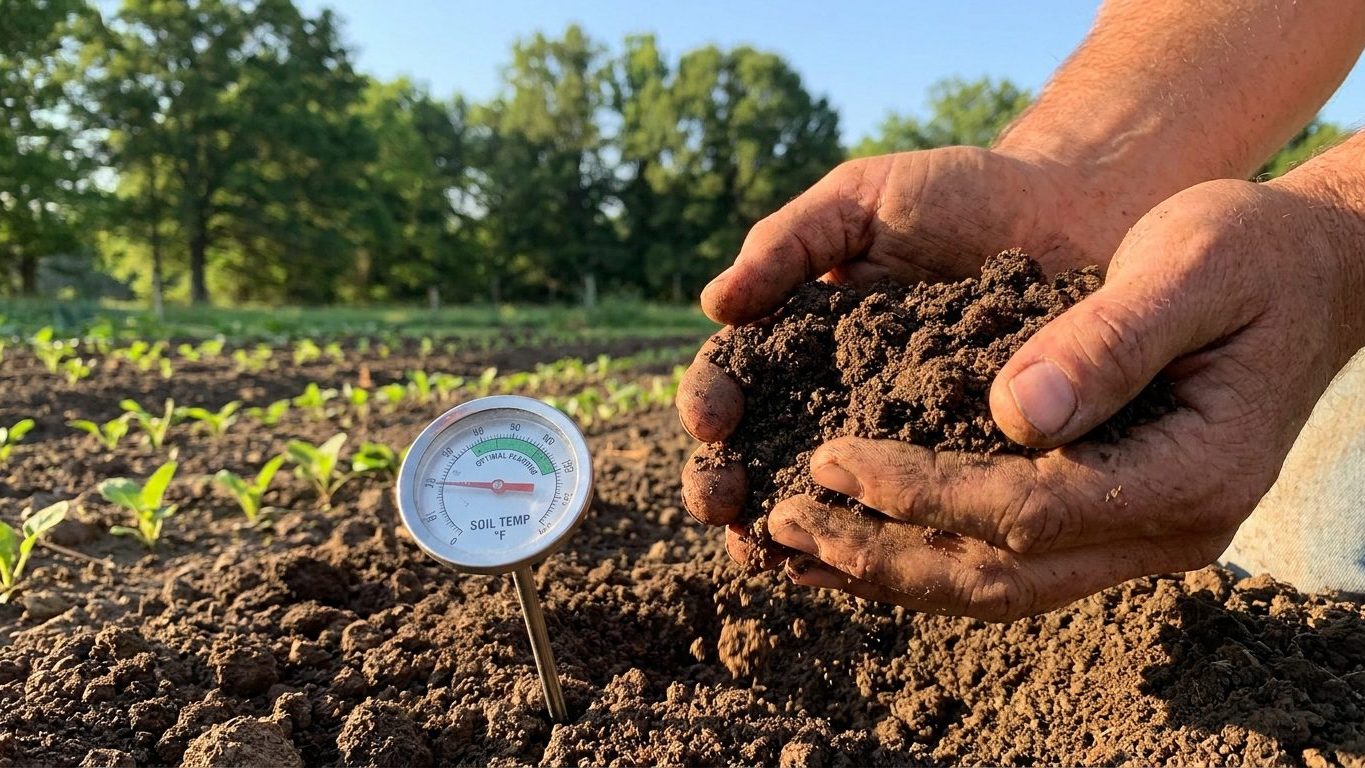
But frost date is really just a proxy for something else gardeners actually need: warm soil. Winter squash seed germinates poorly, and transplants sulk, when soil temperature sits in the 50s. The ground needs a stretch of settled warmth after the frost risk has genuinely passed, which on the coast usually means waiting several weeks beyond that March average before direct-sowing outdoors, and longer still in low-lying or shaded gardens where cold air pools overnight.
This is also where British Columbia’s hardiness rating adds a useful, if narrow, piece of context. Natural Resources Canada places the reference city at zone 9a under the Canadian plant hardiness system, using 1991-2020 normals and seven climate variables rather than the single winter-minimum figure the USDA system relies on. That number describes winter survival for perennial plants, not spring planting timing for an annual vegetable, and it should never be read across to a USDA zone number found elsewhere. NRCan itself notes there’s no simple conversion between the two systems. For winter squash timing, the frost dates and soil warmth matter far more than the hardiness zone does.
What this means for sowing indoors versus outdoors
Given how mild but slow-to-warm coastal soil tends to be, many gardeners in this region start winter squash indoors three to four weeks before their expected outdoor planting date rather than direct-sowing, to get ahead of a soil that lags behind the calendar. That’s a judgment call based on the microclimate of an individual garden, not a fixed rule. A raised bed, black mulch, or a south-facing slope can all shift the real planting window earlier than the regional average would suggest. The BC Ministry of Agriculture and Food publishes region-specific planting guidance that accounts for these local variations better than a single provincial average ever could.
How long the season lasts here
Subtracting the two average dates from Environment and Climate Change Canada, an average last spring frost of March 18 and an average first fall frost of November 10 at Vancouver Int’l A, gives a frost-free window of roughly 237 days. That’s an unusually generous number for winter squash, which is a crop that needs every bit of the growing season it can get to fill out fruit and thicken skin before storage.
A window that long changes the calculus in a specific way. It means the first sowing isn’t the only shot at a crop. Gardeners with 200-plus frost-free days have room to consider a second, later-maturing sowing behind an early one, or to stagger transplant dates across a few weeks to spread out harvest and reduce the risk of a single bad stretch of weather wiping out the whole planting. In territories with a short window, that second sowing simply isn’t realistic; here, it’s a genuine option worth weighing against garden space and the extra care a later crop demands.
Length like this also changes whether transplanting versus direct-sowing is worth the trouble. Where a season is tight, growers often transplant regardless of root disturbance because every week saved matters. With close to eight months of frost-free growing on the coast, there’s more slack to direct-sow instead and skip the transplant shock altogether, particularly for types that resent having their roots handled. The trade-off comes down to how much a gardener values a slightly earlier start against the risk of disturbing a taproot that doesn’t recover quickly.
For a fuller breakdown of how to plan a second planting once frost dates are known, the site’s succession sowing guide walks through spacing sowings for continuous harvest rather than a single all-at-once crop, which is exactly the kind of planning a long coastal window makes possible.
Heat and water in British Columbia

Here’s the number that reshapes everything else on this page: 0.0 days per year above 90°F at the reference station, per the 1981-2010 Canadian Climate Normals. Winter squash is a warm-season crop that evolved to push growth hard under summer heat, and coastal British Columbia essentially never delivers that heat. This isn’t a hot, dry growing region. It’s a cool, mild one, and that distinction should steer every decision made after planting.
Summer rainfall backs up the same picture. Vancouver Int’l A averages about 5.0 inches of rain across June, July and August combined, with July the driest month at just 1.4 inches (June runs 2.12 inches, August 1.45 inches). That’s a modest but real amount of summer moisture, not a drought-season territory needing constant irrigation to carry fruit through filling. The bigger risk on the coast isn’t the vine drying out; it’s the vine staying too damp, too cool, and too shaded for too long.
Cool, moist air sitting in a squash canopy is exactly the condition that breeds powdery mildew and other fungal problems, and it’s also what slows fruit ripening in a season that, however long in frost-free days, rarely delivers the intense heat squash uses to speed up sugar development and skin hardening. A gardener here is managing airflow and disease pressure more than they’re managing drought stress. Spacing plants generously, siting them where afternoon sun and breeze reach the leaves, and avoiding overhead watering late in the day all matter more on this coast than any irrigation schedule would.
Where rain does fall short, particularly during a dry July, a rain gauge on the actual plot tells a gardener more than the regional average ever will. Soil type changes how far 1.4 inches of monthly rain actually goes: sandy soil common in parts of the Fraser Valley drains that moisture away within a day, while heavier clay holds it for a week or more, meaning two gardens ten miles apart can have genuinely different watering needs despite sharing the same regional rainfall figure.
Which winter squash suit British Columbia
Given a long frost-free window, essentially no extreme heat, and a cool, moist summer with real disease pressure, the coast favors squash types chosen for reliability under mild conditions rather than types bred to race a short season or shrug off intense heat. This is a territory where disease resistance and steady, moderate-paced maturation matter more than raw speed.
Butternut-type squash, with its smooth skin and long neck, tends to tolerate a cool, damp summer reasonably well and benefits from the region’s generous frost-free window to fully harden its skin before storage. Acorn-type squash, generally quicker to mature, suits gardeners who want to hedge against a wetter-than-average summer stretching ripening later than planned. Hubbard-type squash, with its size and long maturation needs, can work here specifically because the season is long enough to support it, something that wouldn’t be true in a shorter-season territory. Delicata-type and spaghetti-type squash, both on the earlier-maturing side, offer a buffer if disease pressure or a cool stretch delays the main crop.
| Type | Season length needed | Fits coastal cool, damp summer? |
|---|---|---|
| Butternut-type | Long | Yes, with airflow and spacing |
| Acorn-type | Moderate | Yes, good hedge against delay |
| Hubbard-type | Long | Yes, window allows full maturation |
| Delicata-type | Short to moderate | Yes, useful backup crop |
| Spaghetti-type | Moderate | Yes, tolerates mild summers |
None of this replaces a specific variety recommendation, and this page won’t offer one. Naming a particular cultivar without knowing which ones have actually been trialled for disease resistance and reliability under Fraser Valley or Vancouver Island conditions would be a guess dressed up as advice, and it’s the kind of error a gardener notices the moment a plant underperforms. The BC Ministry of Agriculture and Food maintains the region-specific trial data and extension guidance that actually answers the variety question, and that’s the resource worth checking before buying seed.