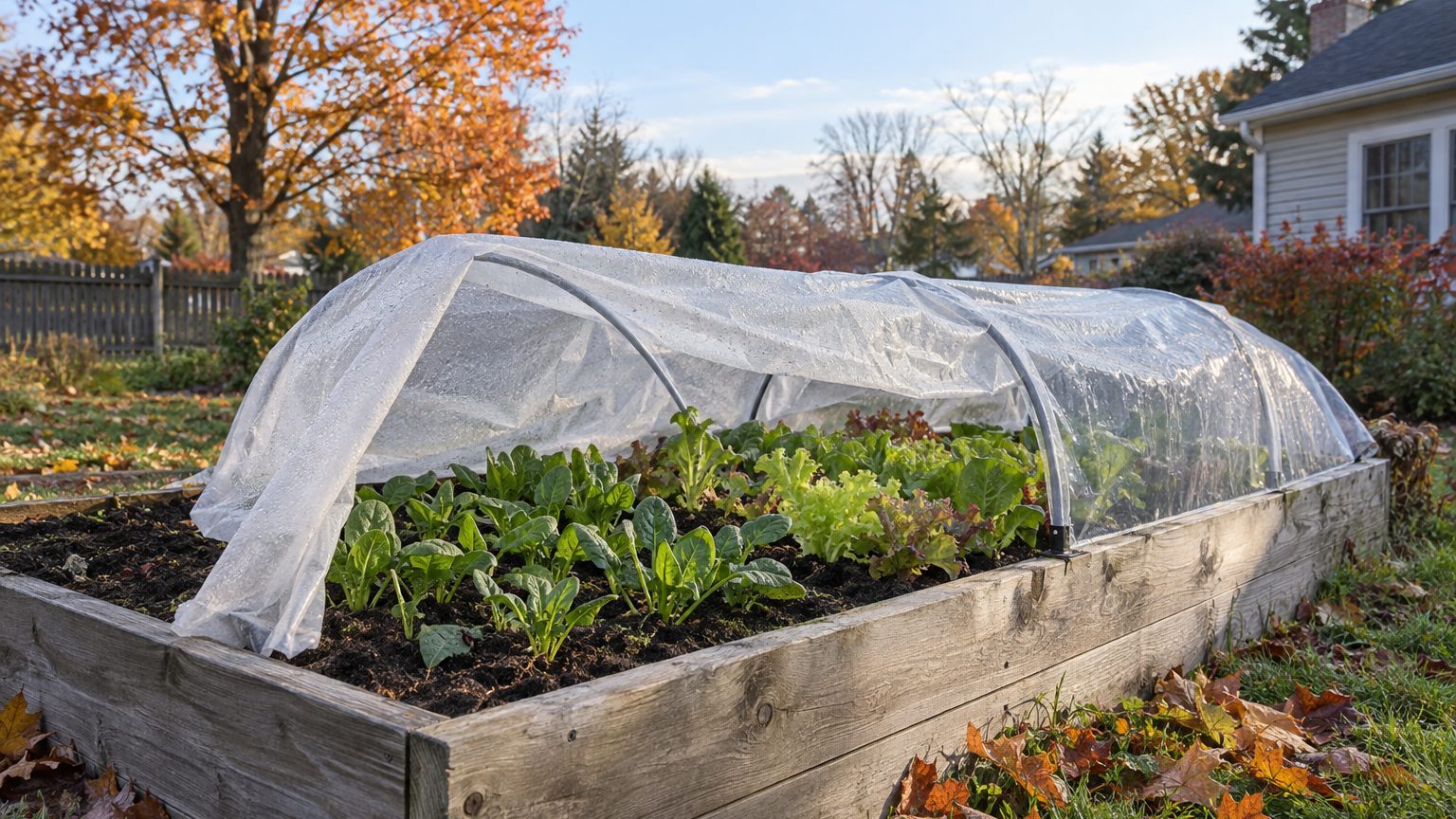

Season extension in California depends on where you garden. At the Los Angeles reference station, NOAA records show no freeze in an average year, so a cover there manages cool soil, wind and summer sun rather than frost. The Central Valley, the northern interior and the Sierra do freeze, and gardeners there use covers much as the rest of the country does. Work out which of those places you live in before you buy a yard of fabric.
When the soil is warm enough in California
The date most gardeners ask for does not exist along the coast. At the Los Angeles reference station (NOAA NCEI 1991-2020 Climate Normals, station USW00023174), no freeze occurs in an average year. NOAA’s daily records show zero days at or below 32 F in 30 years, and the frost-free season is listed as 365 days. Coastal and southern California have no last spring frost to count from. The Central Valley, northern California and the Sierra do freeze, and their dates swing with elevation and with how easily cold air pools in low ground. Your county extension office has the local dates, and you should not borrow Los Angeles’s.
Where a frost date does exist, it is an average of past years, so a freeze after it can still happen. Gardeners in the Valley who plant on the average date and keep a spare sheet of fabric nearby rarely regret it.
Frost is a stand-in for what warm-season crops actually wait for, which is warm soil. Soil heats up after the freeze risk ends, and the lag can run weeks. On the coast the lag is real even with no frost at all, because spring brings cool marine air and fog that keep the ground cold. Tomatoes, peppers and squash set out into cold soil sit and do little. A soil thermometer pushed into the bed in mid-morning, with readings that hold, tells you more than any calendar. The seed packet gives each crop’s minimum soil temperature.
How does a cover warm the soil?
Soil soaks up sun all day and gives that heat back at night. A cover over the bed traps part of what the soil radiates and holds still air around the plants, so the air next to them stays warmer than the open garden. A second layer, such as fabric on hoops inside a larger tunnel, holds a little more. The gain is real but it varies with the material, the night, the wind and whether the ground was warm to begin with. A cover shifts the limit and does not remove it. A clear, windless night in the Central Valley can still beat a light fabric and take a whole bed.
Everything here is passive. Do not put heaters, lamps or candles under a cover. The fire and carbon monoxide risks are serious, and the sun and the soil already supply the heat you need.
Ventilation is part of keeping the crop alive. A closed cold frame in spring sun can cook its contents, and California sun is strong enough to do that even on a cool day. Prop the lid open each morning, and open it wider as the day warms. The Extending the Season: What a Cover Buys, and What It Cannot overview covers how the main cover types behave.
How long the season lasts here
The Los Angeles reference station has 365 frost-free days, because no freeze falls at either the spring or the fall end in an average year. That sets no cold limit on sowing along the coast. It does not describe the whole state: gardeners in the Central Valley, the northern interior and the mountains have a real window between the last freeze of spring and the first of fall, and it shrinks with elevation.
A year-round window allows several sowings of the same crop. Cool-season vegetables such as lettuce, spinach, radishes and peas can go in from fall through early spring and slow down when the heat arrives. Warm-season crops go in once the soil has warmed, and a second planting in late summer can ripen into fall. The pause comes in midsummer, when heat, not cold, stops cool crops. The succession sowing guide in this series lays out how far apart to space those plantings.
Covers hold the window open at the hot end as well. Shade cloth over a bed cools the leaves and the soil, which keeps lettuce and other greens usable into hot weather. It is the same idea as a frost cover, pointed the other way.
The length of the window also decides whether transplanting pays off. Where the window is long, direct sowing wins most of the time. Seeds sown straight into warm ground skip the root disturbance that sets a transplant back, and a failed sowing can simply be redone. Where the window is short, as in the high Sierra and the colder mountain valleys, the first sowing may be the only one. Starting transplants indoors then buys weeks that the calendar will not give back, and the roots are worth handling gently to keep that head start.
Gardeners near the edge of any of these zones should ask their county extension office for the freeze dates at their own address. Cold air drains downhill, so a lot at the bottom of a slope can freeze after the hilltop has been spared.
Heat and water in California
How hot and dry do California summers get for vegetables?
The answer changes sharply with distance from the ocean. The Los Angeles reference station sits under a marine layer, and hot afternoons there are the exception. Inland valleys and the desert run much hotter, with long stretches of hot weather, and a count of such days at one station does not describe the whole state. Rain is the other half of the picture. Summers across most of California are dry, so every drop a crop gets comes from irrigation, and local water restrictions can limit when and how often you can run it. Drip lines under mulch, watered at the root, use less than overhead sprinklers and keep leaves dry.
Where summers stay cool, as in the fog belt along much of the coast, the trouble is not heat. Cool, damp mornings bring disease on plants, slow ripening on warm-season fruit, and more leaf disease where air barely moves. A cover that traps humidity makes all of that worse, so open the sides and thin the foliage rather than closing things up.
What do latitude and the coldest month decide?
Heat is not the governing fact for season extension here. Light and cold are, and they work together. Latitude sets the date when winter daylight drops below the level a crop needs to keep growing. After that date a cover holds a crop alive and does not grow it. Day length also tells an onion when to stop making leaves and start making a bulb, so the same variety behaves differently at different latitudes.
The latitude of the Los Angeles reference station is 33.94 degrees north. That figure belongs to that city, and a large state spans several degrees, so a gardener in the far north or the far south should check their own latitude and expect the dates to shift.
The coldest month decides how much structure a bed needs. At the Los Angeles reference station the mean daily minimum of the coldest month is 49.1 F, so a light fabric is usually enough there, mostly to break wind and soften chilly nights. Where winters freeze, a light fabric stops being enough and a framed structure with a closed top, vented on sunny days, is what holds a bed through the cold. The USDA Plant Hardiness Zone Map 2023 spans zones 5a to 11a across California. That range is too wide to plan from, so use the reference city and your own county’s conditions.
Which season extension suit California
Choose by type and let local conditions decide. A short season favors the earliest-maturing types, because a crop that finishes before the first freeze needs less protection. A hot season favors types that tolerate heat, and the planting needs airflow and shade at the root: mulch, shade cloth in the afternoon and drip irrigation. A humid or foggy site makes disease resistance the first thing to look for on a seed label.
| Part of California | Main limit | Cover that fits | First thing to look for |
|---|---|---|---|
| Coast and southern lowlands (Los Angeles reference station) | Cool spring soil, fog, wind, summer sun | Light fabric, low tunnels, shade cloth in summer | Mildew resistance on the coast, heat tolerance inland |
| Central Valley and hot interior | Summer heat, winter freezes | Fabric or framed tunnels in winter, shade cloth in summer | Heat tolerance and steady root-zone moisture |
| Northern California and the Sierra | Short window, hard freezes, shorter winter days | Framed, vented structures | Earliest-maturing types |
No page can responsibly name the best cultivar for your garden. Varieties perform differently in a fog-belt backyard, a Valley bed and a mountain valley, and the only recommendation that means anything comes from trials run near you. University of California Agriculture and Natural Resources runs county offices and a Master Gardener program that can tell you what has actually done well locally and when to sow it.
Gardeners comparing notes with the humid Southeast can read Extending the Growing Season in Georgia and Extending the Growing Season in North Carolina, where damp summers make disease the first worry. The foggy California coast shares part of that problem. Whatever the type, keep every closed structure vented on sunny days and add no heat source to it.
Common questions
When is the last frost in California?
It depends on the region. At the Los Angeles reference station no freeze occurs in an average year, so there is no date to plan around. The Central Valley, northern California and the Sierra do freeze, and their last-frost dates depend on elevation and local cold-air pockets. Ask your county extension office for yours.
Do I need a cover if my area never freezes?
Often yes, for other reasons. Light fabric breaks wind, warms cool spring soil a little and keeps some pests off, and shade cloth protects cool-season crops from summer sun. A frost-free winter does not make covers useless. It changes what they are for.
Can I leave a cold frame closed on a sunny day?
No. A closed frame in spring sun can overheat its contents, and strong California sun makes that easy to do even on a cool day. Prop the lid open in the morning and open it wider as the day warms.
Which varieties should I grow?
Pick by type for your conditions, then check which varieties have done well in your county. University of California Agriculture and Natural Resources and its local Master Gardener volunteers keep that information for each region.