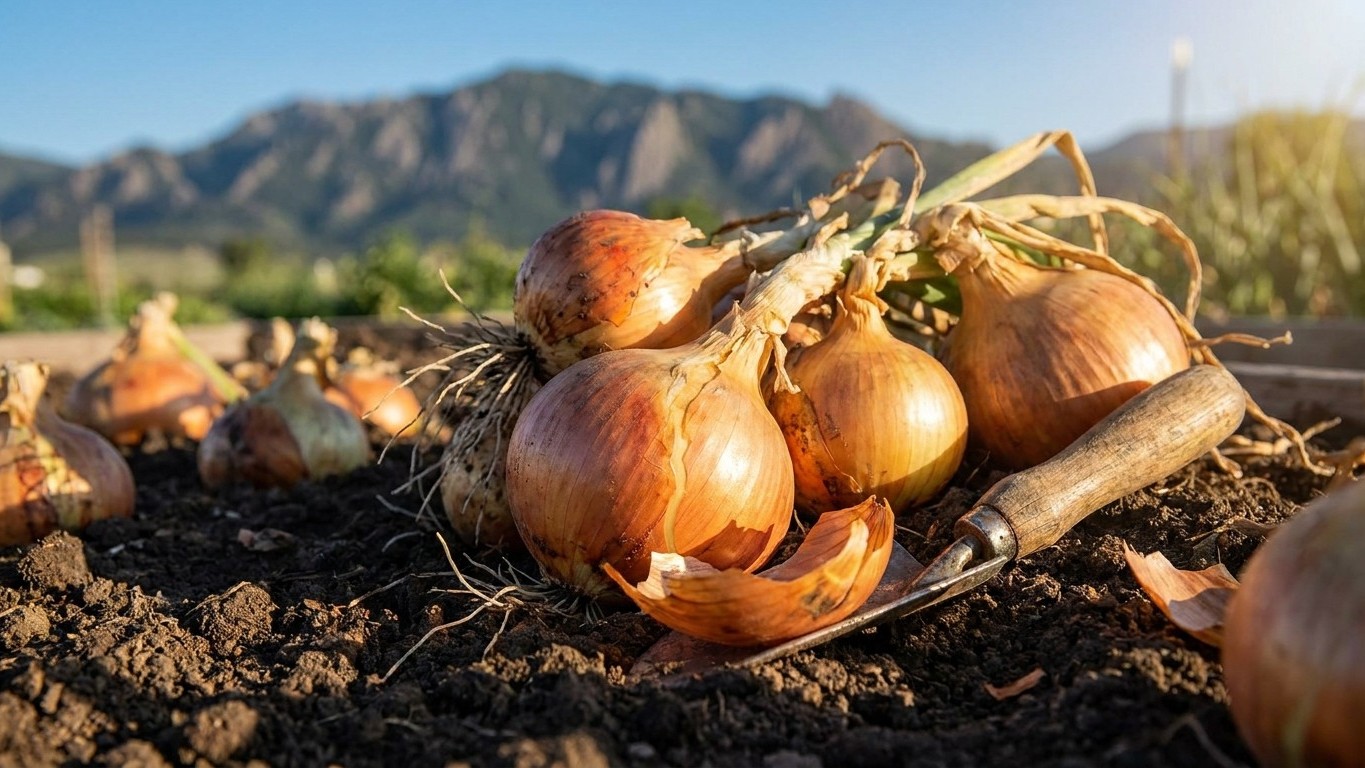

Lift onions in Delaware once most of the tops have flopped over and turned yellow. Cure them in a dry, shaded, breezy spot until the necks are tight and the skins rustle like paper. Only then do they go into storage, in cool, dry air. Pungent onions can last for months, while sweet ones will not, so the variety you grew sets the length of your harvest. Everything below follows from that.
How do you know when to lift onions in Delaware?
Bulbing starts when the day gets long enough, whatever the soil temperature is doing. Wilmington sits at 39.67 degrees north, and its longest day has 14 h 49 of daylight. Clemson Cooperative Extension puts the bulbing threshold for short-day onions at about 12 hours, so those types begin swelling early and finish small. Long-day varieties wait for 14 to 16 hours of daylight. Wilmington’s longest day falls inside that range, so long-day onions can bulb here, though toward the short end of it. Readers in the southern end of the state are at a slightly lower latitude, so check your own. The best onion varieties for Delaware are matched to this daylight, and the choice also decides how well the bulbs keep later.
What does an onion ready to lift look like?
Watch the tops, not the calendar. When the bulb has finished growing, the necks soften and the green leaves fall over on their own. Yellowing follows. Once most of the tops in the row are down, the crop is ready, and waiting a few more days for the stragglers does no harm. Stop watering when the tops begin to fall, because wet soil at this stage invites rot.
Pick a dry day. Loosen the soil with a garden fork a few inches from the row, then ease the bulbs out by hand. Pulling hard on the tops can snap the neck and leave an open wound. Delaware summers bring sudden thunderstorms, so glance at the forecast before you start, since a soaked bulb is slow to cure.
Sort as you pull. Bulbs with thick, green, stiff necks (often called bull necks), bulbs that sent up a flower stalk, and any with cuts or soft spots will not keep. Eat those first. If you see tunnels or scarring from insects, the list of what eats onion in Delaware, and when will help you work out the cause before next season.
How do you cure onions in Delaware’s humid summers?
Curing dries the outer skins and seals the neck, which is the bulb’s main entry point for rot organisms. Spread the onions in a single layer on screens, wire racks or slatted crates, or hang them in loose bunches by their tops. A covered porch, an open barn or a shaded carport all work. Direct sun can scald the bulbs, and rain will undo the work.
Air movement matters more than heat because Delaware’s late summers are humid. A box fan set on low across the rack keeps the air moving on still, muggy days. Leave the tops and roots on during curing.
The bulbs are cured when the neck is tight and dry with no give when you squeeze it, the outer skins are papery and crackle slightly, and the roots are wiry. Then trim the dried tops back to a short stub above the bulb, brush off loose soil, and rub away any dirt without peeling. A bulb that goes into storage with a damp neck brings rot to its neighbors.
Keeping them, and for how long
Clemson Cooperative Extension’s Home & Garden Information Center states the target plainly: “Ideal conditions are between 45 °F and 55 °F, and 50 to 60 percent humidity.” Those numbers describe dry, cool air. That is the opposite of what carrots, beets and potatoes want, and it is why one cellar cannot hold onions and root crops equally well. Put onions in the dry corner and the roots in the damp one, or give the onions a separate spot.
Any storage length you read about is a maximum under those ideal conditions, and a house rarely matches them. A pungent onion held in cool, dry, dark air can last well into winter, and some northern gardens eat theirs into March. Warmer or damper air shortens that, and so does a bulb cured poorly. Plan on eating the oldest first and expect the last bulbs to be the soft ones.
The variety you grew matters as much as the room. The University of Missouri Extension (G6355) says it directly: “As a rule, ‘sweet’ onions do not store as well as the more pungent types.” The reason is chemical. An onion’s bite comes from volatile sulfur compounds, and those same compounds help protect the bulb while it sits in storage. A sweet variety carries fewer of them. That makes it better raw and much worse in the pantry, and no curing method fixes it.
Day length lines up with this trade-off. Short-day types run sweeter and keep less, while long-day types keep longer. A Delaware gardener can grow either, so decide in spring how you want the crop to work. Eat the sweet bulbs in the first weeks after curing, and save the pungent ones for the cold months.
Cure first, always. Bulbs go into storage only once the necks are tight and the skins are papery, never straight from the ground. Store them in mesh bags, open crates or old nylon stockings, in a single layer or loose heaps, never sealed in plastic. Check the stash every few weeks and pull out anything soft or sprouting, because one rotting bulb can spoil the ones around it.
Where in the house that actually is
A refrigerator is too cold and too humid. Most home fridges run well under 45 °F, and the crisper drawer holds moisture on purpose. Whole cured onions sitting there get soft and may sprout, so the fridge is best kept for cut halves wrapped for a few days. A kitchen, living room or any heated space is too warm, since the bulbs will break dormancy and sprout long before winter ends.
A garage or shed swings with the weather. A garage can work in the cool shoulder seasons, but it is a poor choice from midwinter on if the readings keep jumping.
The best candidates are usually an interior closet on the cool side of the house, an unheated spare room or a basement corner away from the furnace and water heater. Basements are cool but, in a humid state like Delaware, often damp. Humidity near 50 to 60 percent is drier than many basements run in summer, so a dehumidifier or a spot near the stairs may be the difference between sound bulbs and soft ones.
Put a thermometer with a humidity reading in the spot for a week before you move the onions in, and read the low and high marks, not just a single glance. If the temperature stays in the Clemson range and the humidity holds steady, the spot will do. If it does not, try the next place. Bulbs stored in the wrong room go soft, which costs far more than the minutes it takes to test.
Common questions
Can I store sweet onions through the winter in Delaware?
Not reliably. Sweet onions carry fewer of the volatile sulfur compounds that protect a bulb in storage, so they give out sooner than pungent ones even when cured well. Eat them first, within the early weeks after curing, and keep the pungent storage varieties for later.
Is the refrigerator a good place for whole cured onions?
No. It is colder than the 45 °F to 55 °F range Clemson Extension recommends, and the humidity is higher than the 50 to 60 percent onions need. Whole bulbs left in a fridge tend to turn soft. Use it only for cut onions, wrapped and eaten within a few days.
What if it rains while my onions are curing?
Move them under cover as soon as clouds build, then let them dry again with a fan or good airflow. A short soaking is usually survivable if the tops are still on and the bulbs dry quickly. Bulbs that stay wet for days are likely to rot at the neck, so use those first instead of storing them.
Can I lift onions before the tops fall over?
You can, and the bulbs are edible, but they will be smaller and will not store. Early onions are best eaten fresh. For storage, wait until most of the tops are down and yellow, then cure until the necks are tight and the skins are papery.