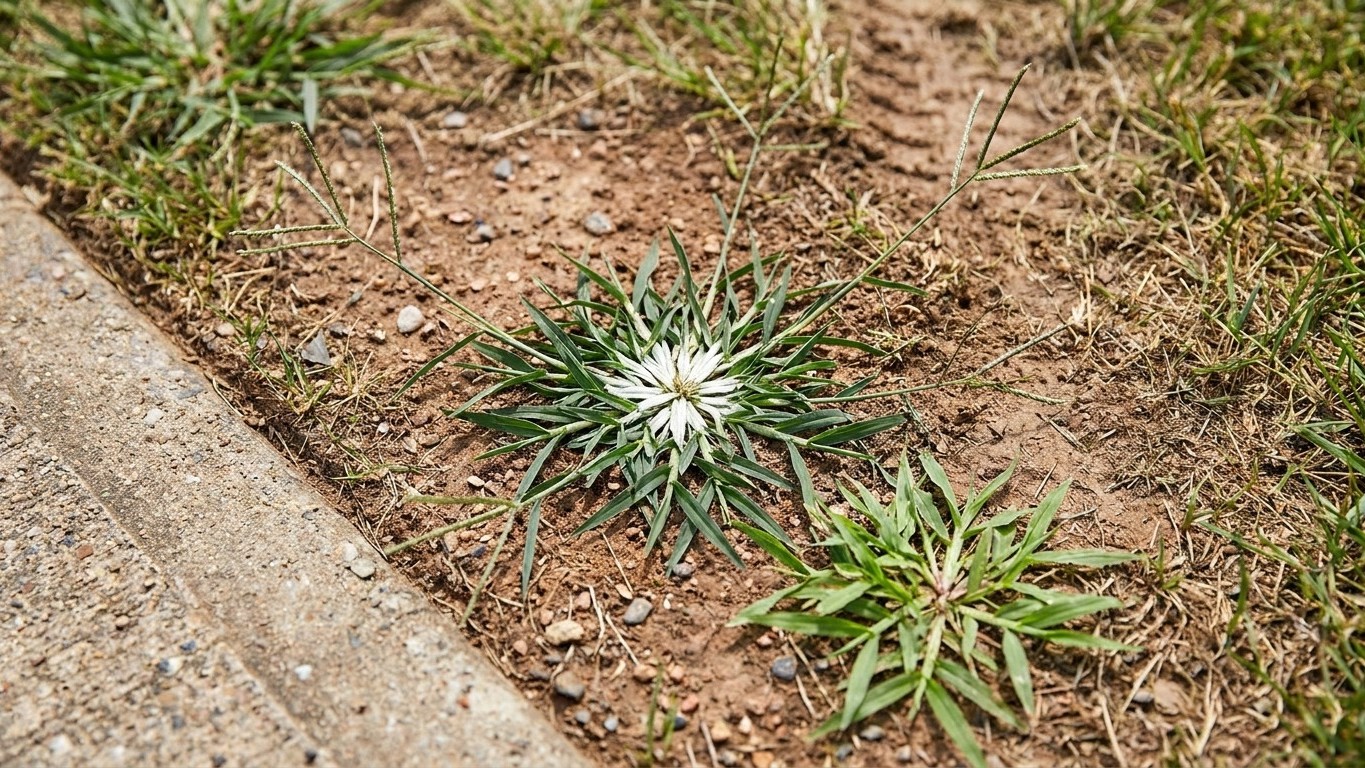

Overseed cool-season lawns in Colorado between mid-August and early September, and warm-season lawns like bermudagrass or zoysia in late spring once soil warms. The state sits in the turf transition zone, so neither grass family thrives all year, and the right window depends on which grass is already growing in your yard, and how far your elevation pushes your first frost.
The overseeding window in Colorado
The math behind that window starts with a single date: the first fall freeze. At station USW00003017, NOAA’s 1991-2020 climate normals put that date between September 30 and October 12, depending on the year. Cool-season turf needs roughly 45 days of growing weather to establish before a hard freeze locks it down for winter. Count backward from October 12 and you land on August 28. Count backward from the earlier end of that range, September 30, and you land on August 16. That’s the real window: sow too late and the seed germinates, puts out a thread-thin root, and dies over winter without ever becoming lawn.
This calculation only works for the station it’s built on. Denver sits at 5,280 feet on the flat plains east of the foothills. Mountain towns lose weeks off that growing season and can see a freeze in July some years. The Western Slope runs on a different clock again, with its own frost pattern tied to elevation and valley drainage. A single frost date never describes a whole state, and Colorado’s terrain makes that truer than most places.
Cool-season lawns versus warm-season lawns
Most Colorado lawns are cool-season grass: Tall Fescue, Kentucky Bluegrass, or Perennial Ryegrass. Those three overseed on the late-summer schedule above, because they germinate and grow hardest when air temperatures cool off from the peak of July and August.
Zoysiagrass and bermudagrass work on the opposite calendar. They’re warm-season grasses, and they overseed in late spring, once the ground has fully warmed and the risk of a late frost has passed. Neither family is a clean fit for Colorado’s climate, and that’s the defining trait of a transition zone. A cool-season lawn goes stressed and patchy under a hot, dry July. A warm-season lawn sits brown and dormant from October straight through April. Pick your season of grass knowing which flaw you’re willing to live with, rather than assuming one type wins outright.
The soil temperature that actually decides it
Calendar dates are a planning tool, not the actual trigger. Grass seed germinates on soil temperature, not air temperature, and the two run weeks apart, especially in fall when the soil is still holding summer’s heat while the air has already cooled.
Cool-season seed, the Tall Fescue, Kentucky Bluegrass, and Perennial Ryegrass most Colorado lawns are built from, germinates best with soil between 50 and 65 degrees Fahrenheit. Warm-season seed, meaning zoysiagrass or bermudagrass, needs soil in the 65 to 70 degree range. Those are two different lawns, two different seasons, and two different thermometer readings, so know which grass is already in your yard before you check the numbers.
A simple soil thermometer, pushed 2 to 4 inches into the ground, tells you more than any date on a bag of seed. Check it in the early morning for a few days running rather than relying on one reading, since soil temperature swings less than air temperature but still moves day to day. In a typical Colorado fall, soil crosses into that 50 to 65 degree cool-season window sometime after Labor Day on the plains, which is precisely why the mid-August sowing date matters: it lets germination start as the soil is cooling into range, rather than waiting until the window is already closing against the first frost.
Spring tells the opposite story. Soil that’s still in the 40s in April will not germinate cool-season seed reliably, no matter how warm the afternoons feel, and warm-season lawns need to wait even longer, into late spring, before soil clears 65 degrees. Guessing by feel, or by what the calendar says other states are doing, is the single most common reason overseeding fails before it starts.
How much Seed, and What It costs to guess
Seeding rates are published as a species constant, meaning they don’t shift by region, but they do shift by whether you’re building a lawn from bare dirt or filling in one that’s already there. Overseeding an existing lawn uses half the rate used for a brand-new lawn, because the seedlings are filling gaps in established turf, not competing against nothing but weeds.
| Grass | New lawn rate (per 1,000 sq ft) | Overseeding rate (per 1,000 sq ft) |
|---|---|---|
| Tall Fescue | 6 to 8 lb | 3 to 4 lb |
| Kentucky Bluegrass | 1 to 3 lb | 0.5 to 1.5 lb |
| Perennial Ryegrass | 4 to 10 lb | 2 to 5 lb |
| Zoysiagrass | 1 to 2 lb | 0.5 to 1 lb |
| Bermudagrass | 1 to 2 lb | 0.5 to 1 lb |
The instinct to buy extra “just in case” backfires. More seed doesn’t mean more insurance against a bad batch or a dry week; it means more seedlings competing for the same water and light, which thins the whole stand out rather than thickening it. A bag calculated for 2,000 square feet dumped onto 1,000 doesn’t give you a denser lawn, it gives you a crowded one that struggles through its first summer.
Guessing low carries its own cost. Skimp on seed and the bare patches that prompted the overseeding in the first place stay bare, or fill in with whatever weed seed is already waiting in the soil. Measuring the actual square footage of the lawn, not eyeballing it, is the cheapest step in the whole project and the one most often skipped.
The three weeks after you sow
Seed down is the easy part. The three weeks that follow decide whether it becomes lawn or compost.
Cool-season seed germinating in that 50 to 65 degree soil window typically needs the top half-inch of soil kept consistently damp, which in practice means light watering once or twice a day rather than one deep soak. Deep watering on bare seed just washes it into low spots. As germination starts, usually within one to three weeks depending on species and soil temperature, watering can shift to a less frequent, slightly deeper schedule that encourages roots to grow down rather than seedlings to sit in a soggy surface layer.
The mower stays parked until new grass has hit its mature mowing height and been over that height at least once, which for most cool-season lawns means letting new growth reach 3 to 3.5 inches before the first cut. Mowing too early rips seedlings out of loose soil that hasn’t anchored their roots yet.
The clock is the real risk here, not the technique. Working from the August 16 to August 28 sowing window against a September 30 to October 12 frost date leaves close to that full 45-day establishment period, but any slippage, a week’s delay buying seed, a dry stretch that pushes germination back, eats directly into the time the grass has to root before winter. Seed sown into September on the Denver-area timeline is racing a freeze it likely won’t beat.
Common questions
Can I overseed a Colorado lawn in spring instead of fall?
Cool-season grasses can be overseeded in spring, but fall is the stronger window because cooler air and less competition from weed germination favor the new grass. Spring seeding also has less runway before summer heat and drought stress hit young seedlings that haven’t developed deep roots yet.
How do I know if my lawn is cool-season or warm-season grass?
Look at when it’s green. A lawn that’s lush in spring and fall but slows or browns in the hottest part of summer is almost certainly Tall Fescue, Kentucky Bluegrass, or Perennial Ryegrass. A lawn that’s brown from fall through spring and only greens up once the ground is warm is zoysiagrass or bermudagrass.
Does overseeding rate really need to be cut in half from a new-lawn rate?
Yes. Existing turf is already occupying most of the ground, so the seed only needs to fill thin spots and gaps, not cover open soil from scratch. Applying full new-lawn rates onto existing grass creates overcrowding among the new seedlings without improving coverage.
What happens if I overseed too close to the first fall freeze?
The seed may still germinate if soil temperature is in range, but the young grass won’t have time to build the root system needed to survive winter dormancy. It typically dies off over the cold months, meaning the time and seed were spent for a lawn that looks the same the following spring as it did before you started. For a local frost-date estimate specific to your county, Colorado State University Extension’s county offices, listed at extension.colostate.edu, are the resource built for that kind of local variation.