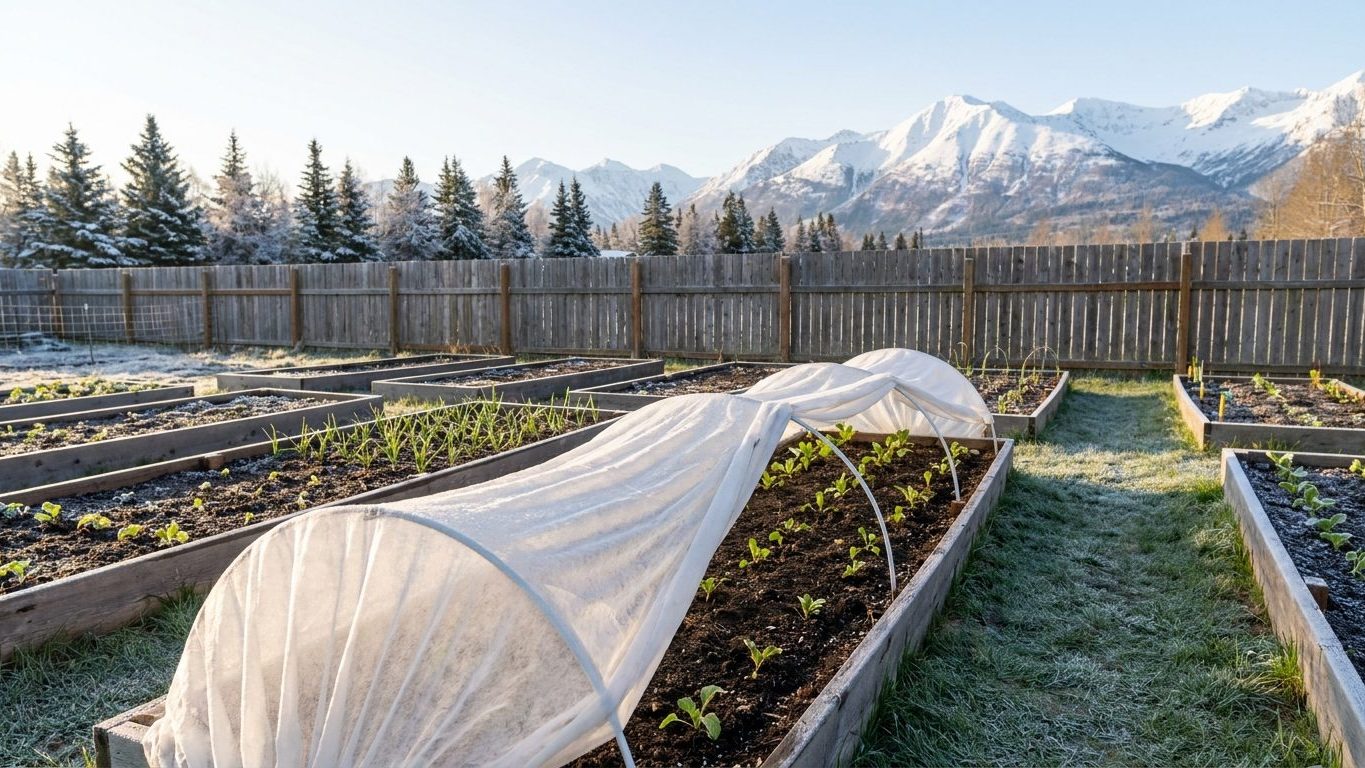

Cover tender plants any night the forecast low reaches 32°F. On the Denver plains, watch from late April through the middle of May in spring and from the last week of September in fall. The reference station’s last spring freeze falls between May 1 and May 11, and its first fall freeze between September 30 and October 12. Hardy crops can go under cover weeks earlier. Elevation shifts every date.
The short answer for Colorado
Cover when a 32°F night is forecast, and keep covers handy for about two weeks past the last-frost window in spring. Those windows come from NOAA’s 1991-2020 Climate Normals for the Denver reference station. May 1 to May 11 is the stretch where the chance of another 32°F freeze sits between 30 and 70 percent. September 30 to October 12 is the same band in fall, where the chance that the first freeze has already arrived is somewhere between 30 and 70 percent. Neither window is a deadline. A freeze after May 11 is entirely possible, and a warm October can run past the fall window.
The station has roughly five months between the mean last spring frost and the mean first fall frost. That is enough for most vegetables on the plains, but a lot of Colorado gardeners still want more, because tomatoes, peppers and squash hate cold nights long before frost arrives. Season extension buys a few weeks at each end. A cover on a hoop or a frame holds back a few degrees of cold on a clear night. That is enough for a light frost and not enough for a hard freeze.
The practical calendar for the Front Range plains looks like this:
| Situation | When to cover |
|---|---|
| Hardy crops (lettuce, spinach, peas, radishes) | Late March through April, whenever a hard freeze or snow is forecast |
| Tender transplants (tomatoes, peppers, squash) | From planting, which is usually after May 11, on any night forecast near freezing |
| Fall tender crops still producing | From the last week of September, on nights forecast at 32°F or below |
| Fall greens and root crops | October onward, as a way to keep harvesting past the first freeze |
Mid-October snow often arrives before the garden is finished, and a cover can carry crops through a single cold night. A cold, wet week is a different matter. For a closer look at the products themselves, see Which Season Extenders Work in Colorado.
The fall dates matter as much as the spring ones. Gardeners who cover only in spring lose their tomatoes and peppers to the first October freeze, when the plants are still loaded with green fruit. Gardeners who uncover too early in spring lose seedlings to a late freeze in the middle of May. Plan for both ends, and keep the cover where you can reach it in under a minute.
What will not work here

Fabric alone does not carry a plant through a real freeze. The coldest month at the reference station has a mean daily minimum of 18.4°F. A cover adds a few degrees, so it bridges a frosty October night, but it does not keep a tomato alive in January. Winter growing under cover works for cold-hardy greens and not much else, and even those mostly sit and hold. At 39.83 degrees north latitude (Denver’s, so check your own if you live far from it), growth slows to a crawl in winter whatever the cover does.
Closed plastic is the next trap. Colorado sunshine is intense, the air is dry and daytime temperatures swing widely. A low tunnel or cloche sealed on a clear 65°F afternoon can bake the plants inside it. Vent plastic in the morning, close it again before sunset, and use breathable fabric if you cannot be home to do either. This is also why a cover left on through a warm spell can do more harm than the frost it was meant to stop.
Wind defeats loose covers fast. Front Range gusts lift fabric off a bed, tear it at the staples and leave plants exposed in the middle of the coldest hour. Pin the edges with soil, boards or landscape staples every foot or two, and anchor hoops deep. Snow load is the winter version of the same problem. Wet spring snow can flatten a hoop frame, so shake it off or use sturdier supports where heavy snow is common.
Weekly watering under cover fails in a dry climate. Fabric slows evaporation a little, but low humidity and a sunny day still dry a bed quickly, and plastic tunnels trap heat that pulls moisture out of the soil. A raised bed under a cover can go bone dry in a week of sunny weather. Check the soil with a finger two inches down, and water when it feels dry there instead of on a fixed day. Water in the morning so plants go into a cold night with moist soil, which holds heat better than dry soil.
Last, a cover cannot rescue a crop that needs more season than the garden has. Slow varieties of melons, winter squash and some peppers are a gamble on the plains and a poor bet at elevation, where a cover buys weeks the plant still cannot use. Pick varieties matched to your season first, then add the cover. The full guide to Extending the Growing Season in Colorado covers how the pieces fit together.
What changes across Colorado
Colorado does not have one growing season. The USDA Plant Hardiness Zone Map (2023 edition, based on 1991-2020 normals) puts the state anywhere from zone 3b to 7b. That is four full zones, so there is no single answer to “when do I cover.” The zone is built on one number, the average annual extreme minimum temperature, which tells you what survives winter. It does not tell you how many warm nights you get in June.
The dates above belong to the Denver reference station at 5,280 feet on the plains. Mountain towns run far shorter seasons and can frost in July. A mountain garden runs a far shorter season and can frost in July, which leaves little room for anything slow. The western slope differs again, with its own pattern of warm days, cold nights and a different mix of fruit and vegetables that does well.
If you garden in the north or at altitude, shift the whole calendar later in spring and earlier in fall, and treat covers as standard equipment from planting day until harvest. Choose fast crops and short-season varieties, and plan on covering on more nights than a plains gardener would. Cold air also pools in low spots and valley floors, so a garden in a hollow can frost when the hillside above it stays clear.
Look up your own zone on the USDA Plant Hardiness Zone Map rather than guessing from the next town over. Zones can change within a few miles in mountain terrain. The zone map answers the winter question. For the frost-date question, your county extension office has the local numbers.
Where to check this for your own county
Colorado State University Extension is the first stop, and its county offices work from local conditions. Look for two things: the local planting calendar for your county, and the varieties that have been trialed there. A calendar built for your elevation gives you frost dates and sowing windows that fit your ground. A trialed variety list tells you which tomatoes, peppers and squash have actually ripened where you garden.
Extension offices also field questions about cover materials, hoop spacing and local hazards like hail and wind. The staff and Master Gardener volunteers see the same late freezes and early snows you do. Call or visit before you buy a season-extension kit, especially if you garden above 6,000 feet, where the right choice can differ a lot from what works in Denver.
A county recommendation beats a state one, and what you are reading is the state one. The Denver reference dates are a sound starting point for the plains, but they are one station’s record. Treat them as the outer frame and let the county calendar fill in the details. If the two disagree, go with the county.
Checking this against your own garden
Your own observations outrank every date here. Three are easy to make without special tools, and each one tells you something about your particular spot.
- Soil warmth by feel. Push your hand a few inches into the bed in the morning. If the soil feels cold and clammy, warm-season seeds and transplants will sit and stall. A bed that feels mild tells you it has warmed up. A bed on a south-facing wall warms sooner than one in shade, and the difference shows you where to plant first.
- The first male flowers. Squash and cucumber plants open male flowers before female ones. When they appear, nights are warming up and the plant is settling in. If you have a cover on, open it on warm days so bees can reach the blooms, and note how much earlier or later your garden is than the neighbor’s.
- The first true leaves. Seedlings first put out rounded seed leaves, then the first true leaves with the shape of the adult plant. Once those appear, the seedling can take cool air and a gentle breeze. A seedling slow to make true leaves is telling you the bed is too cold or too shaded.
Write down the date of each observation and the date of your last freeze. After two or three seasons, your own notes will be a better guide than any station average.
Common questions
When should I take covers off in spring?
Remove them on mild days once temperatures stay above about 50°F, and put them back on when a freeze is forecast. For tender crops, keep the cover close at hand until at least mid-May on the plains, and later at elevation. Leave plastic off in the heat of the afternoon.
Does a cover protect against a hard freeze?
Only a little. Covers hold a few degrees, which is enough for a light frost near 32°F and not enough for a hard freeze. For a hard freeze, stack layers or harvest what is ripe and let the rest go.
Can I rely on the frost dates for Denver anywhere in Colorado?
No. They fit the plains near Denver at 5,280 feet. Mountain towns run far shorter seasons and can frost in July, and the western slope has its own pattern. Use your county extension calendar for your location.
Should I cover plants during the day?
Breathable fabric is fine in the day, and plastic needs venting once the sun is out. Cover in late afternoon so the soil’s stored heat stays under the fabric through the night.