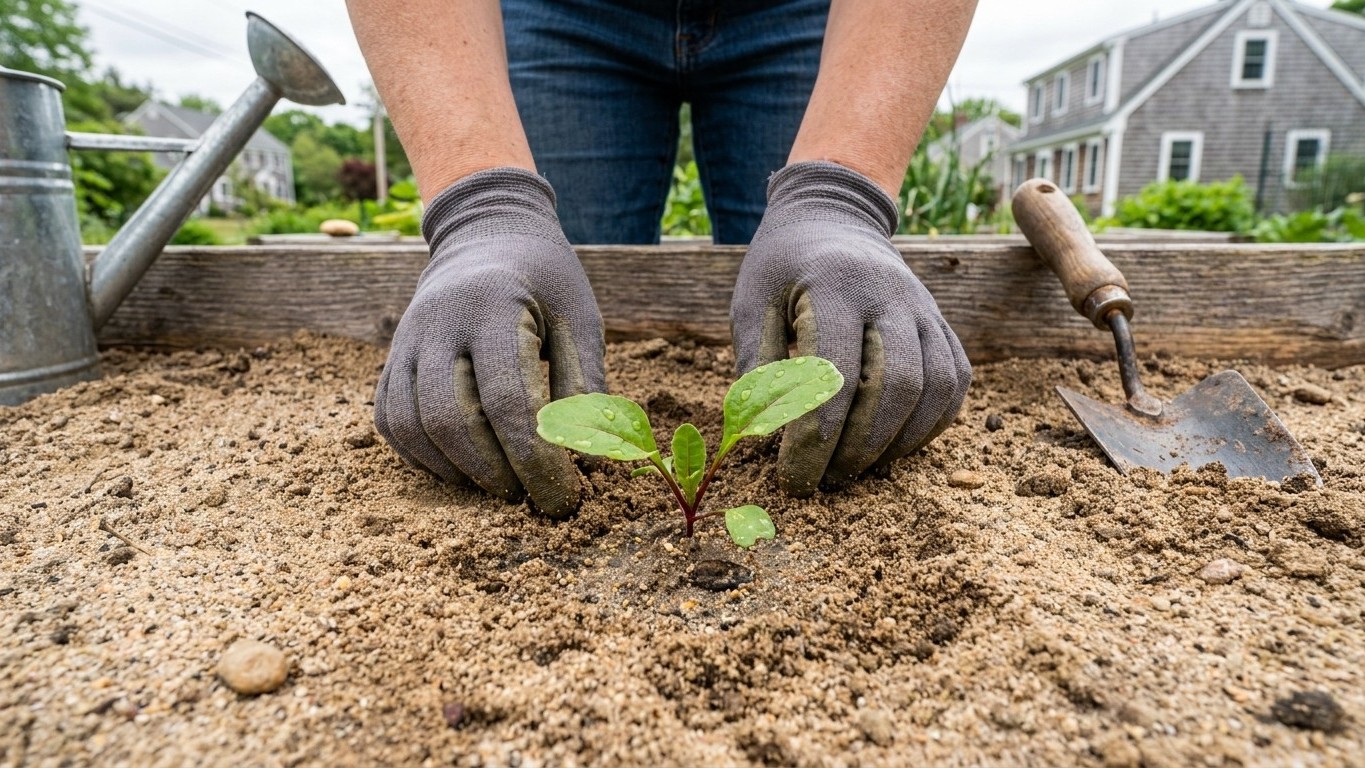

Connecticut’s representative soil runs sandy, acidic and drains fast, which pushes beet growers toward heavy amendment and tight water scheduling. When to Sow Beets in Connecticut comes down to timing it two to three weeks before the last frost, keeping the bed consistently moist through the first six weeks, and watching soil pH before you plant. Skip any of that, and the two classic beet failures, bolting and woody roots, show up fast.
The short answer
The soil USDA lists as representative of Connecticut is the Windsor series, an Entisol, meaning it’s a young soil with almost no profile development. Its surface horizon runs about 82 percent sand, 2 percent clay and 16 percent silt, with a surface pH near 5.1, which counts as strongly acid. Drainage class is excessively drained. Put a beet seed in ground like that and you get a root zone that lets water through almost as fast as it falls, sitting on the acid side of what Beet Soil in Connecticut typically demands.
That combination matters because beets want deep, sandy, well-drained soil rich in organic matter, according to Utah State University Extension. Connecticut’s representative soil checks the sandy and well-drained boxes, too well. Excessively drained ground doesn’t hold a reserve of moisture the way a loam does, so a beet bed on soil like this dries out between waterings faster than most gardeners expect. The organic matter figure recorded for this series, about 95 percent, sounds generous, but that number describes a natural surface layer as mapped, not a worked garden bed. A reading that high usually means peat, muck or forest litter sitting on the surface, not the kind of finished compost a vegetable bed carries after tilling. Don’t read it as a promise that your soil is already rich.
The acidity is the other flag. At pH 5.1, nutrient availability shifts away from where beets do their best work, and most home gardeners will need to bring the bed closer to neutral with lime before seeding.
On heat, the published record for this page doesn’t carry a count of days per year Connecticut spends above 90 F, so that figure isn’t stated here. What is documented is the threshold itself: heat above 85 F combined with water stress makes a beet root woody, per Utah State University Extension. Connecticut summers do produce stretches above that mark, which is reason enough to keep watering steady once the weather turns warm, even without a published day-count to point to.
None of this describes your actual backyard. Connecticut spans hundreds of soil series, and the Windsor series is simply the one USDA names as representative of the state as a whole. River bottoms, hill country, and any lot a builder graded or filled will differ from it, sometimes completely. Treat the numbers above as a starting point for what the region’s ground tends to do, then test your own bed before you commit to a fix.
The six weeks that decide it here
Beets are sown directly in the ground, never transplanted, and the standard advice is to get seed in two to three weeks ahead of the last frost. For coastal Connecticut, represented by the Bridgeport station, the 1991-2020 climate record puts the last spring freeze between April 2 and April 12. That’s the mildest part of the state. Inland and northwest Connecticut freeze later in spring and earlier in fall, so a grower in Litchfield County or the northern hills should expect to push sowing back from that coastal window, not copy it directly.
Working from the coastal date, a two-to-three-week head start lands seeding somewhere in the second half of March for the mildest parts of the state, with inland gardens following later. The first six weeks after that, the stretch that Utah State University Extension flags as the period when water stress triggers premature flowering, run through March, April and into May across most of the state.
That window sits on top of the soil profile described above: sandy, excessively drained, quick to shed whatever rain falls on it. A spring rain that would keep a clay-heavy bed damp for a week can drain out of Windsor-type ground in a couple of days. If a dry stretch lands during those first six weeks, and Connecticut spring weather swings enough that dry stretches happen, a bed on this kind of soil goes from moist to stressed faster than the calendar alone would suggest. That’s the specific mechanism behind early bolting here: not cold, not day length, but a young root crop running short of water while it’s still deciding whether to grow a root or throw a flower stalk.
The practical upshot is that the six weeks right after sowing deserve more attention to soil moisture than any other stretch of the season, especially on ground that drains as fast as the state’s representative soil does.
What goes wrong here
- Bolting from early dry spells. Fast-draining, sandy ground loses moisture quickly in the first six weeks after sowing, and Utah State University Extension names water stress in that window as the trigger for premature flowering. Check the bed every few days during that stretch and water before the top few inches go dry, rather than waiting for the plants to show stress.
- Woody roots from summer heat plus dry soil. This is a separate failure from bolting. It shows up later in the season, when temperatures climb past 85 F and the soil is also short on water, according to the same Utah State University Extension guidance. Keep watering consistent through the warm months rather than assuming early-season care is enough to carry the crop to harvest.
- Acidic soil holding nutrients out of reach. A surface pH near 5.1, as recorded for the state’s representative soil, sits well below what most vegetable crops want. Test your bed’s actual pH and lime toward neutral before seeding if the number comes back low, rather than assuming the state figure applies to your yard.
- Fertility that looks better on paper than in the bed. A high organic-matter reading tied to this soil series reflects a natural surface layer, not a cultivated garden bed. Amend with compost, up to about 1 inch per 100 square feet as Utah State University Extension recommends, rather than skipping fertilizer because a soil survey number looked generous.
- Nutrients washing through excessively drained ground. Soil that sheds water fast also sheds dissolved fertilizer fast. Split feeding into smaller, more frequent applications on sandy beds instead of one heavy dose at planting.
Checking this against your own county
Everything above starts from a single representative soil series and a single coastal weather station. Your actual garden could sit on a completely different soil type, and if you’re inland or in the northwest hills, your frost dates run later in spring and earlier in fall than the Bridgeport numbers used here. Before you finalize a sowing date or a liming plan, run a soil test through the University of Connecticut Extension, which can tell you your bed’s actual pH, texture and drainage rather than the statewide representative figures used in this overview.
Common questions
How many days does it take to grow beets from seed in Connecticut?
The count runs 60 to 80 days from seeding, since beets are sown directly in the ground rather than transplanted. That range gives room for the crop to size up before summer heat sets in.
Do beets need full sun in Connecticut?
The soil and climate facts cited here don’t cover sunlight requirements directly, so that question isn’t answered by this page’s sourced material. Check with UConn Extension for site-specific guidance.
Which beet varieties grow well in Connecticut?
Utah State University Extension names several varieties in its general beet guidance, but doesn’t attach a season, color or specific use to any one of them, so no single variety can be recommended over another from that source.
Should I lime my soil before planting beets in Connecticut?
If your bed’s pH comes back low, similar to the 5.1 surface reading recorded for the state’s representative soil, liming toward neutral is worth doing before seeding. Confirm your own number with a soil test rather than assuming the statewide figure matches your yard.