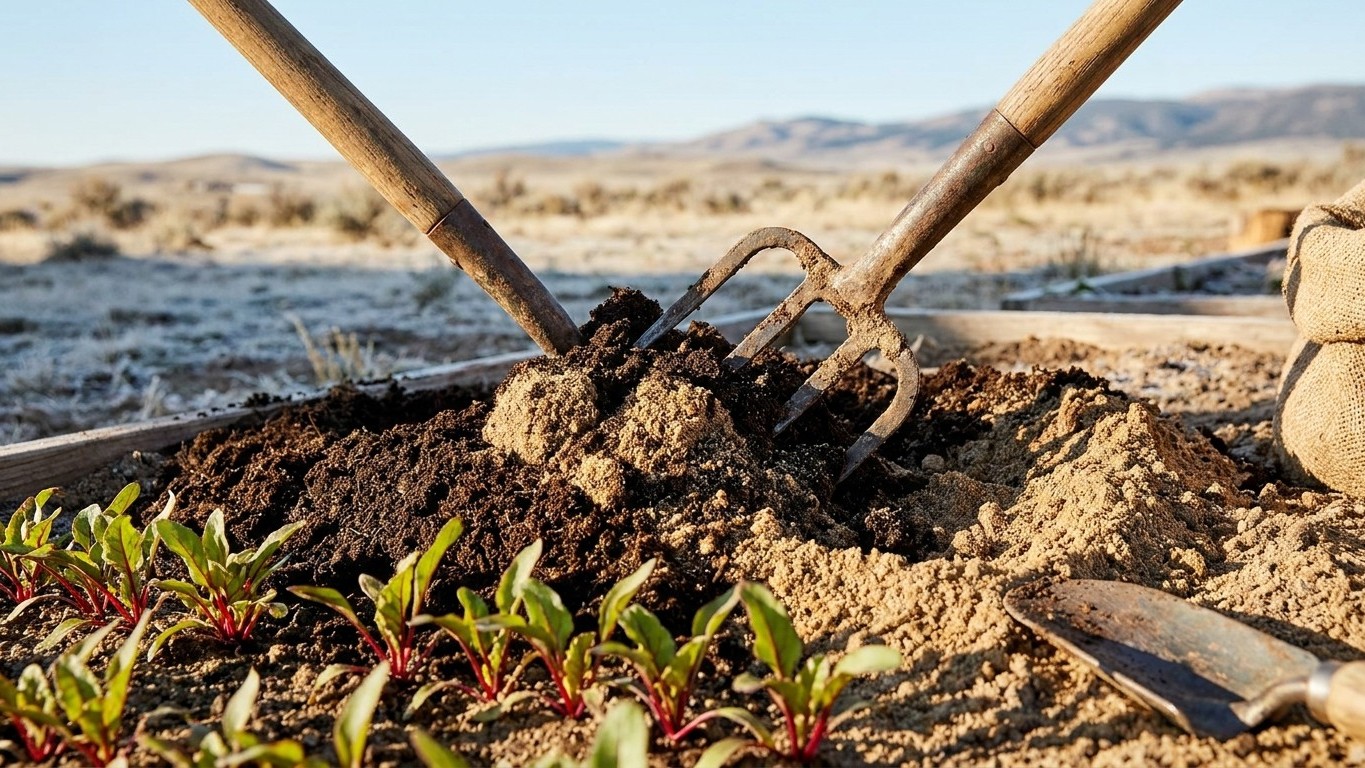

Wyoming’s dry, alkaline ground and a frost-free stretch that barely tops four months make beets a crop of timing more than luck. Get the soil moisture right in the first six weeks after seeding and a beet root grows sweet and tender. Miss that window and you get a plant that bolts to seed before it roots out, or a root that turns woody once summer heat arrives, which is why knowing When to Sow Beets in Wyoming matters as much as the soil itself.
The short answer
Start with the soil the state itself is built on. USDA’s representative soil for Wyoming is the Forkwood series, an Aridisol, the kind of dry-climate soil that develops under low rainfall and tends toward alkaline, sometimes salty, conditions. Its surface horizon runs close to neutral at a pH around 7.2, with a texture of 42 percent sand, 20 percent clay and 38 percent silt, an organic matter content around 1.5 percent, and good drainage. For a beet, that’s a mixed report card, as this closer look at Beet Soil in Wyoming lays out. The sand-and-silt balance and the well-drained rating mean roots can push down without hitting a dense clay pan, which beets need since they’re a taproot crop that hates compaction. But 1.5 percent organic matter is thin, and Utah State University Extension’s guidance for beets calls for soil that’s deep, sandy, well-drained and rich in organic matter, amended with no more than 1 inch of composted material per 100 square feet. Forkwood gets the drainage and texture roughly right and falls short on the organic matter side, which is a fixable gap with compost worked into the bed before seeding rather than a reason to give up on the spot.
On the heat side, the exact count of 90-degree days for a specific reference city isn’t part of the sourced climate data here, so it won’t be invented. What is documented is that Wyoming’s frost-free season runs roughly 130 days at 6,000 feet elevation, and frost can arrive in any month at the state’s higher ground, according to NOAA climate normals. That short, cool-leaning season cuts both ways for beets. It limits how much sustained heat above the 85 F woodiness threshold that Utah State University Extension flags most gardens actually accumulate, which favors tender roots over tough ones later in the season. But it also means the growing window itself is tight, so a plant that stalls early from dry soil doesn’t get much of a second chance before fall cold shuts things down.
None of this is a verdict on any one garden. Wyoming spans hundreds of mapped soil series, and Forkwood is simply the one USDA lists as representative of the state as a whole. A raised bed in a river valley, a plot on scraped fill near new construction, or ground in the foothills can behave nothing like it. Treat these numbers as the state’s general tendency, then confirm your own soil’s texture, drainage and pH before you plan amendments.
The six weeks that decide it here
Beets are sown directly in the ground, never transplanted, and the standard advice is to get seed in 2 to 3 weeks before the last expected spring frost. In Wyoming, NOAA’s 1991-2020 climate normals put that last spring freeze, measured at the 32 F threshold, somewhere between May 7 and May 18 at the reference station used for this data. Sow on that schedule and the first six weeks of a beet’s life, the window Utah State University Extension identifies as the make-or-break period for bolting, lands squarely in Wyoming’s April-into-May stretch.
That stretch is not a gentle one. Spring at this elevation tends to swing hard between a dry, windy spell that pulls moisture out of topsoil fast and a cold snap that can drop temperatures back toward freezing even after seedlings have emerged. Neither extreme alone is fatal to a beet crop, but the combination is what pushes a plant toward premature flowering. Utah State University Extension is specific on the mechanism: water stress during those first six weeks, not heat, is what triggers bolting. A beet that dries out early doesn’t wait around to see if conditions improve. It shifts into seed production, and once that switch flips, the root stops sizing up.
The practical takeaway for Wyoming gardeners is that the bolting risk here sits earlier in the calendar than a lot of national planting guidance assumes. Because the frost-free window is already narrow, a gardener who waits for what feels like safely warm soil before sowing is often sowing later than the ideal date, into a stretch where wind and dry air are already working against seedling moisture. The fix isn’t a different sowing date so much as treating that first six-week window, whenever it falls, as non-negotiable irrigation time. Mulch, consistent watering and a bit of wind protection matter more in those first weeks than at almost any other point in the beet’s roughly 60-to-80-day run from seed to harvest.
What goes wrong here
- Seedlings bolt before the root sizes up. This is the dry-spring problem described above: water stress in the first six weeks pushes the plant to flower early instead of building a root. The remedy is steady moisture from the day of seeding, not just after germination, since Wyoming’s low humidity and wind can dry a seed bed faster than the soil surface lets on.
- Roots turn woody late in the season. Utah State University Extension ties this to a second, separate failure: heat above 85 F combined with water stress later in the growing cycle, after the root has already started forming. Even where Wyoming’s overall season stays cooler than lower-elevation states, a hot dry stretch in mid-summer can still catch a bed that’s been neglected on watering. Keep irrigation consistent through the full 60 to 80 days, not just the early weeks, and this failure is preventable independent of the bolting one.
- Slow, uneven drainage in heavier pockets of ground. The state’s representative Forkwood soil is well drained, but plenty of Wyoming gardens sit on tighter, more clay-heavy patches, especially in low spots or compacted yards near newer construction. Beets sulk in soil that stays soggy after a heavy spring rain or irrigation session. Raised beds or worked-in compost that loosens the top foot of soil address this directly.
- Thin organic matter limiting root size and flavor. At roughly 1.5 percent organic matter in the state’s representative soil, there’s often not enough natural fertility to support the deep, sandy, rich bed Utah State University Extension recommends. Working in up to 1 inch of composted material per 100 square feet before sowing, and no more, closes that gap without over-amending.
- Late frost damage to very young seedlings. Because the last spring frost in Wyoming can land as late as May 18 at the reference station, and because higher elevations can see frost in any month, seedlings sown at the early edge of the 2-to-3-week pre-frost window sometimes take a hit from a late cold snap. Floating row cover over the bed for the first couple of weeks after emergence protects against this without delaying the sowing date that helps prevent bolting.
Checking this against your own county
Everything above starts from a state-representative soil series and a single climate station, and Wyoming’s ground and microclimates vary a lot between the high plains, the river valleys and the mountain foothills. Before finalizing a planting plan, it’s worth confirming your own soil’s texture, drainage and pH with a local test, and checking frost timing for your specific elevation rather than relying on a statewide average.
The University of Wyoming Extension runs county-level offices across the state and can point you toward soil testing services and localized frost-date guidance for your particular ground. That local check is the step that turns this page’s general picture into a planting plan that fits your actual backyard.
Common questions
When should I sow beet seed in Wyoming?
Aim for 2 to 3 weeks before your local last spring frost. At the reference climate station used here, that frost date falls between May 7 and May 18, but elevation shifts this significantly across the state, so confirm timing locally through your county extension office.
Why did my beets bolt instead of forming a root?
Bolting traces back to water stress in the first six weeks after seeding, according to Utah State University Extension. Wyoming’s dry, windy spring is exactly the kind of stretch that causes this, so consistent early irrigation matters more than almost anything else in the growing cycle.
Do I need to amend Wyoming soil before planting beets?
Likely yes, in most cases. The state’s representative soil runs about 1.5 percent organic matter, well below what beets prefer. Working in up to 1 inch of composted organic matter per 100 square feet, without exceeding that amount, brings a typical Wyoming bed closer to the deep, rich, well-drained profile beets need.
Is Wyoming’s climate too cool for beets to grow well?
Not inherently. The state’s short, roughly 130-day frost-free season at 6,000 feet actually limits how often gardens sustain heat above the 85 F threshold tied to woody roots. The bigger challenge here is the dry, swinging spring that raises bolting risk, not summer heat.