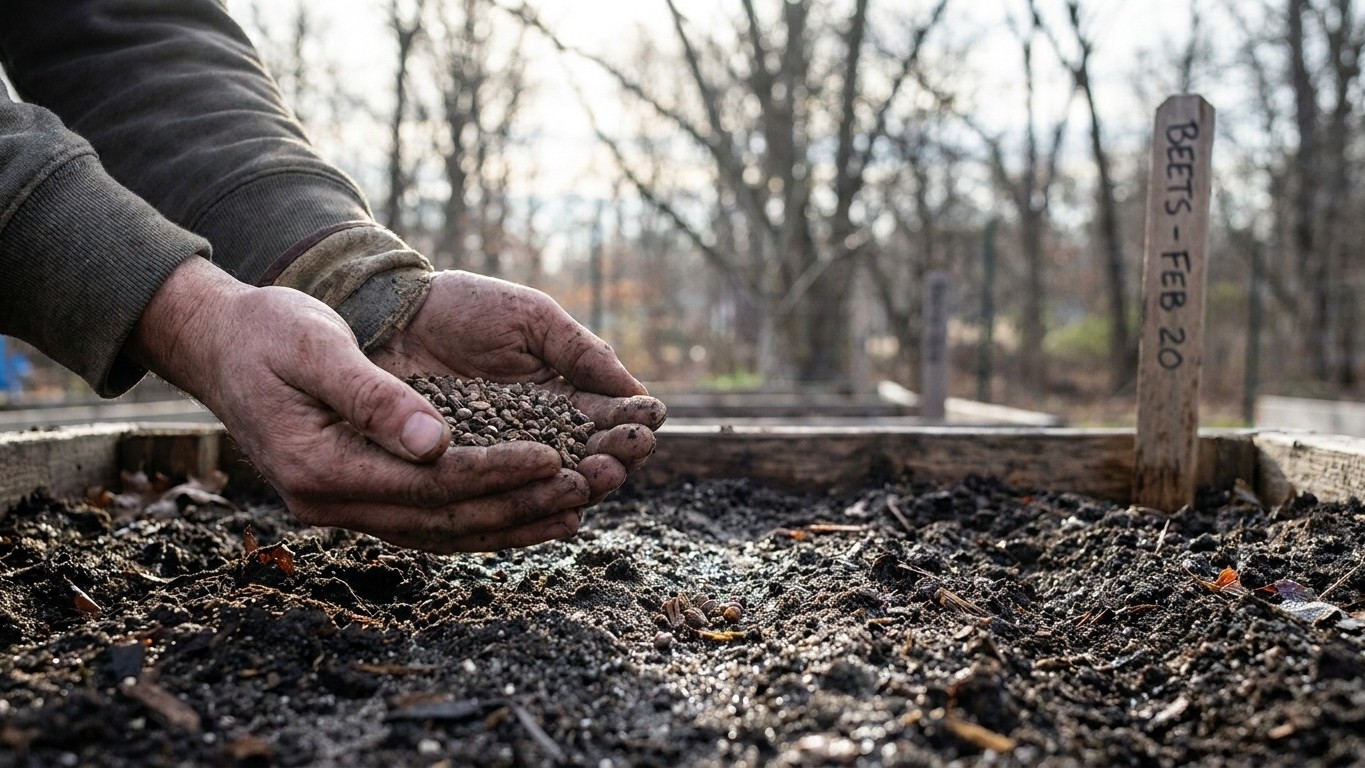

In most of Connecticut, the seed goes in the ground about two to three weeks before the last spring frost, which the coastal reference station near Bridgeport places between April 2 and April 12. That puts a typical sowing window in mid-to-late March along the shoreline, later inland. But the date is only half the story. What the soil does with that seed, and what the following six weeks of weather do to the seedling, matter just as much.
The short answer
Connecticut’s representative soil, the Windsor series, is about as far from a “typical” garden bed as soil gets. It’s an Entisol, meaning it has almost no profile development, and the surface layer runs 82 percent sand, 2 percent clay, and 16 percent silt. Surface pH sits around 5.1, which is strongly acid. Drainage is classed as excessive. Organic matter in the mapped surface averages near 95 percent, though that figure describes an undisturbed natural surface layer, like forest litter or a peaty horizon, not a cultivated vegetable bed. A worked garden row on Windsor-type ground will have nowhere near that organic content unless it’s been heavily amended.
Soil texture and drainage
Utah State University Extension notes that beets want deep, sandy, well-drained soil rich in organic matter, amended with no more than 1 inch of composted organic matter per 100 square feet. On paper, sandy and excessively drained sounds close to what a beet asks for. In practice, excessive drainage cuts both ways: water moves through fast enough that the root zone can dry out between rains, and the strongly acid pH of 5.1 is well below neutral, so any gardener working ground like this should test before planting rather than assume the number applies to their own bed.
Heat and the growing season
The number of days Connecticut spends above 90 F in a given year isn’t part of the sourced data for this page, so no figure is offered here. What is documented is the mechanism: heat above 85 F combined with water stress makes beet roots woody. Whether that combination shows up three times a summer or a dozen depends on where in the state a garden sits, and inland valleys typically run warmer than the shoreline. A state this size spans hundreds of distinct soil series, and the Windsor profile is a starting point for reading what the ground tends to do, not a diagnosis of any one yard.
The six weeks that decide it here
Sowing 2 to 3 weeks ahead of the April 2-12 last-frost window means the first six weeks of a beet’s life, from seed to established seedling, land squarely in Connecticut’s early spring. That’s the stretch that decides whether a planting bolts or grows on normally.
What Connecticut spring usually brings
Early spring in Connecticut tends to swing rather than settle. A raw, wet week can be followed by a stretch of dry wind that pulls moisture out of sandy topsoil fast, especially on excessively drained ground like the Windsor series. That swing is the pattern to watch, not a single average condition, because a bed that looks adequately moist on planting day can dry out within days once the wind picks up.
Where the risk sits in the six-week window
Water stress during those first six weeks is what triggers premature flowering, or bolting, in beets. On sandy, fast-draining Connecticut soil, that stress arrives quicker than it would on heavier ground, because there’s less clay to hold moisture between waterings. The practical implication: a gardener sowing in the recommended late-March-to-early-April window needs to check soil moisture more often than the calendar date alone would suggest, particularly if a dry spell follows a wet week. This is a separate risk from the woodiness that comes later, when established roots face heat above 85 F under water stress. Bolting is an early-season failure; woodiness is a mid-to-late-season one, and treating them as the same problem, with the same fix, misses what’s actually happening in the row.
What goes wrong here
- Seedlings bolt before they size up. Fast-draining sandy soil dries out between rains during the first six weeks, and that early water stress pushes beets to flower instead of building a root. Water consistently through germination and early growth, and consider a light mulch to slow evaporation on excessively drained ground.
- Roots turn woody in mid-summer. Once heat climbs past 85 F, any water stress at that stage toughens the root’s texture. This is a different failure from bolting, and it shows up later, after the root has already started sizing. Keep watering even, and don’t let the bed dry out just because the seedlings look established.
- Poor germination or stunted stands on acid soil. A surface pH near 5.1, as measured on the Windsor series, is strongly acid. That number describes the state’s representative soil, not any one garden, but it’s a reason to test pH before sowing rather than assume the ground is neutral.
- Over-amending sandy beds. Because Windsor-type soil already runs low on clay and can shed nutrients quickly, it’s tempting to pile on compost. Utah State University Extension’s guidance caps composted organic matter at 1 inch per 100 square feet; more than that doesn’t help beets and can throw off the balance of a sandy bed further.
- Uneven moisture from excessive drainage. A single deep watering on excessively drained ground can vanish within a day or two. Shorter, more frequent watering suits this soil type better than the heavier, occasional soak that works on clay-rich ground elsewhere.
Common questions
Can I sow beets in Connecticut in the fall?
The sourced data for this page covers the spring last-frost window only, from a coastal reference station, and doesn’t include a fall first-frost date. Beets run 60 to 80 days from seeding to harvest, counted from when seed goes into the ground, not from a transplant date, so a fall planting has to be timed against each gardener’s own local frost record rather than a statewide figure.
Does the Windsor soil series describe my yard?
Probably not exactly. It’s the series USDA lists as representative of Connecticut, but the state contains hundreds of mapped soil series. River bottoms, hill country, and any ground that’s been graded or filled by a builder can differ completely from Windsor’s sandy, excessively drained profile. Use it as a general read on regional tendencies, then test your own bed.
How much compost should I work into sandy Connecticut soil before sowing?
Utah State University Extension’s figure is no more than 1 inch of composted organic matter per 100 square feet. That applies broadly to beet beds, not specifically to Windsor-type soil, but it’s a useful cap for sandy, low-clay ground that can otherwise be pushed off balance by over-amending.
What’s the difference between bolting and woody roots?
They’re two separate failures with two separate causes. Bolting happens early, in the first six weeks after sowing, and comes from water stress during germination and early growth. Woodiness happens later, once roots are sizing up, and comes from heat above 85 F combined with water stress at that stage. A watering routine that only addresses one of these windows will still let the other failure through.