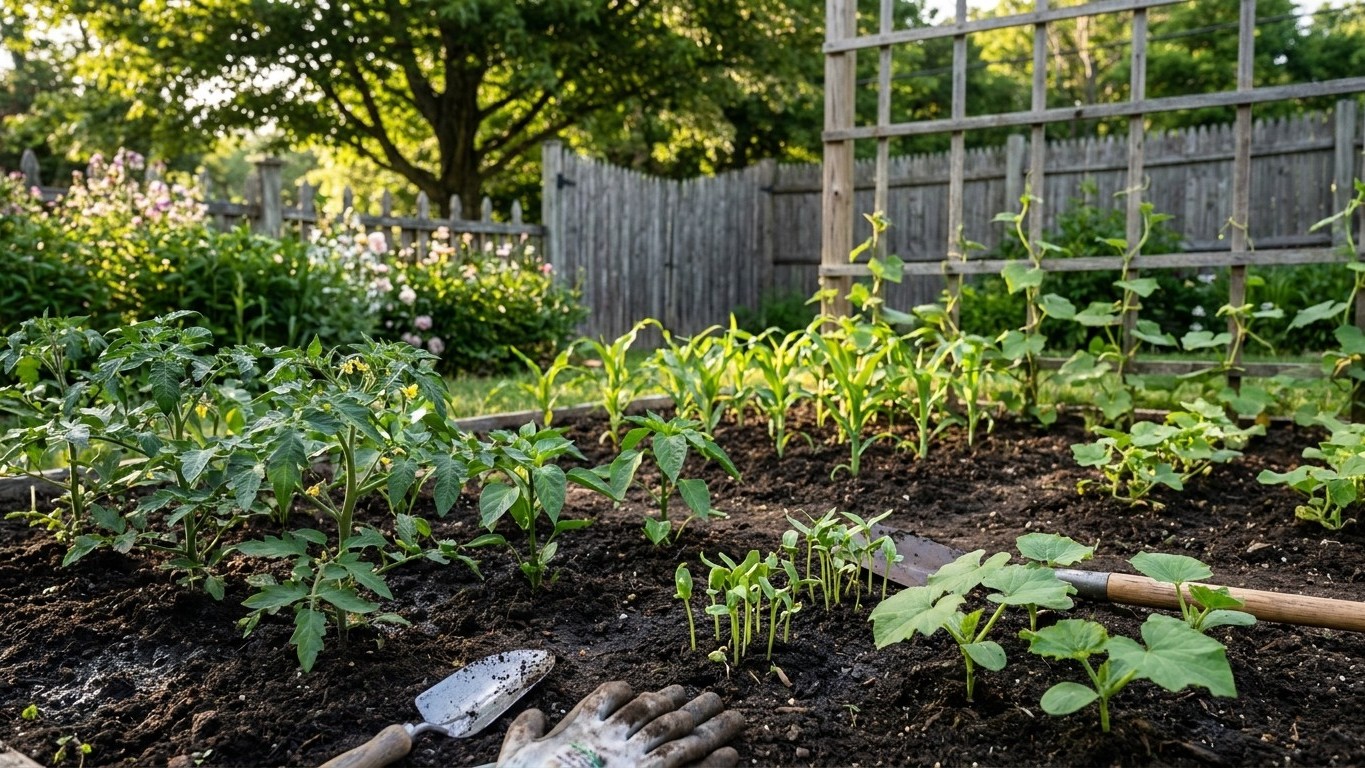

June is the month Connecticut gardens fill in. By now the state is weeks past its last spring frost window (April 2 to April 12 on the coast) and nowhere near the first fall frost (October 28 to November 10), so soil has warmed enough for the crops that sulk or die in cold ground. Tomatoes, peppers, beans, squash, corn, and cucumbers all go outside this month across most of the state’s USDA hardiness range of 6a to 7b.
What goes in the ground in June

The calendar stopped being the limiting factor weeks ago. What decides June planting in Connecticut is soil temperature, not the date on the wall, and by this point in the season most of the state’s ground has caught up even in shadier or clay-heavy beds. That’s why June reads as the most permissive month on the whole planting calendar: the frost risk that shaped April and May is gone, and the first fall frost is still four to five months out depending on where in the state you garden.
Warm-season crops that stalled or rotted if planted too early now go in with little drama. Tomato and pepper transplants that spent weeks hardening off can move into open beds. Direct-sown beans, corn, squash, cucumbers, and melons germinate quickly in soil that’s finally shed its spring chill. Basil, another crop that resents cold feet, is safe outdoors now across the state.
Cool-season crops aren’t finished either. Succession sowings of lettuce, spinach, and radishes still work in June if given afternoon shade as the month warms, and a second round of peas can go in early in the month in northern and inland counties where soil stays cooler longer.
| Crop | Method | Note |
|---|---|---|
| Tomatoes, peppers | Transplant | Should already be hardened off; harden late starts before setting out |
| Beans, corn, squash, cucumbers | Direct sow | Warm soil germinates faster and more evenly than cold spring ground |
| Basil, other tender herbs | Transplant or direct sow | No frost risk left this month statewide |
| Lettuce, spinach, radishes | Direct sow, succession | Give afternoon shade as June heat builds |
| Peas (second round) | Direct sow, early June | Best in inland and northern counties where soil is still cool |
What to start under cover
Most of the spring’s indoor seed-starting is done by June, but the smart move now is counting backward from the first fall frost rather than forward from today. If frost arrives somewhere between October 28 and November 10 depending on location, a fall broccoli or cabbage transplant needs to go into the ground with enough weeks left to mature before that date arrives, and it needs several weeks of growth under cover before it’s ready to transplant.
That arithmetic pushes fall brassicas, like broccoli, cabbage, and kale destined for a second planting, into flats or trays started under cover early in June. Starting too late in the month runs the risk of transplants that never size up before cold weather shuts growth down. Starting too early creates the opposite problem: leggy, rootbound seedlings sitting in trays too long because outdoor beds are still occupied by spring crops that haven’t finished.
The safer approach is starting fall brassicas in batches spaced a week or two apart rather than all at once, so there’s a transplant ready whenever a bed opens up. Gardeners in the Northwest Hills or other inland cold pockets, where the growing season runs shorter than the coast, should lean toward the earlier end of that window rather than the later one.
What is ready to pick
June is when the earliest plantings start paying off. Peas sown in April are climbing their supports and ready to pick once pods fill out but before they turn tough and starchy, a change that happens fast once the weather warms. Spinach and lettuce sown early in spring are at their peak, and pulling them before they bolt in the heat matters more with each passing week.
Strawberries are the month’s headline crop across Connecticut, with June-bearing varieties hitting their main harvest window. Berries should be picked when fully red, since they don’t ripen further once removed from the plant. Radishes sown weeks earlier come out fast, usually within three to four weeks of sowing, and waiting too long turns them woody and hot.
Herbs like chives, mint, and early basil are ready for cutting, and regular harvesting actually keeps them producing longer instead of running to flower. Garlic planted the previous fall isn’t ready yet, but its scapes, the curling flower stalks, are worth cutting off in June both to eat and to redirect the plant’s energy into bulb growth rather than seed production.
The jobs that matter this month
Staking and caging come first, and doing it now rather than later saves real frustration. Tomato plants that seemed manageable in May turn into sprawling, heavy vines by late June, and trying to force a cage around a plant that’s already flopped over damages stems and roots. The same goes for peas and pole beans, which need their supports in place before vines start reaching for something that isn’t there.
Mulching belongs on this month’s list too. Bare soil in June heats up fast and loses moisture just as fast, and a two to three inch layer of straw, shredded leaves, or bark mulch around vegetables keeps roots cooler and cuts down on watering frequency. It also suppresses the weeds that explode in June’s combination of warmth and (usually) regular rain.
Watering rhythm matters more this month than any other, since June is when plants are sizing up fast and demanding more water at the same time surface soil is drying out quicker. Deep, infrequent watering that reaches the root zone beats a light daily sprinkle that only wets the surface and encourages shallow rooting.
Succession sowing keeps the harvest coming instead of arriving all at once. Sowing a short row of beans, lettuce, or beets every couple of weeks through June spreads out the yield and hedges against any one planting failing.
Pest scouting rounds out the list. Colorado potato beetles, squash bugs, and cabbage worms all become active in June, and catching an infestation early, while it’s still a few leaves rather than a whole plant, is far easier to manage than reacting after damage is widespread.
What not to do in June
The classic June mistake in Connecticut is treating warm air temperature as proof that soil has caught up. A string of 80-degree days doesn’t mean the ground six inches down has warmed at the same pace, particularly in heavy clay or shaded beds. Planting squash or melons into soil that’s still cool below the surface leads to slow, stunted germination even though the calendar says it should work fine.
Overfeeding nitrogen is another recurring error, especially on tomatoes and peppers. A heavy dose of high-nitrogen fertilizer in June pushes lush green foliage at the expense of flowering and fruit set, which is the opposite of what a gardener wants heading into the peak growing months. A balanced or lower-nitrogen feed, or simply good compost, serves fruiting crops better once they’re established.
Letting spring greens linger too long is a third mistake. Lettuce and spinach that should have been pulled and replaced with a warm-season crop often get left in the ground out of reluctance to disturb something still technically alive, even as they bolt and turn bitter in the heat. Pulling bolting greens promptly frees up space for beans, cucumbers, or a second planting of something fast-growing.
Skipping mulch because the soil “looks fine” is the fourth. Ground that looks moist in the morning can be bone dry by afternoon once June heat sets in, and skipping mulch now often means scrambling with a hose every single day for the rest of the summer.
Checking this against your own county
The frost dates and hardiness range cited here come from a Bridgeport weather station, the mildest, most coastal point in Connecticut. Inland counties and the Northwest Hills run colder in both directions, with frost arriving earlier in fall and lingering later in spring, which shifts every window in this article by days to weeks depending on elevation and distance from Long Island Sound. A state-wide month is a starting point, not an instruction for a specific yard.
For a planting calendar built around local conditions, check the UConn Extension, the state’s land-grant extension service.
Common questions
Is it too late to plant tomatoes in Connecticut in June?
No. June is well within the safe window since the state’s last spring frost falls between April 2 and April 12. Transplants set out in early or mid-June still have a full season ahead before the first fall frost arrives between October 28 and November 10.
Can I still direct-sow corn or beans in June?
Yes, both germinate reliably once soil has warmed, and June soil across Connecticut is generally warm enough statewide, coastal areas warming earliest.
Why are my June-planted seedlings not germinating?
Cold soil below the surface is the most common cause, even when air temperatures feel warm. Shaded beds, heavy clay, or ground that stayed wet through spring can lag well behind the calendar.
Should I fertilize tomatoes heavily once they’re planted in June?
Not with a high-nitrogen feed. Excess nitrogen pushes leafy growth over flowering and fruit, so a balanced fertilizer or compost supports better yields once plants are established.