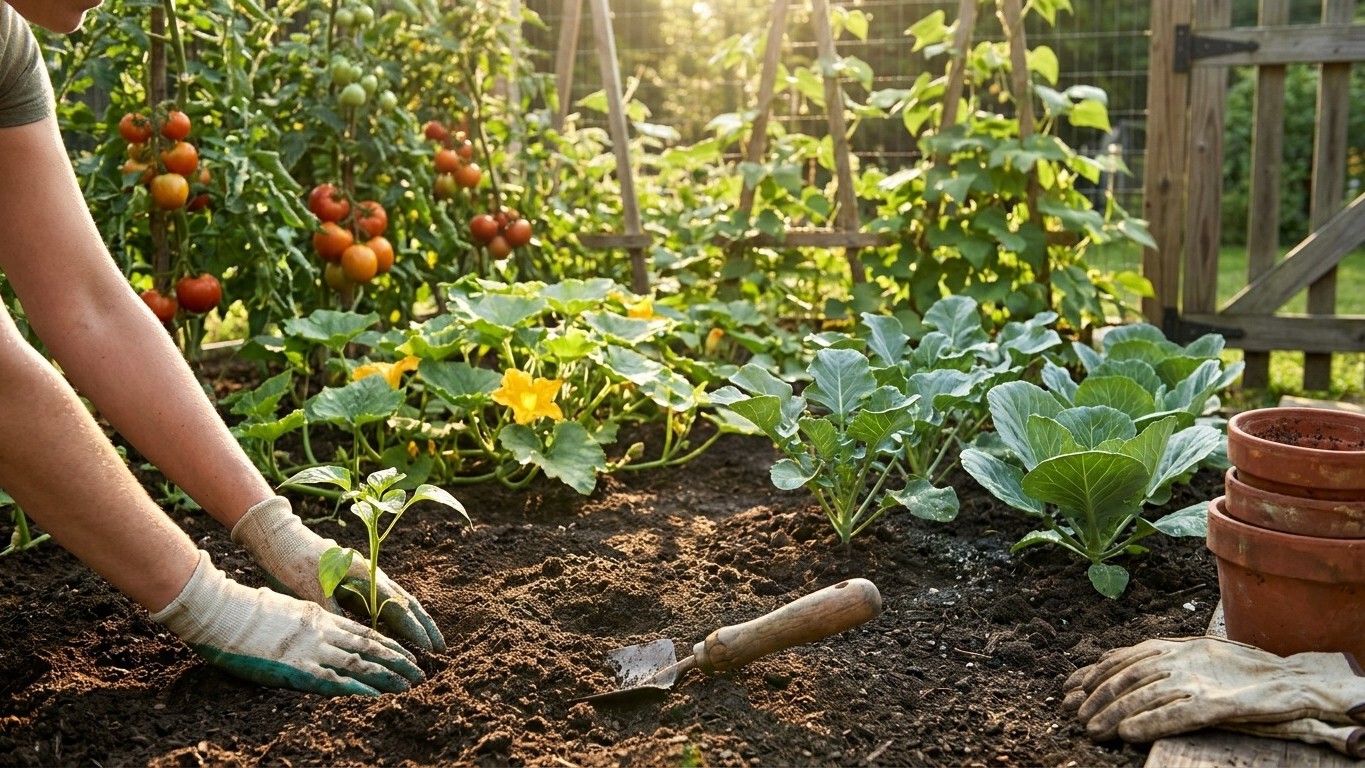

July is Connecticut’s full-throttle growing month: succession beans, cucumbers, and summer squash still go straight into the ground, fall broccoli and cabbage transplants move outside, and by month’s end you’re sowing kale and lettuce for autumn. Garlic comes out of the ground, tomatoes start ripening, and the next four weeks decide whether the fall garden happens at all.
What goes in the ground in July

By July, Connecticut’s frost window is a distant memory. The state’s last spring freeze falls between April 2 and April 12, and the next one doesn’t arrive until October 28 through November 10 at the earliest, according to NOAA’s 1991-2020 climate normals for the Bridgeport station. That gives most of the state a wide-open stretch of warm soil, which matters more right now than the calendar date itself. Soil temperature, not the month printed on a seed packet, is what decides whether a seed germinates or rots.
Early July still has room for another round of bush beans, cucumbers, and summer squash sown directly into warm soil. Sweet corn planted now, in most of the state, still has time to mature before the fall frost window closes, though gardeners in the northwest hills should lean toward the earlier end of that math. Carrots and beets sown in the first half of the month will size up for a fall harvest.
Transplants of fall broccoli, cabbage, and cauliflower, started under cover in June, belong in the ground now while there’s still enough season left for them to head up before cold weather. Toward the back half of July, it’s time to direct sow fall lettuce, spinach, kale, and collards, ideally with some afternoon shade to help germination in the heat.
What’s a gamble: brand-new tomato, pepper, or pumpkin transplants. Those needed to be in the ground weeks ago. Planting them now risks fruit that never ripens before the first fall frost arrives.
| Crop | July window | Note |
|---|---|---|
| Bush beans | Early to mid-July | One more crop before frost math runs out |
| Summer squash, cucumbers | Early July | Direct sow into warm soil |
| Fall broccoli, cabbage | Transplant early-mid July | Started under cover in June |
| Kale, collards, fall lettuce | Mid to late July | Direct sow, shade helps germination |
What to start under cover
The math for anything started under cover in July runs backward from the fall frost window, not forward from today’s date. Take a fall broccoli variety that needs roughly 70 days to maturity. Counting back from the earlier edge of the frost window, October 28, transplants need to go outside by mid-August. Seedlings typically need four to five weeks in a tray before they’re ready to harden off and go into the garden, which puts the seeding date for that crop in early to mid-July.
Fast fall crops give more slack. Kale and collards, at roughly 60 days to maturity, can be direct sown as late as early August in much of the state and still finish before the frost window closes. Starting them under cover in July instead, in cell trays, gives them a head start and a sturdier root system before they hit garden soil.
Two ways this goes wrong. Start too early, and seedlings sit too long in small cells through the hottest stretch of the year, turning rootbound and stressed before they ever reach the garden. Start too late, and the maturity date lands after the frost window has already closed, especially for gardeners inland and in the northwest hills, where cold arrives sooner than it does along the coast.
In July’s heat, trays started outdoors need shade cloth or row cover just to germinate evenly, not for cold protection but to keep the soil surface from baking dry between waterings.
What is ready to pick
Hardneck garlic is usually ready in Connecticut in early to mid-July, once the lower third of the leaves has browned while the upper leaves stay green. Pull too early and the bulbs are undersized; wait too long and the wrappers split, cutting storage life short. Cure harvested bulbs somewhere dry and shaded for two to three weeks before storing.
Spring peas are wrapping up, their pods turning pale and papery, a sign to pull the vines and free up the trellis for a fall crop. Summer squash, zucchini, and cucumbers need daily attention now; skip a day or two and a zucchini turns into a baseball bat overnight.
Early and cherry tomato varieties start coloring up this month, ahead of the main-season crop. Green beans deliver their first heavy flush, and new potatoes, the small, thin-skinned kind dug before the plant fully dies back, are ready for digging around the edges of the hill. Blueberries and raspberries are peaking in most of the state, and basil and dill are at their best for pesto and pickling.
The tell for most of these is simple: squash six to eight inches long, beans that snap crisply rather than bend, and garlic leaves browning from the bottom up.
The jobs that matter this month
Mulch now, not later. A two- to three-inch layer around vegetables holds soil moisture through July’s heat and cuts down on the weeding that would otherwise eat an entire weekend. Skip it, and plants under stress from dry soil are far more likely to drop blossoms or develop blossom end rot on tomatoes and squash.
Watering rhythm matters more in July than almost any other month. Vegetable gardens generally need about an inch to an inch and a half of water a week, delivered deeply and less often rather than a light daily sprinkle. Morning watering, aimed at the soil rather than the leaves, keeps foliage drier overnight, which matters in a humid Connecticut summer where fungal disease spreads fast on wet leaves.
Staking and caging tomatoes, pole beans, and peas needs to happen before, not after, a July thunderstorm flattens an unsupported row. Once vines sprawl and tangle, staking them becomes a two-person job instead of a five-minute one.
Keep succession sowing bush beans, carrots, and beets every two to three weeks through the middle of the month to spread out the harvest instead of getting buried in it all at once.
Pest scouting pays off now: Japanese beetles peak in July, squash vine borer moths are laying eggs at the base of squash stems, and cabbage worms are working over young brassicas. Catching any of these early, by hand-picking beetles or checking stem bases for the sawdust-like frass borers leave behind, beats losing a plant outright. Round out the month by harvesting and curing garlic, deadheading spent flowers, and pulling weeds before they set seed.
What not to do in July
The most common mistake is planting warm-season transplants late because the weather feels endless. Tomatoes and peppers set out now in most of Connecticut won’t have enough days left to ripen a full crop before the fall frost window arrives, especially away from the coast where that window opens earlier.
Overhead watering at midday looks refreshing but wastes most of the water to evaporation and leaves foliage wet into the evening, exactly the condition fungal diseases like powdery mildew and early blight need to spread through a July garden.
Leaving garlic in the ground past its window is another. Bulbs that sit too long after the lower leaves brown split their wrappers and lose most of their storage life, turning a crop meant to last through winter into one that needs eating within weeks.
High-nitrogen fertilizer, applied out of habit once fruiting has started on tomatoes, squash, or beans, pushes leafy growth at the expense of flowers and fruit. Once a plant is setting fruit, it needs phosphorus and potassium more than nitrogen. And pulling row cover off young brassicas too early, just because a stretch of mild weather rolled in, exposes them to the cabbage moths that were kept out in the first place.
Checking this against your own county
A state-wide window is a starting point, not an instruction. The frost dates above come from a coastal station in Bridgeport, the mildest corner of Connecticut. Inland counties and the northwest hills run measurably colder, with frost arriving weeks earlier in fall and lingering weeks later in spring, and the state’s 6a-7b USDA hardiness range, built on a single measure, the average extreme winter minimum, spans real differences in elevation and terrain from the coast to the Litchfield Hills. For a planting calendar built for a specific county, check the University of Connecticut Extension Service.
Common questions
Can I still plant tomatoes in Connecticut in July?
New transplants set out this late generally won’t have enough time to ripen a full crop before the fall frost window opens, which runs from October 28 to November 10 depending on location. Existing plants started earlier in the season are the ones that will produce.
What vegetables can I direct sow in Connecticut in July?
Bush beans, cucumbers, and summer squash early in the month, followed by fall lettuce, spinach, kale, and collards from mid to late July, timed to mature before the fall frost window.
When should I harvest garlic in Connecticut?
Most hardneck garlic is ready in early to mid-July, once the bottom third of the leaves has browned while the top leaves stay green. Cure bulbs in a dry, shaded spot for two to three weeks before storing.
Is it too late to start a fall garden in July in Connecticut?
No. Counting backward from the fall frost window, there’s still time to start fall broccoli and cabbage under cover early in the month and direct sow kale, collards, and lettuce by late July.