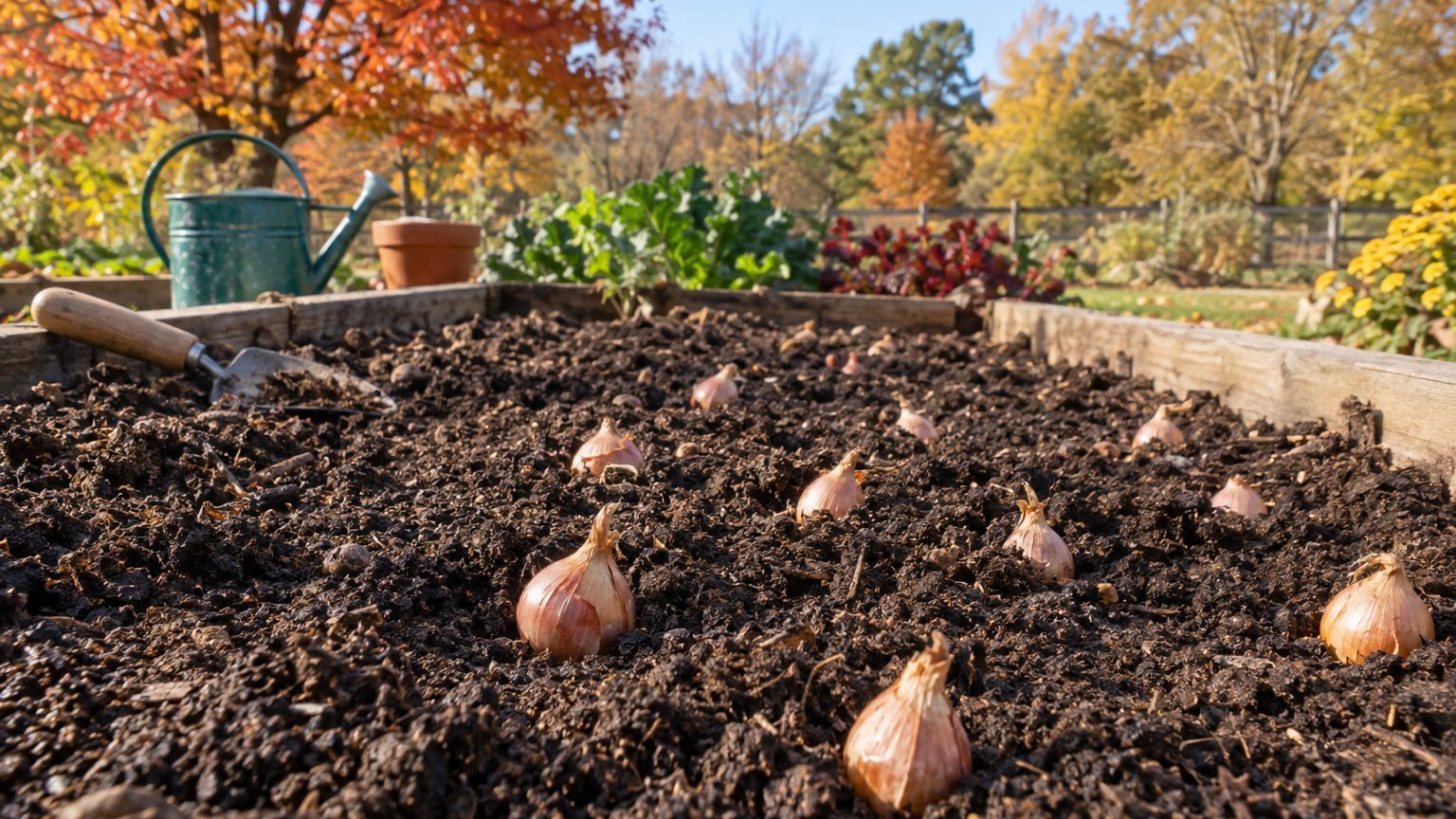

For Boise and similar low valleys, plant shallots in fall, a few weeks before the ground freezes, or in spring as soon as the soil can be worked. The reference dates below come from Boise, though, and most of Idaho is higher and colder, so your window may sit weeks away from the one given here. Treat this page as the starting point, not the final word.
The short answer for Idaho
Start with the frost dates, because they set both ends of the calendar. At the Boise station (USW00024131), the NOAA 1991-2020 Climate Normals put the last spring 32°F freeze between April 23 and May 7. The first fall freeze falls between October 7 and October 21. Those are not guarantees. Each range is the 30 to 70 percent probability band for a 32°F freeze. On the early date, a freeze after it is still a fairly even bet. By the late date, it has become less likely than not.
| Reference point (Boise) | Date range | What it represents |
|---|---|---|
| Last spring frost | April 23 to May 7 | 30-70% probability band for a 32°F freeze |
| First fall frost | October 7 to October 21 | 30-70% probability band for a 32°F freeze |
Shallots do not need to wait for the last frost. The bulbs are hardy, and the green tops shrug off a light freeze. So spring planting happens around the early part of that April-to-May band, once the soil is workable and no longer a sodden mess. Digging in cold clay and calling it progress is a classic mistake. If a handful of soil squeezes into a wet ball, wait.
Fall or spring?
Fall planting works because shallots set roots in cool soil and start early the following season. The goal is roots, not top growth. In the Boise reference, that points to planting from around the first fall frost range into the weeks after it, while the ground is still open. Plant too early and you get a tuft of leaves that winter will punish.
Spring planting is the safer choice where winters are harsh or where you cannot mulch well. It trades a little bulb size for lower risk. The cost is a shorter season, since the crop has to size up before summer heat and drying tops signal the end. Which pairing of variety and timing suits you is covered in The Best Shallots to Grow in Idaho, and the full crop cycle is in Growing Shallots in Idaho.
One more fact worth keeping in view: the mean daily minimum of the coldest month in Boise is 25.4°F. That is the figure that decides whether a hardy bulb survives the winter, and at that level, a mulched fall planting in the valley is realistic. It does not describe the rest of the state. This page does not have equivalent figures for the northern panhandle or the high plateaus, and I will not borrow numbers for them.
What will not work here
The Boise dates look generous, and that is the trap. The station sits in a low valley, and the data carries a plain warning that most of Idaho is higher and colder with far shorter seasons. A gardener in a mountain valley who copies an April 23 to May 7 spring window may be putting bulbs into frozen or saturated ground weeks too early, or, more often, running out of season at the other end.
Short seasons punish slow shallots first. Anything grown from true seed needs a long runway to make a bulb, and a growing window that closes in the first half of October, even in the reference valley, does not leave much slack. Plant a slow type late in a cold spot and you harvest small, thick-necked bulbs that do not cure or store well. Sets and fall-planted bulbs give you a head start that seed cannot.
Fall planting has its own failure. If the first fall freeze arrives in the October 7 to 21 band in the valley, it comes earlier still at altitude. Plant in late October at elevation and you may be chipping at frozen ground, or setting bulbs that never root before the ground locks. Bulbs with no roots heave out during freeze and thaw cycles, and you find them lying on the surface in March. Mulch helps, but it will not rescue a planting that missed its window by a month.
Overwatering is a second quiet killer. Wet winter soil rots dormant bulbs, which is why raised rows or well-drained beds matter more than any fertilizer. Heavy valley clay that holds water after a thaw can lose a whole planting.
Third, steady weekly watering habits do not match what shallots want in a dry summer. Southern Idaho summers are dry, and a crop watered on a fixed schedule rather than by soil moisture often swings between stress and soggy roots. Shallots have shallow roots and need consistent moisture while bulbs size up, then a taper as tops fall over. Cut off water too late, and bulbs stay green and rot in storage.
The honest takeaway is that a single statewide date does not exist. Anyone who gives you one is guessing.
What changes across Idaho
The USDA Plant Hardiness Zone Map (2023 edition, built on 1991-2020 normals) lists Idaho at 3b to 7b. That is a wide spread, and it is built on a single variable: the average annual extreme minimum temperature. It tells you about winter survival, not about summer heat or the length of the frost-free season. It is also a range for the whole state, so a dated recommendation should come from a reference city, which is why this page leans on Boise.
No single answer fits that range. A gardener at the warm end of it can often plant in fall with a light mulch and expect bulbs to come through. A gardener near the cold end faces both harder winters and a season that starts and stops weeks apart from Boise’s. Someone in the north or at altitude should shift in two ways: plant in fall earlier, giving roots more time before hard freeze, or skip fall entirely and plant in spring as soon as the ground thaws and drains. In either case, expect harvest later than the valley, and choose varieties that finish quickly.
Local terrain complicates the picture further. Cold air pools in low spots on clear nights, so a garden at the bottom of a slope can freeze later in spring than one a few feet higher. South-facing slopes warm sooner. A raised bed warms faster than flat ground. Two neighbors a mile apart can be a week or two out of step.
Do not take my word for which zone applies to you. Look up your own location on the USDA map, using your ZIP code, and compare it to what this page treats as the reference. If your zone is colder than Boise’s, lean later in spring and earlier in fall. If it is warmer, you have a bit more room, but not unlimited.
Where to check this for your own county
A county recommendation beats a state one. This page is the state one: a reference built on Boise data, useful for orientation and little else. Idaho’s counties run from irrigated river plains to mountain basins, and what holds for one will mislead in another.
Your best next stop is University of Idaho Extension, the land-grant extension service for the state. Your county has an office there, staffed by people who see local frost patterns and failed plantings every year. Two things are worth looking for.
- A local planting calendar for your county, or the nearest one that matches your elevation, covering fall and spring garlic and onion-family crops. Shallots are close kin, so those dates are a useful proxy.
- Variety trial results from your county or a similar climate, showing what finished and stored well, not just what grew.
If the extension office has no shallot-specific page, ask about onion and garlic timing. The logic carries over. Ask also about the average date of the last spring freeze at your elevation and the first fall one. Those two figures replace the Boise range on this page.
One caveat: I have not confirmed what shallot-specific materials the University of Idaho publishes, so I will not point you to a particular document. Search the site or call the county office, and be ready to give your town and rough elevation.
Checking this against your own garden
Dates on paper lose to what your own plot is doing. Three observations will tell you more than any calendar, and none needs equipment.
Soil warmth by feel. In spring, push your hand into the bed. If the soil feels cold and clammy and clumps in a sticky ball, it is too early. If it crumbles and no longer numbs your fingers, you are close. A bed that gets there ten days before your neighbor’s tells you that you have a warm pocket, probably from sun exposure or drainage.
The first true leaves. Once shallots are in, watch how fast green shoots appear. Early, steady growth means roots took hold. Slow or yellowing growth points to cold or waterlogged soil. In fall plantings, a few inches of green before winter is too much, and a sign you planted early for your microclimate.
The first flush of male flowers. Watch the squash or cucumbers in the same garden. When male flowers first open, summer has really started in your spot. Compare that date year to year. It shows how your garden’s season runs relative to regional averages, and so whether you should push shallot timing earlier or later.
Keep a simple notebook: planting date, first green, first frost, harvest. After two seasons it will beat any reference station.
Common questions
Can I plant shallots in fall in Idaho?
Yes, in many areas. In the Boise reference, the first fall frost falls between October 7 and October 21, and fall planting is timed to give roots a few weeks before the ground freezes. In colder or higher parts of the state, the window closes sooner, and spring may be the safer choice.
How late can I plant shallots in spring?
The earlier the better, because the crop needs time to size up before summer heat. Plant as soon as the soil is workable. Late plantings give smaller bulbs, though they will often still produce something usable.
Do I have to wait for the last frost date?
No. Shallots tolerate light frost. The Boise range of April 23 to May 7 is the 30-70% probability band for a 32°F freeze, and spring planting can begin around the early part of it, once soil conditions allow.
Is Boise’s calendar right for the rest of Idaho?
Not for most of it. Boise is a low valley, and much of the state is higher and colder with a shorter season. Use the Boise dates as a reference and adjust with your county’s information. Variety choices are covered in The Best Shallots to Grow in Idaho.