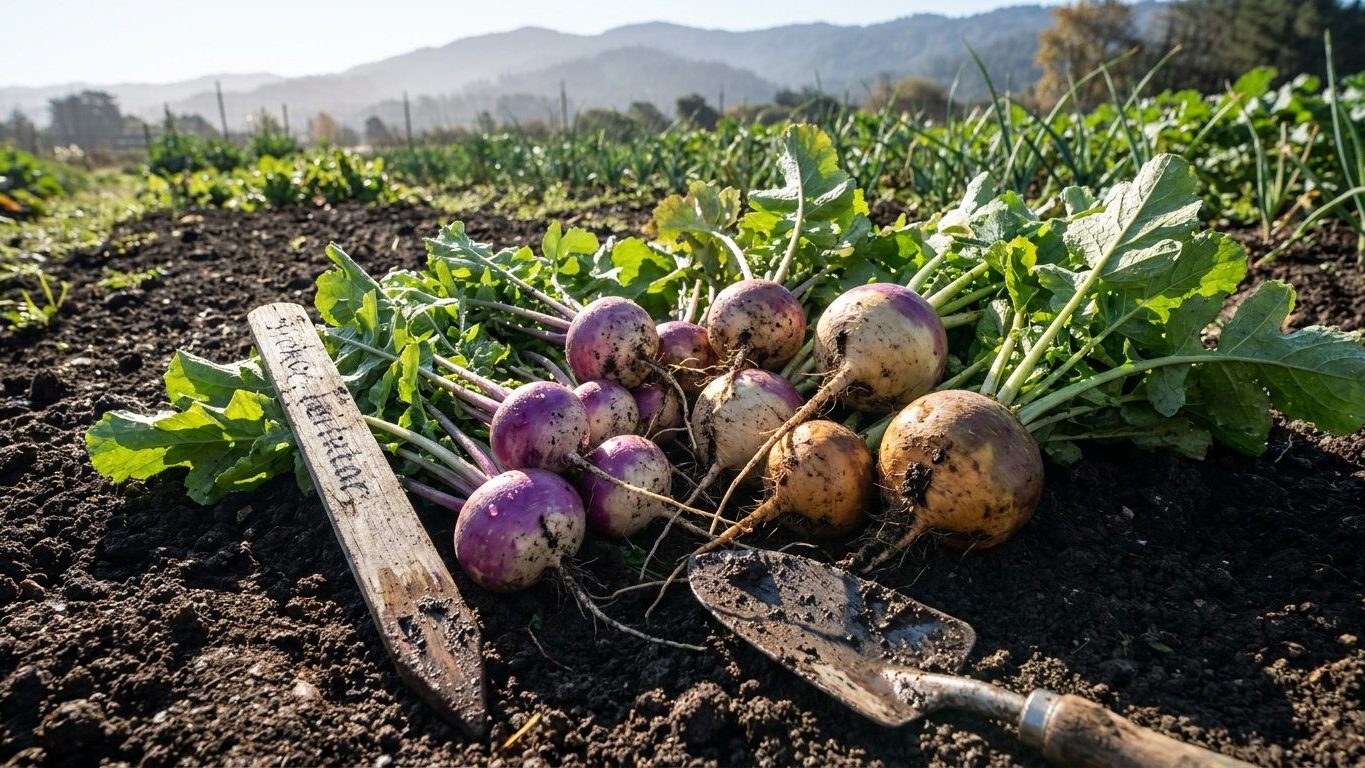

Connecticut‘s Turnips and Rutabaga split cleanly by season length. Fast turnips like Hakurei or Purple Top White Globe thrive in the state’s short cool windows, spring or fall. Rutabaga needs a longer, cooler stretch and does best as a single fall crop timed backward from the first frost, not planted in spring at all.
The short answer for Connecticut
Connecticut’s frost-free window runs from a last spring frost between April 2 and April 12 to a first fall frost between October 28 and November 10, based on the Bridgeport climate station. That gives a working season of roughly 200 days on the mild coast, shorter inland. Turnips and Rutabaga don’t need that whole window, but the split between them comes down to how fast each one finishes.
Quick turnip varieties, the ones bred for salad-size roots in 30 to 45 days, fit into either end of that window. Sow them two to three weeks before the last frost date for a spring crop, or again in mid to late summer for a fall crop that finishes in cooler, milder weather when the roots turn sweeter instead of woody. Purple Top White Globe, the standard slicing turnip most Connecticut gardeners already know, matures in about 55 days and works best as a fall planting timed to finish before that October frost window opens.
Rutabaga is the outlier. It needs 90 to 100 days from seed to a storage-size root, and it does not tolerate the muggy heat of a Connecticut July the way a fast turnip does. The plant sulks, the roots stay small and fibrous, and the flavor turns bitter. The fix is to skip spring planting entirely and sow rutabaga by early July, counting backward from the first fall frost so the roots size up during the cool, damp weeks of September and October, when rutabaga actually does its best growing.
So the short version: pick a 30 to 45-day turnip if you want two harvests a year, one in spring and one in fall. Pick rutabaga if you want one long fall crop and you’re willing to give up the bed for the whole summer to get it. Trying to run both crops on the same spring schedule is the single most common mismatch gardeners make with this pair in Connecticut.
What will not work here

Slow turnip varieties sown in spring are the first failure. Anything bred to mature past 60 days, planted in April, is still filling out its root in late June and early July, right as Connecticut’s humidity and heat peak. The result is a woody, sharp-tasting turnip instead of a tender one, and often a plant that bolts to flower before the root ever bulks up. If a seed packet lists a maturity date longer than about 50 days, that variety belongs in a fall planting, not a spring one.
Rutabaga sown late is the second failure, and it’s the one that costs a whole crop rather than just flavor. Because rutabaga needs those 90 to 100 days, a planting pushed to late July or August in Connecticut runs straight into the October 28 to November 10 frost window before the roots have sized up. A grower who waits until the “it’s cooling off, let’s plant fall crops” instinct kicks in in August has already missed the rutabaga window by three to four weeks. Early July really is the cutoff, not a suggestion.
Tight spacing is the third failure, and it’s specific to Connecticut’s summer humidity rather than a universal rule. Turnips and Rutabaga crowded closer than the seed packet recommends trap moisture around the leaves, and Connecticut’s muggy August air is exactly the kind of environment that turns that trapped moisture into downy mildew and Alternaria leaf spot. Thinning aggressively, even when it feels wasteful to pull healthy seedlings, keeps airflow moving through the row and cuts disease pressure more than any fungicide will.
Finally, watering on a weekly schedule fails both crops during dry stretches. Turnips and Rutabaga are shallow-rooted and size up fast once they start, and an irregular water supply, heavy rain followed by a dry week followed by more rain, is what causes split roots and pithy, hollow centers. Consistent moisture matters more than total volume here, particularly for rutabaga during its final month of bulking in September and October.
What changes across Connecticut
Connecticut sits across USDA hardiness zones 6a to 7b, and that spread matters more than it might seem for a 5,500-square-mile state. Zone in this system is built from one number, the average annual extreme minimum temperature, and it tells you about winter survival more than about planting dates directly. But the same geography that produces that zone spread, the moderating effect of Long Island Sound versus the colder inland hills, also shifts frost timing enough to matter for turnip and rutabaga scheduling.
The frost dates cited above come from Bridgeport, a coastal station on Long Island Sound and the mildest part of the state. Inland Connecticut, and especially the higher elevations of Litchfield County in the northwest corner, sees frost arrive earlier in fall and linger later in spring. A gardener working land at elevation or well inland should expect the growing season to run 10 to 14 days shorter on each end compared to the coastal figures used here, which pulls the rutabaga sowing deadline forward into late June rather than early July.
This isn’t a case where one adjustment fits everyone equally. A shoreline garden in Fairfield County can push a fall turnip sowing into early August and still finish before frost. A hillside garden in Litchfield or northern Hartford County working with the cooler end of that 6a to 7b range needs to treat late July as the real cutoff for anything, turnip or rutabaga, meant to mature before the ground freezes. There’s no single date that covers both, only a range, and the coastal dates in this article sit at the generous end of it.
Where to check this for your own county
The Connecticut figures here come from one weather station and one statewide hardiness map, and neither one knows what your specific county looks like. The University of Connecticut’s Cooperative Extension is the resource built to fill that gap, and it’s the next stop for anyone trying to nail down a planting date closer to home than a Long Island Sound weather station.
Visit UConn Extension and look specifically for two things. First, a county-level planting calendar, if one exists for your area, will adjust the frost-date estimates used in this article for your actual local microclimate, whether that’s a warmer coastal pocket or a colder inland valley. Second, look for any variety trial results UConn has published for turnips or rutabaga specifically. Extension programs regularly test different cultivars under local conditions and report back on which ones actually performed well in Connecticut’s soil and weather, information that goes well beyond what a seed catalog description can tell you.
A county-specific recommendation from your local extension office will always beat a state-level article, this one included. Connecticut is a small state geographically, but the difference between a Fairfield County coastal garden and a Litchfield County hillside is large enough to change a planting date by two weeks or more, and no single article can account for every one of those variations. Treat this page as the starting framework, then check your county’s specific guidance before finalizing a sowing date, especially for the tighter rutabaga window.
Checking this against your own garden
Every date in this article is an average built from thirty years of weather records, which means your actual garden will deviate from it in some direction, and the deviation is worth watching for rather than fighting. Three signs from the plants and soil themselves outrank any calendar date.
Soil warmth by feel is the first check. Turnip and rutabaga seed germinates reliably once soil reaches the mid-40s Fahrenheit, and a gardener can get a rough read by simply pushing a hand a few inches into the bed in early spring. Soil that still feels cold and damp, more like refrigerator temperature than room temperature, isn’t ready yet regardless of what the calendar says about the last frost date.
The appearance of true leaves is the second check. Turnip seedlings put out two small, rounded seed leaves first, then a set of true leaves with the jagged edge typical of brassicas. That true-leaf stage is when the plant has actually established a root system capable of handling thinning and outdoor stress, and it’s a better cue for thinning timing than counting days since sowing.
Early flowering is the third, and it’s a warning rather than a milestone. If turnip or rutabaga plants send up a flower stalk before the root has sized up, that’s the plant responding to stress, usually a hot spell or a cold snap it read as the end of its life cycle, and it’s a signal that this particular bed or this particular week ran hotter or colder than the season’s average. A grower who sees that happen consistently, year after year, in the same corner of the yard has just learned something about a microclimate no state-level frost map could tell them.