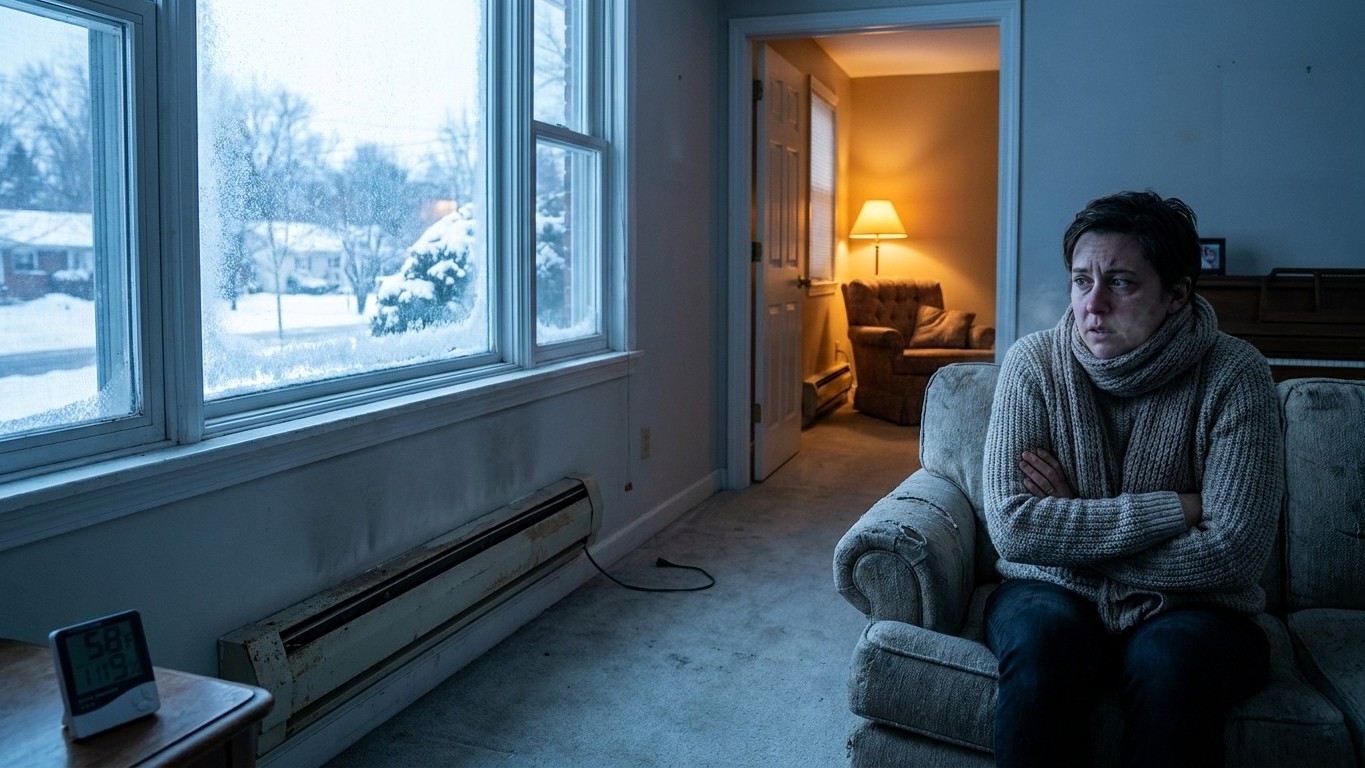

One room stays cold while the rest of the house is fine. That almost never means the whole heating system failed. It means one Thermostat, one breaker, one zone valve, or one loop stopped doing its job while everything else kept running. Which one depends entirely on what kind of baseboard heater is sitting under that window, and that’s the first thing to figure out before doing anything else.
Which one is it, before anything else
There is no single set of instructions for “a Baseboard Heater that isn’t working,” because there are two quite different appliances hiding under that one name. An electric baseboard heater is a resistance element sealed inside a metal enclosure, wired at 120 or 240 volts and controlled by a Line-Voltage Thermostat, often built right into the unit. A hydronic baseboard is not a heater at all in the electrical sense. It’s an emitter on a boiler loop, a finned copper tube that hot water passes through, radiating heat as it goes. One of these is live electrical wiring. The other is plumbing with a thermostat attached to a boiler somewhere else in the house.
That difference matters more than anything else in this article, because the wrong instructions applied to the wrong appliance are how people get hurt or waste an afternoon. If the cold unit has a cord-free enclosure with a small dial or slider on the end of it and nothing running to a boiler, it’s electric. If it has copper piping entering and leaving the enclosure, connected to other baseboards in a loop that eventually reaches a boiler in the basement or a utility closet, it’s hydronic.
There’s a third case worth naming because it trips people up: some electric baseboard units are filled with a heat-transfer fluid and marketed using the word “hydronic” because the fluid moves heat the way water does in a boiler loop. That’s a manufacturing detail, not a system type. If the unit plugs in or wires to a breaker and isn’t connected to a boiler anywhere in the house, treat it as electric for every purpose in this article, including the safety warnings. The label on the unit, not the marketing name, tells you what you’re dealing with.
Settle this before touching a cover, a thermostat dial, or anything else. The electric checks below involve a breaker panel and, at the point where they stop, exposed line-voltage wiring. The hydronic checks involve a boiler and a water loop and none of the electrical exposure. Applying one set of steps to the other appliance either does nothing useful or creates a real hazard.
If it is electric
Work through these in order. Each one is safe to do without opening the enclosure, and each one is cheaper and faster than the next, so there’s no reason to skip ahead.
- Check the thermostat that actually controls this heater. Many electric baseboard units have their own line-voltage thermostat built into one end of the enclosure, separate from any thermostat on the hallway wall. If someone bumped that dial to its lowest setting, or switched it off, the rest of the house can be warm while this one room does nothing. This is the single most common cause of one cold electric baseboard and the easiest to rule out.
- Check the breaker. Go to the panel and look for a breaker that’s tripped, sitting in the middle position rather than fully on or off. Reset it once, firmly. If it holds, the heater should come back on within a few minutes as the element warms. If it trips again immediately, stop, that’s covered in the next section.
- Check whether other heaters on the same circuit are also cold. Electric baseboards are frequently wired in a series on one circuit, meaning several units in adjacent rooms share a single breaker. If two or three rooms are cold together, the fault is more likely in the shared wiring or the breaker itself than in any one unit. If only this one room is affected while a neighboring room on the same circuit works fine, the problem is local to this heater.
- Check for dust buildup at the element. Electric baseboards have a thermal cutout that shuts the unit down if it overheats, and heavy dust or pet hair packed along the heating element is a common reason that happens. A unit that clicks on, runs briefly, then shuts off on its own, repeating that cycle, is often telling you it needs cleaning rather than repair. This can usually be addressed by vacuuming the visible fins through the front grille without removing the cover.
That’s where the homeowner checks end. Behind that enclosure cover is line-voltage wiring, connected directly to the breaker panel, and opening it to test the element, the thermostat’s internal switch, or the wiring connections is not a job to do with the power still live. If the four checks above don’t bring the heater back, the next step is confirming the circuit is fully dead at the panel, not just switched off at the unit, before anyone opens that cover. If you’re not certain the circuit is dead, that’s the point to call an electrician rather than proceed.
If it is hydronic
The logic here is different because the heater itself has no electrical fault to chase. The heat is made somewhere else and delivered through water, so the checks move outward from the room instead of into the enclosure.
- Check whether the boiler is running at all. Go look at it. Most boilers have some visible indication of operation, a light, a display, or an audible burner when the system calls for heat. If the boiler shows no sign of running anywhere in the house, the problem isn’t this baseboard, it’s upstream, and every emitter in the house should be affected, not just one.
- Check whether this is the only cold emitter or one of several. This is the question that matters most. If every baseboard and radiator in the house is cold, the fault is at the boiler and nothing about this one room’s hardware needs attention yet. If this is the only cold unit while others nearby are warm, the fault is local to this room’s loop, and the boiler itself is doing its job fine.
- Check the zone valve for this loop, if the system uses zone valves. Homes with multiple heating zones typically have a motorized valve for each one, often clustered near the boiler with a small lever or manual override on each valve body. A valve stuck closed, or a zone that isn’t being called by its thermostat, will leave every emitter on that zone cold while other zones stay warm. This is a mid-level check, more involved than looking at a dial but still something to observe without disassembly.
- Check whether the loop is air-locked. Trapped air in a hydronic loop blocks water flow through part of the system, and a baseboard fed by an air-locked section can stay cold or only partially warm even while the boiler runs normally and the rest of the loop is fine. Some systems have a bleed valve at the end of each baseboard run or at a high point in the piping for exactly this reason.
- Check whether the damper on the unit itself is simply closed. Hydronic baseboards have a small metal damper inside the enclosure that can be adjusted, and sometimes closed all the way, restricting airflow across the hot pipe even though water is circulating normally. A damper that’s been pushed shut, deliberately or by a vacuum cleaner catching an edge, will produce a room that stays cool while the pipe inside is warm to the touch.
The distinction between one cold emitter and several does more work here than any single check. One cold unit among warm ones points at that loop, that valve, or that damper. Every emitter cold at once points at the boiler, and no amount of bleeding or damper adjustment on this one baseboard will fix a boiler that isn’t firing.
Where this stops
Some findings end the homeowner part of this and hand it to a professional, without much room for judgment calls in between.
Line-voltage wiring inside the electric enclosure is the first one. Once the breaker is confirmed off and the four surface checks haven’t solved it, testing the element or the internal thermostat connections is electrical work, not a heater repair, and it should go to an electrician.
A breaker that trips again immediately after being reset is the second. That’s not a nuisance trip, it’s the breaker doing its job in response to a fault somewhere in the circuit or the unit, and repeatedly resetting it doesn’t fix whatever caused it to trip.
A boiler that won’t fire at all is the third. Whether that’s an ignition problem, a pressure issue, or something else, it’s outside what a cold-room check can diagnose from the baseboard end, and it affects the whole house, not just one room.
Any smell of burning, from an electric unit or from anywhere near the boiler, ends the checklist immediately. That’s not a symptom to keep investigating, it’s a reason to shut the system off and call someone.
One more thing worth knowing before that point: a baseboard cover that feels warm to the touch during normal operation is expected, that’s the heater working. A cover that feels hot, noticeably hotter than the rest of the enclosure or hot enough to be uncomfortable to touch, is not normal and is itself a reason to stop and have the unit looked at rather than a detail to note and move past.
Common questions
Can one electric baseboard heater fail while others in the house keep working fine?
Yes, and it’s actually the more common pattern than a whole-house electrical fault. Each unit typically has its own built-in thermostat, and several units can share a breaker without sharing a fault, so one heater going cold while its neighbors stay warm points at that unit or its local thermostat setting rather than the panel.
Why is only one room cold when the boiler is clearly running?
Because a running boiler only proves the heat source works, not that heat is reaching every loop. A closed zone valve, an air-locked section of pipe, or a closed damper on that one baseboard can all leave a single room cold while the boiler heats every other zone in the house normally.
Is it safe to open the cover on an electric baseboard heater to look inside?
Not while the circuit is live. The enclosure holds line-voltage wiring connected directly to the breaker panel, and the only safe way to open it is after confirming that circuit is fully off at the panel, not just switched off at the unit’s own thermostat.
What does it mean if a hydronic baseboard is warm on one end and cold on the other?
That’s usually a sign of trapped air or a partial flow restriction in that section of pipe, since water isn’t reaching the far end of the finned tube the way it’s reaching the near end. It points at the loop for that specific unit rather than at the boiler, which is presumably heating the water that is getting through.