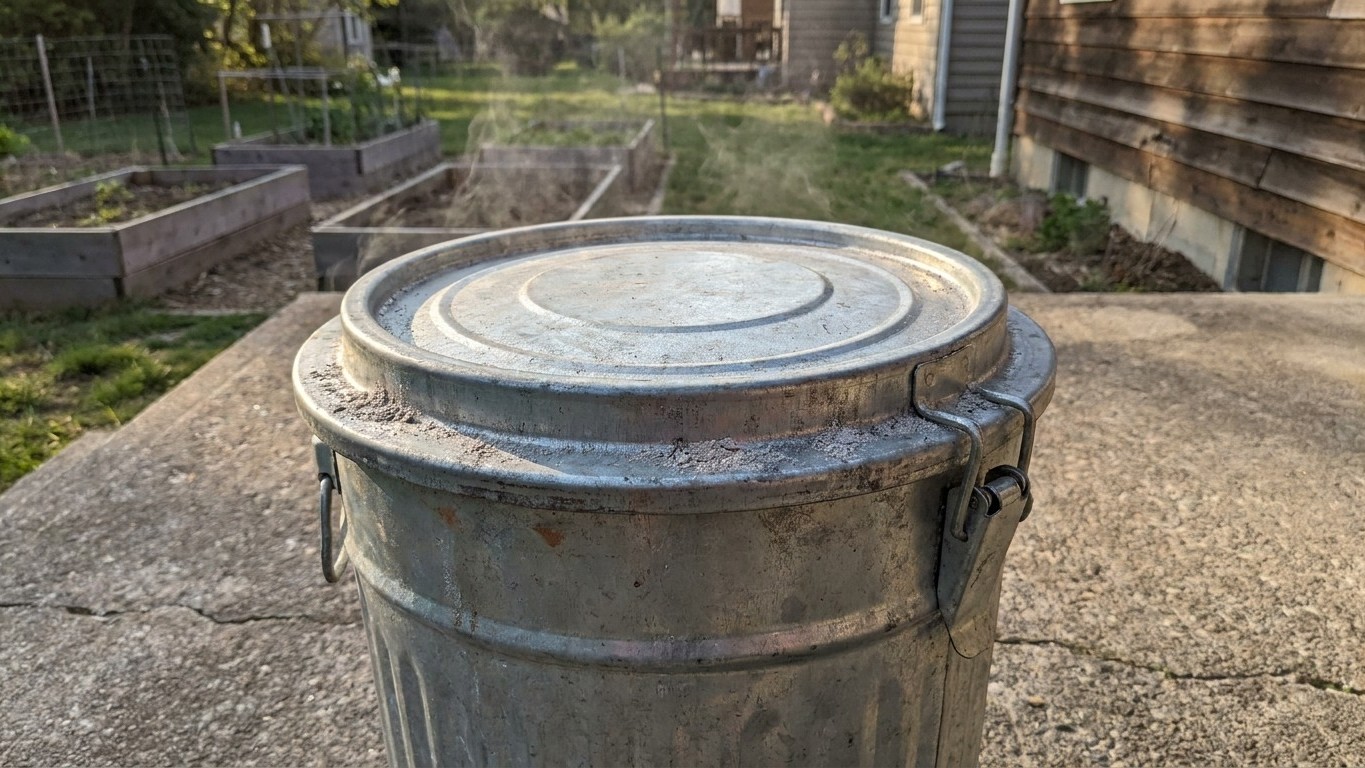

Pellet stove ash goes in a metal container with a tight lid, stored outside on a non-combustible surface, then either into the trash once it’s fully cooled or onto the garden if the pellets burned were clean, untreated wood. The tricky part isn’t the disposal itself. It’s knowing when the ash is actually safe to touch, because looks are deceiving here.
Ash keeps embers longer than you think

A pile of gray ash looks dead. It isn’t always. Fine ash acts like an insulating blanket over embers buried underneath, and that blanket can hold enough heat to reignite for days after the fire seems out. This is the mechanism behind a huge share of residential ash fires: someone assumes cold-looking ash means cold ash, bags it up, and sets the bag down somewhere it shouldn’t be.
The U.S. Fire Administration’s guidance on heating equipment centers on distance and material. They advise you “keep anything that can burn at least 3 feet from all heat sources including fireplaces, wood stoves, radiators, space heaters or candles.” That three-foot rule applies just as much to the ash your stove produces as it does to the stove itself, because hot ash is, functionally, still a heat source.
So the storage routine matters more than people expect. Ash goes into a metal container, never anything else. A paper bag will smolder and catch. A plastic bin will melt, and possibly ignite, long before the embers inside have cooled down. The garage floor isn’t safe either, since a stray ember can catch sawdust, cardboard, or a stored gas can. The same goes for a wood deck: composite or pressure-treated, it doesn’t matter, both will scorch or ignite under a container that’s radiating heat from below.
Where the container should actually sit
Put the metal can on dirt, gravel, or a concrete pad, at least several feet from the house, from fences, and from anything else that burns. Leave it there for a minimum of several days before you even consider transferring the ash elsewhere. If you’re unsure whether embers are still live, treat the whole batch as hot. There’s no visual test that reliably tells you otherwise, and a screwdriver poked into the pile to check for warmth isn’t a substitute for just waiting it out.
This is also where annual maintenance connects to the ash question. The U.S. Fire Administration recommends you “maintain heating equipment and chimneys by having them cleaned and inspected each year by a professional.” A stove that’s been inspected and is burning properly produces ash that’s more predictable and typically cooler faster, simply because the fuel is combusting the way it’s supposed to. A poorly maintained unit is more likely to leave partially combusted material in the ash pan, and that material holds heat longer.
How much a pellet stove makes
Compared to a wood stove, a pellet stove is almost tidy. Pellets are manufactured to a consistent density and moisture content, so combustion is more complete and more even than tossing in split logs of varying dryness. Less unburned material means less leftover ash, which is one of the quieter advantages of switching fuel types that doesn’t get talked about as much as the automatic feed or the thermostat control.
But “less ash” isn’t a fixed number, and anyone promising you a specific bags-per-winter figure is guessing. The real driver is fuel quality, and the EPA is direct about this: “Pellets can differ significantly in how well they’re made and how well they burn. Lower quality pellets may provide less heat and create a fine dust. Higher quality pellets tend to burn cleaner and produce less ash.” That’s the whole equation. Buy inconsistent pellets, and you’ll be emptying the ash pan more often, and dealing with more fine dust in the process. Buy well-made pellets, and the ash output drops along with the dust.
If you want to understand what’s driving your own ash volume, our guide on pellet quality breaks down what separates a clean-burning batch from one that leaves your ash pan full every few days.
Why the stove itself factors in
The EPA notes that “EPA currently certifies over 90 different pellet stoves,” and that “EPA-certified pellet stoves usually fall into the 70-83% efficiency range, while heating capacities range from 8,000-90,000 Btu per hour.” A more efficient stove is converting more of the pellet into heat and less into ash and unburned residue, so the efficiency rating on your appliance label is a rough clue as to what you should expect, even though the agency doesn’t publish an ash-output figure to go with it.
Regular cleaning also shapes what ends up in the ash pan. The EPA states plainly that “pellet stoves need to be regularly cleaned to ensure that the stove runs efficiently and safely,” and that owners “should have your stove professionally cleaned at least once a year.” A stove that’s overdue for cleaning tends to burn less completely, which pushes more material into the ash tray between servicing visits. If your ash output has crept up recently, a clogged burn pot or dirty exhaust path is a more likely explanation than the pellets suddenly changing.
Worth remembering too: pellet stoves aren’t passive appliances. The EPA points out that “pellet stoves need an electrical supply to work because they use motorized components to feed the fire and blow out hot air,” and that “the pellets are poured into a hopper, which automatically feeds into the stove.” That automated feed is part of why combustion is so consistent, and consistent combustion is exactly what keeps ash volume down and predictable, batch after batch.
Using it in the garden
Once ash has cooled for good, and only then, it has a second life outside the trash can. Wood ash is alkaline, and it carries potassium along with smaller amounts of calcium and other minerals plants use. For a garden bed that’s naturally acidic, a modest amount of ash can nudge the soil chemistry in a helpful direction. For a bed that’s already neutral or alkaline, the same ash can push things too far the other way and start locking up nutrients your plants need.
That’s the tradeoff in a sentence: alkaline ash helps acidic soil and hurts alkaline soil. There’s no universal answer, which is exactly why this isn’t a page that hands out an application rate. How much ash your soil can absorb, and how often, depends entirely on where your pH sits right now, and that’s a question your own soil test answers, not a blanket number pulled from a stove manual.
The condition that matters most
Only ash from clean wood pellets belongs anywhere near a garden bed. That means pellets made from untreated wood, with no additives, no binders beyond what’s naturally in the wood, and no pellets marketed for anything other than home heating. Ash from treated lumber, painted wood, or fuel blended with additives can carry compounds you don’t want concentrated in soil where you’re growing food, and there’s no visual way to sort clean ash from contaminated ash once it’s cooled in the pan. The source has to be known before the ash goes anywhere near a planting bed.
If you’re burning EPA-certified pellet stoves on standard heating pellets, and you know exactly what’s gone into the hopper all winter, that’s the batch worth saving for the garden. Anything mixed with fire starters, anything from a stove that’s also occasionally burned scrap wood, or anything you can’t fully account for should just go in the trash instead.
For the pH side of this decision, our pages on soil pH walk through how to test your beds and read the results, which is the step that actually tells you whether ash belongs in your garden this season or should sit out entirely. Skipping that test and guessing is how well-meaning gardeners end up with soil that’s harder to grow in, not easier.
Common questions
How long should pellet stove ash sit before I throw it away?
There’s no fixed number of hours that’s safe across every stove and every fuel load, which is why the guidance focuses on the container instead of the clock. Store it in a covered metal can, away from the house, for several days at minimum, and don’t transfer it to household trash until you’re confident no warmth remains anywhere in the pile.
Can I compost pellet stove ash instead of putting it in the garden bed directly?
Composting is an option for clean wood-pellet ash, but the same source rule applies: only ash from untreated pellets with no additives. Adding it to a compost pile doesn’t remove the pH concern, so a soil test still matters before you use the finished compost on beds that are already alkaline.
Does a dirty or poorly maintained pellet stove produce more ash?
Generally, yes. A stove that’s overdue for its annual professional cleaning tends to burn fuel less completely, leaving more residue in the ash pan. Regular cleaning is one of the few controllable variables in how much ash you’re dealing with each week.
Is pellet stove ash different from wood stove ash?
The material itself is similar, since both come from burning wood. The difference is volume and consistency: pellet fuel burns more evenly than split logs, so pellet stoves typically leave behind less ash overall, and that ash tends to be more uniform batch to batch, assuming consistent fuel quality.