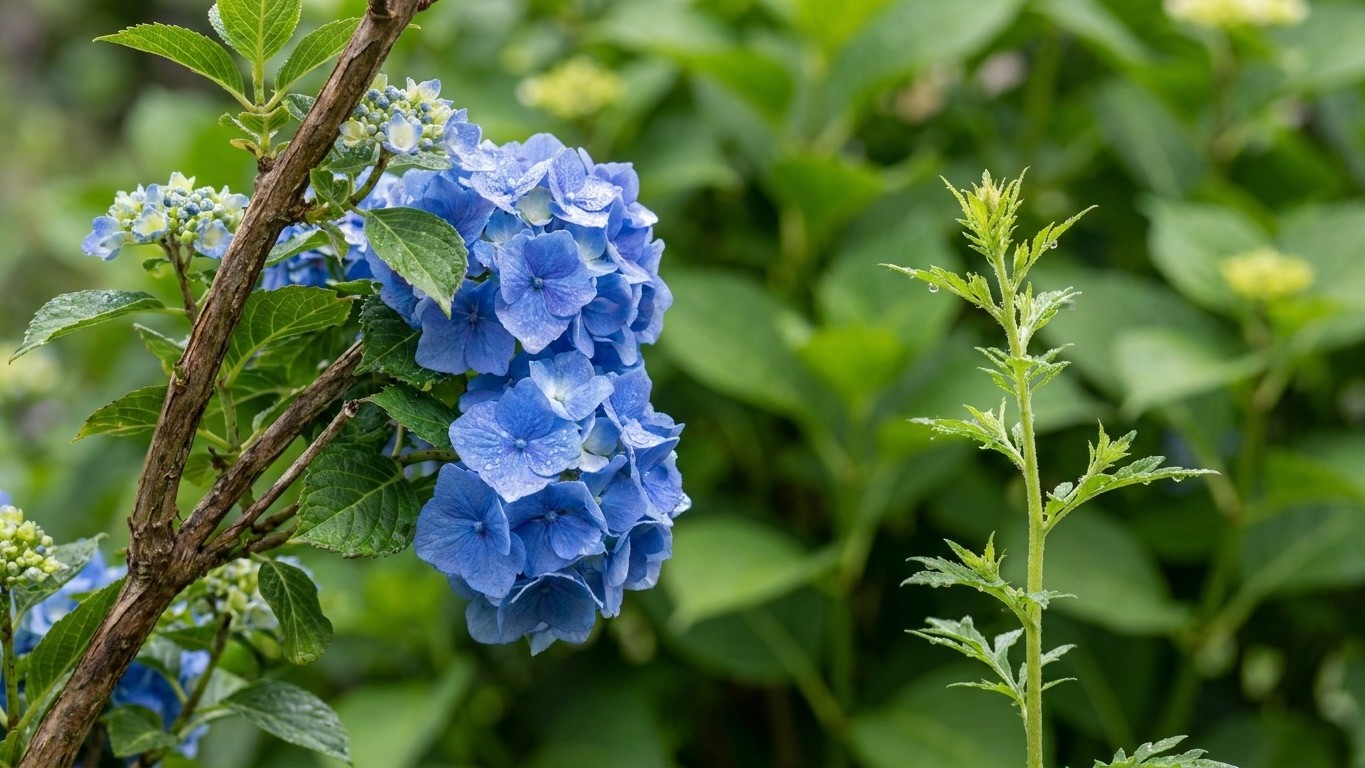

Hydrangeas grow across nearly all of Florida, but the state splits into two different gardens. North Florida gardeners work around real winter frost and plant dormant shrubs in late winter. Everyone from Orlando south gardens in a nearly frost-free climate where summer heat, not cold, is the limiting factor, and bloom color swings on soil pH almost everywhere aluminum is available to the roots.
When to plant Hydrangeas in Florida
The frost data that anchors a planting calendar for this state comes from a single well-documented station: Jacksonville International Airport, station USW00013889, tracked by NOAA’s National Centers for Environmental Information over the 1991-2020 normals period. There, the last spring freeze (32°F) falls somewhere between February 16 and March 7 in most years, and the first fall freeze arrives between November 26 and December 13. That’s a roughly nine-month window most years where a hydrangea’s roots and stems are safe from freeze damage.
A few caveats matter before applying that figure elsewhere. It’s a 30-70% probability band, not a guarantee, some years show no freeze at all. The airport sits inland, so coastal gardeners in the same region likely see milder swings. And this window belongs to north Florida specifically. The Panhandle’s frost season runs longer, though no published figure here supports a specific date for that area. South past about Ocala, the premise flips entirely: central Florida (Orlando) and south Florida (Miami, Tampa, the coasts) are effectively frost-free, so planting there isn’t scheduled around a freeze date at all, but around summer heat, which becomes the stress period instead of winter cold.
What this means for planting a hydrangea, not a seed
Home gardeners almost never start hydrangeas from seed. Named cultivars don’t come true from seed, and germination for the species is slow and unreliable. Nurseries propagate hydrangeas from rooted cuttings, which is why every garden center hydrangea is already a container-grown plant with a developed root ball. The practical timing question isn’t “when do I start seed indoors,” it’s “when do I get a potted shrub into the ground.”
In north Florida, count backward from that February 16 to March 7 window. Plant in late winter while the shrub is still dormant or just breaking bud, ideally by early March so roots get several weeks to establish before summer heat arrives. Planting a dormant shrub, rather than one already pushing soft new growth, means less transplant shock and no tender leaves exposed if a late cold snap slips in. If you buy a hydrangea in December or January, there’s no reason to wait for a specific date, just get it in the ground when the soil isn’t waterlogged.
In central and south Florida, skip the frost math entirely. The better planting window is fall through winter, when soil and air temperatures are mild and the plant can establish roots before summer’s heat and humidity test it. Planting into July soil in Tampa or Miami means fighting establishment stress and heat stress at the same time, a combination that kills more new shrubs than any pest does.
Soil and site preparation
Hydrangeas want morning sun and afternoon shade almost everywhere in Florida. The farther south you garden, the more shade the plant needs to avoid leaf scorch; dappled light all day works better than a few hours of unfiltered midday sun in July.
Soil texture matters more than most people expect. Florida’s sandy soils drain fast, sometimes too fast, so water moves past the root zone before the plant can use it. The fix is amending the soil before planting so it holds moisture longer. Work several inches of compost or aged organic matter into a bed at least two to three times the width of the root ball, ideally several weeks before planting, so the material has started to break down rather than sitting as a distinct layer roots avoid.
Drainage cuts the other way too. Hydrangeas hate wet feet, and low spots that hold standing water after a Florida downpour will rot roots regardless of added organic matter. If your site pools water, raise the bed six to eight inches above grade rather than fighting the natural grade.
Soil pH and bloom color
For big-leaf hydrangeas (Hydrangea macrophylla), soil chemistry doesn’t just affect plant health, it determines flower color. Acidic soil, roughly below pH 5.5, makes aluminum available to the roots and pushes blooms toward blue. Soil closer to neutral or alkaline, above pH 6.5, ties up that aluminum and the same variety blooms pink. Gardeners chasing blue typically work in elemental sulfur or aluminum sulfate weeks to months before bloom, since the shift isn’t instant; gardeners chasing pink work in garden lime instead. White-blooming varieties and most panicle and oakleaf hydrangeas don’t shift with pH.
Space plants three to ten feet apart depending on the mature spread of the variety, checking the tag rather than guessing, since a compact reblooming type and a full-size panicle hydrangea need very different room.
Varieties that suit Florida
Florida’s long, hot, humid growing season changes which traits matter most. Cold hardiness is only a north Florida concern, and even there it’s secondary to two bigger questions: how much heat and sun the variety tolerates, and whether it blooms on old wood, new wood, or both.
That last point matters more here than most. A variety that blooms only on old wood (stems grown the previous year) loses its flower buds if a hard freeze kills those stems back, or if late-winter pruning removes them by mistake. A variety that blooms on new wood flowers reliably even after dieback, because it’s building buds on the current season’s growth.
Widely available types and what each is good for
- Panicle hydrangea (Hydrangea paniculata), widely sold under names like ‘Limelight,’ blooms on new wood and tolerates more direct sun and heat than other types, making it a solid choice for open, sunnier Florida yards.
- Oakleaf hydrangea (Hydrangea quercifolia), sold as ‘Snow Queen,’ ‘Alice,’ and similar names, is native to the Southeast and handles Florida’s humidity and part-shade conditions well, with the bonus of fall leaf color.
- Smooth hydrangea (Hydrangea arborescens), the ‘Annabelle’ type, blooms reliably on new wood and tends to be more forgiving of a hard pruning or a cold setback.
- Big-leaf hydrangea (Hydrangea macrophylla), including reblooming series marketed as ‘Endless Summer’ types, flowers on old and new wood, hedging against losing a season’s blooms to dieback or pruning mistakes, but it’s also the most heat- and sun-sensitive of the group and needs the most reliable afternoon shade in central and south Florida.
No extension service or institution is cited here as endorsing a specific cultivar; these are simply the traits that matter given Florida’s season length. Check plant tags for confirmed bloom timing and mature size before buying.
What to plant alongside
Hydrangeas share cultural needs with a handful of other acid-loving, part-shade plants, which makes them good bed companions rather than just neighbors that happen to coexist. Azaleas and camellias want the same dappled light and slightly acidic, moisture-retentive soil, so a mixed bed needs only one soil amendment plan instead of three conflicting ones. Ferns and other low groundcovers planted at the hydrangea’s base help shade the root zone and hold soil moisture, which matters more in Florida’s sandy soils than almost anywhere else.
For pollinator interest, flowering perennials like salvia planted at the sunnier edge of a hydrangea bed draw bees without competing directly for the same root zone moisture, since their roots sit shallower.
What to avoid: turf grass growing right up to the trunk. Lawn grass is a surprisingly aggressive competitor for water and nitrogen, and mowing equipment nicking stems or surface roots is a real, everyday source of damage. Keep a mulched, grass-free ring at least two feet out from the base. Shallow-rooted annuals planted directly over a hydrangea’s root flare also compete for moisture the shrub needs during dry spells.
One common pairing claim worth naming plainly: marigolds planted near hydrangeas to “repel pests” through scent. There’s no solid evidence behind that pairing for hydrangeas specifically, and it shouldn’t replace an actual pest-monitoring routine.
Watering, feeding and support
Hydrangeas want consistent moisture, not frequent shallow sips. A deep soak that wets the top eight to ten inches of soil, roughly an inch of rainfall, once or twice a week depending on rainfall and heat, does more good than a daily five-minute sprinkler run that never reaches the root zone. In Florida’s sandy soils, that deep watering matters even more, since water drains past shallow roots quickly.
Mulch does real work here, not just cosmetic work. A two-to-three-inch layer of pine bark or similar organic mulch, kept a few inches back from the stem, moderates soil temperature through Florida’s summer heat and slows evaporation.
Feed with a balanced, slow-release fertilizer in early spring as new growth starts, and again in early summer if needed. In north Florida, stop feeding by roughly August, so new growth hardens off before the first fall freeze arrives between November 26 and December 13. Pushing tender growth into that freeze window is a common, avoidable way to lose stems. In frost-free central and south Florida, that hard stop matters less, though feeding through the hottest part of summer still isn’t ideal.
Staking is rarely needed except on top-heavy panicle varieties after a heavy summer downpour weighs the blooms down; a simple stake and soft tie is usually enough. Pruning timing depends entirely on bloom type: prune old-wood bloomers right after they finish flowering, since next year’s buds start forming soon after; prune new-wood bloomers in late winter, before spring growth starts. Remove root suckers at the base as they appear, so the plant’s energy stays in the main framework of stems.
Common problems
Leaf scorch shows up as brown, crisping edges, usually on the side of the plant getting the most direct afternoon sun. It’s a heat and sun exposure problem more than a disease, and the fix is usually more shade, though check soil moisture too since a stressed, underwatered plant scorches faster.
Wilting cuts two directions and gardeners often misread which one they’re seeing. A plant wilting in afternoon heat that perks back up by morning is likely just responding to heat stress. A plant that stays wilted regardless of watering, especially with yellowing lower leaves, is more likely dealing with root rot from poor drainage, a problem traced back to bed prep.
Powdery mildew and cercospora leaf spot both show up as Florida’s humidity would predict: powdery mildew as a white-gray dusty coating, cercospora as small brown spots that can merge and cause early leaf drop. Both are worse with poor air circulation, so thinning crowded stems and avoiding overhead watering late in the day does more than any fungicide as a first response.
No blooms, or far fewer than expected, traces back most often to pruning timing (cutting off an old-wood bloomer’s flower buds by mistake), too much shade for the variety, or too much nitrogen fertilizer pushing leafy growth at the expense of flowers.
Yellowing between the veins on otherwise green leaves, called chlorosis, usually points to soil pH too high for the plant to take up iron properly, a separate issue from the pH-driven bloom color shift, though both trace back to the same soil test.
Stunted, weak growth with no obvious above-ground cause sometimes traces to root-knot nematodes working in the soil, difficult to diagnose without a soil test since the visible symptom looks like a dozen other problems first.
Pests that actually show up in Florida
UF/IFAS Extension’s gardening pest guidance names a working list of the pests home gardeners in this state deal with most, and a handful do real, direct damage to hydrangeas specifically.
Chilli thrips (Scirtothrips dorsalis) are the one to watch closest. They show up as distorted, bronzed, or blackened new leaves and stunted growth, since the insect feeds on tender tissue before it’s fully expanded, and damage is heaviest during long hot, dry stretches. The control that actually works is pruning out and destroying damaged new growth as soon as you spot it, paired with a targeted insecticide labeled for thrips if the infestation is established.
Eastern lubber grasshoppers (Romalea microptera) are large, slow, hard to miss, and eat leaf tissue in ragged chunks. They’re active from roughly March or April through October or November, with peak numbers in July and August. Because they’re large and slow-moving, hand-picking young nymphs off plants in spring is more effective than most sprays.
Aphids cluster on new growth and flower buds, leaving a sticky residue (honeydew) behind. A strong spray of water knocks most populations down without chemicals, and encouraging lady beetles keeps numbers in check afterward.
Whiteflies scatter in a small white cloud when a leaf is disturbed and are most visible on the underside of foliage. Yellow sticky cards near the plant help monitor and reduce numbers, backed up by insecticidal soap on heavier infestations.
The rest of the extension’s list, pickleworm, melonworm, fall armyworm, cycad aulacaspis scale, hornworm caterpillars, target vegetables, turf, or cycads specifically and aren’t typical hydrangea problems, though fire ants and root-knot nematodes are worth watching in the soil around any bed. If something doesn’t match these patterns, the county extension office is the right place to get an actual identification rather than guessing.
Harvest and end of season
“Harvest” for a hydrangea means cutting blooms, either fresh or for drying, and timing that cut changes the result. For fresh arrangements, cut stems in the cooler morning hours and get them into water quickly; a fresh diagonal cut and a long drink in a bucket for an hour or two before arranging extends vase life noticeably. For dried flowers, wait until the bloom feels papery and slightly stiff on the plant, since fresh-cut blooms tend to wilt rather than dry cleanly. Hang cut stems upside down in a dark, well-ventilated space for a couple of weeks.
End-of-season care depends entirely on which part of the state you’re gardening in. In north Florida, as the first fall freeze approaches, new-wood bloomers like panicle and smooth hydrangeas can be cut back once frost blackens the foliage, since they’ll rebuild flowering wood from the base next spring anyway. Old-wood bloomers like big-leaf hydrangea should be left alone through fall; hard pruning now removes next year’s flower buds. A fresh layer of mulch before the coldest nights helps insulate the root zone, which needs protecting since established roots survive cold far better than exposed stems.
In central and south Florida, there’s no real dormancy to prepare for. Blooming may simply slow through the cooler, drier months and pick back up as temperatures rise, with summer heat remaining the bigger stress test than any winter chill.
Local help
Frost dates, soil behavior, and pest pressure all vary by county even within the same state, and a home soil test is the fastest way to know what your specific bed actually needs before you buy amendments. The University of Florida’s IFAS Extension network runs county offices across the state that handle both, and is the right first call for anyone wanting numbers more specific than a statewide average. Find your county office through the UF/IFAS Extension directory.
Common questions
Can hydrangeas grow in south Florida? Yes, but choose varieties and siting carefully. South Florida is essentially frost-free, so winter cold isn’t the concern; summer heat and sun intensity are, which means reliable afternoon shade and heat-tolerant types like panicle hydrangea perform better than sun-sensitive big-leaf types.
What is the best hydrangea for Florida heat? Panicle hydrangea (Hydrangea paniculata) and oakleaf hydrangea (Hydrangea quercifolia) generally tolerate Florida’s heat and humidity better than big-leaf hydrangea, which needs more consistent shade the farther south you garden.
Why won’t my hydrangea bloom in Florida? The most common causes are pruning at the wrong time for the variety’s bloom type, too much shade for that particular variety, or excess nitrogen fertilizer pushing leaf growth instead of flowers.
Can I change hydrangea color in Florida soil? Only on big-leaf hydrangea (Hydrangea macrophylla) varieties, and only through soil pH. Acidic soil below roughly pH 5.5 makes aluminum available and pushes blooms blue; soil above roughly pH 6.5 ties up that aluminum and pushes blooms pink. White and most panicle or oakleaf varieties don’t shift with soil pH.
Do hydrangeas need full sun or shade in Florida? Morning sun with afternoon shade suits most varieties across the state, and the farther south you garden, the more afternoon shade the plant generally needs to avoid leaf scorch in the more intense summer sun.