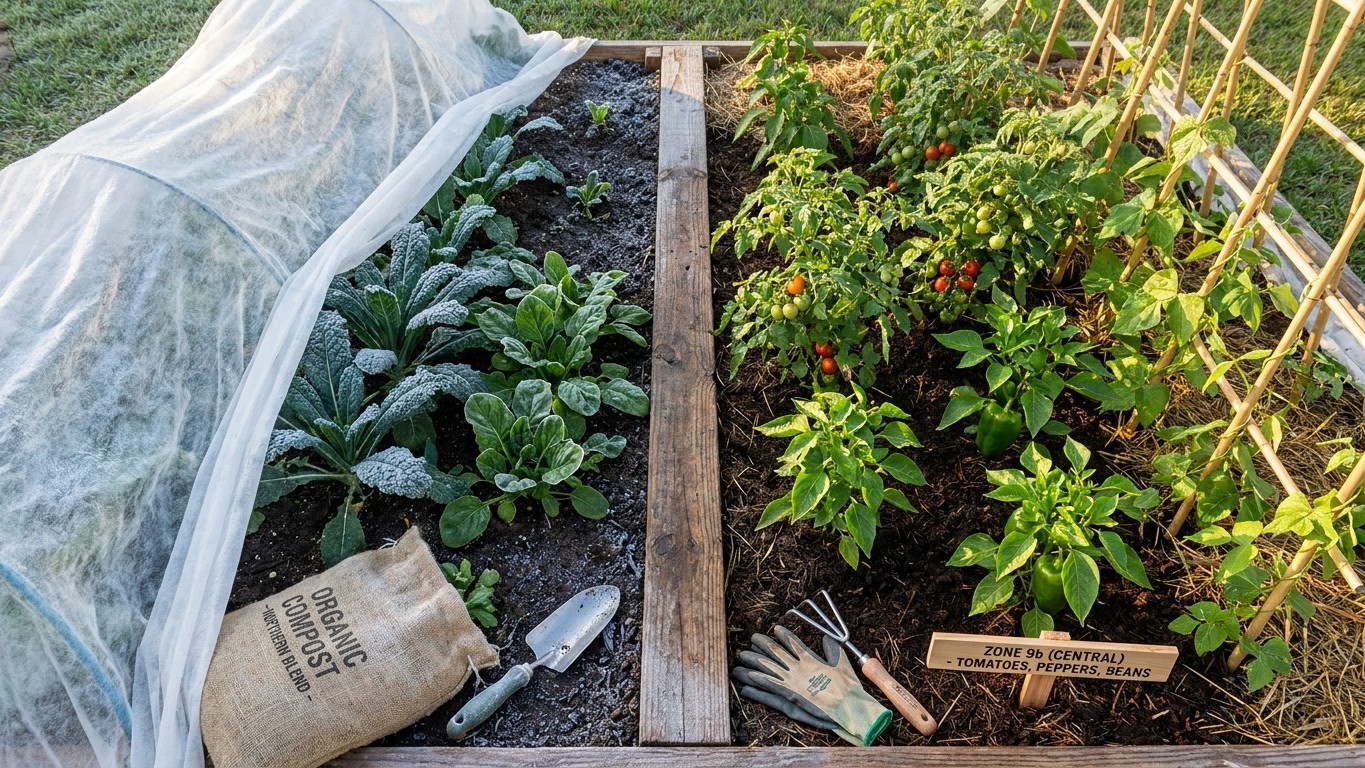

January splits Florida in two. In Jacksonville and the rest of the north, frost is still a real threat and the safe list stays short: garlic, onions, hardy greens, English peas. But in Central and South Florida the calendar flips entirely. Winter is the main growing season there, and January is one of the best months of the year to plant tomatoes, peppers, beans, and a long list of warm-season vegetables outdoors.
What goes in the ground in January

The deciding factor is never the date on the calendar. It is soil temperature and how close you sit to the last frost window. For north Florida, NOAA climate data for the Jacksonville station puts the last spring frost between February 16 and March 7. January falls weeks ahead of that window closing, so the ground there is still cold enough to kill anything tender.
South and Central Florida do not share that constraint. Both sit outside the frost band tracked at the Jacksonville station and are effectively frost-free most winters, which is exactly why the growing calendar there runs opposite to the rest of the country: winter is prime time, and summer heat and humidity are what growers work around instead.
Here is roughly how that plays out by region:
| Region | Frost risk in January | What typically goes in the ground |
|---|---|---|
| North Florida (Jacksonville area) | Real, ongoing through the last-frost window | Garlic, shallots, onion sets, English peas, kale, collards, spinach, lettuce, carrots and beets under row cover |
| Central Florida | Occasional light frost, short-lived | Tomatoes, peppers, eggplant, snap beans, cucumbers, squash, broccoli, cabbage, sweet corn |
| South Florida | Effectively frost-free | Full range of warm-season vegetables plus tropical and subtropical crops that would not survive summer heat there |
If you garden in the north and the air feels mild some afternoon, resist the pull to set out tomato transplants. The soil several inches down is still holding winter cold, and a single freeze event can wipe out a bed overnight. Stick to the hardy alliums and greens, and use a cold frame or low tunnel if you want to push the edges of that list a little further.
What to start under cover
For north Florida gardeners, the arithmetic runs backward from that February 16 to March 7 frost window. Tomatoes, peppers, and eggplant generally need several weeks of indoor growth before they are sturdy enough to transplant, so starting seed trays under lights or on a warm windowsill now lines up a crop of stocky, well-rooted seedlings ready to go out once the freeze risk passes. Start too early and you end up babying leggy, rootbound plants for weeks longer than necessary. Start too late and you lose the head start that makes an early harvest possible before summer heat shuts tomatoes down.
Central and South Florida gardeners have less pressure here, since most warm-season crops can go straight into the ground outdoors. But starting a second wave of seed under cover still pays off for succession planting: a fresh tray of squash or cucumber seedlings started now can slide into a bed as soon as an earlier planting finishes, keeping harvests coming without a gap.
Across the whole state, this is also a smart month to start slower germinators indoors: celery, parsley, and onions from seed all take their time, and starting them under cover now avoids losing weeks later when outdoor conditions are already changing.
Whatever region you are in, watch your trays for the two classic failure points: seedlings stretching thin toward a weak light source, or trays sitting finished and waiting because the outdoor window has not opened yet. Neither is fatal, but both cost you part of the harvest window if you do not catch them early.
What is ready to pick
In north Florida, January harvests lean on what survived the cold: overwintered kale, collards, and leafy greens tucked under row cover, plus anything growing in a cold frame. Indoors, sprouts and microgreens fill the gap when the outdoor garden is mostly dormant. It is also worth pulling stored sweet potatoes, winter squash, and onions out for a look, since a soft spot or a sweet smell means one is starting to turn and needs to be used before it spreads rot to its neighbors in storage.
Central and South Florida are a different story entirely. Because the growing season runs through winter there, January is an active harvest month: broccoli, cabbage, and lettuce planted in fall are typically coming in, along with carrots, beets, and other root crops. Florida’s winter strawberry season, centered in areas like Plant City, is also in full swing, and citrus, oranges and grapefruit especially, ripens through the winter months across the peninsula.
A useful gut check for readiness: leafy greens should look full and unblemished with no yellowing at the base, root crops should show their shoulders pushing slightly above the soil line, and citrus should have fully colored up rather than showing green patches near the stem end. None of that depends on the calendar, only on how the individual plant is behaving in your soil and your microclimate.
The jobs that matter this month
North Florida’s biggest January task is frost protection for citrus. A hard freeze can damage wood, not just fruit, so mulching around trunks and having covers or string lights ready to drape over smaller trees on cold nights protects an investment that took years to grow. Deciduous fruit like peaches and blueberries, which do get real winter chill in the north of the state, benefit from dormant pruning now while the plants are leafless and the structure is easy to see.
Statewide, this is prime time to order seed before the popular varieties sell out, particularly heat-tolerant tomato and pepper varieties that Florida gardeners rely on to beat the summer shutdown. Pulling a soil test now gives results back in time to amend beds before the main spring planting push, and turning a compost pile that has been sitting since fall speeds it toward being ready for use.
Tool maintenance belongs on this list too: a sharp pruner blade makes a cleaner cut and heals faster on citrus and cane fruit alike, and a dull one tears tissue and invites disease in. Walk the garden and check raised beds, trellises, and fencing for anything that slipped through fall repairs, since fixing a leaning post now is far easier than fixing it once it is loaded with a spring crop. Finally, scout brassicas and greens for aphids and cabbage worms; cool weather slows pests down but does not stop them, and catching an infestation early on a small planting is far easier than managing it once it has spread.
What not to do in January
The most common mistake in north Florida is trusting a warm afternoon. Air temperature can climb into the 70s for a day or two even while the soil underneath stays cold and while another freeze is still weeks away. Planting tomatoes or peppers outdoors on the strength of one mild stretch is a gamble that usually loses; wait for the frost window itself to close before committing tender transplants to open ground.
A related error is uncovering citrus or tender beds too early after a cold snap passes, only to get caught by the next one. Frost events in north Florida do not arrive on a fixed schedule, and removing protection on the first comfortable morning leaves plants exposed right when a second front can move in.
Fertilizer timing trips people up too. Feeding citrus a heavy dose of nitrogen while a tree is still in its dormant winter phase pushes soft new growth that a subsequent freeze can damage badly, since new shoots are far more frost-sensitive than mature wood. Hold nitrogen back until the real growth push begins later in the season, and lean instead on phosphorus and potassium if a soil test calls for feeding now. In Central and South Florida, the more common misstep is the opposite problem: gardeners assume the frost-free calendar means no limits at all, and overcrowd warm-season beds without leaving room for the heat that arrives later to force an early end to the season.
Checking this against your own county
A statewide month is a starting point, not an instruction. Florida runs from USDA hardiness zone 8b in the far north down to 11b at the southern tip, a range built on average annual extreme minimum temperature, and that spread alone moves planting windows by weeks depending on where you sit. Add elevation, coastal exposure, and how close you are to open water, and a county forty miles inland can behave very differently from one on the coast at the same latitude.
The most reliable way to narrow this down is your local University of Florida IFAS Extension office, which tracks conditions and planting guidance specific to your county rather than the state as a whole.
Common questions
Can I plant citrus trees in January in Florida?
In Central and South Florida, January is a reasonable time to plant citrus since the ground is workable and the tree has months to establish roots before summer heat arrives. In north Florida, hold off until the frost risk tracked for the Jacksonville station, February 16 to March 7 for the last spring frost, has passed, since a young tree has far less cold tolerance than an established one.
Is it too cold to start a vegetable garden in Florida in January?
Not statewide. It depends entirely on which part of Florida you are in. North Florida gardeners should stick to hardy crops until the frost window closes, while Central and South Florida gardeners are in the middle of one of their best planting months for warm-season vegetables.
Why does Florida’s growing season run opposite the rest of the country?
Because Central and South Florida stay effectively frost-free through winter, that season becomes the comfortable growing window there. Summer flips the problem: heat and humidity that would be fine further north become the limiting factor, which pushes the state’s main planting effort into the cooler months instead.
What should I do if a freeze warning is issued in January?
Cover citrus and any tender outdoor plantings before nightfall, mulch around trunks to protect the root zone, and avoid pruning or fertilizing right before a freeze, since fresh cuts and new growth are the most vulnerable tissue on the plant.