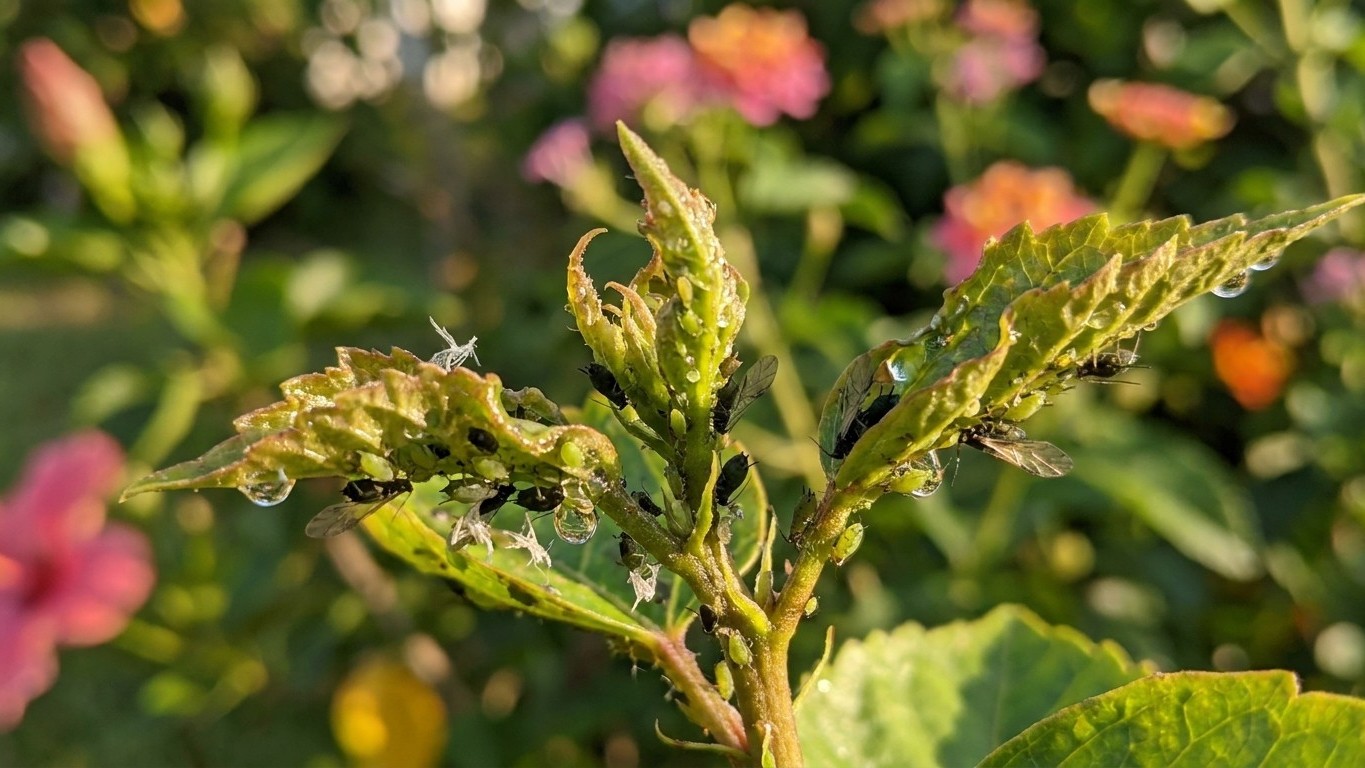

Aphids in Florida rarely take a season off. Thanks to the state’s mild winters, these soft-bodied insects can reproduce year-round in most regions, though activity typically spikes during the spring flush (March through May) and again in fall (September through November) when new plant growth gives them tender leaves to feed on. If you’re seeing curled leaves, sticky residue, or clusters of tiny insects on new growth, that’s your signal to act before populations explode.
Why Florida’s Climate Keeps Aphids Coming Back

Most of the country gets a hard freeze that wipes out aphid populations each winter. Central and South Florida rarely do. That single fact changes the whole equation for gardeners here. In Georgia or the Carolinas, aphids die back and homeowners get a clean slate every spring. In Florida, especially south of Orlando, populations can persist through December and January in mild years, feeding on winter vegetables, citrus flush, and ornamentals like hibiscus and oleander.
Humidity plays a role too. Aphids thrive in the same warm, moist conditions that make Florida landscaping so lush. New growth on citrus trees, roses, and vegetable transplants provides exactly the soft tissue these insects prefer to pierce and feed on. A single female aphid, without even mating, can produce dozens of offspring within a week under the right conditions. That’s not an exaggeration for effect. It’s how aphid reproduction works, and Florida’s climate rarely interrupts the cycle long enough to reset it.
Peak Season and Early Warning Signs
Two windows matter most for Florida property owners. The first runs from late February through May, when citrus trees push new flush and vegetable gardens are in full swing. The second runs from late summer into November, tied to fall vegetable planting and a secondary growth period in many landscape plants. Between these windows, aphid numbers usually drop, but they rarely disappear entirely in the warmer parts of the state.
The tell-tale signs show up before the insects themselves become obvious. Leaves curl inward or pucker. A clear, sticky substance called honeydew coats leaf surfaces and anything beneath the plant, including patio furniture and car hoods if a tree is infested. That honeydew often grows a black fungus called sooty mold, which can look alarming but is really just a secondary symptom. Ants trailing up and down stems are another clue. Ants farm aphids for their honeydew and will actively defend them from predators, which is one reason an ant problem near your roses or citrus can point straight back to an aphid infestation.
Flip a suspect leaf over and you’ll usually find the culprits: pear-shaped insects, often less than an eighth of an inch long, clustered along stems and the undersides of leaves. Color varies by species, from pale green to yellow to nearly black, which is part of why misidentification happens so often.
Which Aphids Show Up Most in Florida Yards and Gardens
Not every aphid in Florida behaves the same way, and the species involved often depends on what’s growing. The melon aphid, also called the cotton aphid, targets vegetables including squash, cucumbers, and melons, and it’s a regular visitor to home gardens statewide. The green peach aphid has one of the widest host ranges of any aphid species and shows up on everything from peppers to ornamental flowers.
Citrus growers, whether managing a backyard tree or a small grove, deal most often with the black citrus aphid and the spirea aphid, both of which cluster on new flush and can distort young leaves badly enough to stunt a tree’s growth for the season. The oleander aphid, bright yellow with black legs, is common on oleander and milkweed. It’s harmless to monarch caterpillars feeding on the same plants but can build up fast in numbers.
According to entomologists at the University of Florida’s Institute of Food and Agricultural Sciences, aphid feeding damage in Florida landscapes and gardens is rarely fatal to established plants on its own. The bigger risk is what aphids transmit. Several aphid species are efficient vectors for plant viruses, meaning the sap-sucking itself might be a minor nuisance while the disease they carry between plants does the real damage to a vegetable crop or ornamental planting.
What Actually Stops Them
A strong jet of water from the garden hose, aimed at the undersides of leaves, knocks a surprising number of aphids off a plant and disrupts their feeding. It sounds too simple to work, but for light infestations on tomatoes, peppers, or roses, this remains one of the most effective first responses because it’s free, immediate, and doesn’t harm beneficial insects.
Insecticidal soap and horticultural oil come next for anything that survives the water treatment. Both work by contact, meaning they need to physically touch the aphid to be effective, so thorough coverage of leaf undersides matters more than the product you choose. Neem oil offers similar contact control and has the added benefit of disrupting aphid feeding and reproduction over time. These options are generally considered lower-risk for pollinators when applied in early morning or evening, after bees have finished their daily foraging.
Natural predators do a lot of the heavy lifting in Florida landscapes that aren’t already saturated with broad-spectrum insecticides. Lady beetles, both adults and their alligator-shaped larvae, can each consume dozens of aphids a day. Lacewing larvae are just as voracious. Parasitic wasps, tiny and harmless to people, lay eggs inside aphids that eventually kill the host and leave behind a hollow, tan-colored “mummy” on the leaf, a sign that biological control is already working in your favor.
The catch is that broad-spectrum insecticides, the kind sold for general “bug control,” tend to kill these predators faster than they kill aphids, since aphids reproduce quickly enough to rebound while lady beetle populations take longer to recover. That’s part of why heavy-handed spraying sometimes makes an aphid problem worse a few weeks later, not better. Reserving stronger systemic insecticides for genuinely severe infestations, and rotating products when they are used, helps avoid this rebound effect and slows the development of resistance.
When Ant Control Belongs in the Plan
Because ants protect aphid colonies from predators in exchange for honeydew, controlling ant trails around an infested plant can make other treatments work faster. Sticky barriers applied to tree trunks, or ant bait placed away from the affected plant, remove that protective relationship without adding another pesticide application directly to the foliage.
One detail that surprises a lot of Florida gardeners: aphid outbreaks often follow over-fertilization, particularly with high-nitrogen fertilizers that push out soft, fast growth. That flush of tender new tissue is exactly what aphids prefer, so a lawn or garden fed on a lighter, slower-release schedule tends to see smaller aphid spikes even in peak season.
Related guides
- Aphids in Georgia: When It Shows Up and What Stops It
- Aphids in Alabama: When It Shows Up and What Stops It
- Aphids in Hawaii: When It Shows Up and What Stops It
- Aphids in Idaho: When It Shows Up and What Stops It
- Aphids in Arizona: When It Shows Up and What Stops It
- Aphids in Tennessee: When It Shows Up and What Stops It