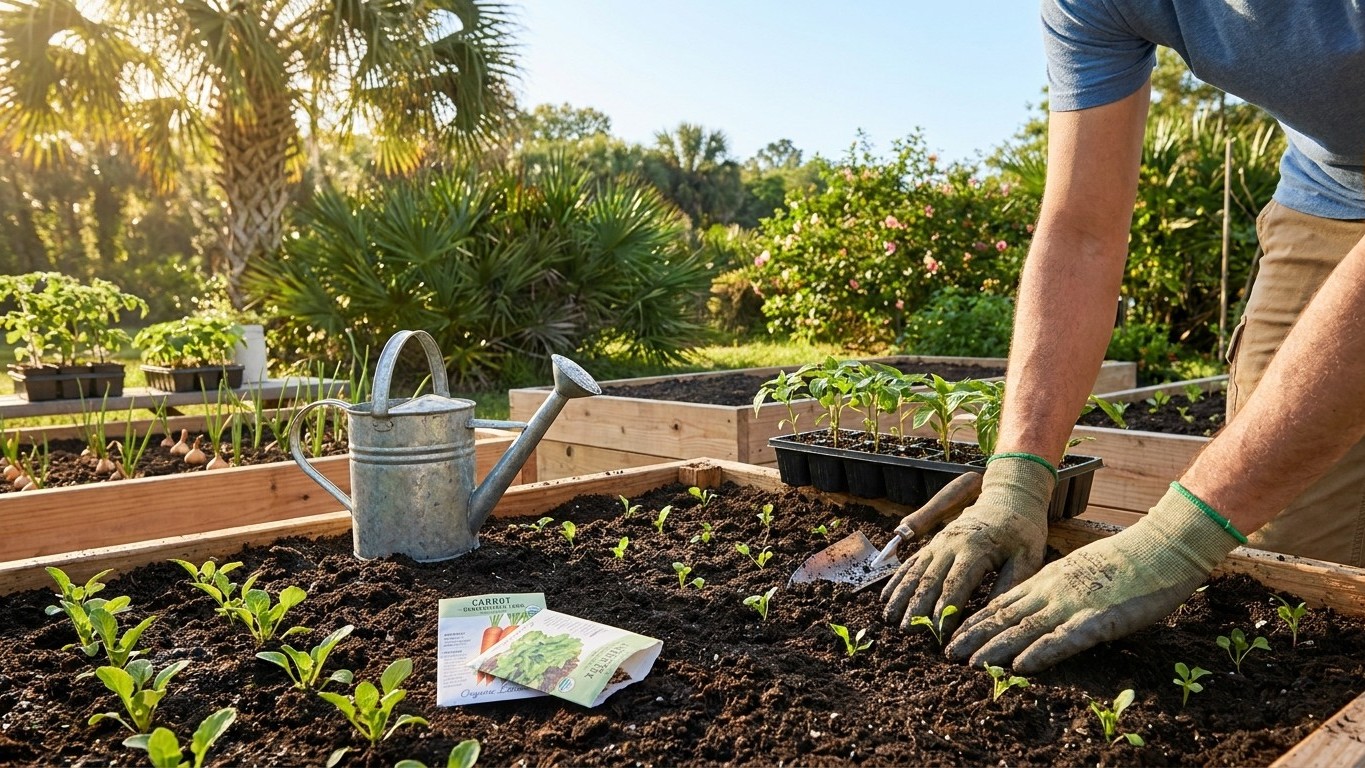

In north Florida, March straddles the last frost window (February 16 to March 7 at the Jacksonville station), so it’s the month cool-season crops finish and warm-season crops start cautiously. In central and south Florida, there’s effectively no frost to wait for, and the calendar runs the other way: March is late in the main cool-dry growing season, with the push toward summer heat and rain already visible on the horizon.
What goes in the ground in March

The decision this month isn’t the calendar. It’s which half of the state you’re standing in, and how close the soil temperature is to what a given seed or transplant needs to germinate or root without stalling. Florida’s official hardiness range runs from zone 8b up through 11b under the USDA Plant Hardiness Zone Map, and that spread changes everything about what “March planting” means.
Around Jacksonville and the rest of the northern tier (roughly zone 8b to 9a), the last spring frost window runs from February 16 to March 7. That means early March can still carry a frost risk in a given year, and by late March the window has typically closed. The safe move: keep cool-hardy crops going through the first half of the month, then transition to tender ones once the local risk has passed. Garlic and shallot sets can still go into workable ground early on. Onion sets, English peas, collards, mustard greens, carrots, beets, and Irish potatoes are all reasonable direct-sow choices through the month. Tender crops like tomatoes, peppers, squash, and beans should wait for transplants or direct seeding until the frost risk has genuinely cleared, not just because a warm afternoon fooled everyone into thinking spring had arrived.
South of about Ocala, and through the central and southern peninsula, frost isn’t part of the equation. Those areas fall into the milder end of the state’s zone range, and March sits in the tail end of the primary cool-dry growing season, before daytime heat and humidity start working against fruit set. This is prime time to get tomatoes, peppers, snap beans, cucumbers, and summer squash into the ground, alongside sweet corn and southern peas for those wanting an early jump before the wet season complicates disease pressure.
| Region | March status | Safe to plant now |
|---|---|---|
| North FL (Jacksonville area) | At or just past last frost window (Feb 16–Mar 7) | Garlic, onion sets, peas, greens early; tomatoes/peppers/beans late month |
| Central/South FL | Frost-free, late cool season | Tomatoes, peppers, beans, squash, corn, cucumbers |
What to start under cover
Counting backward from a frost window works better than counting forward from a fixed date, because it forces the math to match the actual local risk rather than a generic “spring” guess. In north Florida, tomato and pepper seedlings typically need six to eight weeks indoors before they’re ready to go outside. Anyone who hasn’t started them by early March, working back from that February 16 to March 7 window, is already behind for an early transplant and should either start now for a slightly later planting or buy started plants instead of pushing seed trays.
The two ways this goes wrong are mirror images of each other. Start too early, and seedlings sit indoors under weak light for weeks past their prime, turning leggy and rootbound in cell packs never meant to hold them that long, then sulking for a month after transplant instead of taking off. Start too late, and the plants go into the ground as tiny seedlings just as the window for a full harvest before summer heat shuts fruit set down is already closing.
In central and south Florida, where there’s no frost deadline forcing the calendar, indoor starting in March is less about survival and more about getting a head start on crops that will move outside within a few weeks: eggplant, melons, and the later rounds of peppers and tomatoes destined for planting once the current outdoor round is thinned out. Succession-starting seedlings indoors on a two-to-three-week rotation keeps something ready to slot in every time a bed opens up, which matters more in a peninsula that’s racing toward its own heat limit than in places worried about the last freeze.
What is ready to pick
In north Florida, March harvests are dominated by what survived the winter: collards, kale, mustard greens, and Swiss chard are usually at their best right before warming temperatures push them toward bolting, so this is the window to harvest heavily rather than let them go to seed. Carrots and beets planted in fall or early winter are typically ready to pull, judged by shoulder diameter at the soil line rather than by counting days. Snow peas and snap peas started earlier in the cool season often begin producing pods toward month’s end.
Central and south Florida gardens are usually in full swing by March. Tomatoes and peppers planted in January or February start setting fruit, strawberries (a major commercial and home-garden crop in the central part of the state) are typically at peak production, and leafy greens, broccoli, and cabbage started in the fall cool season are finishing their run before the heat turns them bitter or causes bolting.
Stored crops deserve a check regardless of region. Any winter squash, onions, or potatoes held from a fall harvest should get pulled out and inspected for soft spots or sprouting; one bad squash left in a storage bin can spread rot to its neighbors faster than most gardeners expect. Cull anything questionable before it takes down the rest of the batch.
The jobs that matter this month
Soil preparation earns its keep in March precisely because both halves of the state are either entering or finishing a planting push. Working compost into beds before the next round of transplants goes in beats trying to side-dress struggling plants later. A basic soil test, run through the county extension lab, is cheap insurance against guessing at fertilizer needs for the season ahead.
Pruning and structural work
Citrus and other fruit trees benefit from a final look at dormant or winter damage before new growth fully commits energy to leaves; removing dead or crossing wood now, before the spring flush, directs the tree’s resources where they’re wanted. Staking tomatoes, peppers, and vining crops at planting time, rather than after they’ve sprawled, saves broken stems and rot from fruit sitting on wet soil later in the season.
Watering, mulching, and pests
As days lengthen and temperatures climb, especially in central and south Florida, beds dry out faster than they did in January. Mulch laid down now, once cool-season crops are cleared and new ones go in, holds moisture and suppresses the first wave of weeds before they establish. Pest scouting matters more in March than it did a month earlier: aphids and early caterpillar pressure build fast as temperatures rise, and catching an infestation on a few leaves is a different job than dealing with a full outbreak two weeks later. Succession sowing of quick crops like lettuce, radishes, and bush beans, staggered every couple of weeks, keeps harvests coming instead of dumping everything at once.
What not to do in March
The most common mistake in north Florida is trusting a warm afternoon over the actual frost data. A string of 75-degree days in early March feels like permission to set out tomatoes, but the last frost window at the Jacksonville station runs through March 7, and a cold front behind a warm spell is a well-worn pattern, not a fluke. Tender transplants set out into soil that’s still cool from a recent freeze often just sit there, stunted, even if they survive the next cold night.
Uncovering cold frames, row covers, or mulched beds too early after a mild stretch is the second classic error. A week of gentle weather doesn’t mean the risk is over, and plants that had protection stripped away too soon are the ones most likely to take frost damage if a front does come through.
Nitrogen timing trips people up in both halves of the state. Heavy nitrogen applied to young transplants before they’ve established roots pushes soft, leafy growth that’s more attractive to aphids and more vulnerable to a cold snap or a sudden dry spell than growth that develops more slowly. Save the heavier feeding for once plants are rooted in and actively growing, and lean on a balanced or lower-nitrogen mix at transplant time instead.
Checking this against your own county
A statewide reading of March is a starting point, not an instruction. Florida’s frost data comes from a single station near Jacksonville, and that window doesn’t apply to Orlando, Tampa, or Miami, where frost is rare or effectively nonexistent, and it doesn’t necessarily match a rural inland county sitting in a colder pocket than the coast. Elevation, distance from the coast, and even a nearby lake can shift a local frost date by more than a week in either direction.
The most reliable next step is the county extension office, which tracks local planting windows and can answer questions specific to a given zip code rather than the state average.
Common questions
Is it too late to plant tomatoes in Florida in March?
Not in most of the state. In north Florida, tomatoes can go in once the frost risk has passed, typically after the local last-frost window closes. In central and south Florida, March is still within the main planting season, though gardeners aiming for an early harvest before summer heat sets in should get transplants in as early in the month as conditions allow.
Can I still plant cool-season vegetables in March in Florida?
In north Florida, yes, especially early in the month: peas, greens, carrots, and beets are still reasonable choices before the weather turns warm enough to push them toward bolting. In central and south Florida, the cool season is winding down, so cool-season crops planted now have a narrower window before heat sets in.
What is the last frost date for north Florida?
Based on NOAA NCEI 1991–2020 climate normals for the Jacksonville-area station, the 32-degree freeze probability window for spring runs from February 16 to March 7. That’s a range built from thirty years of data, not a single guaranteed date, and three of those thirty years saw no measurable freeze at all.
Does Florida really have different growing seasons depending on region?
Yes. North Florida follows a more typical temperate pattern with a defined frost season limiting spring planting. Central and south Florida are largely frost-free, and their growing calendar essentially inverts: the main vegetable season runs through the cooler months, and summer heat and humidity become the limiting factor instead of cold.