
In north Florida, where Jacksonville’s climate data anchors this guide, autumn spinach goes into the ground from mid-September through late October, once soil has cooled below 80°F. Count back 50 to 75 days from a harvest before the first fall frost (November 26 to December 13) to land on a sowing date. Central and south Florida run a different calendar entirely, since frost barely touches those regions and summer becomes the limiting season instead of winter.
The short answer
Jacksonville logs 13 hours and 58 minutes of daylight on the longest day of the year. For spinach, that number works against you. Long days trigger flowering (bolting) just as reliably as heat does, so a mild summer wouldn’t buy extra growing time even if Florida had one, which it doesn’t. The plant reads the calendar through day length, and once the days stretch out, the flower stalk starts forming regardless of how the thermometer behaves.
Here, though, the two limits arrive together, and that’s what makes the growing calendar so narrow. Jacksonville averages 73.2 days a year at 90°F or hotter, a heat load that pushes soil and air temperatures well past the point where spinach stays productive. Growth quality falls apart above 75°F, and that same number marks where the leaves turn bitter. So the ceiling isn’t a single afternoon spike, it’s a sustained condition that lasts for months, from late spring through most of September.
That combination, long days plus sustained heat, means Florida gardeners aren’t choosing between one obstacle or the other. Both apply, and both apply early. A gardener in a northern state might get a few extra weeks of cool nights even as days lengthen, softening the bolt trigger. Florida doesn’t get that cushion. Once day length starts climbing in late winter, heat is usually right behind it, closing the window from two directions at once.
This is why the autumn crop matters so much on the Florida calendar. As days shorten again after the fall equinox, the bolting trigger eases off well before the temperature does. The remaining obstacle in early fall isn’t day length at all, it’s whether the soil has cooled enough for seed to germinate. That’s a soil-temperature problem, solvable with patience and a thermometer, not a day-length problem that no amount of waiting fixes.
So the short answer has two parts. Spring in Florida is short and gets shorter every week because both heat and day length are working against the crop simultaneously. Autumn is the more forgiving season, but only once the ground itself has stopped running hot from summer.
How long the spring window really is
The math for spring sowing starts from the last frost date and works forward, but in Florida it collides quickly with the 75°F ceiling. Here’s how the pieces fit together.
- The last spring frost at the reference station falls between February 16 and March 7, based on NOAA’s 1991-2020 climate normals for freeze probability.
- Spinach seed goes in the ground 2 to 3 weeks before that last frost date, which places the earliest sowing somewhere around late January to mid-February, depending on how the season is running.
- From there, growth stays productive only as long as temperatures hold below 75°F. Given that Jacksonville averages 73.2 days a year at 90°F or above, that ceiling gets crossed early in the season, not late.
- The practical result is a spring window measured in a handful of weeks rather than months. Sow too early and cold slows germination; wait too long and rising day length plus rising heat push the crop toward bolting before it’s produced much to harvest.
- Because both stresses accelerate together in Florida’s spring, there’s little room for a late sowing to recover lost time the way it might in a cooler climate. Once the window starts closing, it closes for good until fall.
None of this means spring sowing isn’t worth doing. It means treating the window as narrow and non-negotiable, sowing at the early edge of that 2-to-3-week range rather than the late edge, since every extra week of delay compounds against a crop that’s already fighting day length and heat at the same time.
The autumn crop, and when the soil lets you sow
Fall flips the equation. Shortening days remove the bolting trigger, leaving heat as the only real obstacle, and heat in Florida fades on its own schedule rather than the calendar’s. Whichever variety ends up in the ground, Bloomsdale, Melody, Teton, or Olympia, the same soil-and-frost math applies to all four; the source behind this guide doesn’t publish days-to-maturity or germination specifics for any of them, so the 50-to-75-day countback from harvest is the only timeline available here, and it applies regardless of which of the four is chosen.
Soil still too warm to germinate
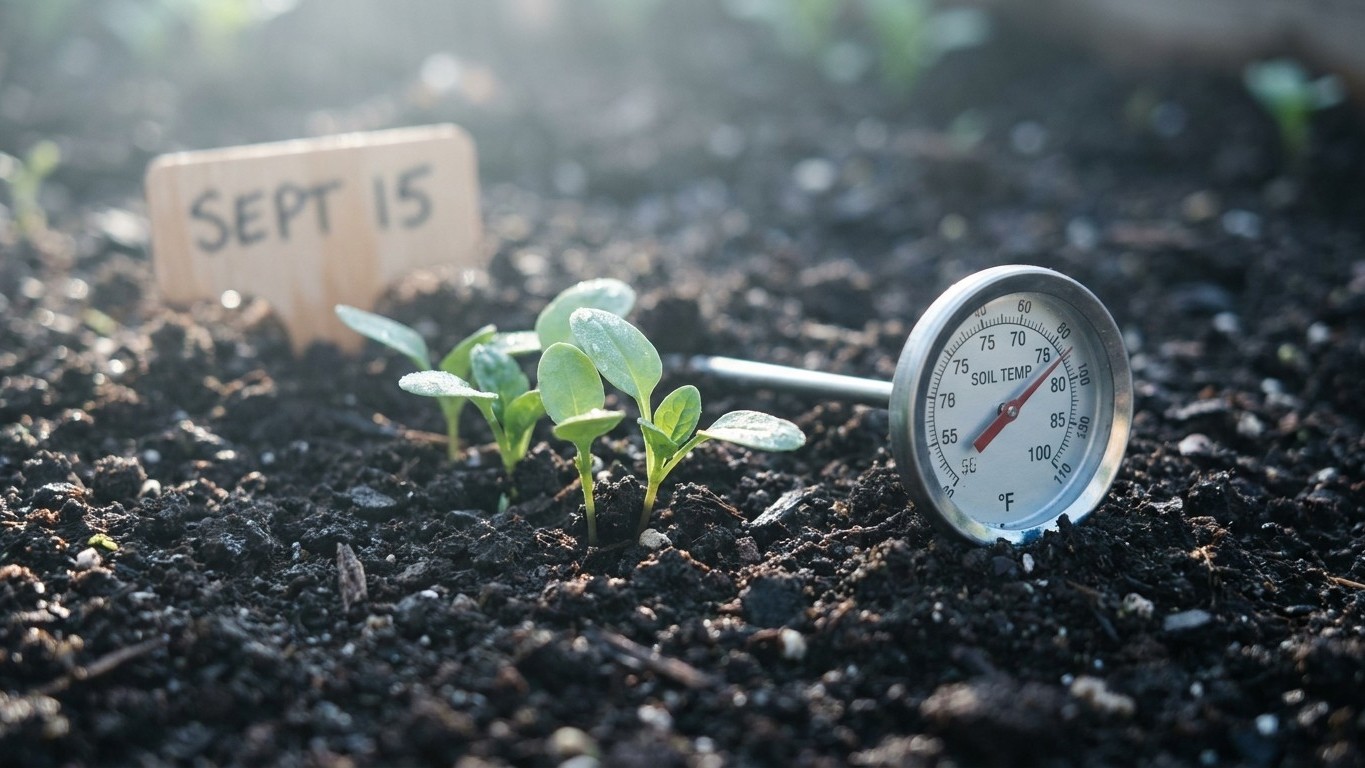
Spinach seed germinates poorly once soil climbs above 80°F, and Florida soil holds that heat well into what other regions would call autumn. With 73.2 days a year reaching 90°F at the air level, ground temperature lags behind but stays elevated for weeks after the hottest days pass. Waiting for the soil, not the calendar, to signal readiness is the only reliable approach. A simple soil thermometer pushed a couple of inches down beats guessing from the date on a seed packet, since a warm September can push that threshold later than a cooler one.
The frost that ends the season
The first fall frost at the reference station arrives between November 26 and December 13, based on the same NOAA climate normals used for the spring date. Working backward 50 to 75 days from that range lands the sowing window between mid-September and late October, depending on how early or late frost actually shows up in a given fall and how close to the frost date the harvest is planned.
| Season | Governing limit | Approximate sowing window |
|---|---|---|
| Spring | Rising heat and lengthening days together | Late January to mid-February |
| Autumn | Warm soil (above 80°F) delaying germination | Mid-September to late October |
Put the two obstacles together and the practical rule is straightforward: don’t sow by date alone. Check the soil first, then count backward from a harvest target that sits comfortably before the frost window opens, giving the crop its full 50 to 75 days without racing the first freeze.
Common questions
Can spinach be sown all winter in north Florida?
The autumn sowing window closes well before the November-to-December frost dates, but plantings made within the 50-to-75-day countback can still be productive through much of winter, since cold slows growth without triggering the bolting that heat and long days cause.
Does mulching change the soil-temperature timeline?
That specifics for soil-cooling techniques aren’t part of the source data used here, so no mulching timeline can be stated with confidence. A soil thermometer reading below 80°F remains the only benchmark this guide can confirm.
Why does spinach behave the opposite of onions with day length?
Long days push spinach toward flowering and bolting, while for onions, long days are what triggers the bulb to form in the first place. Same variable, opposite response, which is why day length matters for very different reasons depending on the crop.
Does this timing apply to Orlando or Miami?
No. The frost dates and heat-day counts used here come from the Jacksonville reference station in north Florida. Central and south Florida rarely see frost at all, and their growing calendar inverts, running through winter with summer as the limiting season, so this window shouldn’t be applied south of north Florida.