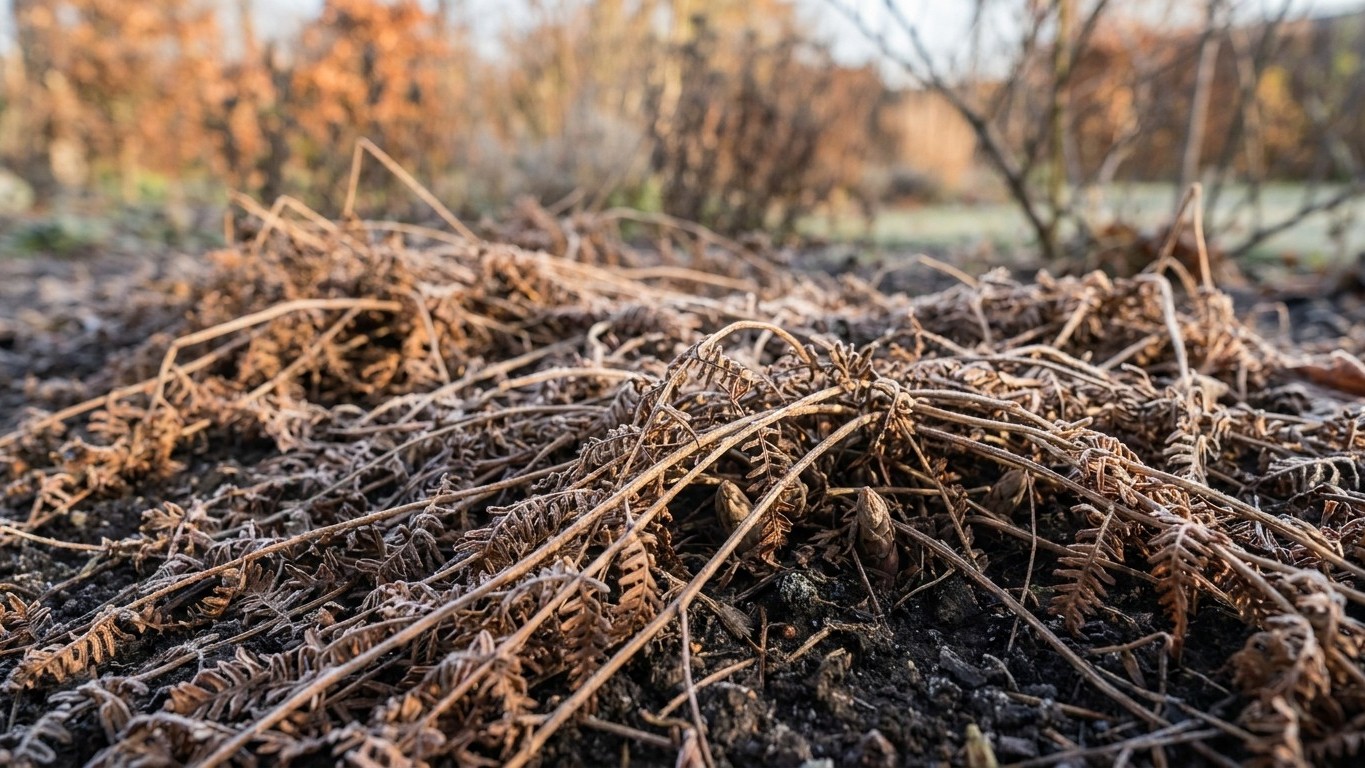

Once the ferns turn brown and collapse after the first hard frost, cut them down and leave the material right on the bed as mulch. That’s the guidance from Utah State University Extension: “After ferns die in the fall, mow them down and use as a soil mulch.” No raking the debris away, no bagging it for the curb. The dead top growth becomes the season’s first layer of winter protection for the crown underneath.
The short answer
Utah State University Extension states the timing plainly: wait until the ferns have died on their own, then mow them down and use the cut material as a soil mulch. That single sentence carries two instructions people tend to separate when they shouldn’t. The first is a timing rule (after the ferns die, not before). The second is a disposal rule (use it as mulch, don’t remove it from the bed).
The order matters because a fern that’s still green is still doing work below ground. Nothing in the Utah State University Extension guidance sets a specific frost temperature or a calendar date for when that death happens; it simply happens “in the fall,” and the gardener’s job is to watch the plant rather than the calendar. Some autumns bring an early frost, some drag out mild well past the first cool nights. Either way, the fern tells you when it’s finished. Once it has, the mowing step is straightforward and doesn’t require special tools beyond something that can cut through the tough, woody stalks.
The mulch step deserves a second look too, because it’s easy to assume dead fern material should be cleared out of the garden the way you’d clear spent tomato vines. Utah State University Extension doesn’t frame it that way. The instruction is to leave the cut material on the soil as mulch, not to haul it off. That’s a meaningful difference for anyone used to a tidy fall cleanup routine.
One thing this guidance does not address is any winter chilling requirement for asparagus. It’s tempting to connect fern dieback to a plant’s need for a cold period, especially since asparagus is grown across such a wide range of hardiness zones, but that connection isn’t published in this source. Neither is a soil pH target. Readers looking for either figure won’t find it here, and turning a hardiness zone number into a chilling requirement would be a guess dressed up as a fact. The Utah State University Extension material sticks to what happens to the fern and what to do with it afterward: nothing more, nothing less.
What actually decides it
The fern dies on its own schedule
Frost, not a date on the wall, ends the fern’s season. Utah State University Extension frames the mowing step as something that happens “after ferns die in the fall,” which puts the decision in the plant’s hands rather than the gardener’s calendar. A bed in a colder region will typically see its ferns collapse earlier than one in a milder climate, but no specific temperature threshold is given in this guidance, so the practical move is to check the bed rather than count days from Labor Day or any other marker.
Pests and disease ride along in dead foliage
Utah State University Extension lists the problems that affect asparagus: asparagus aphid, asparagus beetle, root rot diseases, and viruses. Dead fern material sitting through winter is exactly the kind of cover these problems can use, which is part of why the timing and handling of that material matters. Mowing it down after it has died, and doing so as part of a regular fall routine, keeps the bed from turning into a place where beetle or aphid populations get a head start on next spring.
Variety choice is a separate, mostly unanswered question
Four varieties come up repeatedly in asparagus growing discussions, and what’s actually published about them is limited to their sex, not their flavor, yield, or any reason to prefer one over another.
| Variety | Sex |
|---|---|
| Jersey Giant | All-male |
| Jersey Knight | All-male |
| UC 157 F1 | Male/female |
| Purple Passion | Male/female |
That’s genuinely all that’s documented here. No source in this material ranks these for taste, productivity, or fall fern vigor, so any claim beyond sex is a guess, not guidance.
How to do it
- Set the crowns. Clemson Extension advises setting crowns “15 to 18 inches apart and 6 to 8 inches deep.” This is the starting point for a bed, long before any fern or fall cleanup enters the picture.
- Backfill gradually, not all at once. Clemson Extension is specific here: “continue to pull soil over the crowns (about 2 inches every two to three weeks) until the trench is filled, and the crowns are 6 to 8 inches deep.” The crown sits in an open trench at first. Soil gets pulled over it a few inches at a time as spears emerge, not dumped in at full depth on planting day. Burying a crown 8 inches deep immediately, instead of building up to that depth over weeks, is one of the more common ways a new bed fails to establish.
- Skip harvest entirely until the third year. No spears should be cut before then, no matter how tempting the first thin shoots look.
- Limit harvest to about four weeks in year three. The bed is still building its root reserves at this stage.
- Watch the spear diameter to know when to stop. Clemson Extension puts it directly: “Stop harvesting when the diameter of the spears has been reduced to pencil-size and allow the spear to grow to full height.” The spear itself gives the signal, not a date on the calendar, which is why this rule works regardless of where the bed is located.
- Extend the harvest window in following years. Roughly six weeks the year after, then about eight weeks in the years after that, always ending on the same pencil-size signal.
- Let the fern grow undisturbed once harvest stops. This top growth carries the plant through summer and into fall.
- Wait for the ferns to die back on their own. Frost ends the season; there’s no fixed date to circle in advance.
- Mow the dead ferns down to the ground. Utah State University Extension recommends this once the ferns have died.
- Leave the cut material on the bed as mulch. This is the final step in the cycle, and it sets up the bed for winter and the following spring.
What Goes Wrong
- Backfilling the trench all at once. Piling soil over the crown to full depth on day one skips the gradual buildup Clemson Extension describes. The remedy is to pull soil over the crown in stages, about 2 inches every two to three weeks, until the trench is filled.
- Harvesting before the third year. Cutting spears from a young bed pulls energy away from a root system that hasn’t finished establishing. The remedy is simply patience: no harvest at all until year three, then a short four-week window.
- Ignoring the pencil-size signal. Continuing to cut spears after they’ve narrowed down leaves the plant without enough fern to rebuild its reserves for next year. The remedy is to stop the moment most spears are thinner than a pencil and let them grow to full height.
- Clearing dead fern material off the bed instead of leaving it as mulch. This skips a step Utah State University Extension specifically recommends and removes a layer of winter cover. The remedy is to mow the dead ferns and leave the material in place.
- Letting pest and disease problems ride through on old foliage. Asparagus aphid, asparagus beetle, root rot diseases, and viruses are the problems this source lists, and dead stalks sitting untouched through fall can shelter them. The remedy is to mow down the fern promptly once it dies rather than letting it stand through the winter.
- Assuming a chilling requirement or a soil pH target that isn’t published here. Neither figure appears in this guidance, and inventing one based on a hardiness zone number is a guess, not a documented practice. The remedy is to rely on what’s actually stated: watch the fern, mow it after it dies, use it as mulch.
Common questions
Should asparagus ferns be cut down before frost kills them?
No. Utah State University Extension specifies mowing “after ferns die in the fall,” which means waiting for the plant to finish on its own rather than cutting it back early.
What should be done with the cut fern material?
Leave it on the bed. Utah State University Extension recommends using it as a soil mulch rather than removing it.
Does cold weather trigger asparagus to need a rest period before spring?
This guidance doesn’t address a chilling requirement at all. It covers what happens to the fern in fall and what to do with the cut material, nothing about a rest period tied to cold exposure.
How do pests like asparagus beetle relate to fall fern cleanup?
Utah State University Extension lists asparagus aphid, asparagus beetle, root rot diseases, and viruses among the problems affecting the crop. Mowing down dead fern material in fall, rather than leaving it standing through winter, is part of managing a bed where these problems can take hold.