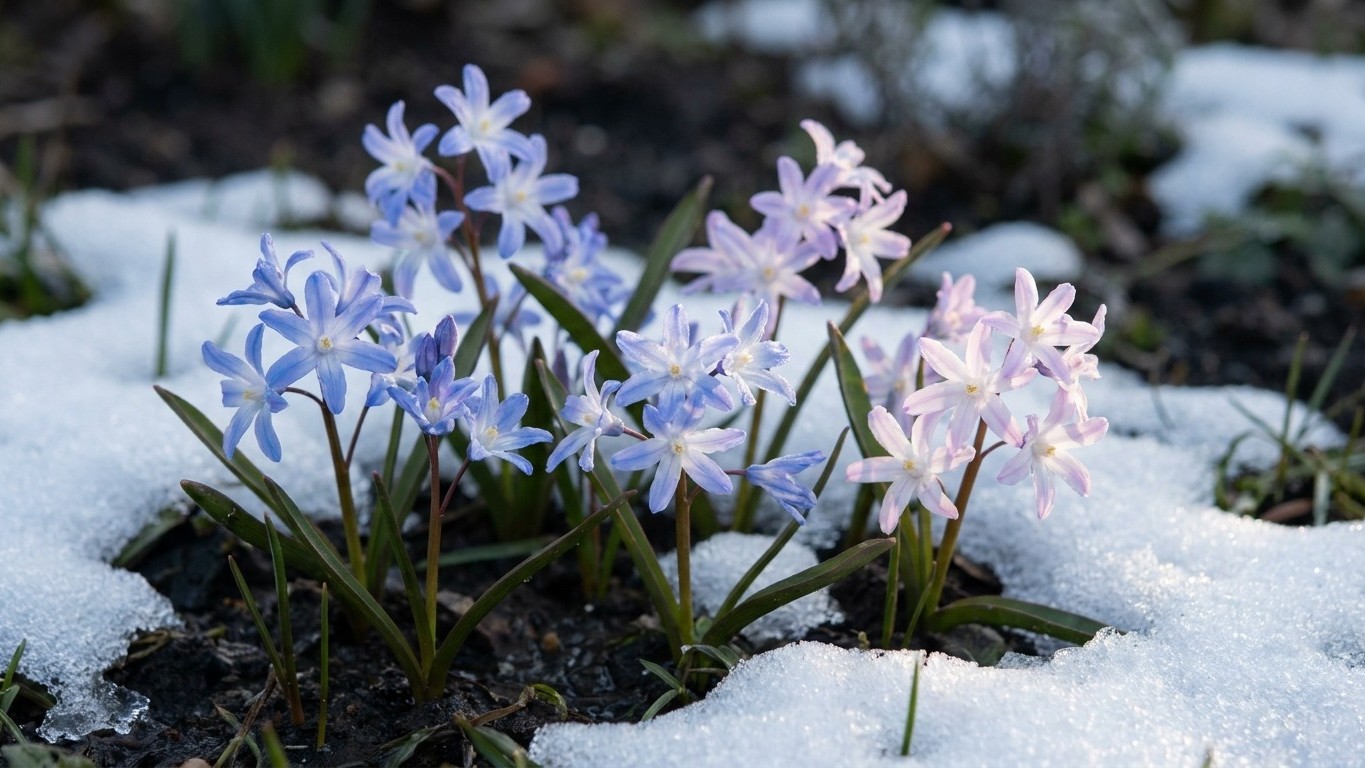

Chionodoxa, better known as Glory-of-the-Snow, needs 12 to 15 weeks below 45°F to bloom properly and thrives in USDA zones 3 through 8. Plant the bulbs 3 inches deep and 3 inches apart in fall, then leave them alone. That’s the whole formula.
What Glory-of-the-Snow actually is

Before buying a single bag of these bulbs, two numbers matter more than color or catalog photos. The hardiness range runs from USDA zone 3 to zone 8, which covers most of the continental United States outside the hottest Gulf Coast pockets and the coldest interior Alaska. The second number is the cold requirement: 12 to 15 weeks below 45°F, according to Cornell University’s Department of Horticulture, Flower Bulb Research Program. That figure isn’t a suggestion. Fall short of it and the bulb will still push up leaves, but the flower either never forms or opens on a stem too short to notice. A gardener sitting right at the edge of that window, say a mild zone 8 winter that barely dips below 45°F for ten weeks, shouldn’t expect total failure either. The bloom just tends to be thinner and shorter than what a full 12 to 15 weeks produces.
Chionodoxa flowers in early spring, often pushing through the last patches of snow, which is where the common name comes from. Colors run blue and pink, and the display tends to open before daffodils and well before tulips, filling a gap when the garden still looks mostly bare.
A habit worth knowing before planting
One quirk catches new growers off guard: the foliage can start dying back while the flower is still fully open and blue. That’s normal biology, not a sign of disease or poor planting. The bulb is already redirecting energy for next year’s bloom even as this year’s flower is putting on its show. Leaves also tend to emerge in autumn on some plantings and sit through winter under snow cover, which looks alarming the first time you see it but does no harm to the bulb underneath.
How deep and how far apart
The planting depth for Glory-of-the-Snow is 3 inches, and the spacing between bulbs is also 3 inches. Both figures do real work. Depth buffers the bulb against freeze-thaw cycles that otherwise heave small bulbs right out of the soil over a hard winter, a common failure point for anyone who plants too shallow to save a few minutes of digging. Spacing decides whether the bed reads as a natural drift of color or a row of isolated dots, and at 3 inches apart the bulbs sit close enough to blur together into a solid sheet of blue and pink once they’re established.
- Depth: 3 inches
- Spacing: 3 inches apart
- Orientation: pointed tip up, flatter side down; if the shape gives no clue, plant it on its side, the shoot will find its way up regardless
These bulbs are cheap enough to buy by the hundred, and that’s exactly how the planting looks best. A dozen scattered thinly across a bed reads as an afterthought. A hundred packed at that 3-inch spacing across a shaded corner or under deciduous trees reads as a small blue river in April. Chionodoxa naturalises steadily once it’s happy in a spot, spreading slowly by seed and offset without turning into the kind of aggressive spreader that takes over a bed. It’s a slow, well-mannered spread, not a nuisance.
Will it come back next year
This is the honest question every bulb buyer should ask before spending money, and for Glory-of-the-Snow the answer is genuinely good news. Left in place with reasonable conditions, this bulb comes back year after year and gradually multiplies, unlike some spring bulbs sold as perennials that are really a one-season display in disguise. The difference comes down to bulb physiology rather than marketing language.
After flowering, the leaves keep photosynthesizing for several weeks even as they start to yellow and look untidy. That process is how the bulb rebuilds the starch reserves it needs to form next year’s flower bud underground. Cut the foliage back while it’s still green, mow over it, or braid it up for a tidier look, and you interrupt that rebuilding. The bulb survives, usually, but the flower for the following spring is smaller or missing entirely. It’s the single most common reason a once-reliable planting of small spring bulbs quietly stops flowering after a year or two, and gardeners rarely connect the dots back to premature leaf removal because the damage doesn’t show up until months later.
The fix is simple neglect: let the foliage yellow and flop over completely on its own schedule, then remove it or let it disappear into the lawn. Interplanting with later-emerging perennials that fill in as the chionodoxa foliage fades is the usual workaround for gardeners who don’t like looking at yellowing leaves in a front bed.
What eats it, and what leaves it alone
Squirrels and other rodents will dig up and eat Glory-of-the-Snow bulbs, so anyone planting in a yard with an active squirrel population should plan around it rather than be surprised by it in spring. That’s worth stating plainly rather than glossing over, since a newly planted bed of bulbs disappearing overnight is a common and frustrating first experience for new gardeners in this hobby.
The measure that actually works isn’t a repellent spray or a scattering of pepper flakes, both of which wash away or lose potency within days. It’s physical exclusion: lay wire mesh flat over the planting area right after digging, pinned down at the edges, and leave it in place until the ground freezes solid for the season. By the time the mesh comes off, the ground is too hard for digging anyway, and the bulbs are safely out of the window when rodents are most likely to excavate freshly disturbed soil. Once the bulbs are established for a season or two, the risk drops off considerably since undisturbed soil draws far less digging interest than a bed that was obviously just worked.