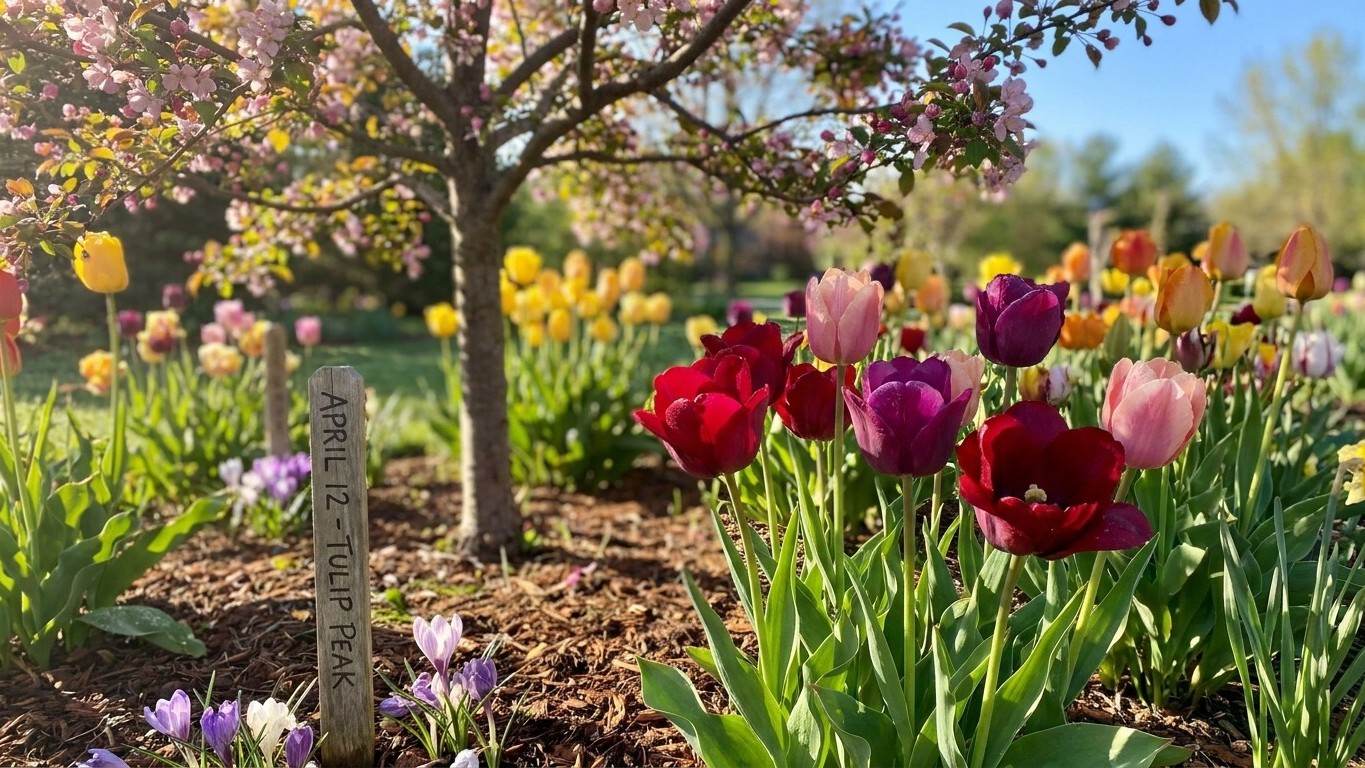

Tulip needs 12 to 14 weeks of temperatures below 45°F before it will flower, and it thrives in USDA zones 3 through 8. Get the cold right, and the planting depth right, and the rest is patience: plant in fall, wait through winter, watch mid spring do the work.
What Tulip actually is

Two numbers matter before you buy a single bulb. The first is the hardiness range: USDA zones 3 to 8, which covers most of the continental United States except the hottest coastal and desert pockets of the Deep South and Southwest. The second is the cold requirement, and it’s the one gardeners underestimate. Tulip needs 12 to 14 weeks below 45°F to complete the internal process that builds a flower bud. Skip that window, or fall short of it, and the bulb doesn’t just sulk. It often pushes up leaves with no flower at all, or a bloom on a stem too short to clear the foliage. This figure comes from Cornell University, Department of Horticulture : Flower Bulb Research Program, and it’s worth taking seriously rather than treating as a rough guideline. A bulb that gets close to the requirement, say 10 or 11 weeks in a mild winter, doesn’t necessarily fail outright. It tends to flower thin and small, which is its own kind of disappointment after months of waiting.
Tulip belongs to the tulip group of hardy fall-planted bulbs, and it blooms in mid spring, generally after the earliest crocus and snowdrop have already faded but before the late-season alliums take over. That midpoint timing is part of why it’s the bulb most people picture when they think “spring garden.” Color range is broad. Growers offer tulip in essentially every hue except true blue, so the choice comes down to what fits a bed’s existing palette rather than what’s available. None of that flexibility changes the cold math, though. A gardener in zone 8 who wants tulip has to accept that some winters won’t deliver enough chill hours naturally, which is why bulbs are sometimes pre-chilled in a refrigerator before planting in warmer parts of that range.
How deep and how far apart
Depth and spacing aren’t cosmetic choices. Depth is what keeps a bulb from being pushed out of the ground during freeze-thaw cycles in late winter, when soil expands and contracts and shallow-planted bulbs can literally heave to the surface overnight. Spacing decides whether the bed reads as a solid drift of color or a scattering of individual dots, which matters more for tulip than for most bulbs because it’s usually planted in visible groups rather than tucked under other plants.
The working numbers:
- Depth: 6 to 8 inches, measured from the soil surface to the base of the bulb
- Spacing: 4 to 6 inches apart, center to center
Orientation is straightforward once you look closely. Tulip bulbs have a pointed tip and a flatter, slightly rougher base where roots will emerge. Point up, flat side down. If a bulb has been knocked around in shipping and the shape is genuinely hard to read, plant it on its side rather than guessing wrong; the shoot will find its way up either way, though it costs the plant a little extra energy and time. Skipping this step entirely and planting sideways on purpose isn’t a shortcut worth relying on for a whole bed, since it can delay emergence just enough to throw off an otherwise even display.
Group plantings look best when the spacing stays consistent across the bed rather than tightening in some spots and loosening in others. A cluster of a dozen bulbs at 5 inches apart, all at the same 7-inch depth, will emerge and bloom together in a way that a haphazardly spaced planting won’t.
Will it come back next year
Here’s the part sellers tend to gloss over. Most modern tulip hybrids decline after two or three years in the ground. The bulb that produced a strong bloom this spring is very likely producing offsets and using up its stored energy in ways that leave less for next year’s flower, and the effect compounds. By year three or four, a bed that started with uniform, showy blooms often has a mix of small leaves, weak stems, and gaps where bulbs simply didn’t return. That’s not a failure of care so much as the physiology of the hybrid bulb itself. Treating tulip as a short-lived planting, essentially a one-to-three-season investment, is the realistic framing rather than expecting decades of return like some other spring bulbs manage.
There’s one factor within a gardener’s control that makes a real difference: what happens to the leaves after bloom. The flower fades, but the foliage keeps working, photosynthesizing and sending energy back down into the bulb to build next year’s flower bud inside it. Cutting the leaves back while they’re still green, even if they look untidy sprawled across the bed, is the single most common reason a tulip planting stops flowering earlier than expected. The leaves need to be left alone until they yellow and die back naturally on their own, which usually takes several weeks after the petals drop. It’s an unglamorous stretch of the season, but skipping it undermines everything the cold winter and the correct planting depth were meant to set up.
What eats it, and what leaves it alone
Tulip is the one popular spring bulb that rodents genuinely go after. Squirrels dig up freshly planted bulbs in fall, sometimes within days of planting, and voles tunnel underground and eat them from below over the course of winter. This isn’t a minor nuisance risk the way it can be with other bulbs that rodents mostly ignore; tulip bulbs are a real food source for both, which is why beds planted in areas with active squirrel or vole populations can lose a large share of their bulbs before spring ever arrives.
The measure that actually works is unglamorous but effective: lay wire mesh directly over the planting bed, pinned down at the edges, and leave it in place until the ground freezes solid. Rodents do their digging in the weeks right after planting, while soil is still loose and the bulbs are easy to smell out. Once winter sets in hard, the risk drops sharply. Sprays, granules, and other repellents sold for this purpose are far less consistent than a physical barrier, and a layer of hardware cloth or chicken wire costs little compared to replacing an entire bed of bulbs come spring.