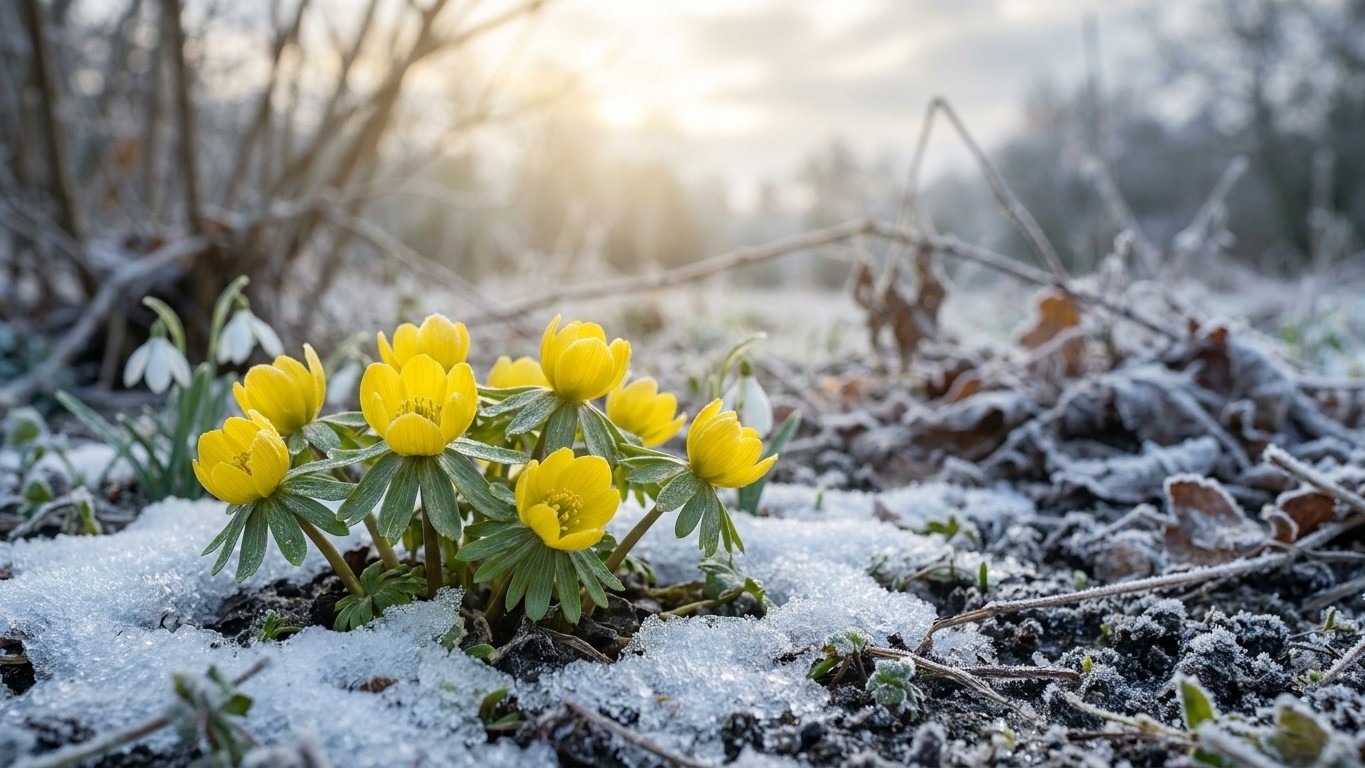

Winter aconite needs 12 to 15 weeks below 45°F to flower at all, and it lives happily in USDA zones 3 through 7 for decades once it’s settled. Those two figures decide almost everything else about whether this bulb works for you.
What Winter Aconite actually is

Winter aconite belongs to the eranthis group, and its whole identity comes down to timing. It blooms in late winter, often before anything else in the yard has stirred, throwing up small yellow flowers that sit close to the ground. The color range is limited to that one yellow, no cultivars in pink or white to chase here, which keeps the buying decision simple.
The plant is hardy from USDA zone 3 up to zone 7. Below that requirement, or right at the edge of it, the bulb tends to disappoint rather than fail outright: according to Cornell University, Department of Horticulture : Flower Bulb Research Program, the bulb needs 12 to 15 weeks of temperatures below 45°F to build a flower. Short that window and you get leaves with no bloom, or a flower stem too stunted to notice. Gardeners in zone 7, especially in a mild winter, sit in that uncertain band and should expect a lighter show some years rather than nothing at all.
Timing against the other spring bulbs
Winter aconite blooms alongside snowdrops, which makes it one of the earliest color sources in the whole spring bulb lineup. That’s worth knowing if you’re planning a bed: it opens before crocus, before most daffodils, often while there’s still frost on the ground in the morning.
One habit is worth flagging before anyone plants a single tuber. The foliage can die back while the flower is still open, which looks like a problem but isn’t one. It’s just the plant’s normal rhythm, and pulling at yellowing leaves too early undercuts next year’s bloom rather than tidying this year’s bed.
How deep and how far apart
Depth isn’t a cosmetic choice with this bulb. Planting it too shallow leaves it exposed to freeze-thaw cycles that can heave a small tuber right out of the soil over a hard winter, which is a common reason a planting seems to vanish after its first year. Spacing, meanwhile, decides the look: tight spacing reads as a solid drift of yellow, wide spacing reads as scattered dots, and winter aconite tends to self-sow into colonies over time regardless of which you choose, so a modest planting fills in on its own.
- Depth: 2 to 3 inches
- Spacing: 3 inches apart
Orientation trips people up more than depth does. These are small, irregular tubers, not bulbs with an obvious pointed top like a tulip or daffodil. When there’s no clear top or bottom, the safest move is to plant them on their side rather than guess wrong; the shoot will find its way up regardless. Trying to force an orientation onto a tuber that gives no visual clue just wastes time and risks damaging it.
The step that gets skipped, and shouldn’t, is soaking. These tubers arrive dry and shriveled, and planting them straight from the bag is a common reason a planting fails to establish. Soak them overnight in room-temperature water before they go in the ground. That rehydration step is the difference between a tuber that wakes up and roots in fall, and one that sits dormant and rots. It costs nothing but a few hours and a bowl of water, and skipping it is the single most avoidable mistake with this bulb.
Will it come back next year
Winter aconite is a genuine long-term perennial, not a one-season bulb dressed up as one. Left alone, it doesn’t just survive from year to year, it spreads, self-sowing into small colonies that expand at the edges over several seasons. That’s a different proposition from bulbs that bloom well the first spring and then thin out and vanish within two or three years.
The mechanism behind that longevity is simple biology, and it’s also the reason plantings fail even when the bulb is a reliable perennial by nature. After flowering, the foliage keeps working, photosynthesizing and feeding the tuber underground, building the flower bud that will open the following late winter. That process needs the leaves to run their full course and yellow on their own schedule. Cut them back green, whether out of tidiness or because they look spent right after bloom, and you remove the bulb’s only way of storing energy for next year. The flower show doesn’t stop immediately; it stops the following spring, which is what makes this mistake so easy to miss until it’s too late to fix that season.
So the honest answer is that winter aconite comes back, and multiplies, provided the gardener does the one thing that matters most: leave the foliage alone until it yellows and collapses on its own, however messy that looks in the bed for a few weeks. That patience is the entire difference between a planting that expands into a colony over ten years and one that quietly fails after its second spring.
What eats it, and what leaves it alone
Winter aconite carries a real advantage that daffodils and tulips don’t: it’s not a bulb rodents typically target. Squirrels, voles, and chipmunks tend to leave it alone, which matters a great deal in yards where every fall planting turns into a dig-and-replant cycle by spring. That resistance isn’t unusual among early-blooming bulbs planted alongside it, and it’s one reason winter aconite and snowdrops are so often planted together: neither draws the digging that tulip beds attract.
Where rodent pressure is heavy in a given yard regardless of species, the fix that actually works is wire mesh laid over the planting bed, left in place until the ground freezes hard. That’s the point rodents stop digging on their own, since frozen soil is as much a barrier to them as the mesh is. Removing the mesh too early, at the first mild spell rather than a true freeze, undoes the protection it was providing all fall.