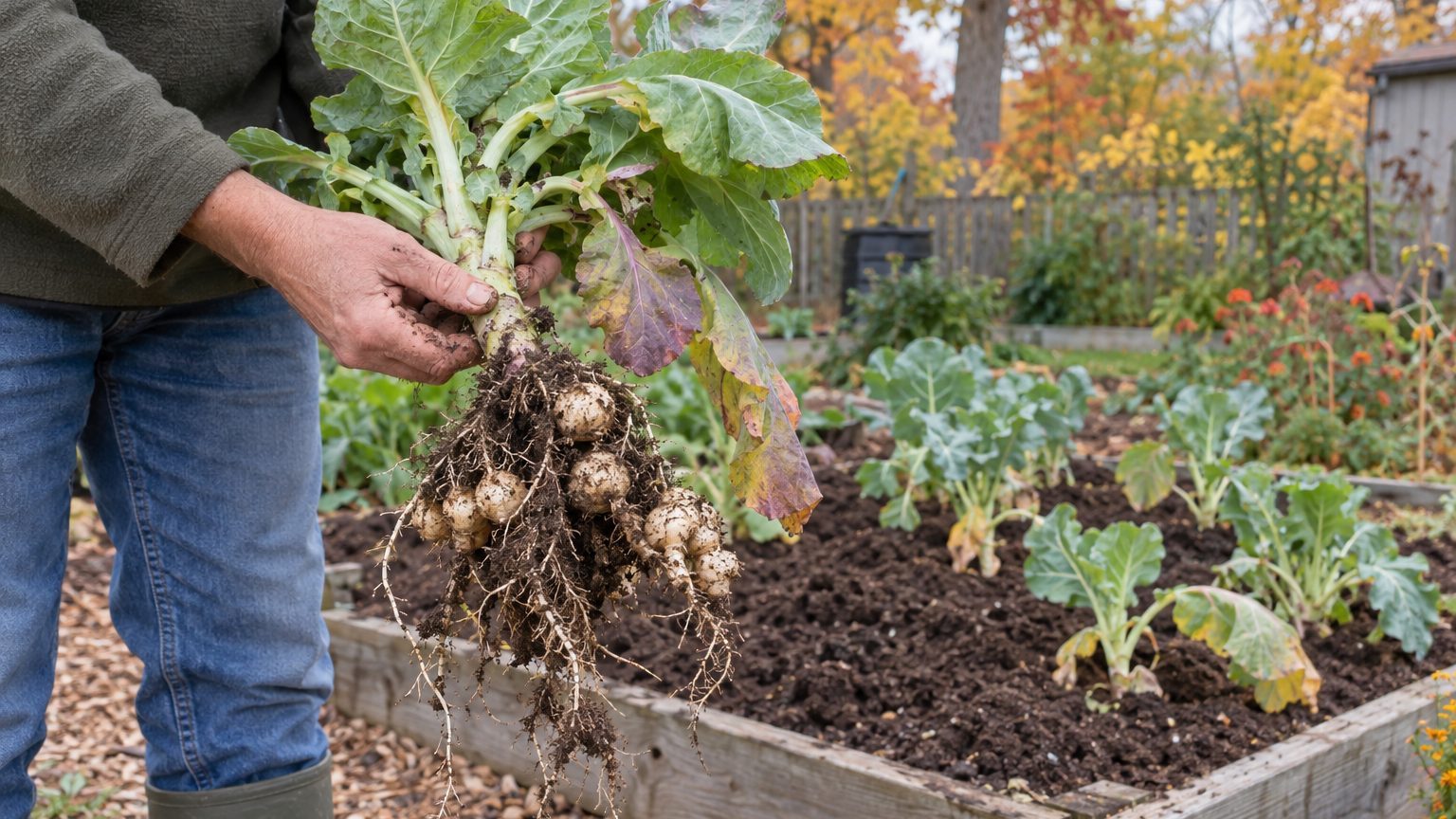

Clubroot is a soil-borne disease that turns the roots of collards and other brassicas into swollen, knobby clubs, and once it is in a bed it can stay there for 15 to 20 years. The cause is a microscopic parasite called Plasmodiophora brassicae. It cannot be sprayed away, and no household fix removes it. What you can do is confirm it early, raise the soil pH, stop it from traveling on your boots and tools, and shift your brassicas to ground that has never carried it.
A newborn’s first birthday is a fair yardstick. Plant a clubroot-infested bed to something else the year a baby arrives, and the spores may still be alive when that child is heading to college. Most of them die off in the first few years, but a stubborn fraction hangs on, and that fraction is enough to restart the problem the moment a susceptible crop returns.
Spotting clubroot, and what it gets confused with
Above ground, the early signs are vague. Collard plants look stunted. Lower leaves yellow. On a warm afternoon the whole plant wilts, then perks up overnight, which sends many gardeners hunting for a watering problem. Leaves may take on a purplish cast, and the plant just stalls while its neighbors keep growing.
The proof is underground. Pull one plant (don’t just tug the stem, loosen the soil with a fork first so the roots come out intact) and shake off the dirt. A healthy collard has a fibrous mass of fine white roots. A clubroot plant has thick, spindle-shaped or lumpy swellings, sometimes fused into one distorted mass that looks like a ginger root or a misshapen parsnip. Early on the galls are firm and pale. Later they turn brown, go soft, and rot, which releases the next generation of spores into the soil.
Two lookalikes cause most misdiagnoses:
- Root-knot nematodes make small, bead-like swellings along fine roots, common in sandy Southern soils. The galls are attached along the root, which stays recognizable.
- Cabbageworm and maggot damage chews or tunnels roots, leaving scars and holes rather than smooth, fat swellings.
Nutrient shortages and waterlogging can also mimic the wilting and yellowing, but they never produce clubbed roots. If you aren’t sure what you’re looking at, bag a plant with its roots and take it to your county Cooperative Extension office. Most offer plant diagnosis, and a lab confirmation is worth having before you change how you manage the whole garden.
One reassurance: clubroot is a plant disease. It doesn’t harm people, and the leaves of a mildly affected plant are generally fine to eat. They just won’t be much to eat, because a plant with a ruined root system can’t take up water or nutrients properly. Expect small, tough, disappointing leaves.
How it arrives and why collards are exposed
The parasite lives as tough resting spores in the soil. When roots of a brassica grow nearby, the spores release swimming cells that invade root hairs, and the plant responds by growing the abnormal tissue that becomes the club. The infection does best in wet, acidic soil, with temperatures in roughly the upper 60s to upper 70s Fahrenheit. Cold soil below the mid-50s slows it a lot, and very dry soil does too.
That profile matters for Southern collard growers. Many soils across the Southeast are naturally acidic, often in the pH 5 to 6 range, and fall collards usually go into the ground in September, when soil temperatures still sit squarely in the range the disease likes. Add a wet autumn and you have favorable conditions without trying. Clubroot is reported more often in cooler, wetter regions (the Northeast, the Great Lakes states, the Pacific Northwest, and Appalachian areas of the mid-South), but the same biology applies anywhere the soil is acidic and the seedlings are susceptible.
Gardeners rarely bring spores in on purpose. The usual routes are:
- Transplants, or the potting mix and soil clinging to them, from an infested source
- Soil carried on shovels, tillers, wheelbarrows, and boots
- Muddy runoff water moving across a sloped garden
- Compost or manure that includes infected roots
- Wind-blown dust from a neighboring infested field
A second hazard is hiding in the weeds. Shepherd’s purse, wild mustard, wintercress, and other brassica-family weeds can host the parasite, so a bed left fallow but full of weedy mustards isn’t really resting. It’s keeping the spore population fed.
What to do once you have it
Raise the pH, and keep it there
Liming is the most useful lever. Spore germination and infection drop sharply as soil approaches neutral, and extension programs commonly recommend bringing pH up to around 7.2 in infested beds. Start with a soil test, because the amount of lime required depends on your soil’s texture and existing pH, and over-liming can lock up micronutrients like iron and manganese and cause new problems. Follow the lab’s recommendation rather than a rule of thumb, and retest the next season. Hydrated lime acts faster than ground limestone but is caustic and easy to overapply, so wear gloves and eye protection and keep the dose modest.
Liming reduces disease. It does not erase the spores. Treat it as a way to grow a decent crop in the meantime, not a cure, and expect to keep the pH up year after year.
Clean up so the spore load stops growing
Every infected plant that rots in the bed adds spores to the soil, which is why cleanup matters more than most people expect. At the end of the season, pull the entire plant, roots included, and bag it for the trash. Don’t put clubbed roots in the compost pile, because home piles rarely get hot enough or stay hot long enough to be trusted. Burning is an option where local rules allow it.
Then keep the infested soil where it is. Scrub tools and boots before leaving the bed, and wash them with a 10 percent bleach solution or another disinfectant, letting the surface stay wet for a few minutes. Work the infested bed last when you’re doing garden chores, not first. Improve drainage with raised ground or better grading so water doesn’t pool, since wet soil gives the swimming spore stage the film of water it needs to move.
Rotate with realistic expectations
Rotation is where the usual three-year advice falls short. Because a few spores last for many years, a short break only lowers the numbers, and a susceptible crop planted too soon brings the disease right back. Longer gaps work better, and the best plan is to move brassicas to a different part of the garden entirely and leave the infested bed in non-brassica crops such as beans, tomatoes, corn, or onions for as long as you can manage. Our guide to rotating collards and what counts as the same family lays out which crops are related and which are safe neighbors, including the sneaky relatives like turnips, radishes, kale, and mustard.
That list includes the quick-growing greens many Southern gardeners plant in the same bed as collards. Mustard greens are brassicas too and are just as susceptible, a point covered in Mustard Greens: Faster, Sharper, More Fragile. Planting them in an infested bed doesn’t give the collards a break, it gives the parasite another host.
Resistant varieties and clean transplants
Plant breeders have released clubroot-resistant cultivars of cabbage, broccoli, and some Asian brassicas, but resistant collards are harder to find, and resistance can break down when a field carries several strains of the pathogen. Check seed catalogs and ask your extension office what’s currently available for your state before you count on it. Don’t assume a “resistant” label means immune.
Where the problem is established, consider starting your own transplants in fresh, sterile potting mix and never buying seedlings from a source you can’t vouch for. Before you plant a purchased flat, tip a few out of their cells and look at the roots. Swollen or knobby roots on a seedling mean the whole flat should go back or into the trash.
Growing in containers or in raised beds filled with purchased soil is another workaround, as long as the bed has a barrier from the native ground and you follow the same tool-cleaning habits. A clean bed built on top of infested soil, with nothing separating them, won’t stay clean for long.
Keeping the rest of the garden clear
If clubroot appears in one bed, the goal shifts to containment. Mark the bed on a garden map, because a spot you’ve forgotten is a spot you’ll replant in. Avoid tilling it and then moving a tiller to other beds. Don’t borrow compost or soil from it. Send leftover roots to the trash, not the chicken run or the compost bin.
The full picture of a healthy collard planting, from seed starting to harvest timing, is in our main guide to growing collards for months of harvest. That kind of long, productive planting is exactly what makes clubroot so costly: a bed that could feed you from fall through spring ends up producing stunted plants.
One last nuance that surprises people. Clubroot doesn’t affect plants outside the brassica family, so tomatoes, okra, and sweet potatoes can go into the same ground the next summer without any risk from this disease. Which means a ruined collard bed isn’t ruined for good. It’s closed to one plant family for a very long time, and open to nearly everything else.