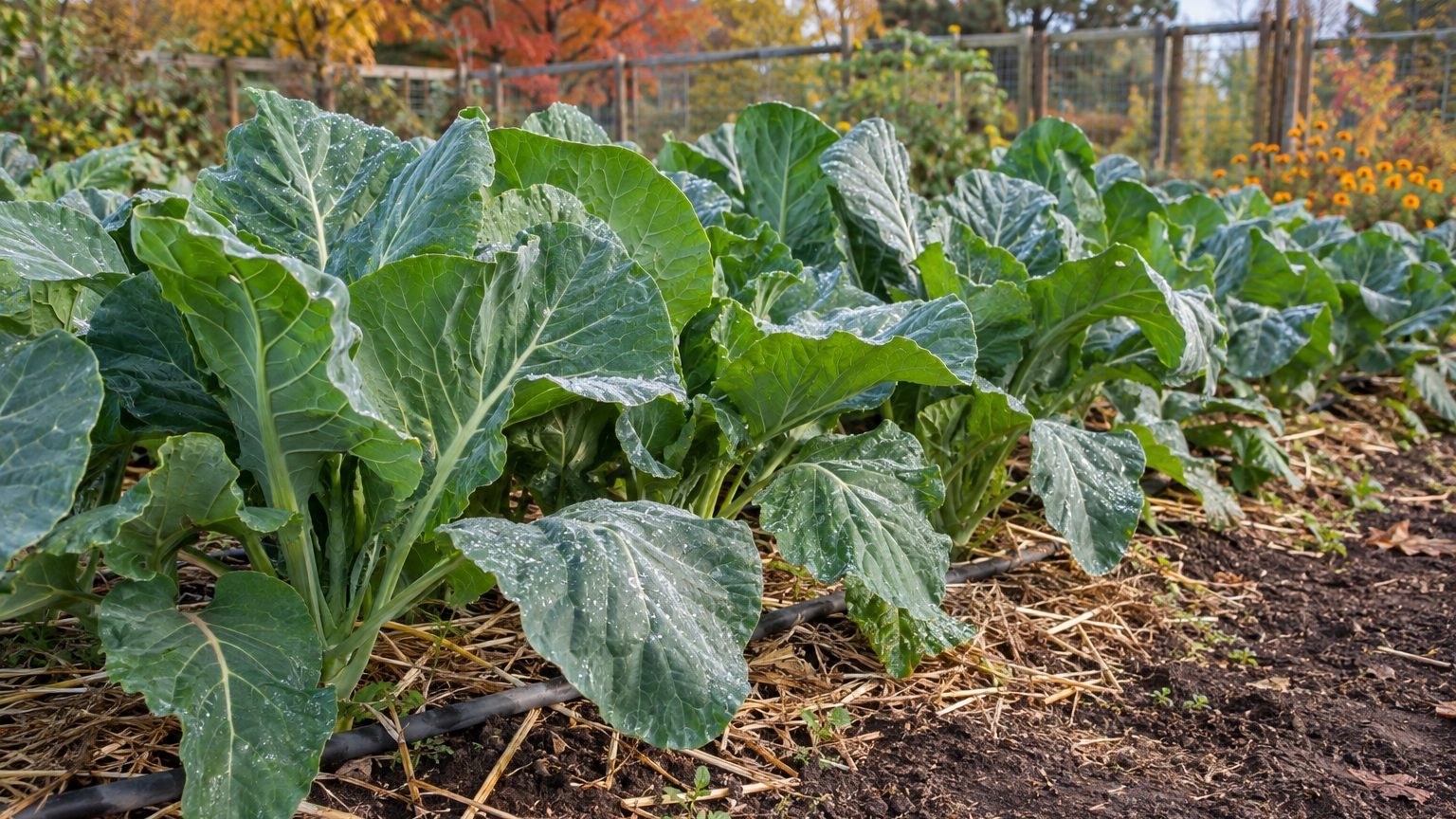

Collards need even moisture from transplant to last pick. About 1 inch of water a week is a sound starting point, delivered slowly at the base of the plant. Give more in summer heat and sandy soil, and less once cool weather slows growth. Because you eat the leaves, a dry spell shows up on the plate. Mulch, a quick finger test and a steady rhythm do most of the work.
What is actually going on
A collard leaf is mostly water held under pressure inside its cells. While the plant is well supplied, those cells expand, and the leaf comes out broad, flexible and tender. When the soil dries, the plant stops expanding new leaves and puts its effort into roots and water conservation. The leaves that form during that stretch come out smaller, thicker and more fibrous. Stressed brassicas also tend to taste sharper and more bitter.
The key point is that leaves already formed do not improve. A leaf that grew during a dry week stays tough after the rain comes back. Only new growth benefits. Collards are picked from the bottom up over many months, so the stalk becomes a record of every dry spell. A plant watered evenly gives tender leaves all the way up, while one that was neglected has bands of leathery ones.
How can you tell a collard plant is short of water?
Midday wilting in hot sun happens even in moist soil, so check in the morning. Leaves that are still drooping at dawn mean the plant is truly thirsty. Earlier signs are a duller, grayer cast than the usual blue-green, leaves that feel thick and stiff, and slow growth at the center of the plant. The most reliable test is your finger. Push it 2 inches into the soil near the plant, and if it comes out dry at that depth, water.
Roots explain why depth matters. In loose soil, collard roots can reach well below a foot, and they go where the moisture is. A light sprinkle wets the top inch, which dries out within hours in warm weather and teaches the roots to stay shallow. Slow, deep watering reaches the layer that holds moisture for days. Crowding works against all of this, because neighboring plants draw from the same pool. How Much Room a Collard Plant Needs covers how spacing changes what each plant gets.
In the garden
Steady watering does not mean the same amount all season. Collards can be harvested for months, and over that time the plant goes from a small transplant to a big leafy stalk, then through heat, cool fall weather and often a cold winter. Each stage has its own demand and its own way of going wrong.
How much water do collards need each week?
Start with 1 inch a week, counting rain, and set a straight-sided can or rain gauge in the bed to measure it. Sandy soil drains fast and may need that inch split into two soakings. Clay holds water longer, so one deep soak can last the week. Drip lines or a soaker hose put the water at the roots and keep the leaves dry. Early morning is the best time, because leaves dry quickly and the plant has water ahead of the day’s heat.
Dry foliage matters for more than comfort. Collards share their leaf diseases with cabbage, kale and mustard, and turnips and rutabagas are brassicas too, so they carry the same troubles. Wet leaves overnight help those diseases spread. Rotating collards into a spot where turnips grew changes nothing, because the whole family needs to move on together.
How does watering change from planting to winter?
| Stage | What steady watering looks like | What happens when it goes wrong |
|---|---|---|
| Newly set transplants | Keep the root ball and surrounding soil moist, with light watering every day or two until new growth shows. | A dried root ball stalls the plant, and it may stay stunted even after you recover. |
| Warm-weather growth | About 1 inch a week, soaked deeply. | Shallow roots, and tough, bitter leaves lower on the stalk. |
| Midsummer heat | Check the soil every few days, mulch, and water early in the day. | Growth stops, leaves turn stiff and sharp-tasting, and the plant struggles through the hottest weeks. |
| Cooling fall weather | Water only when the top 2 inches dry out, which often means less than in summer. | Keeping to a summer schedule leaves soggy soil, yellowing lower leaves and root problems. |
| Cold winter harvest | Leaves still lose moisture, so water during long dry spells, on a day above freezing. | Dry soil and cold wind leave leaves leathery and damaged. |
| Spring warm-up | Resume regular watering as growth restarts. | Drought stress plus lengthening days can hasten bolting, and leaves turn bitter. |
Mulch helps at every stage. A 2- to 3-inch layer of straw or shredded leaves slows evaporation in summer and moderates soil temperature in winter. Growing Collards: One Planting, Months of Harvest shows how the whole season fits together.
What it depends on where you are
The principle is national: even moisture, deep roots, mulch and leaves that stay tender. The numbers are local. Season length, summer heat and summer rainfall all change how often you water and for how long, and no general rule can know what your sky does in July.
How do you adjust watering to your own climate?
Where summers are hot and humid, rain can supply the water, but it often arrives in heavy bursts with long gaps between. A rain gauge tells you whether the week really delivered an inch. Where summers are dry, irrigation does nearly all the work, and drip lines pay off. Soil type shifts things further, since sand needs more frequent watering than clay or loam.
Season length changes how long you water. In the Deep South and other mild-winter regions, collards stand in the garden through winter, so watering runs into months that gardeners farther north never think about. Where winters are hard, the harvest ends at the first deep freeze, and watering the fall crop covers a shorter window. In either case, your county extension office is the most reliable source for local timing, and it can name the varieties trialled in your state.
The state pages in this collards series cover regional planting windows, and they pair well with the watering rhythm above. Start with the basics in Growing Collards: One Planting, Months of Harvest, then check the page for your state.
The mistake that costs the most
Waiting for the plant to wilt before watering is the error that costs the most. Wilting is a late signal. By the time the leaves droop, the plant has already been shutting down growth for days, and the leaves formed in that stretch are permanently tougher and more bitter. Watering after the droop saves the plant, but it does not fix the leaves. For a crop grown only for its leaves, that is real damage.
The habit usually comes from treating collards as tough plants, which they are in many ways. They tolerate cold better than most vegetables, and they shrug off a lot. Dryness is the exception, because it affects the part you eat. A gardener who waters only when the plant complains ends up with a stalk of uneven, chewy leaves.
What should you do instead of waiting for wilt?
Check the soil, not the plant. Push a finger 2 inches down every few days, and water when it is dry at that depth. Soak slowly until the top 6 inches is moist, then leave it alone until the test says dry again. Lay mulch after the first watering so it holds the moisture in. In hot, dry weather, check more often, because soil that took a week to dry in May may take two days in July.
If a dry spell does slip by, pick the toughened leaves anyway. They are better suited to long braising than quick sautéing, and Keeping and Cooking Collard Greens explains how to handle them. Leave the new growth to develop on a steady schedule.
Common questions
Should I water collards every day?
Only newly set transplants need frequent watering, usually every day or two until they root in. Established plants do better with deep, less frequent soakings, with the soil checked every few days.
Is it all right to water collards from overhead?
It works, but a drip line or soaker hose is better. Wet leaves overnight help leaf diseases spread, and these diseases are shared across the brassica family. If you use a sprinkler, run it in the morning so leaves dry quickly.
Do collards need water in winter?
Yes, during long dry spells. Leaves keep losing moisture even when growth slows, and dry soil under cold wind damages them. Water on a day above freezing, in the morning, and not before a hard overnight freeze.
Will tough, bitter leaves get better once I start watering again?
The leaves already formed will not change. New growth after steady watering will be more tender. Pick the tough leaves for slow cooking, and let the center of the plant produce better ones.