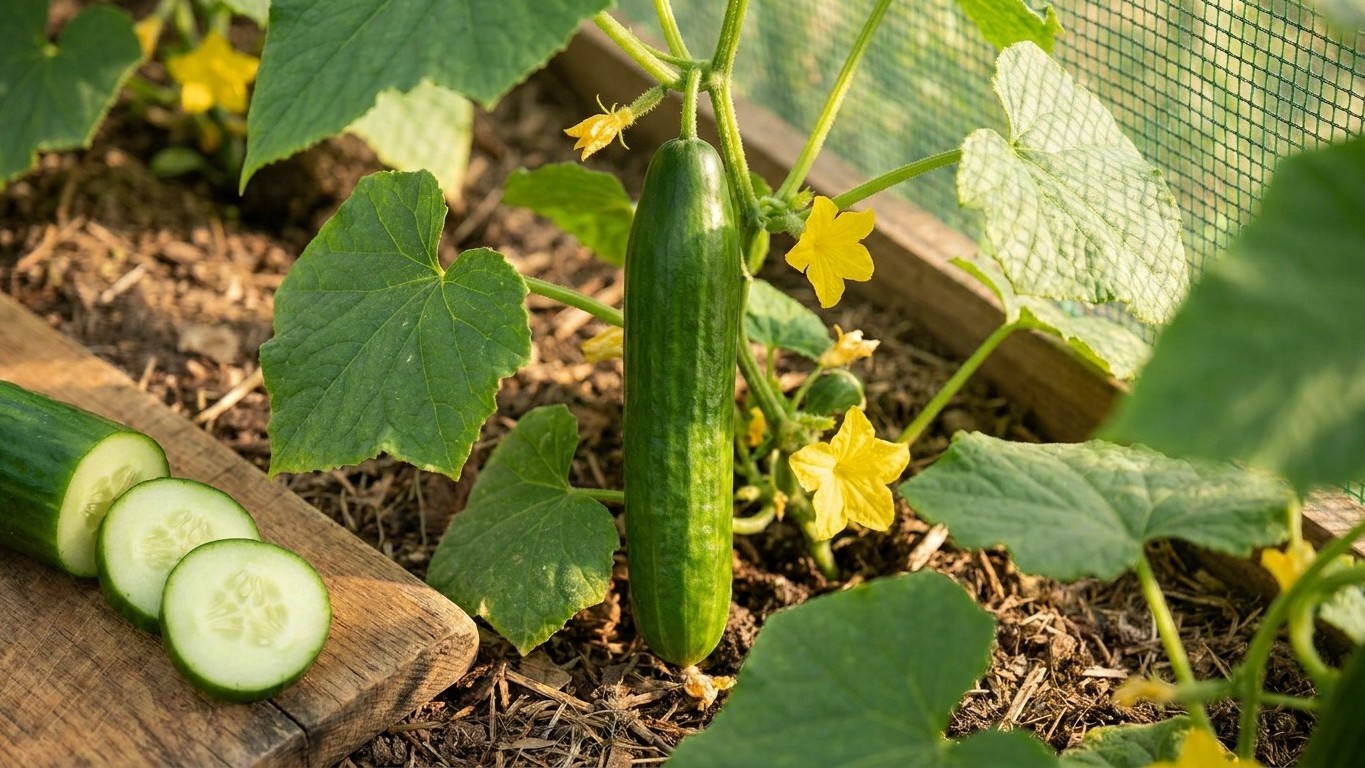

Yes, some cucumber varieties produce fruit without any pollination at all. These are called parthenocarpic types, and they set fruit from the flower itself, with no bee, no wind, no hand-pollination required. That single trait solves a specific problem: crooked, stubby, or misshapen fruit caused by incomplete pollination, which is one of the most common complaints gardeners have about cucumbers grown under cover or in poor pollinator years.
What is actually going on

The thing to understand here is parthenocarpy: fruit develops without fertilization, so the plant does not depend on pollinator weather. In a normal cucumber flower, a female bloom needs pollen delivered from a male bloom, usually by a bee, to trigger the ovary into becoming a fruit. If that pollen transfer is partial, spotty, or uneven, you get the classic bottleneck-shaped or bulbous cucumber that home gardeners blame on “bad luck.” A parthenocarpic plant skips that step entirely. The ovary swells into a fruit on its own signal, with no seeds forming inside, or only a few soft, undeveloped ones.
This is a genetic trait bred into certain lines, not a growing technique. It shows up across several fruit categories: pickling types, slicing types, and the long, thin-skinned burpless types sold for fresh eating. It also appears on both bush and vining growth habits, so the trait is independent of plant size or shape. What ties them together is the flower biology, not the fruit’s use in the kitchen.
There is a practical wrinkle worth knowing before you buy seed. Most parthenocarpic varieties are also gynoecious, meaning nearly all their flowers are female. That is usually an advantage, since it means an earlier and more concentrated harvest with none of the male-only flowers that produce nothing. But it creates a real risk if bees are active nearby and cross-pollination happens anyway: pollinated fruit on a parthenocarpic plant can turn out bulbous or oddly shaped, the opposite of what you bought the seed for. Some seed packets note whether a variety is bred to resist this cross-pollination effect; if a packet doesn’t say, assume it can happen and plan the growing site accordingly.
Parthenocarpic types are not the same thing as “self-pollinating” in the tomato sense. Tomatoes self-pollinate because their flowers carry both male and female parts and don’t need outside help to move pollen a fraction of an inch. Cucumbers with parthenocarpic fruit set need no pollen movement of any kind, from any source. That distinction matters when you’re deciding where and how to grow them, which is where the practical decisions start.
In the garden
Where this trait earns its keep is anywhere pollinators can’t reliably reach the flowers, or where cross-pollination would ruin the fruit shape you’re after. Where it earns nothing is an open garden bed buzzing with bees all summer, where a standard variety does the job just as well for less seed cost and less label-reading.
| Growing situation | Why parthenocarpic types help | What goes wrong if you skip this |
|---|---|---|
| Greenhouse or high tunnel | No pollinator access most days; fruit sets regardless | Standard varieties produce few or no fruit, since bees rarely get inside |
| Row covers or insect netting | Netting keeps out cucumber beetles and squash bugs but also keeps out bees | Growers leave covers off during bloom to let bees in, which defeats the pest protection |
| Balcony or container growing in a city | Pollinator traffic is often thin several floors up or in dense urban blocks | Flowers open and drop unfertilized, and the gardener assumes the plant is unhealthy |
| Cold, wet spring with few bees flying | Fruit set doesn’t depend on bee activity that hasn’t started yet | Standard varieties sit and flower for weeks with nothing to show for it |
| Open garden bed with an active bee population | Little added benefit over a standard variety | Cross-pollination can distort fruit shape on parthenocarpic plants not bred to resist it |
The row-cover situation deserves a second look, because it’s where a lot of gardeners get tripped up. The whole point of covering young cucumber plants is to keep cucumber beetles off before they spread bacterial wilt, a disease the beetles carry in their gut and pass to the plant while feeding. But once flowers open, covers need to come off for pollination on a standard variety, right when the beetle pressure is often still high. A parthenocarpic type lets you leave the cover on straight through fruiting, cutting off the beetles’ access for the whole life of the plant instead of just the seedling stage.
Greenhouse growers run into the reverse problem if they plant a standard variety without thinking it through. Enclosed structures block wind and mostly block bees, so fruit set on ordinary cucumbers indoors is often thin and disappointing no matter how healthy the plants look. Commercial greenhouse cucumber production leans on parthenocarpic types for exactly this reason, and the same logic scales down fine to a home hoop house or a sunroom.
One more practical point: because parthenocarpic fruit forms without seed development, harvested cucumbers from these types tend to have a cleaner, more consistent interior with little to no seed cavity, which is part of why the burpless slicing types leaned into this trait in the first place. That’s a bonus for fresh eating, but it’s a side effect of the flower biology, not the reason to plant them if pollination was never your problem.
What it depends on where you are
How much any of this matters depends heavily on your local climate and your local pollinators, and this page can’t see either one. Season length changes how much a head start from early, reliable fruit set actually buys you. In a region with a long, hot growing season, a slow first two weeks of poor pollination barely registers by harvest time. In a region with a short window between last frost and first frost, those same two lost weeks can be the difference between a real harvest and a handful of small fruit before the season ends.
Summer heat plays its own separate role. Cucumber pollen and flower viability both suffer once daytime temperatures climb into the range that stresses the whole plant, and that stress hits standard and parthenocarpic varieties differently. A parthenocarpic plant that doesn’t need pollen transfer at all sidesteps the heat’s effect on pollen viability specifically, though it doesn’t protect the plant from heat stress in general, which still affects flowering rate and fruit quality.
Rainfall matters too, mostly through its effect on bees rather than on the plant directly. Wet, cloudy stretches keep pollinators grounded, which is exactly the condition parthenocarpic types are bred to shrug off. A gardener in a region with frequent early-summer rain gets more practical benefit from this trait than someone gardening in a dry climate with pollinators active most days.
None of this can be answered with a single national rule, because growing season, summer heat, and rainfall patterns vary enormously across states and even across counties within a state. The right move is to check your state’s cooperative extension service, which tests varieties under local conditions and publishes results specific to your region’s climate, pest pressure, and typical planting dates. Look also at the state-specific pages on this site for cucumber growing guidance tailored to particular regions, since a planting calendar or variety list that works in one climate zone can be the wrong advice entirely two states over.
The mistake that costs the most
The single costliest mistake is planting a parthenocarpic variety in an open garden bed thick with bees, expecting a bonus, and getting oddly shaped fruit instead. This happens because gardeners hear “parthenocarpic” and assume it means “better” across the board, when really it means “doesn’t need pollination,” which is a different claim entirely. In a bee-rich open garden, pollination happens anyway, whether the plant needs it or not, and if the variety wasn’t specifically bred to resist that cross-pollination, the result can be worse fruit shape than a standard variety would have given you.
The fix is matching the trait to the actual growing situation instead of treating it as a universal upgrade. If you’re growing in a greenhouse, under row covers, on a shaded balcony, or anywhere pollinator access is genuinely limited, a parthenocarpic type is the right tool, and it will outperform a standard variety in exactly the way it’s designed to. If you’re growing in an open bed with a healthy bee population and no netting, a standard pickling, slicing, or burpless type, chosen for your region through your state extension service’s trial results, will do the job without the cross-pollination risk.
Before buying seed, read the packet or catalog description carefully for two things: whether the variety is described as gynoecious as well as parthenocarpic, and whether it notes any bred-in resistance to cross-pollination effects. Those two details tell you far more about how the plant will behave in your specific garden than the word “parthenocarpic” does on its own. When in doubt, your state extension office can tell you which varieties, of either kind, have actually performed well in trials near you, which beats guessing from a seed catalog every time.