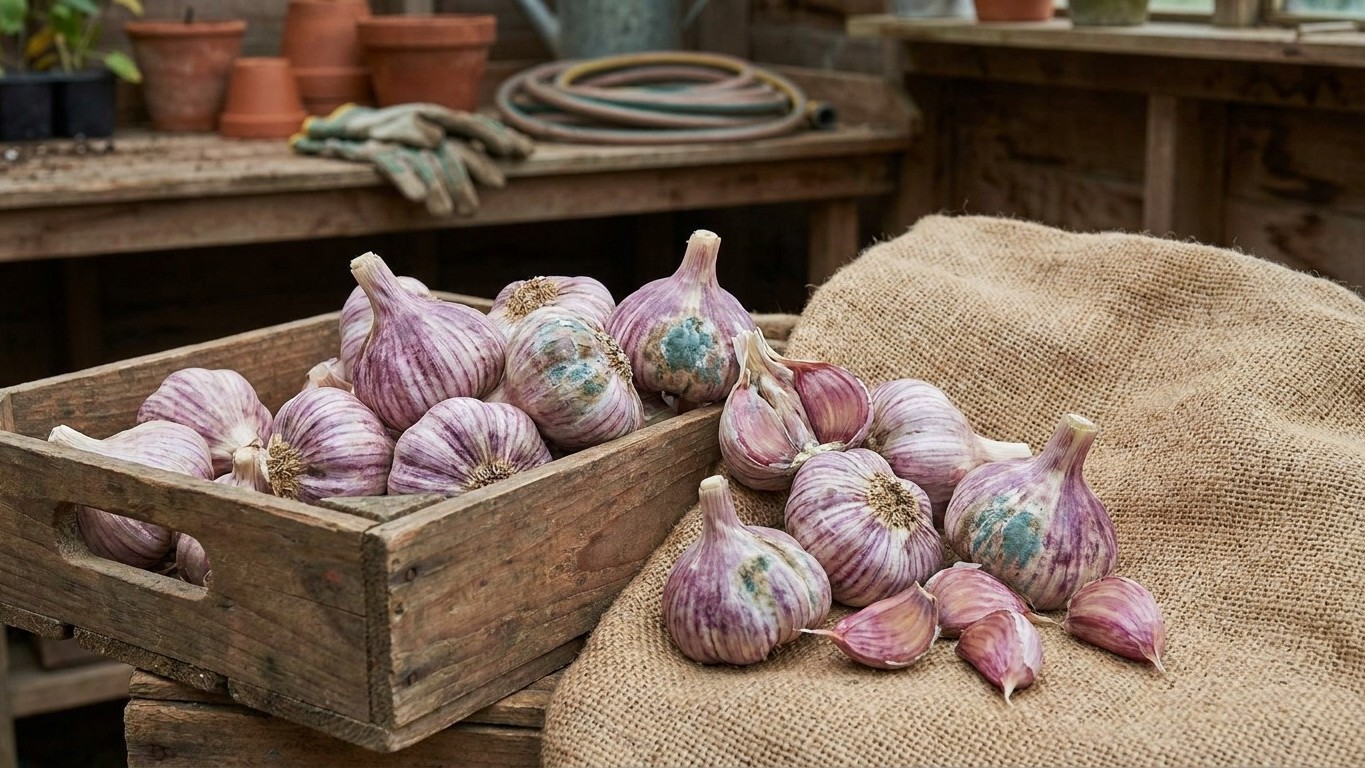

Blue mold on garlic is caused by Penicillium fungi that move into bruised cloves or uncured neck tissue after harvest, according to the University of California‘s Integrated Pest Management program (UC IPM). It shows up as a pale, water-soaked patch that turns green to blue-green and powdery, usually inside a week or two of storage. Check every bulb for soft spots or nicked skin before you put it away, and set aside anything bruised to use first instead of storing it.
What you are looking at

You will not find this one in the field. Blue mold rot shows itself after the bulbs are out of the ground, usually once they are curing or already bagged for storage. The first sign is a water-soaked patch on the outer skin, sometimes just pale yellow rather than obviously wet-looking, sitting right where a bulb was nicked by a fork, dropped, or squeezed too hard going into a crate.
Within days that patch turns color. A dusting of green to blue-green powder spreads across the damaged tissue, exactly the shade and texture you would associate with moldy bread or an old orange left too long in the bowl. Look at the neck first, since garlic that went into storage before the neck tissue fully dried gives the fungus its easiest entry point, and rot often starts there before spreading down into the cloves.
How it progresses in storage
Left alone, the infection does not stay cosmetic. The tissue beneath the mold turns soft and watery, and a bulb that started with one bruised clove can turn to mush within the wrapper in a matter of weeks. A bulb with watery, collapsed cloves under the papery skin is past saving, and the smell alone usually tells you before you even cut into it. Handled early, though, a single spotted clove can often be cut away from an otherwise sound bulb without losing the rest.
What it is not
Garlic yellows for plenty of reasons that have nothing to do with rot, and it is worth ruling those out before you assume the worst. Lower leaves die back naturally as the bulb matures, and that dieback is exactly what tells you it is time to lift the crop. Uneven watering, a nitrogen shortfall, or a patch of compacted soil will also turn leaf tips yellow or pale without any mold ever forming.
The tell is location and texture, not color alone. Blue mold rot shows up on the bulb itself, after harvest, as a powdery surface growth, not as streaking or mottling on standing leaves in the garden. If what you are seeing is yellow-green streaks or a mosaic pattern running along the leaf blades of a still-growing plant, that points toward a different problem entirely, and it is worth reading up on Garlic Mosaic Virus: Streaked Leaves and Shrinking Bulbs to compare symptoms before you decide.
Neck rot from other fungi can also look similar in storage, and separating the two by eye alone is not always possible. For a grower who wants to identify the full range of what can go wrong between planting and storage, the overview at Garlic Diseases is a better starting point than guessing from a single photo.
Where it comes from and when it strikes
Blue mold rot is caused by several species in the genus Penicillium, the same group of fungi behind blue-green mold on citrus and bread. According to UC IPM, the fungus does not attack healthy, intact tissue. It needs a way in, and that means a wound, a bruise from rough handling, or neck tissue that was still soft and undried when the bulb went into storage.
The temperature window that matters
UC IPM lists a soil temperature range of 70 to 77°F as the window in which this fungus is most active and does the most damage, with 70 to 77°F also cited as the optimum. That is a soil temperature reading, not an air temperature, and it matters where the reading comes from. A weather forecast telling you the air is in the 70s does not tell you what is happening at bulb depth in the row or in a curing shed, so do not substitute one for the other when you are trying to judge risk.
Because the fungus depends on wounds rather than attacking on its own, the moment of real exposure is usually harvest day itself. Forking too close to a bulb, tossing garlic into a bucket instead of setting it down, or dragging bulbs across pavement to dry all create the kind of bruising that gives Penicillium its opening. Curing time is the second point of risk: garlic that goes into bags or mesh crates before the neck has fully dried gives the fungus a soft, moist entry point that a properly cured bulb would not offer.
What to do about it now
Once a clove shows the blue-green powder and the tissue beneath has gone soft, there is no treatment that reverses it. Fungicide sprays are not part of home garlic care and would not help a bulb already in storage regardless. The only real management at this stage is sorting, done by hand, bulb by bulb.
- Pull any bulb with visible mold or a soft, water-soaked patch and set it aside from the rest of the batch immediately
- If only one clove on an otherwise firm bulb is affected, cut it away with a clean knife and use the rest promptly rather than returning it to long-term storage
- Check the bulbs stored directly next to an infected one, since moisture and spores can spread through touching skins in a crowded bag or crate
- Improve airflow around the remaining stored garlic by loosening crowded mesh bags or spreading bulbs into a single layer
Do not compost affected bulbs. Home compost piles rarely sustain the temperatures needed to kill fungal spores reliably, and garlic waste tossed on a pile near next year’s planting bed is a simple way to reintroduce the problem. Bag infected bulbs and put them in the trash instead.
Keeping it out of your garden
The controls that actually matter for a home grower come down to handling, not chemistry. UC IPM’s published guidance for blue mold rot includes curing promptly, minimizing bruising, and storing at a maximum of 41°F with low humidity, and every one of those is something a backyard grower can do without special equipment.
Start with clean planting stock
Because the fungus enters through wounds rather than infecting healthy tissue outright, the biggest single risk in your own garden is planting bruised or damaged cloves in the first place. A clove that goes into the ground with a soft spot or split skin can rot before it ever manages to root, which wastes the planting and can leave a gap in the row. Buy or save seed garlic that is firm, dry-necked, and free of nicks, and skip anything questionable rather than hoping it recovers underground.
Handle bulbs like they bruise, because they do
At harvest, lift bulbs with a fork set well clear of the row rather than close to the plant, and set them down rather than tossing them into a bucket or wheelbarrow. Let the necks dry fully before bagging, which for most home setups means spreading bulbs in a single layer somewhere shaded and airy rather than piling them in a bin the same day they come out of the ground.
Storage conditions do the rest
For long-term storage, UC IPM’s guidance points to keeping bulbs at a maximum of 41°F with low humidity, conditions that slow the fungus down considerably compared with a warm pantry shelf. This is different from the soil-persistence problem you get with a disease like White Rot in Garlic: The Soil Disease That Never Leaves, where the pathogen’s resting bodies can sit in the ground for decades regardless of how you handle the harvest. Penicillium rides in on damaged tissue rather than building up in the soil the same way, so clean handling and proper curing address most of the risk directly, without needing a multi-year rotation plan to back it up.
Common questions
Can I still eat garlic that has a little blue mold on one clove?
Cut well past the affected area and use the bulb promptly rather than returning it to storage. If the smell is off or the tissue under the skin looks watery beyond the visible mold, discard the whole bulb instead of trying to salvage part of it.
Why did my garlic turn moldy in storage when it looked fine at harvest?
Because the fungus needs a wound or an uncured neck to get started, and bruising from harvest handling often does not show clearly until the tissue has had time to break down. A bulb that looked sound going into a crate can still have had a soft bruise on the far side that only became visible once mold set in.
Is blue mold the same thing as the green mold I see on old garlic in the fridge?
They are caused by the same group of fungi, Penicillium species, and look nearly identical: a powdery blue-green surface growth on damaged tissue. Kitchen garlic left too long in a humid fridge drawer is essentially experiencing the same process as bulbs mishandled at harvest.
Does washing garlic before storage help prevent this?
No, and it can make things worse. Washing introduces moisture right at the neck and skin, which works against the drying that curing is meant to achieve, so store bulbs unwashed with just the loose outer dirt brushed off by hand.