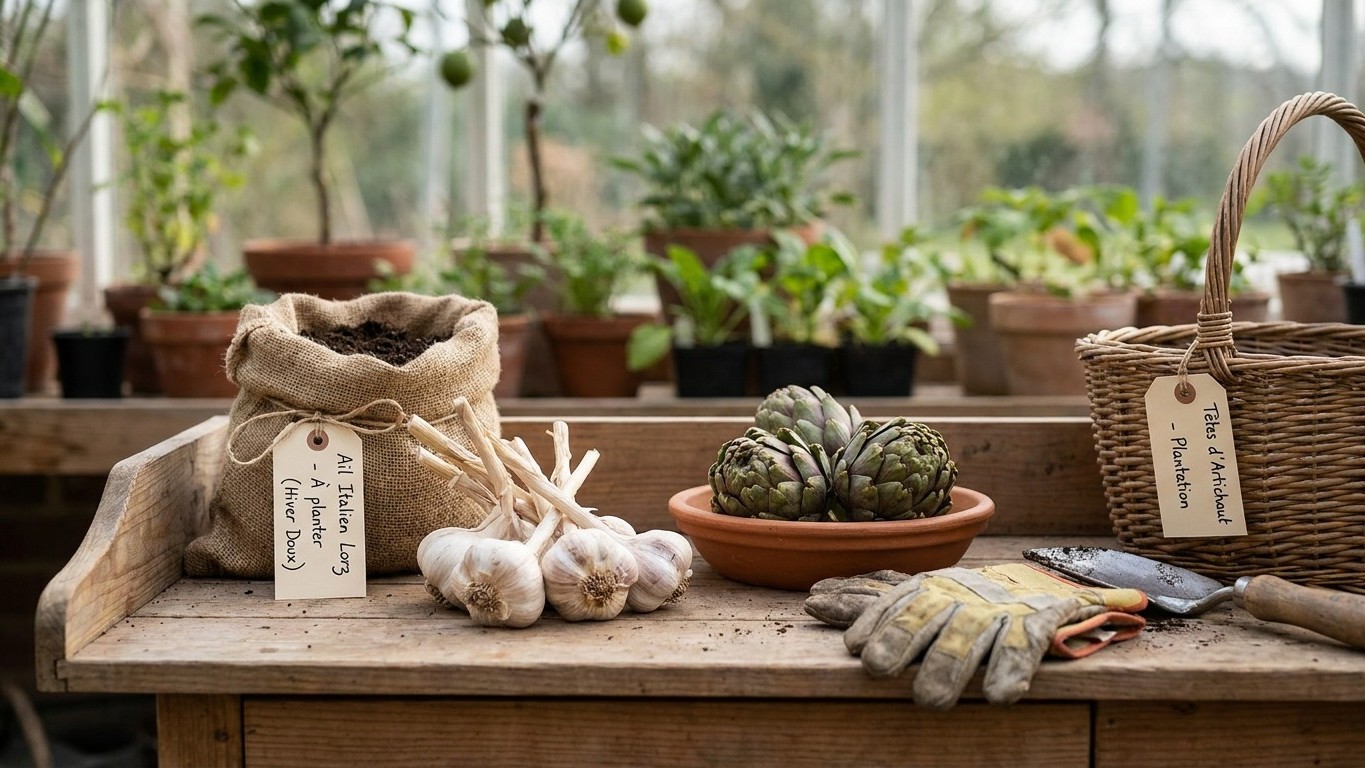

Lorz Italian is an Artichoke type garlic, a softneck strain that is hot and spicy in flavor, and it keeps in storage for six months or more when cured well. Being a softneck Artichoke type, it tolerates a mild winter better than a hardneck garlic does, but it still needs a real stretch of cold after planting or the clove won’t divide into a head. Check how many weeks your area sits below 40°F before you order cloves, and if that number falls short, plan to refrigerate the seed cloves for six weeks before you plant.
What Lorz Italian actually is

Lorz Italian belongs to the artichoke group, the softneck garlics named for the way their cloves overlap in layers like the leaves of the vegetable. Most artichoke varieties are grown precisely because they are gentle and forgiving on the palate, easy to eat raw in quantity without much bite. Lorz Italian breaks from that pattern: its flavor is notably hot and spicy. That contradiction is worth sitting with for a moment, because it is the whole reason to seek out this variety by name rather than simply buying “artichoke garlic” from a bin. Choosing the type tells you about the plant’s habit and structure; choosing Lorz Italian tells you what will actually happen in your mouth.
As a softneck, Lorz Italian has no rigid central stalk, and its cloves are arranged in the loose, irregular, multi-layered pattern typical of the artichoke type — often a dozen or more cloves of varying sizes packed around the center rather than the tidy single ring of a hardneck. The wrapper skins tend to be thick and durable, which suits the variety well for its main practical strength: keeping. Artichoke garlics as a group are known for long storage life, and Lorz Italian follows that trait faithfully even as it departs from the group’s flavor reputation. Properly cured and kept cool and dry, heads can last many months without sprouting or drying out, making it a good choice for cooks who buy or grow garlic once and want it to last through the season.
So the short summary is this: soft neck, layered artichoke-type head, sturdy skins, excellent keeper — and, unusually for its type, a hot, spicy heat rather than a mild one. That last point is the detail that actually matters when deciding whether this is the garlic for your kitchen.
What Lorz Italian tastes like, and what to do with it
The heat in Lorz Italian is a raw-garlic heat, and that matters because heat is the first thing cooking removes. Sliced thin into a salad, crushed into a dressing, or eaten straight off the clove, this is where the variety earns its reputation — a sharp, spicy bite that most softneck artichoke types simply don’t deliver. That bite comes from the same volatile sulfur compounds every garlic produces when its cells are broken, and Lorz Italian just seems to produce them in greater quantity or intensity than its milder relatives. Use it anywhere raw garlic is the point: a garlicky vinaigrette, a spicy aioli, chimichurri, or the last-minute clove grated over finished pasta.
Cook it, and that intensity softens the way it does in any garlic, hardneck or soft. A quick sauté in oil mellows the heat considerably, and slow roasting a whole head will push it all the way into sweetness — caramelized, spreadable, almost nutty. That means whole-head roasting doesn’t showcase what makes Lorz Italian distinctive; it erases it, just as it would with a milder variety. If you want to taste the spice this garlic is known for, keep the heat brief and the cuts fine, and add it late in cooking rather than early.
The cloves are white-skinned, which tells you nothing about flavor on its own — color in garlic is a poor predictor of pungency — but it does mean Lorz Italian looks the part of a classic kitchen garlic, unmarked by the purple streaking some hardnecks show. Beyond the documented heat, no further flavor notes such as aftertaste length or specific aromatic character have been published for this variety, so it’s best judged by growing and tasting a bulb rather than by comparison to other artichoke garlics.
Will it get the cold it needs where you are
Garlic doesn’t grow like a bulb you tuck in and forget. Each clove needs a stretch of cold weather after planting, and without it the clove doesn’t divide, it just swells into one round, single bulb with no papery cloves inside. Lorz Italian needs roughly six weeks of temperatures under 40°F to split properly, and that number is what decides whether this variety belongs in your garden at all.
Where the winter falls short
In the hottest, mildest parts of the country the shortfall is severe. Los Angeles, the reference station for California, gets essentially zero weeks under 40°F in a typical winter, six short of what the clove needs. Houston, standing in for Texas, runs the same gap. New Orleans, representing Louisiana, follows the identical pattern. Jacksonville stands in for Florida with the same shortfall, and Honolulu and Phoenix, covering Hawaii and Arizona, are no better.
| Territory (station) | Weeks under 40°F | Set out | First ripe |
|---|---|---|---|
| California (Los Angeles) | 0 of 6 needed | not established | not established |
| Texas (Houston) | 0 of 6 needed | early to late November | early August |
| Louisiana (New Orleans) | 0 of 6 needed | late November to mid December | late August |
None of that rules Lorz Italian out in those regions. It rules out planting cloves straight from the bag. Refrigerate the seed cloves for the six weeks of cold the ground won’t provide, kept dry and well away from apples or other ethylene-producing fruit, then plant as usual. The alternative is to sidestep the vernalization problem entirely and grow a type built for a shorter chill, which is the case made for the Silverskin covered in Nootka Rose Garlic: When to Plant the Silverskin Heads That Suit a Mild Winter.
Where cold isn’t the problem
At the other end of the map, cold is not the issue, cumulative summer heat is. Prince Edward Island, measured at Charlottetown, accumulates around 1569 degree-days across the growing season, which is just enough for an early crop under plastic mulch. Further west and north, the shortfall widens. Alberta, at Calgary, totals 1171 degree-days a year, and Alaska, at Anchorage, manages 917. Yukon and Northwest Territories, at Whitehorse and Yellowknife, run lower still, and Nunavut, at Rankin Inlet, totals only 159. Those territories don’t lack cold, they lack the summer warmth a Mediterranean-bred softneck needs to size up bulbs, and a tunnel or greenhouse matters there more than frost dates do. A hardneck bred for a genuine winter, like the Porcelain type in Georgian Fire Garlic: When to Plant the Porcelain Heads That Need a Real Winter, is usually the better match for those latitudes anyway.
When to put the cloves in
Garlic is planted in fall and lifted the following summer, and the planting window is set by your first fall frost date rather than by a date on the calendar. The goal is narrow: the clove needs enough time in the ground to grow roots before the soil freezes solid, but not so much time that it pushes several inches of green top growth before winter sets in. Roots without top growth survive a hard freeze. A garlic plant that has already leafed out going into winter loses vigor, and sometimes the whole clove, to a cold snap.
In regions with a hard, early winter, that generally means planting a few weeks ahead of the ground freezing, a window most cold-state extension offices set around the average first fall frost. In milder regions where the ground rarely freezes at all, the window opens later and stretches longer, sometimes into early winter, because there’s no freeze-up deadline forcing an early planting. The Texas and Louisiana examples above, where growers set cloves from November into December, show how far that window can slide in a state with a mild winter compared with a northern schedule anchored tightly to first frost.
Where sources genuinely disagree is how close to first frost is too close. Some university extensions recommend planting four to six weeks ahead of it, others push nearer the frost date itself to limit fall top growth, and the right answer shifts with soil type and mulch depth as much as with latitude. That’s a real regional difference, not a gap in the research, and it’s why your state extension service’s recommended planting window, not a national average, is worth tracking down before you order cloves. The Garlic Varieties guide has the broader planting calendar if you haven’t settled on a variety yet.
Hardneck or softneck: what this one asks of you
Lorz Italian is a softneck, and that shapes almost everything about growing it. There’s no scape to watch for and cut in late spring, no woody central stalk running through the bulb, and no forced choice between eating the scape and leaving it on for a bigger head. What you get instead is a bulb with far more cloves than a hardneck produces, twelve to twenty of them in overlapping rings rather than the six to twelve fat cloves ringing a hardneck’s central stalk.
The tradeoff is peeling. Hardneck cloves have a looser skin that slips off easily. Softneck cloves, Lorz Italian included, hold their papery wrappers tighter, and a cook peeling a whole head for a roast will spend longer on it than with a Porcelain or Rocambole. What softneck gives back is storage life. A hardneck typically holds three to six months before it sprouts or dries out, while a well-cured softneck Artichoke type routinely reaches six months or beyond, which is the main reason it’s worth the extra peeling time for anyone putting up garlic for the whole year.
Climate is the other half of the tradeoff, and it works in Lorz Italian’s favor in a short, mild winter. Softneck types as a group ask for less cold than hardnecks do, which is why an Artichoke type is a reasonable pick where six weeks under 40°F is a stretch, even though the crossing above shows it’s still marginal in the very warmest states. A gardener in a long, cold winter has less reason to choose it. Hardneck types hold up to harder freezes and are the more common pick where winter is genuinely severe.
Growing and curing it without losing the crop
Plant cloves root-down, pointed end up, about two inches deep and six inches apart, in rows spaced roughly twelve inches apart, adjusting a little deeper where winters are harsh and a little shallower where the ground barely freezes. Mulch heavily right after planting, four to six inches of straw is typical, because an overwintered crop needs that layer to buffer soil temperature swings and to smother weeds that would otherwise crowd young shoots before the garlic canopy fills in.
Knowing when to lift
Water through spring while the bulb sizes up, then stop watering two to three weeks before you expect to lift, since wet soil at harvest invites staining and rot in storage and slows curing. The real signal to lift is foliage, not the calendar: when the lower third to half of the leaves have died back and browned while the upper leaves stay green, the bulb is mature. Pulling too early gives small, thin-skinned heads that won’t store. Waiting too long lets the wrapper layers split and cloves separate underground, which ruins storage life, so dig a test bulb or two rather than guessing.
Cure whole, unwashed plants in a shaded, dry space with good airflow for a few weeks, roots and tops still attached, out of direct sun which can scald the bulbs. Curing is finished when:
- Outer wrappers are papery and dry, not soft or damp
- The neck above the bulb is tight and no longer flexible
- Roots have shriveled and darkened
Only then trim roots and tops, or braid the softneck stalks while they still have a little give, and move the cured heads to a cool, dark, dry spot for the long storage this variety is grown for.
Common questions
Can I plant Lorz Italian in spring instead of fall?
You can, but expect smaller, less-divided bulbs. Spring planting skips most or all of the cold period the clove uses to differentiate into cloves, so heads tend to come in undersized and sometimes as a single round bulb rather than a full head.
Where do I find Lorz Italian seed garlic to buy?
Specialty seed garlic growers carry it more reliably than general nurseries or grocery-store garlic, and availability shifts year to year with what those growers harvested. Order early in the season most suppliers list for fall shipping, since popular Artichoke varieties often sell out before planting time.
Does Lorz Italian produce a scape I need to cut?
No. It’s a softneck, so it doesn’t send up a hard central flower stalk the way a hardneck does. You won’t get the scape harvest some hardneck growers count on for a mid-season crop.
How is Lorz Italian different from other Artichoke types like Inchelium Red?
The differences show up in catalog details rather than in how you grow them: days to maturity, clove count per head, and flavor intensity vary somewhat between named Artichoke cultivars, and a seed supplier’s variety description is the place to compare them side by side. The cold requirement and general growing method described here apply across the Artichoke group.