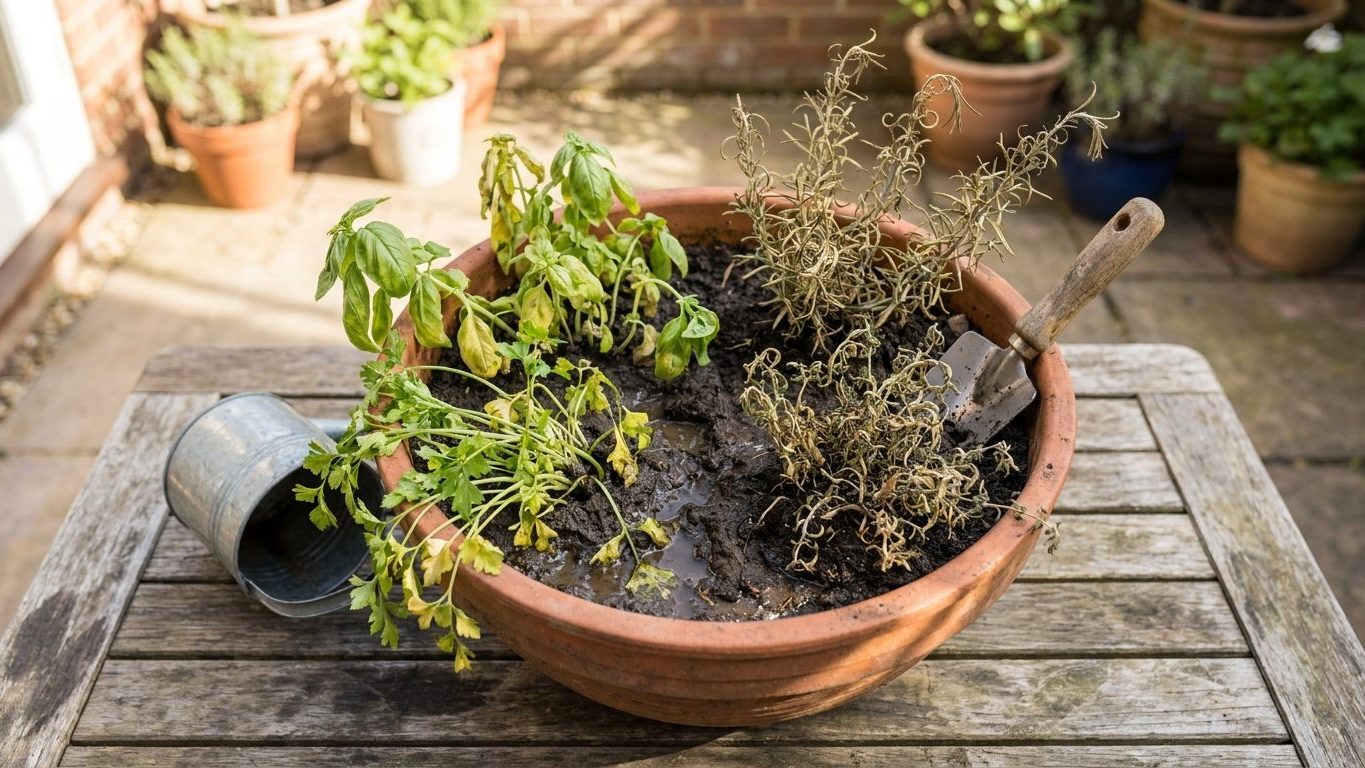

A single overwatered pot doesn’t just kill one herb, it kills the pot’s whole point. Mixed herb containers fail because most people water them like one plant, when in truth they’re planted with two or three plants that want opposite things. The fix isn’t more attention or better fertilizer. It’s grouping herbs by what they actually need, not by what recipe they end up in.
What is actually going on

A mixed pot of herbs from the garden center is arranged for the moment you buy it, not for the months after. Growers pack basil, thyme, rosemary, and parsley into one container because the combination looks full and green on the shelf. Nobody at that stage is planning for what those roots will be fighting over six weeks later.
The real problem is that herbs split into two camps with opposite native habits. Mediterranean species, that’s thyme, rosemary, oregano, and sage, evolved on dry, rocky hillsides. They want lean soil, sharp drainage, and long dry spells between waterings. Give them constant moisture and their roots suffocate and rot, often before any sign shows up on the leaves. The other camp, basil, parsley, cilantro, and mint, comes from damper, richer ground. These plants want soil that stays lightly moist, and they wilt and turn bitter or bolt to seed the moment they dry out for a day too long.
A container only has one soil, and that soil only holds one moisture level at a time. There’s no way to make one side of a 10-inch pot dry and rocky while the other side stays damp and rich. Water poured in at the surface moves down and spreads, so whichever herb dominates the watering schedule effectively decides the fate of everything else sharing that soil. Add mint to the mix and there’s a second problem: its roots spread by rhizome and physically crowd out neighboring plants regardless of whether their water needs match.
Pot volume adds a third layer to this. A garden bed has yards of soil to buffer against drying out and to hold onto nutrients. A container has a few quarts. That smaller volume dries out faster in sun and wind, and it runs out of available nutrients sooner than the same herbs would in open ground. So a mixed pot isn’t just fighting mismatched water needs, it’s doing that inside a soil volume that punishes any water mistake faster than a garden bed would. Some of these herbs, sage among them, carry a long-standing reputation beyond the kitchen.
In the garden
The workaround is straightforward once the mechanism is clear: stop grouping herbs by cuisine and start grouping them by their root and water preferences. Herbs that want the same soil and the same watering rhythm can share a pot. Herbs that don’t, shouldn’t, no matter how often a recipe calls for them together.
Grouping by need, not by dish
| Group | Typical herbs | What they need | What goes wrong if mixed with another group |
|---|---|---|---|
| Mediterranean, dry-loving | Thyme, rosemary, oregano, sage, lavender | Full sun, gritty or sandy potting mix, water only once the soil is dry an inch or two down | Root rot and fungal crown disease within weeks if kept moist for basil or parsley’s sake |
| Leafy, moisture-loving | Basil, parsley, cilantro, chives | Consistent moisture, richer potting mix, partial shade in hot climates | Wilting, bitter flavor, and early bolting to seed if the soil is left dry to suit rosemary or thyme |
| Spreading, invasive-rooted | Mint, and to a lesser extent oregano | Its own dedicated container, regardless of water needs | Rhizomes take over the pot within a single season and crowd out every other plant’s roots |
| Woody perennials vs. tender annuals | Rosemary, sage (perennial) vs. basil, cilantro (annual) | Perennials need less frequent repotting and lighter feeding; annuals need regular feeding and full seasonal turnover | Fertilizing heavily for the annual’s sake pushes soft, rot-prone growth on the woody perennial |
Container choice matters as much as the soil mix. Unglazed terra cotta breathes and dries faster, which suits the Mediterranean group. Glazed ceramic or plastic holds moisture longer, better for the leafy group. Whatever the material, a pot without a real drainage hole is a pot that will eventually drown whatever’s planted in it, no matter which group it belongs to. Size matters too: a shared pot for two Mediterranean herbs needs enough width, generally a foot or more in diameter, for both root systems to spread without choking each other before either plant matures.
What it depends on where you are
How often any of this goes wrong depends heavily on climate, and that part of the answer isn’t something a single page can give you. Season length decides whether a Mediterranean herb like rosemary lives outdoors year-round as a small shrub or has to come inside before the first hard frost. Summer heat decides how fast a container dries out, and in the hottest, driest regions, even a well-matched pot of thyme and oregano may need water daily in peak summer, while the same combination in a cooler, cloudier region might need it only once a week.
Humidity works the other way. In regions with muggy summers and frequent rain, the risk isn’t drying out, it’s fungal disease taking hold in soil that never fully drains between rain events, which hits the Mediterranean group hardest since they’re the ones least tolerant of wet roots. Wind exposure, how much direct afternoon sun a balcony or patio gets, and even the material a deck or patio floor is made of (concrete radiates heat back into pots sitting on it) all shift the watering math further.
The more reliable path is checking the state-specific guide on this site for a region’s typical season length and rainfall pattern, and beyond that, contacting a local cooperative extension office, which tracks soil and climate conditions at the county level.
The mistake that costs the most
Of everything that goes wrong with container herbs, one mistake accounts for more losses than all the others combined: watering a mixed pot on a single schedule set to satisfy whichever herb looks thirstiest. In practice, that’s almost always the leafy group, basil or parsley, wilting visibly and asking for water. The Mediterranean herbs in the same pot don’t wilt the same obvious way when they’re overwatered. They rot quietly at the root, and by the time the foliage shows it, the plant is usually already past saving.
This mistake costs more than a single lost herb because rosemary, sage, and thyme are slow to establish. A basil plant that dies can be replaced from seed and back in production within a couple of months. A rosemary plant that took a full growing season to build a decent root system, killed by three weeks of well-meaning overwatering meant for its potmates, isn’t coming back on the same timeline, if it comes back at all.
The fix isn’t a better watering schedule for the mixed pot. It’s not keeping a mixed pot in the first place. Splitting a garden-center combination pot into two or three separate containers within the first week, sorted by the groups above, costs nothing but a few minutes and maybe one extra pot. It’s the single change that prevents the most common and most expensive failure in container herb growing, and it’s the one step most buyers skip because the plants look fine together on day one.