
Sow okra when the soil 2 inches down holds at 65°F or higher in the morning, and when nighttime air temperatures stay above 55°F. For most of the country, that means two to four weeks after your last spring frost, well after tomatoes and peppers have gone in. If you plant on the date the seed packet implies, you’re probably early. Okra seed that sits in cold, wet dirt rots, and seedlings that survive often stall for weeks.
The plant comes from warm regions of Africa and South Asia, and it has never lost its taste for heat. Cool weather doesn’t just slow it down. It sets it back in ways that a week of sunshine won’t undo.
The number that matters is soil temperature, not the calendar
Last-frost dates are a fine starting point for lettuce and peas. For okra, they’re a minimum bar. A garden can be frost-free on May 1 in Ohio and still have soil in the low 50s, which is a lousy place for a seed that wants to feel like Georgia in June.
Okra seed germinates, technically, at soil temperatures around 60°F to 65°F. It does so slowly and unevenly, and cold rain can finish off what the thermometer let begin. In the low 70s, expect emergence in a week or more. Once the soil reaches the 80s, seedlings can show up in four to five days. The seed coat is thick and hard, so the seed already has a head start on being stubborn. If you want a deeper look at what’s going on underneath the soil, Getting Okra Seed to Come Up covers soaking, scarifying and the other tricks.
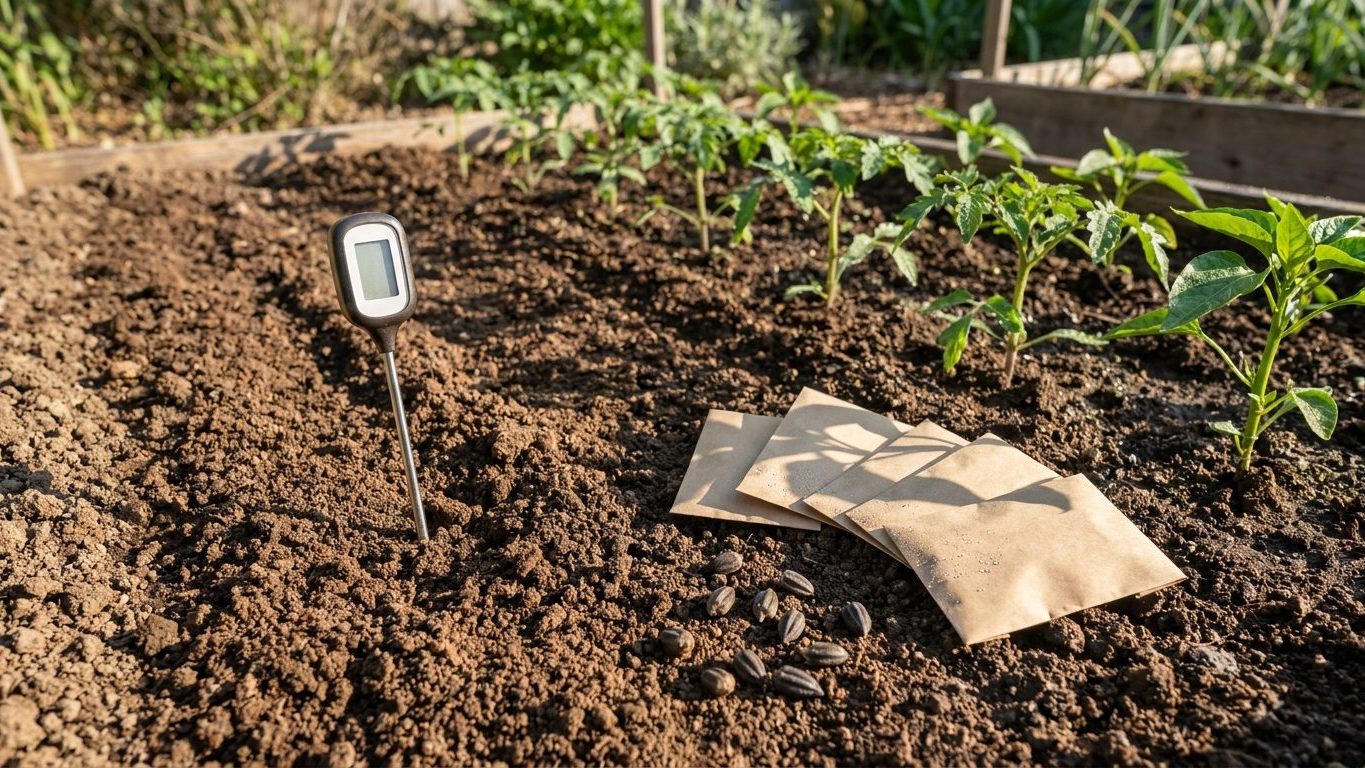
A soil thermometer costs a few dollars at any hardware store or garden center and removes the guesswork. Push it 2 to 4 inches into the bed at about 8 a.m., when the soil is at its coolest, and check for three or four days in a row. If the morning reading is 65°F or higher and the extended forecast shows nights staying above 55°F, you’re clear. If a cold snap is predicted within the next week, wait it out. Seed sitting in damp, cold ground for ten days is a bad bet.
A good rule of thumb: plant okra when you’d feel comfortable leaving a window open overnight without a sweater. It’s not scientific, but it keeps you honest when a warm Saturday in April tempts you.
Planting windows by region
Because the target is a soil temperature rather than a date, the planting window slides a long way from one end of the country to the other. These ranges are typical, not guaranteed. Local microclimates, elevation and a cold spring can move them by two weeks either way.
Long, hot summers: Deep South, Gulf Coast, Southwest deserts
Gardeners in zones 8 through 10 have the widest window. Across Georgia, Alabama, Mississippi, Louisiana and much of Texas, sowing usually runs from April into early summer, and many people make a second sowing in June or early July. In the warmest parts of Florida and the Gulf Coast, a planting in midsummer can still produce before the first cool nights arrive. Okra tolerates July heat that shuts down a lot of other crops, and that’s why it appears in so many Southern gardens.
One thing to watch in the hottest areas: when daytime highs sit well above the mid-90s for weeks, flowers may drop without setting pods. That isn’t a planting-date problem, strictly, but it can influence whether you want to time your sowing so pods develop before the peak of summer. Okra Flowers Falling Without Setting Pods explains what’s happening and what to do.
Moderate summers: Mid-Atlantic, Midwest, upper South
In Virginia, Kentucky, Missouri, southern Illinois, Ohio and similar areas, the sweet spot is usually mid-May to early June. Many gardeners in these states get impatient at the first 75°F day in late April and sow too soon. The ones who wait until the soil has been steadily warm often catch up in a few weeks. A seedling that goes in on May 25 into 70°F soil can easily outpace one sown May 5 that sat through three cold, rainy weeks.
Short, cool summers: northern states and the Pacific Northwest
Minnesota, Wisconsin, Michigan, upstate New York, New England and the Pacific Northwest can grow okra, but they have to work for it. Direct-sowing outdoors is possible in late May to mid-June in a warm, sheltered spot, and it works best in a hot summer. Otherwise, start seeds indoors and transplant. Short-season selections matter more here. Classic varieties such as Clemson Spineless typically mature in around 55 to 60 days, which can fit in a northern summer if the plants never stall.
In places like western Washington and Oregon, where nights stay cool even in July, raised beds, black plastic mulch and a low tunnel or small greenhouse are what make the difference. Without extra warmth, expect a small harvest at best.
Giving okra a head start without setting it back
Okra has a taproot, and it resents being disturbed. Pulling a seedling out of a crowded flat and shoving it into a garden bed can stunt it badly. If you start seeds indoors, use individual containers, ideally biodegradable pots that can go straight into the ground, or deeper cells that let you slide the root ball out whole. Sow three to four weeks before your intended transplant date, not earlier. A seedling kept in a small pot for six or seven weeks becomes root-bound and stops growing, which defeats the purpose.
Indoor starts need warmth as well. A kitchen counter in a cool house won’t do it. Seed germinates faster on a heat mat set to roughly 80°F, and the seedlings need strong light as soon as they emerge, or they’ll stretch and flop. When it’s time for transplanting, harden them off for a week, exposing them to outdoor conditions gradually. Move them out only when nighttime lows are reliably above 55°F and the soil is comfortably warm.
For direct sowing, a few steps can shave days off emergence and improve stand counts:
- Soak seeds in room-temperature water for 12 to 24 hours before planting, then sow right away so they don’t dry out.
- Plant them about ½ to 1 inch deep, and sow a few extra seeds per spot, thinning to a plant every 12 to 18 inches.
- Lay black plastic over the bed two weeks ahead of planting to warm the soil by several degrees, then cut holes for the seed or transplants.
Black plastic is the most underused tool for northern okra growers. It’s cheap, it works, and it lets you plant a week or so earlier than you could in bare soil. Just remember to water under it, since rain won’t penetrate, and watch for overheating on very hot days in the South, where it can scorch young roots.
Avoid watering heavily right after sowing in cool conditions. Soaked soil stays colder and is where seed rot starts. Moist is enough.
Working backward from fall: the last good planting date
Okra is frost-tender, and a single night near freezing can blacken the plants. That makes the end of the season as important as the start, especially for gardeners in the middle latitudes who like the idea of “one more sowing.”
Here’s the arithmetic. Most varieties start producing pods about 50 to 65 days after sowing. Okra is a cut-and-come-again crop, so you want a harvest period of at least four to six weeks to make the planting worthwhile. Add those together and you get roughly 90 to 100 days between sowing and the first fall frost. Look up your area’s average first frost date, count back about 100 days, and that’s your cutoff. In Kentucky, where the first frost often lands in mid-to-late October, that points to sowing by early July at the latest, and sooner is safer. Where the first frost arrives in late September, as in much of the northern tier, the cutoff falls in June.
Succession planting makes sense in the long-season South. A second sowing four to six weeks after the first fills the gap when the first planting gets tall and leggy, and it keeps pods coming into fall. Farther north, a single well-timed planting is usually all the season allows, so put your effort into getting that one right.
Planting date also affects how big the plants grow. Early plantings in warm climates may reach 6 feet or more by August, so give them room. Later plantings stay shorter and can produce pods closer to the ground, which makes picking easier. Either way, check plants daily once they start producing. Pods go from tender to woody in a couple of days. The complete picture, from heat to harvesting, is in Growing Okra: Heat, Daily Picking, and the Slime Question.
A final nuance: if a late frost hits after you’ve already sown, the seedlings may be fine if they haven’t emerged yet, since the soil usually buffers the seed. Emerged plants are another story. Cover them overnight with row cover, buckets or old sheets, and if they turn black, don’t dig them up immediately. Wait a few days, then check the growing point. If it’s dead, resow, because the replanted seed will probably catch up before the stunted survivors do.