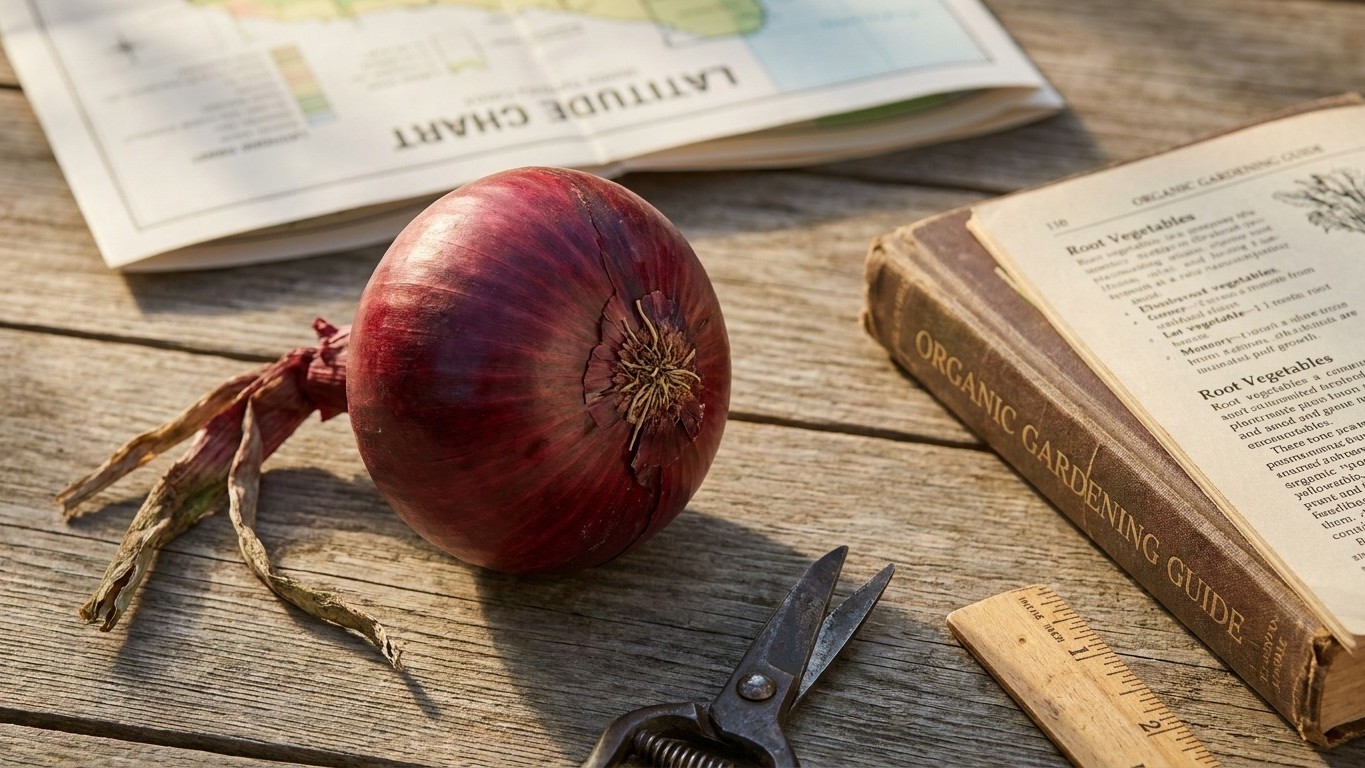

Barolo is a long-day red onion that needs between 38 and 55 degrees north latitude to form a bulb at all, and it holds in storage for a solid 6 months once cured. That single day-length requirement decides everything else about growing it, so before getting into planting dates or curing steps, the first question is simple: does your yard even sit in the zone where this onion can do its job?
Will Barolo bulb where you are

Barolo belongs to the long-day group, and it bulbs correctly between 38 and 55 degrees north latitude. That range runs roughly from the northern half of California and the mid-Atlantic states up through the northern tier of the country and into Canada. Anyone gardening south of that line, think Florida, the Gulf Coast, or the low deserts of Arizona, is outside the window this variety was bred for.
Here’s the part that trips up a lot of gardeners: onions don’t bulb because of heat. They bulb because of daylight hours. A long-day variety like Barolo waits for roughly 14 to 16 hours of light in a day before it shifts from growing leaves to swelling a bulb. The far north actually gets more hours of summer daylight than the south does, which is exactly why long-day onions are built for northern latitudes and short-day onions are built for the Gulf Coast and the Deep South.
Plant Barolo outside its range and the result isn’t a smaller onion. It’s no onion. The plant keeps producing leaves because it never receives the daylight trigger, and by the time cold weather arrives, there’s a fat green top and a thin, undeveloped root with no real bulb underneath. Store that and it rots within weeks instead of lasting through winter.
If a reader’s location falls right at the edge, say 37 or 38 degrees north, or somewhere around 54 to 56, that’s a genuine gray area. The 38 to 55 degree band is a continuum based on field performance, not a hard line drawn with a ruler. A gardener near either edge might get a decent bulb some years and a disappointing one in others, depending on how the season’s daylight and weather line up. That’s not a false yes, and it’s not a false no either. It’s a variety that will work most of the time in that zone, with more risk the closer someone sits to the border. Gardeners in that in-between territory are usually better served checking with their local Cooperative Extension office, since regional trial data can settle what a general latitude range can’t.
What Barolo is like
Assuming the latitude checks out, here’s what actually shows up in the garden and later in the kitchen. Barolo is a red onion, and it takes 110 days from transplant to reach maturity, a long season that rewards an early start indoors or a purchased transplant rather than direct seeding.
The catalogue facts, gathered in one place:
- Color: Red
- Days to maturity: 110 days from transplant
- Flavor: Sharp, with real bite raw
- Storage life: 6 months
The flavor and storage trade-off, explained
Barolo is not a mild, sweet onion you’d want to eat like an apple. It’s sharp, and that sharpness isn’t a flaw to work around, it’s the reason the onion keeps at all. The sulfur compounds responsible for an onion’s bite are the same compounds that protect the bulb’s tissue from breaking down in storage. A sweet onion, low in those compounds, tastes great sliced raw on a burger but turns soft and starts rotting within a few weeks of harvest. A sharp onion like Barolo trades that mellow raw flavor for months of shelf life.
That’s why it earns a spot as a pantry onion rather than a salad onion. It holds into spring, long after sweeter varieties have gone soft or sprouted, but it’s meant for cooking, not eating raw off a cutting board. Anyone hoping for a red onion that’s both mild and long-keeping is chasing something that doesn’t really exist in onion breeding. The two traits pull in opposite directions.
When to plant it
Planting time for onions isn’t fixed to a date on the calendar. It follows the day-length group, and that changes depending on where the garden sits, which surprises a lot of first-time growers.
Short-day onions, grown in mild-winter regions like the Gulf Coast, actually go into the ground in fall and get harvested the following late spring, spending winter as small, hardy plants. Long-day onions like Barolo work on the opposite calendar. They’re planted in late winter to early spring, typically as transplants set out a few weeks before the last frost, and they grow through the long days of early summer before bulbing kicks in during the peak daylight months.
Since Barolo is a long-day variety, that late-winter-to-early-spring planting window is the one that applies. Gardeners in the colder end of its range, up toward the 50 to 55 degree mark, generally start transplants indoors 8 to 10 weeks before their last frost date and move them outside once the soil can be worked, giving the plants the longest possible head start before the summer solstice triggers bulbing.
The size test that matters more than any date
Here’s the detail that actually determines bulb size, and it’s more useful than any planting calendar: the onion plant needs to reach a decent size in leaves and roots before the daylight trigger arrives. Whatever size the top growth has reached the moment day length hits the bulbing threshold is roughly the size the bulb will end up being. A stunted, late-planted onion that’s still small and thin when the long days of summer arrive will form a small bulb no matter how perfect the rest of the season turns out. A well-established plant with several thick leaves at that same moment will bulb up much larger. That’s the real reason early planting matters for long-day onions, it’s not about beating the frost, it’s about building enough plant before the calendar switch flips.
Growing it well
Onions have shallow, sparse root systems, and that single fact explains most of what goes wrong in an onion bed. They can’t compete with weeds for water and nutrients the way a tomato or squash plant can, so a patch left weedy for even a couple of weeks translates directly into smaller bulbs at harvest. The plant isn’t fighting back, it’s just losing ground quietly while the weeds take what little moisture and nutrition sit near the surface.
Consistent moisture matters for the same reason. Because the roots don’t reach deep, a dry stretch in midsummer, right when bulbs are sizing up, shows up later as undersized onions rather than wilted plants. Onions rarely look distressed the way a thirsty tomato does; they just quietly cap out smaller than they should have.
Watch for bolting
Occasionally a plant sends up a thick flower stalk instead of staying focused on the bulb, usually triggered by a cold snap early in the season followed by a warm spell, a stress response called bolting. A bolted onion redirects its energy into the flower stalk, and the bulb that forms underneath will not store well, no matter how sharp or well-cured it seems at harvest. The fix isn’t complicated: pull the flower stalk out, harvest that particular bulb, and plan to eat it first, within weeks rather than saving it for the pantry. It’s a perfectly good onion for the kitchen table this month, just not one to count on for February.
Harvesting and keeping it
Onions announce their own readiness, and the signal has nothing to do with a date circled on the calendar. As the bulb finishes sizing up, the hollow green tops start to soften at the neck and fall over on their own, usually across the whole bed within a few days of each other. That collapse is the plant’s own signal that it has stopped pulling in nutrients and switched into storage mode.
What happens after the tops fall over decides whether those onions last through winter or rot in the bin by Thanksgiving, and it’s the step most home gardeners skip or rush. Curing means drying the whole bulb, and especially the neck, until the outer layers turn papery and the neck itself closes up tight. Skip that step and moisture stays trapped near the neck, giving rot a way in during storage even if the bulb looked perfectly fine on harvest day.
From fallen tops to the storage shelf
- Watch for the tops to fall over on their own, this is the harvest signal, not a specific date.
- Pull the bulbs and let them lie in the garden for a day or two if the weather is dry, or move them to a covered, airy spot if rain is expected.
- Spread the bulbs in a single layer somewhere warm, dry, and shaded, and leave them there for two to three weeks to cure.
- Check the necks: they should feel dry and papery, not soft or green, before moving on.
- Trim the dried tops and roots, then store the cured bulbs somewhere cool, dark, and well-ventilated.
Once cured properly, Barolo keeps for 6 months, which in practical terms means onions harvested in mid-summer are still sound and usable well into the following winter, sometimes stretching into early spring. That’s a meaningfully longer window than a sweet, mild variety offers, since those tend to soften and spoil within two to three months even with careful curing. A household that puts up a full braid of Barolo at harvest is still cooking with it long after the sweeter onions from the same garden have been used up or tossed.