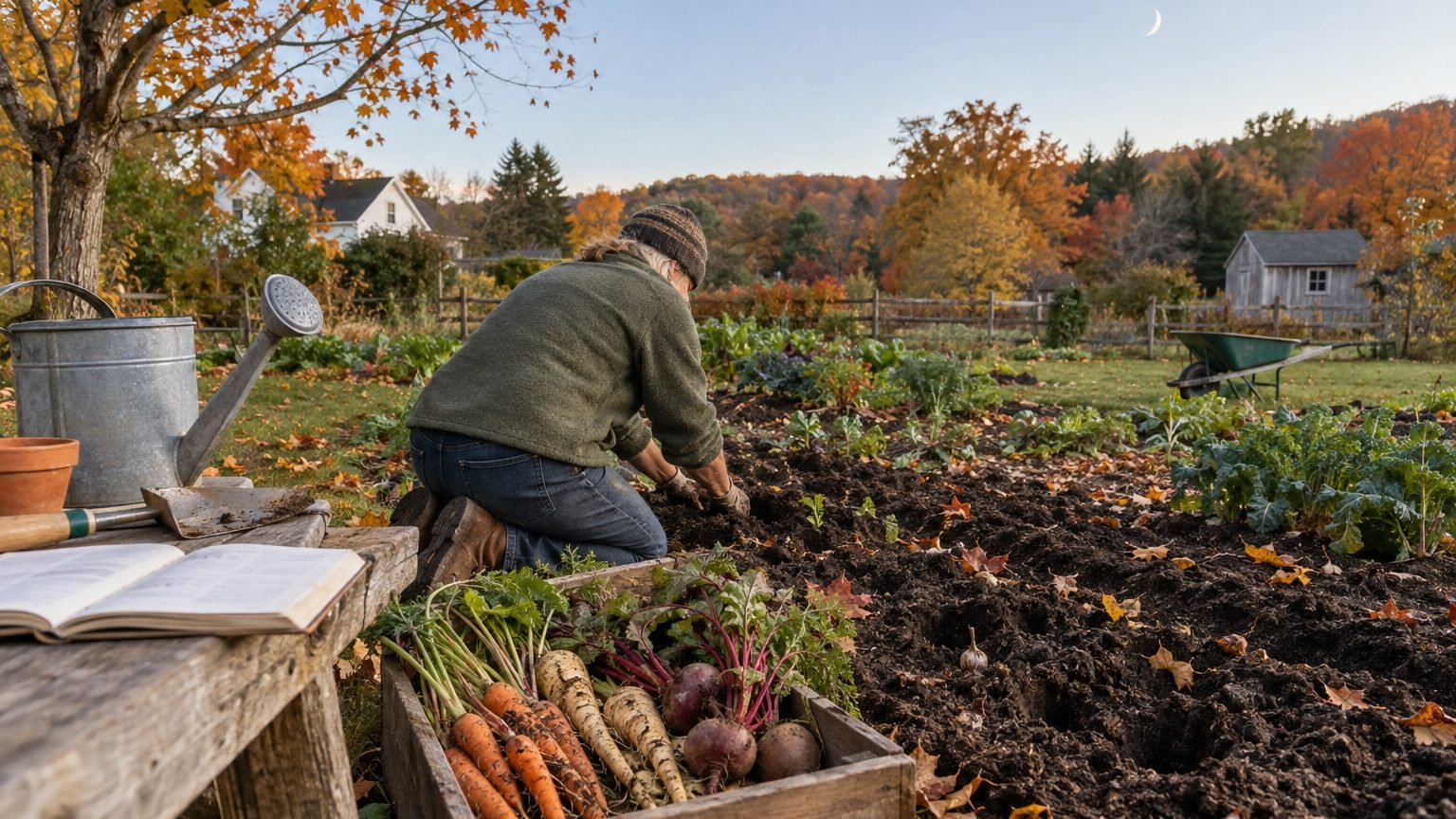

According to almanac tradition, the Moon in Taurus is a semi-fruitful sign, and the biodynamic calendar calls it a root day. Gardeners who plant by the Moon link it with root crops, but only when the phase agrees. None of this is proven. The Moon next enters Taurus on October 25 at 7:34 p.m. ET and stays in the sign for about two and a half days.
What the tradition says about the Moon in Taurus
Two labels for one sign
The Moon passes through all twelve zodiac signs in a little under a month, and moon-sign almanacs sort those signs into classes. Moon sign gardening uses two separate systems, and Taurus appears in both.
The first is the almanac convention of fruitful, semi-fruitful and barren signs. This convention labels Cancer, Scorpio and Pisces fruitful. It labels Taurus, Libra and Capricorn semi-fruitful. The remaining six signs (Aries, Gemini, Leo, Virgo, Sagittarius and Aquarius) are labeled barren. Almanacs disagree on Virgo, Sagittarius and Aquarius, but Taurus sits in the semi-fruitful group in the convention described here.
The second system comes from the biodynamic tradition of Maria Thun. It groups the signs by element into root days (Taurus, Virgo, Capricorn), flower days (Gemini, Libra, Aquarius), leaf days (Cancer, Scorpio, Pisces) and fruit days (Aries, Leo, Sagittarius). The two systems do not always line up. Look at Moon in Aries: the almanac convention labels it barren, while the biodynamic calendar calls it a fruit day. Taurus is more consistent, since it is semi-fruitful in one system and a root day in the other.
The crops and jobs attached to Taurus
The crops follow from the phase, not from the sign alone. According to almanac tradition, the third quarter (full moon to last quarter) is the period for root crops, bulbs and perennials, with potatoes, carrots, garlic, onions and beets as the usual examples. A semi-fruitful sign is one the convention allows for that sowing. A biodynamic root day adds a second tie, since gardeners who follow Thun’s calendar reserve root days for root crops.
Jobs are a separate matter. The fourth quarter (last quarter to new moon) is the traditional rest period for weeding, pruning, turning the soil and composting. That assignment comes from the phase, and the Taurus label does not change it.
The effect of the Moon’s phase or sign on germination or yield has not been established. Gardeners who plant by the Moon are following a custom, and nothing on this page promises a result from it.
The Moon also never overrides the calendar of the place. Frost dates and soil temperature decide whether a crop can go into the ground at all. If a reader follows the Moon, it only chooses among days that are already open. For those dates, check your state’s planting guide first.
When the Moon is in Taurus next
The Moon moves into a new sign roughly every two and a half days, so a Taurus window is a short one. It opens at the moment of entry and closes when the Moon crosses into the next sign. This page gives entry times only. For the full day-by-day sign, check the October 2026 calendar or the monthly calendar for the month you are planning.
| Moon enters Taurus | Date | Time (ET) |
|---|---|---|
| Next entry | October 25 | 7:34 p.m. ET |
| Following entry | November 22 | 5:09 a.m. ET |
| Third entry | December 19 | 3:29 p.m. ET |
All three times are Eastern. Readers in the Central, Mountain or Pacific zones should subtract one, two or three hours, which can move an entry to the previous calendar date. The October 25 entry at 7:34 p.m. ET falls in the evening, so most of the first Taurus day is already past when the Moon arrives. In practice, the first full traditional day under the sign is the one after entry.
The gap between entries is about four weeks, since the Moon takes that long to circle the zodiac and come back to the same sign. That is why the table shows one Taurus window per month rather than several.
The sign and the phase together
Almanacs that use moon signs rarely use them alone. The usual setup combines two rules, and a day qualifies only when both agree. A root crop, according to the tradition, wants the third quarter and a fruitful or semi-fruitful sign. A leafy crop that bears above ground wants the first quarter. A fruiting crop wants the second. Taurus, as a semi-fruitful sign, can satisfy the sign rule for any of them, but the phase has to match the crop group.
The two rules clash more often than you might expect. Suppose the Moon is in Taurus during the second quarter. The biodynamic calendar calls it a root day, while the phase rule points to above-ground fruiting crops. Suppose it is in Taurus in the fourth quarter. The sign is semi-fruitful, but the phase puts the day in the rest period for weeding, pruning and composting. A barren sign under the third quarter is the reverse problem, with the right phase but the wrong sign label.
Almanacs differ in how they settle these conflicts, and this page does not rank one rule above the other. If you follow the custom, check which rule your almanac states first. Where the two rules cannot be reconciled, gardeners who plant by the Moon commonly wait for the next window that satisfies both. For phase dates, the pillar page on planting by the moon explains the four quarters, and the October 2026 calendar lays them out by day.
Local conditions come before any of this. A Taurus day in the third quarter says nothing about whether your soil is ready, and your state’s planting guide is the place to confirm that.
Questions
Is Taurus a fruitful sign?
Not quite. The almanac convention labels Taurus semi-fruitful, which puts it between the fruitful signs (Cancer, Scorpio, Pisces) and the barren ones. In the biodynamic system it is a root day, a different kind of label that says nothing about fruitfulness.
Does a Taurus day mean root crops can go in?
According to almanac tradition, a Taurus day suits root crops only when the Moon is also in the third quarter. The biodynamic calendar treats any Taurus day as a root day. Neither rule replaces frost dates and soil temperature, so your state’s planting guide still has the final say on timing.
Do almanacs agree about Taurus?
On the semi-fruitful label, yes. The sources that disagree are about Virgo, Sagittarius and Aquarius, not Taurus. The larger split is between the two systems, since the almanac convention and the biodynamic calendar sort the same twelve signs by different logic. A gardener who mixes them may find a day that one calls promising and the other calls barren.