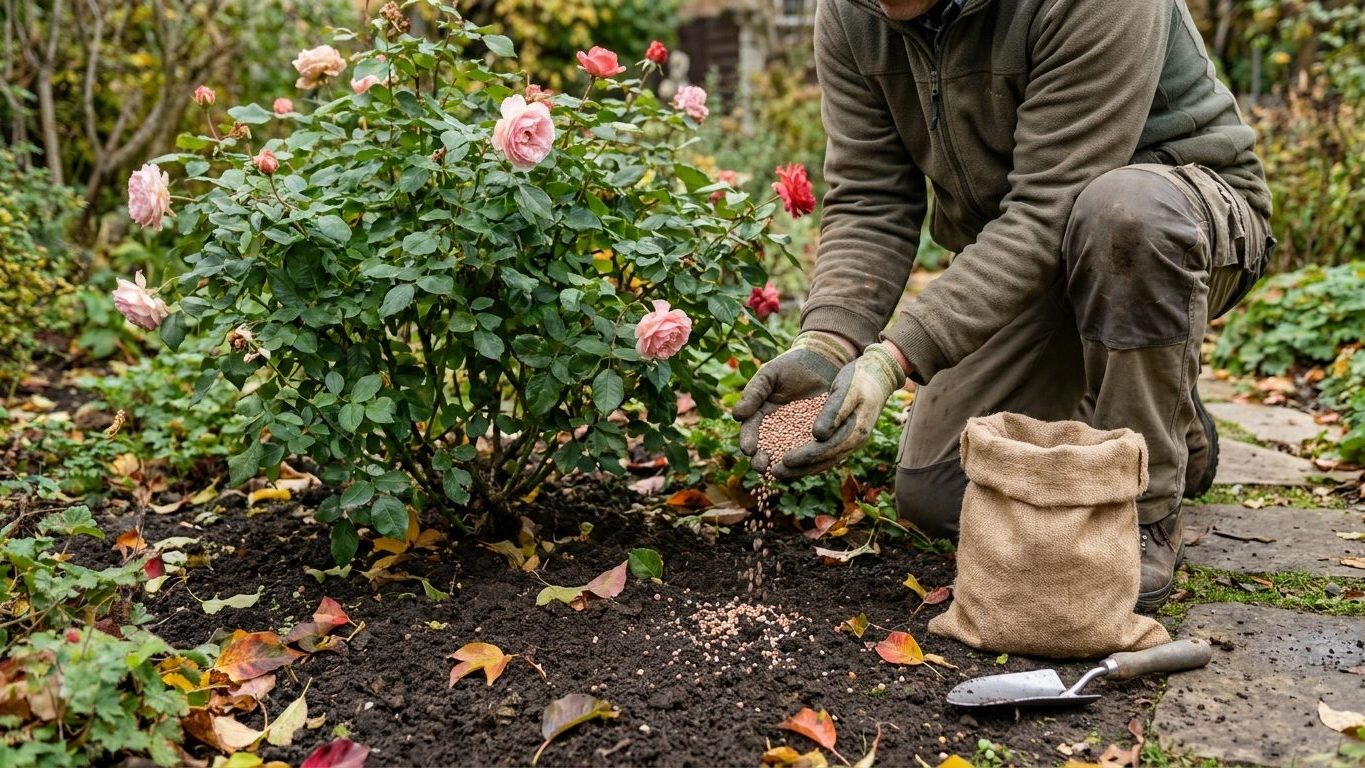

Feeding roses means supplying nitrogen for foliage, phosphorus for root and bud development, and potassium for stem strength and bloom quality, on a schedule tied to the plant’s own stages rather than a fixed calendar. Feeding starts once new growth appears after pruning and continues through the bloom cycles. It stops well before the plant heads into dormancy, so soft growth has time to ripen instead of getting caught by frost. The exact stop date depends on your zone.
Why this matters
A rose bush rated for HIGH maintenance by NC State Extension isn’t exaggerating: it’s a plant built to produce flower parts in multiples of five, sometimes more than 20 petals per bloom on a double variety, several times a season. That kind of repeat performance draws hard on the soil. Skip feeding, or feed at the wrong moment, and the plant doesn’t die outright, but it thins out: fewer blooms per flush, smaller flowers, weaker stems that flop under the weight of a fully open bloom.
The soil itself sets limits before any fertilizer touches the ground. Roses tolerate a pH range from acid (below 6.0) up to neutral (6.0-8.0), and problems tend to show up outside that window rather than inside it. On strongly alkaline soil, above roughly 7.5, iron chlorosis shows up as yellowing between the veins on new leaves, and no amount of extra fertilizer fixes that until the pH itself comes down. Clay soil holds nutrients longer than sandy ground, which changes how often feeding needs repeating. Feeding well means reading the soil first, not just the fertilizer bag.
When to do it
Watch the plant, not the calendar. The first feeding follows the yearly late-winter pruning, timed to whichever zone you garden in, once new red-tinted shoots start pushing from the buds below each cut. That first flush of growth is the plant’s biggest single demand for nitrogen all year.
The second signal comes after the first bloom flush fades. Once you deadhead a spent bloom, the plant pushes a new shoot from the next eye down, and that shoot needs the same nutrients the first flush did. Repeat bloomers, like most hybrid teas, floribundas and grandifloras, cycle through this several times a season, so feeding tracks the bloom-and-deadhead rhythm rather than a set number of weeks.
Stopping is its own signal, and it has nothing to do with rose hips. Hips don’t trigger dormancy: day length and cold do that, on their own schedule. What feeding does is push new shoots, so any fertilizer applied late in the season risks soft growth that will not ripen before frost. Once the plant is heading toward its dormant season for your zone, the right move is to stop feeding and let the wood ripen on its own.
How to do it
Start with the soil, not the bag. A basic pH test, sold at most garden centers or through a state extension soil-test program, tells you whether you’re working with acid, neutral, or alkaline ground. Roses handle clay or loam anywhere from acid to neutral, so most results won’t call for a full overhaul, just a fertilizer chosen to match what’s already there.
For an established bush, scatter a granular fertilizer formulated for roses in a ring around the base, starting a few inches out from the crown and extending to roughly the plant’s drip line, where the feeder roots actually sit. Follow the product label for the exact amount, since formulations vary widely. Work it lightly into the top few inches of soil, then water it in thoroughly so the nutrients move down to the root zone instead of sitting on the surface, where they can scorch new growth.
Liquid feeds work faster. Mixed in a watering can and poured around the base, they reach the roots within days rather than weeks, useful for a quick correction rather than as the only feeding method all year. They also wash out of the soil faster, particularly in sandy ground or in containers, so they need repeating more often than a granular application.
Organic options fit the same rhythm. Well-rotted compost or manure worked into the surface soil around the base adds nutrients slowly and improves how the soil holds water between waterings. These are typically applied once at the start of the growing season and again after the first bloom flush, alongside or instead of a packaged fertilizer.
Whichever form you use, water the plant well the day before feeding if the soil is dry. Fertilizer applied to parched soil concentrates around the roots instead of spreading, and that’s when leaf edges scorch brown within days. Done right, the result is boring in the best way: steady, deep green foliage, buds swelling on schedule, no yellowing between the veins, no sudden flush of growth so soft it bends over in the next rain.
What goes wrong
Late feeding is the most common mistake, and it looks like extra care rather than a problem. A gardener sees a bush winding down in early fall and gives it one more round of fertilizer to help it along. That last application pushes soft growth that can’t ripen in time, and those are the stems that blacken and die back over winter. The fix afterward isn’t more feeding; it’s pruning out the dead tissue once new growth resumes.
Overfeeding shows up faster and is easier to spot: leaf edges that brown and curl within days of an application, especially after a granular feed applied to dry soil rather than watered in. That’s fertilizer burn, not disease, and it clears up once the plant pushes fresh growth, though the scorched leaves themselves don’t recover.
Underfeeding is quieter. Pale green or yellowing leaves, especially between the veins on new growth, point either to a nutrient shortfall or to alkaline soil above roughly 7.5 locking up iron, which is why a soil test matters more than guessing at the fertilizer aisle.
The mistake that’s easy to miss entirely: reaching for a general lawn fertilizer because it’s already in the garage. Lawn products are formulated for grass blades, not for a plant setting flowers in multiples of five, and the nitrogen-heavy ratio common in lawn feed pushes leafy growth at the expense of blooms.
Doing it differently
Container roses run through nutrients faster than anything planted in a bed, because every watering that drains out the bottom takes some fertilizer with it. A rose in a pot generally needs feeding more often than the same cultivar in the ground, and a diluted liquid feed on a tighter repeat cycle usually works better in containers than a single slow-release granular application meant to last months.
Raised beds sit somewhere between the two. The soil mix is usually looser than native clay or loam, which drains faster, so a raised bed rose often benefits from splitting one large feeding into two smaller ones rather than changing the total amount.
Greenhouse-grown roses, kept warmer and often blooming beyond the normal outdoor season, keep demanding nutrients as long as they keep pushing growth, since the day-length and cold cues that stop an outdoor plant’s dormancy don’t apply indoors the same way.
Variety matters, too, though not by group as a blanket rule. Own-root shrub roses bred for lower maintenance, Knock Out and Drift among them, tend to get by on less fertilizer than a budded hybrid tea pushed for large, repeat blooms. Check the tag: a budded rose and an own-root rose differ in what winter protection covers, and they differ just as much in how hard they need to be fed to perform.
Common questions
When should I stop feeding roses for the season?
Stop with enough time left for new growth to ripen before your zone’s first hard frost, rather than on a fixed date. That timing depends on where you garden, so check your state page for the frost window and count backward from there; feeding right up to frost is what leaves shoots too soft to ripen in time.
Are rose thorns dangerous?
They’re prickles, not true thorns. A true thorn is a modified stem, woody all the way through; a rose prickle grows from the outer skin of the stem, which is why it snaps off sideways rather than staying anchored like a thorn would. They still break skin, so gloves are worth it at feeding and pruning time alike.
Can I use lawn fertilizer on roses?
It’s not the right tool. Lawn fertilizer is built for grass blades and leans heavily toward nitrogen, which pushes leafy growth at the expense of the phosphorus and potassium a rose needs for buds, stems and bloom quality. A fertilizer labeled for roses, or a balanced all-purpose feed, matches what the plant actually needs through its bloom cycle.
Does feeding change the rose hips or the fragrance?
Not directly. Hips form from pollinated flowers and ripen from green to red in fall regardless of the feeding schedule, and fragrance depends on the cultivar’s group more than on fertilizer. What feeding does affect is the plant’s overall vigor, which determines how many flowers, and eventually how many hips, it sets in the first place.