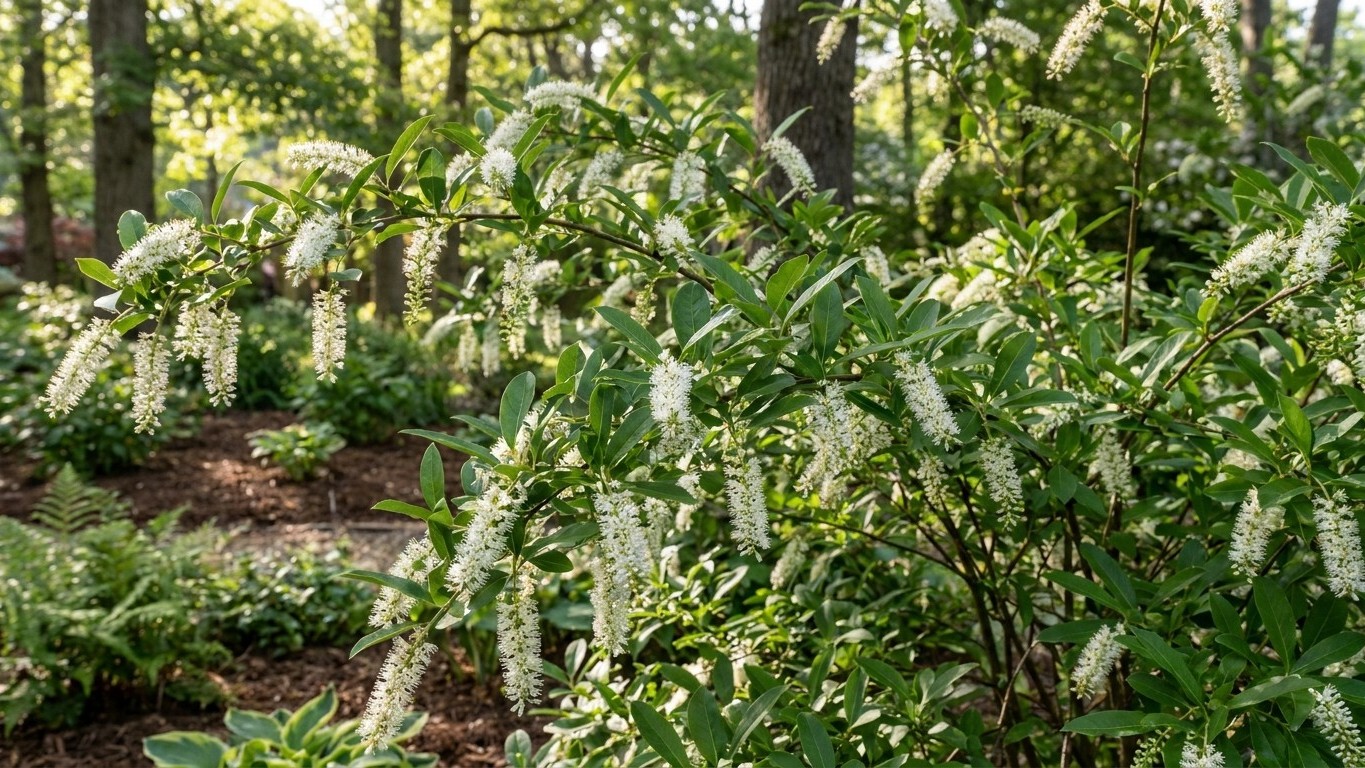

Itea virginica, sold under names like Virginia Sweetspire, Virginia Sweet Spire, Virginia Willow, or just Itea, survives across USDA zones 5a through 9b. It’s classified as a native plant, perennial shrub with an arching, clumping habit that spreads 6 to 12 feet wide at maturity. “Native” here means native to the southeastern United States, not native everywhere it’s sold. Where it goes in a yard, when it flowers, and when it gets pruned all hinge on details a plant tag rarely spells out.
Where it will and will not survive

The USDA hardiness range for Itea virginica is 5a-9b. That’s a survival window, not a comfort zone, and the distinction matters more than most plant tags admit. A shrub rated hardy to 9b will live through a 9b winter, but summer heat and humidity at that end of the range are a different stress altogether, one the hardiness number doesn’t measure at all.
The more useful way to read this range is from the outside in. Below the bottom of it, in colder zones than 5a, winter temperatures will kill the plant outright or cut it back so hard, year after year, that it never behaves like the shrub described here. Above the top of it, in warmer zones than 9b, the plant may struggle with heat stress, root disease in warm wet soil, or simply fail to get the winter chill some woody plants need to leaf out and bloom normally. Neither end is a place to plant this shrub and hope.
What this range does not tell you is your own zone. Zone boundaries run in narrow bands that shift with elevation, with distance from open water, and with local cold-air drainage, so two addresses ten miles apart can sit in different zones. Rather than assume where you fall, check your specific zone against a current map before buying. This site’s hardiness zone guide breaks the country down so you can confirm your zone by state and county instead of guessing from a regional label.
One more caution on the source itself. This plant data comes from the North Carolina Extension Gardener Plant Toolbox, and the USDA hardiness range is a national standard, so it applies wherever you garden. But that same extension also publishes regional notes for North Carolina’s coast, piedmont, and mountains, and those notes are calibrated to North Carolina’s specific soils and climate bands. They don’t transfer to a different state, even one in the same hardiness zone, and shouldn’t be treated as general advice.
Light, soil and where it belongs
The source lists a range of conditions Itea virginica tolerates, not a single ideal setup. Read the table as what the plant can handle, not what it needs to thrive.
| Condition | Tolerance range |
|---|---|
| Light | Dappled sunlight (shade through upper canopy all day), partial shade (2-6 hours direct sun) |
| Soil texture | High organic matter |
| Soil pH | Acid, alkaline, and neutral |
| Drainage | Frequent standing water, good drainage, moist, occasionally wet |
That drainage list is unusually wide for a shrub, spanning from soggy ground to well-drained beds, which makes this a candidate for low spots and rain gardens where other shrubs struggle, as well as ordinary border plantings.
What it looks like from the window
With an arching, clumping, erect, and rounded habit all noted by the source, expect a fountain-shaped mass of stems rather than a tight, formal outline. Seen from indoors, it reads as soft and layered, not sculptural. Against a wall or fence, the arching branches will lean outward and need room to do that without brushing siding or catching on hardware.
Space at maturity is given as 6 to 12 feet, and that single figure implies two different spacings depending on the job. Planted as a hedge or screen meant to knit together into one mass, space plants toward the tighter end of that spread, roughly 4 to 6 feet apart on center, so the arching branches overlap. Planted as a specimen meant to be seen as an individual shape, give it the full 12 feet of clearance from walls, walkways, and other shrubs, since crowding a specimen planting is the single most common spacing mistake with a shrub this size.
When it flowers, and what that decides
The source lists bloom time as spring and summer, a season-long window rather than a fixed month. Bloom timing shifts with latitude and elevation, so a plant in a warmer zone will flower earlier in that window than the same species planted farther north or higher up.
The fruit that follows is a set of woody capsules arranged in racemes, described as slim, pubescent, with tiny seeds, about 1/3 inch long, and persistent into the following year, showy through August to October. That’s a display feature, not a food source, and the description says nothing about taste or edibility either way.
Why the bloom season decides the pruning date
When a shrub flowers determines when it should be pruned, and the rule splits into two cases. A shrub that sets its flower buds on the previous year’s wood needs to be pruned right after it finishes blooming, so the new growth that follows has a full season to form next year’s buds before winter. A shrub that flowers on the current year’s new growth can instead be pruned earlier, before growth starts in late winter or early spring, without losing that year’s bloom.
The facts here don’t settle which case Itea virginica falls into, so don’t guess. The reliable way to find out is to watch one full growing season: note when the plant flowers relative to when new stems emerge, then prune shortly after that bloom finishes the following year. One season of observation costs nothing and prevents cutting off a year’s worth of flowers by pruning at the wrong time.
Planting and the first two years
Getting a new shrub established follows the same sequence regardless of species, and skipping a step is what usually shows up as poor growth two summers later.
- Plant in fall or early spring, when temperatures are mild and rain is more reliable than in summer.
- Dig the hole wider than it is deep, at least twice the width of the root ball, so roots can spread into loosened soil.
- Set the root flare, the point where roots begin to widen from the trunk, at or slightly above grade rather than burying it.
- Tease out any circling or matted roots from the root ball before placing it, so they grow outward instead of continuing to spiral.
- Backfill with the native soil that came out of the hole rather than replacing it with amended soil.
- Water deeply right after planting, soaking the full root zone rather than sprinkling the surface.
- Mulch two to three inches deep, keeping it pulled back from direct contact with the stems.
The source notes drought resistance, but that rating describes an established plant with a developed root system, not one that went into the ground last spring. The first two summers are the ones that decide whether the shrub makes it, regardless of what the label promises about mature drought tolerance, and that means regular deep watering through dry stretches until the roots have had time to spread.
Expect a predictable pattern: the plant often sulks in year one, putting more energy into roots than visible growth. Year two brings noticeable filling in. Year three is when it starts performing the way the plant tag describes. Knowing that timeline in advance keeps a slow but healthy plant in the ground instead of getting dug up too early.
What it resists, and what it does not
Resistance means a plant tends to shrug off a particular pressure more often than not. It is not immunity, and a resistant plant can still be damaged under the wrong conditions.
The source flags four categories for Itea virginica but doesn’t rate the degree of resistance for any of them. That’s worth stating plainly rather than filling in a guess.
| Category | What the source says | What that means for the reader |
|---|---|---|
| Deer | Unspecified | No rated tendency either way; don’t assume deer will avoid it |
| Fire | Unspecified | No rated tendency either way |
| Drought | Unspecified | Applies, if at all, only to an established plant, not a new one |
| Wet Soil | Unspecified | No rated tendency either way, despite the wide drainage tolerance noted for this plant |
Growth rate is listed as medium, which sets expectations for maintenance. A medium grower fills in steadily without the constant shearing a fast-growing hedge plant demands, but it also won’t screen a view or fill a bare corner in a single season. Combined with the arching, clumping habit and the 6 to 12 foot mature spread, that medium growth rate points to occasional shaping after bloom rather than frequent pruning, and to giving the shrub its full mature footprint from the start rather than planning to keep it small through repeated cutting.
Common questions
Is Itea virginica the same plant as Virginia Willow?
Yes, according to the source these are common names for the same shrub, along with Virginia Sweetspire and Virginia Sweet Spire. None of them is the primary name; the botanical name is the only one that reliably points to this specific plant.
Does Itea virginica need full sun?
No. The tolerated light conditions are dappled sunlight and partial shade, not full sun, so it belongs in a spot with some canopy cover or a few hours of direct light rather than an open, all-day-sun bed.
How far apart should Itea virginica be planted for a hedge?
Given a mature spread of 6 to 12 feet, hedge spacing should sit toward the tighter end, around 4 to 6 feet apart on center, so the arching branches overlap and close gaps. A specimen planted alone needs the full spread as clearance instead.
When should Itea virginica be pruned?
That depends on whether it flowers on old wood or new wood, and the source doesn’t specify which. Watch one growing season, note the bloom timing relative to new growth, and prune shortly after flowering the following year if it turns out to bloom on last year’s wood.