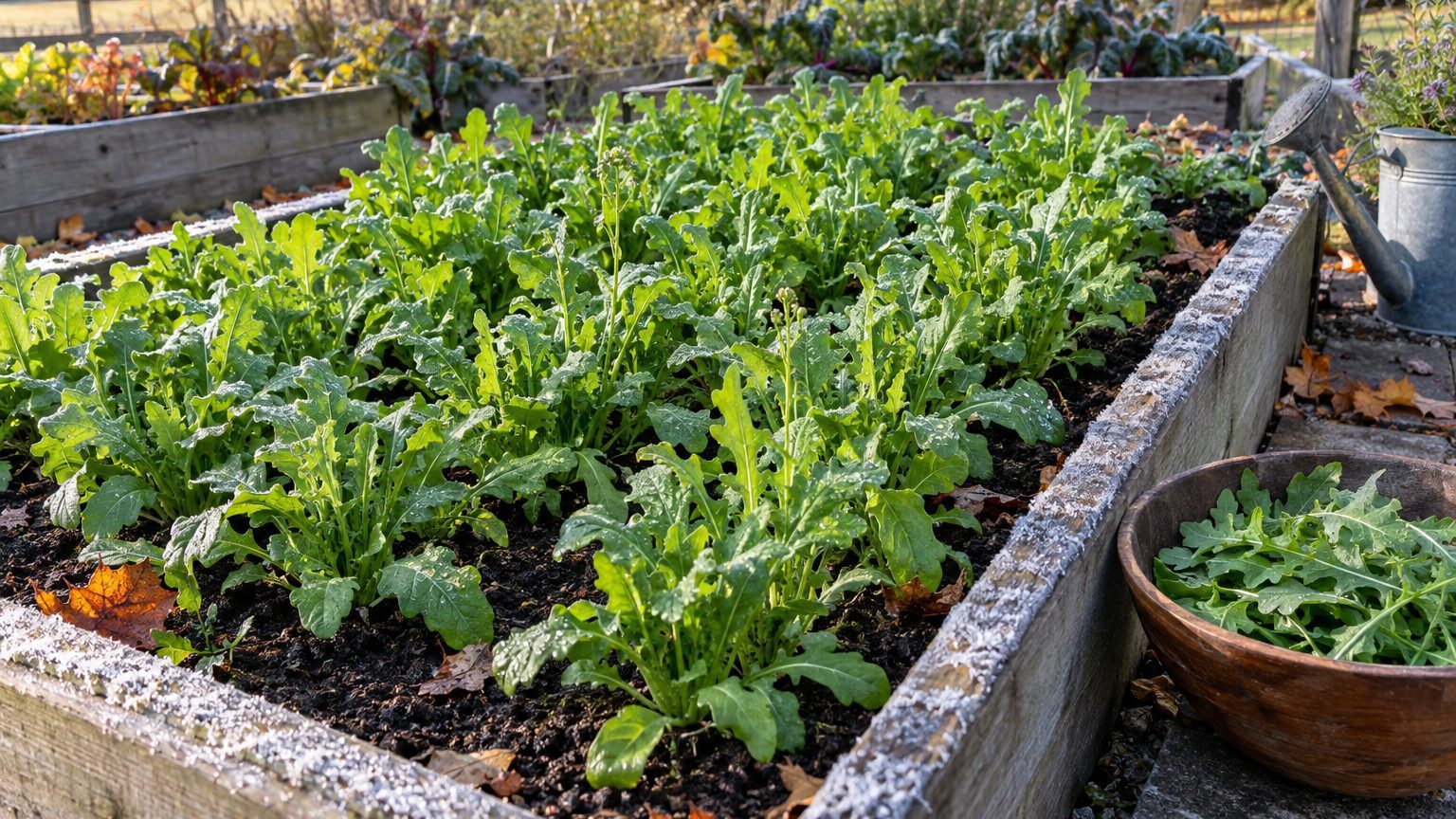

Arugula goes from seed to salad faster than any other green in the winter bed, and it flowers just as fast once days lengthen or the weather warms. Cool, short days keep the leaves mild. Heat and long days turn them harshly pungent within weeks. Sow it in small batches as the weather cools, cut it young, and treat it as the sprinter of Winter Salads: What Grows When Lettuce Will Not.
What is actually going on
The thing to understand is heat and day length. Arugula is a cool-season, long-day plant. Warmth and lengthening days tell it the season for making seed has arrived, and it sends up a flower stalk within weeks of sprouting, sometimes before the rosette is big enough to fill a salad bowl. Cold does the opposite and keeps the plant in leaf. That is why arugula belongs in fall and winter beds, and why it fails in spring beds sown too late.
How does bolting change the leaves?
Once the stalk starts, the plant stops pouring energy into tender rosette leaves. New leaves come smaller, more deeply lobed and tougher, and the flavor slides from peppery to harshly pungent. Arugula belongs to the mustard family, and that sharp bite is built into the whole group. Steady, cool growth keeps it balanced. Heat and dry spells push it hot. Pungency and bolting arrive together, so a suddenly fiery leaf is the plant’s early warning that the stalk is coming.
How cold can arugula take?
Arugula seed sprouts in cool soil, and established plants shrug off light frost. A hard freeze can blacken exposed leaves, which is why gardeners in cold regions grow it under row cover or in a low tunnel. Short midwinter days slow growth to a crawl, so the plants mostly hold in place rather than grow. Most of a winter crop is sown in early fall, grows quickly while there is still some warmth and light, and then gets cut gradually over the cool months.
The same trigger works in reverse in late winter. As days stretch toward spring, plants that survived the cold are the first to bolt. For a salad green that stays leafy deeper into the cold, look at Claytonia: The One That Grows in the Cold, which makes a good partner for arugula in the same bed.
In the garden
Sow arugula thinly, about ¼ inch deep, in rows or a broad band. Thin the seedlings to a few inches apart so air moves between them. Start cutting while the leaves are young and small. Cut the outer leaves or shear the whole plant an inch or two above the crown, and it will often send up a second flush. Every row in the table below pairs the right move with what happens when it goes wrong.
When should you sow arugula for winter salads?
| Situation | What to do | What goes wrong |
|---|---|---|
| Fall sowing, once the heat breaks | Sow small batches every couple of weeks as nights turn cool | Sown into hot soil, it sprouts overnight, then bolts young and tastes harsh. Sown too late, it stalls in short days and never reaches cutting size. |
| Winter sowing under cover | Use row cover or a low tunnel, and cut outer leaves | Uncovered in a hard freeze, leaves blacken. Sealed tight on a sunny day, the heat builds and the plants bolt or rot, so vent the cover. |
| Late winter to early spring | Sow as soon as the soil can be worked | Sown late, the plants meet lengthening days and warmth and flower before you get a real harvest. |
| Any sowing, any season | Cover the bed with floating row cover from the day you sow | Flea beetles chew tiny shot-holes in the leaves and can set back young seedlings. |
| Cold, wet soil at germination | Sow thinly in well-drained ground, and water in the morning | Seedlings can collapse at the soil line, as described in Seedlings That Collapse at Soil Level. |
Annual or perennial: which arugula should you grow?
The common salad arugula is an annual with broad, lobed leaves. It grows fastest and tastes mildest when cut young, and it bolts soonest. The perennial kind is a different species, often sold as “wild” arugula even though gardeners raise it from seed in beds and pots like any other salad crop. Its leaves are narrower, more deeply cut and sharper in flavor, and it generally holds off flowering longer in warm weather. In mild climates it can come back for a second year. Expect more heat in every leaf, and if the winters are cold where you live, plan to protect it or replant.
Seed catalogs list many named types of both. Your state extension service knows which ones have been trialled in your climate, so ask there before you buy.
What is a flowering arugula plant still good for?
A bolted plant is not a total loss. The small flowers are edible and make a peppery garnish, and the young buds and tender seedpods can go into a salad in small amounts. The leaves are hot, so mix them with milder greens or wilt them into eggs, pasta or soup, where cooking softens the bite. If you want a free fall crop, let one plant finish its seed. The seeds it drops often sprout when the weather cools. Pull the rest, loosen the bed and sow fresh seed.
What it depends on where you are
Some of this holds anywhere in the country. Arugula is a cool-season, long-day mustard, it bolts as days lengthen and temperatures rise, and cutting it young gives the mildest leaves. Those facts come from the plant, and they apply in a Minnesota backyard as much as a Georgia one.
The calendar is local. Three things move the sowing window: how long your growing season runs, how hot your summers get, and how much rain falls in summer and fall. Where summers are hot and humid, the right window opens late and may run through a mild winter, and the winter bed can be the best growing season of the year. Where summers are short and cool, spring and fall both work, and a cold winter calls for a tunnel or cold frame to keep cutting. Dry summers can keep seed from germinating in warm soil, while a wet fall invites damping-off and slugs.
How do you find the right arugula sowing window for your area?
Start with your average first fall frost date, then work backward to schedule a succession of small sowings. Your county extension office can give you that date and tell you which arugula types have done well locally, including how they handle your summers. The state pages on this site sit alongside this one and cover timing for each region in more detail. Use the local date over any general one, since a few weeks either way decides whether arugula turns out tender or bitter. Take notes on what you sowed and when. After one season you will know your own garden’s window better than any chart.
The mistake that costs the most
Sowing arugula into warm weather and expecting it to behave. A gardener has an open bed in late summer or late spring, the soil is warm, the seed sprouts in a couple of days, and the plants race upward. They look great for about two weeks. Then the stalks start, the leaves turn hot, and the whole planting is done before there was a real salad in it.
What should you do instead?
Let temperature and day length pick the sowing date, not the empty bed. For a fall and winter crop, wait until the weather is clearly cooling, then sow in small batches a couple of weeks apart. A short row every other week gives you cutting-size plants coming along in turn, and no single bolting planting can sink the harvest. In spring, sow the first possible day the soil can be worked, and stop sowing once the days run warm.
If you are stuck with a warm spell in the sowing window, give the seedlings afternoon shade, keep the soil evenly moist, and expect to cut them very young. A partial-shade corner, such as the north side of a trellis or a taller crop, can buy you a few extra weeks. It does not replace cool weather.
Cut early too. Leaves harvested while small, a few inches tall, are milder than leaves left to size up. A bed that is cut young and resown on schedule stays in tender leaf far longer than one left to look impressive.
Common questions
Can you grow arugula indoors in winter?
Yes, in a container on a bright, cool windowsill or under a grow light. Warm rooms and low light make the plants leggy and push them toward bolting, so a cooler spot works better. Sow thinly in a shallow pot, cut young, and resow every few weeks.
Can you eat arugula after it bolts?
Yes, though the leaves are hot and tough. Cooked, they soften and mellow, and the flowers and young buds are edible too. Most gardeners pull the plants, since the flavor is better in a fresh sowing.
How many times can you cut arugula?
Often two or three times in cool weather. Cut an inch or two above the crown and the plant regrows. Each cutting tends to come back a bit smaller and sharper, and once a flower stalk appears, regrowth is not worth waiting for.
How far apart should you sow arugula?
Sow seeds thinly in a row or band, then thin the seedlings to a few inches apart. Crowded plants hold moisture, grow soft and are more prone to disease. Thinnings are tender and can go straight into a salad.