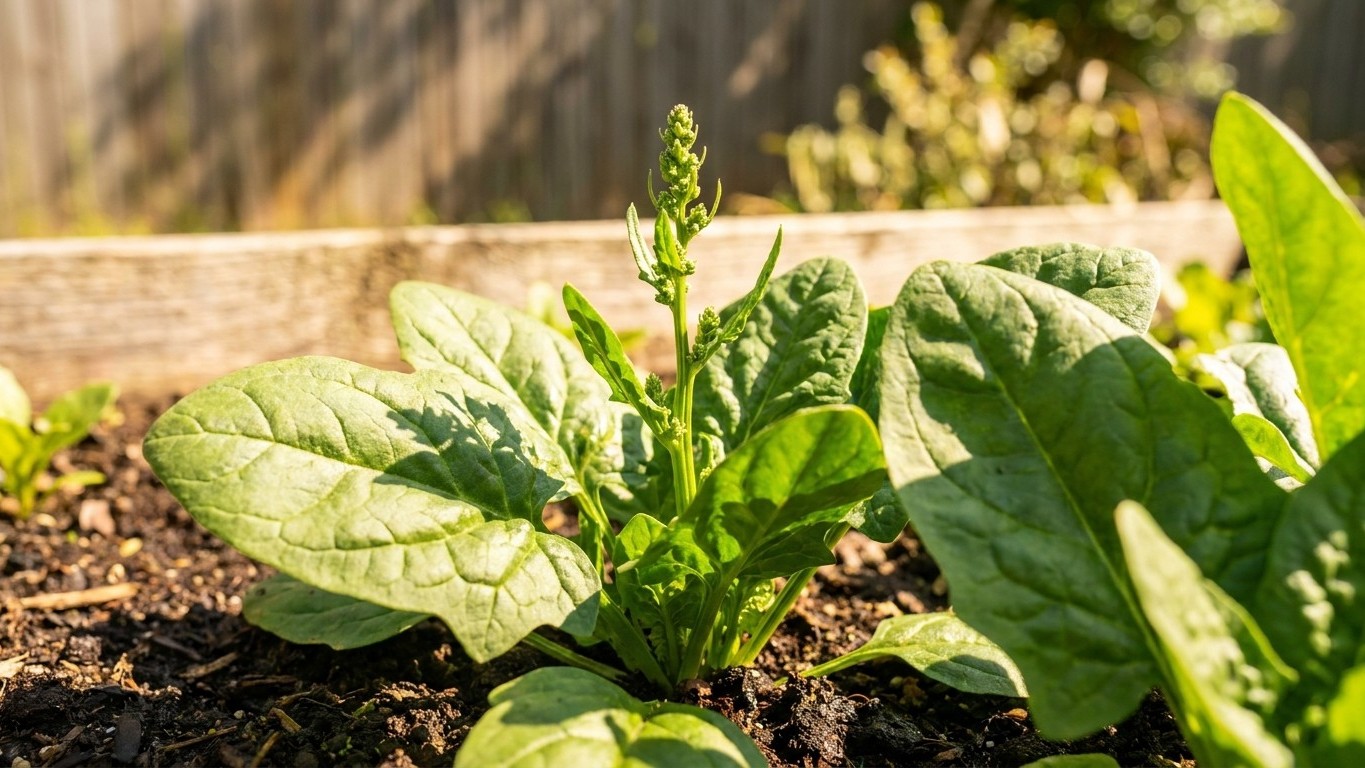

Spinach is a cool-season crop, and in the Deep South the cutting window is short. Cut it when the leaves are full size and before a seed stalk shows. On the Gulf Coast that means late fall into early spring, well ahead of the summer heat. Once it’s in the kitchen, the clock is short too. A properly cold refrigerator buys you up to about two weeks, and most home fridges buy less.
When spinach is ready in Louisiana
Cut spinach when the plant has a full rosette of leaves big enough to eat and the center is still a low, tight cluster with no stalk rising from it. For a fall crop, Utah State University Extension says to plant before the date you want to harvest, so the harvest calendar starts with the sowing date.
How do you know spinach is ready to cut?
The plant tells you. Look for these signs:
- A full rosette, with leaves large enough that you would put them on a plate
- A center that is still a flat, low cluster, with no tall stem climbing out of it
- Leaves that taste sweet and mild when you nibble one
You can pick the outer leaves and leave the center to keep producing, or cut the whole plant at the base when it’s mature or when warm weather is on the way. Once a thick stalk rises from the middle, the plant is flowering and the leaves turn bitter fast. The full story is in Will Spinach Bolt Early in Louisiana?. Holes or ragged edges mean something else got to the leaves first, and What Eats Spinach in Louisiana, and When covers who and when.
What does the harvest window look like on the Gulf Coast?
Frost dates are a poor guide here. At the New Orleans reference station, NOAA NCEI puts the first fall freeze between December 17 and January 8, and the last spring freeze between January 18 and February 8. Those dates straddle the New Year. A 32°F freeze happens in only 86.8 percent of years there, so roughly one winter in seven has no freeze at all. Cold is not what limits spinach in south Louisiana. Heat is.
The reference station reaches 90°F or more on an average of 70.7 days a year. Spinach grows best where temperatures stay at or below 75°F, and that same number is where leaves turn bitter. Warm soil also holds back the fall sowing. Seed germination drops once the soil goes above 80°F, so the planting window opens when the ground cools, not on a set date. Start counting your days from that point.
Spring brings a second limit. Spinach bolts in response to long days as well as warmth, and the longest day at the reference city gets 13 h 56 of daylight. A cool snap in April does not hold the plant back for long once the days stretch out. Cut the whole bed when afternoons start to flirt with 75°F rather than waiting for a stalk to prove you right. Utah State University Extension names several varieties gardeners grow, and your local extension office can say which ones suit your area.
Keeping it, and for how long
What temperature and humidity keep spinach longest?
The UC Davis Postharvest Technology Center gives the target for spinach: an optimum temperature of 32°F and an optimum relative humidity of 95 to 98 percent. That is cold and nearly saturated air. A bunch of leaves loses water through its surface, and moist air slows that loss, which is why a dry fridge wilts greens so quickly.
The same source calls spinach highly perishable. It says spinach “will not maintain good quality for more than 2 weeks.” Read that as a ceiling reached only under ideal conditions. Wilting, yellowing and decay are likely to increase once storage runs past 10 to 14 days. They arrive faster at 41 to 50°F (5 to 10°C), the range UC Davis describes as common distribution conditions.
How long does cut spinach really last?
Plan on less than two weeks. The two-week figure assumes a store-quality cold chain held at 32°F with very humid air, and very few kitchens match that. Spinach cut from your own bed has skipped the trucks and warehouse shelves, so it starts out fresher than a bagged bunch. It still ages at the same rate once it’s cut.
| Storage condition | Temperature | What to expect |
|---|---|---|
| Optimum | 32°F, 95 to 98% relative humidity | Good quality for up to 2 weeks at most; wilting, yellowing and decay likely to increase past 10 to 14 days |
| Common distribution conditions | 41 to 50°F | The same decline, but faster |
A sensible approach is to eat the best of the harvest in the first few days. Treat the second week as a bonus, and cook the leaves that are starting to go limp. Cooked spinach forgives a lot of wilting.
If your spring harvest comes in all at once because heat is closing the window, don’t hold it all raw in the fridge. Blanching and freezing is the usual move with a big cut, and it lets you stop worrying about the clock.
Where in the house that actually is
Which fridge shelf comes closest to 32°F?
Your refrigerator does not run at 32°F. A domestic fridge sits warmer than the optimum, and the door runs warmer still, because every opening lets room air rush in. The door shelves are where the 41 to 50°F range lives, and spinach left there yellows in days. Cold air settles, so the coldest spot in the main compartment is low and toward the back. Put the spinach at the back of the bottom shelf. Skipping that step costs you days of shelf life, and a leaf that yellows early is gone for good.
A cheap fridge thermometer tells you more than guessing. Leave it on the shelf where you plan to keep greens overnight and read it in the morning. If the number is well above the low 30s, that shelf is your best option anyway, since it is the coldest one you have.
How do you get 95 to 98 percent humidity in a home fridge?
Use a bag, a damp wrap and water at the cut ends. A closed or loosely sealed plastic bag traps the moisture the leaves give off and holds the air near the plants humid. A slightly damp paper towel or cloth tucked inside adds to it. Wring it out well so it feels cool and barely moist, never dripping.
If you cut whole plants or bunches with the base still attached, stand the cut ends in about an inch of water in a jar or tall container. Slip a loose bag over the leaves. That keeps the stems drinking while the bag holds the humidity around the leaves. If your crisper drawer has a humidity setting, set it to high.
Don’t bag wet leaves and shut the door on them. Free water sitting on the leaf surface speeds rot. Wash spinach right before you use it, or spin it dry thoroughly if you wash it first. Moist air around the leaves helps, but a film of water on them hurts.
Common questions
Can I cut spinach before it reaches full size?
Yes. Young leaves are tender and mild, and picking the outer ones early lets the plant keep growing. Do not wait for size if warm weather is arriving. Once afternoons climb toward 75°F or you see a stalk starting in the center, cut the plant while it still tastes sweet.
How long does fresh spinach last in the refrigerator?
The UC Davis Postharvest Technology Center says spinach will not keep good quality for more than 2 weeks, even at 32°F and 95 to 98 percent humidity. Past 10 to 14 days, wilting, yellowing and decay become more likely. In a home fridge, especially on the door, expect it to decline sooner.
What should I do if spinach starts to bolt?
Cut it now. Bolting is triggered by long days and warm temperatures together, and once the stalk is up the leaves turn bitter. Harvest what is still good, eat or freeze it quickly, and pull the plants. The bolting page above has details on how to spot the early signs.
Can I sow spinach as soon as fall feels cooler?
Check the soil, not the air. Germination is reduced when soil is above 80°F, and a Gulf Coast soil can stay warm long after the mornings feel crisp. Sow when the ground has cooled, then count the days to your first harvest. For a full overview of the crop, see Growing Spinach in Louisiana.