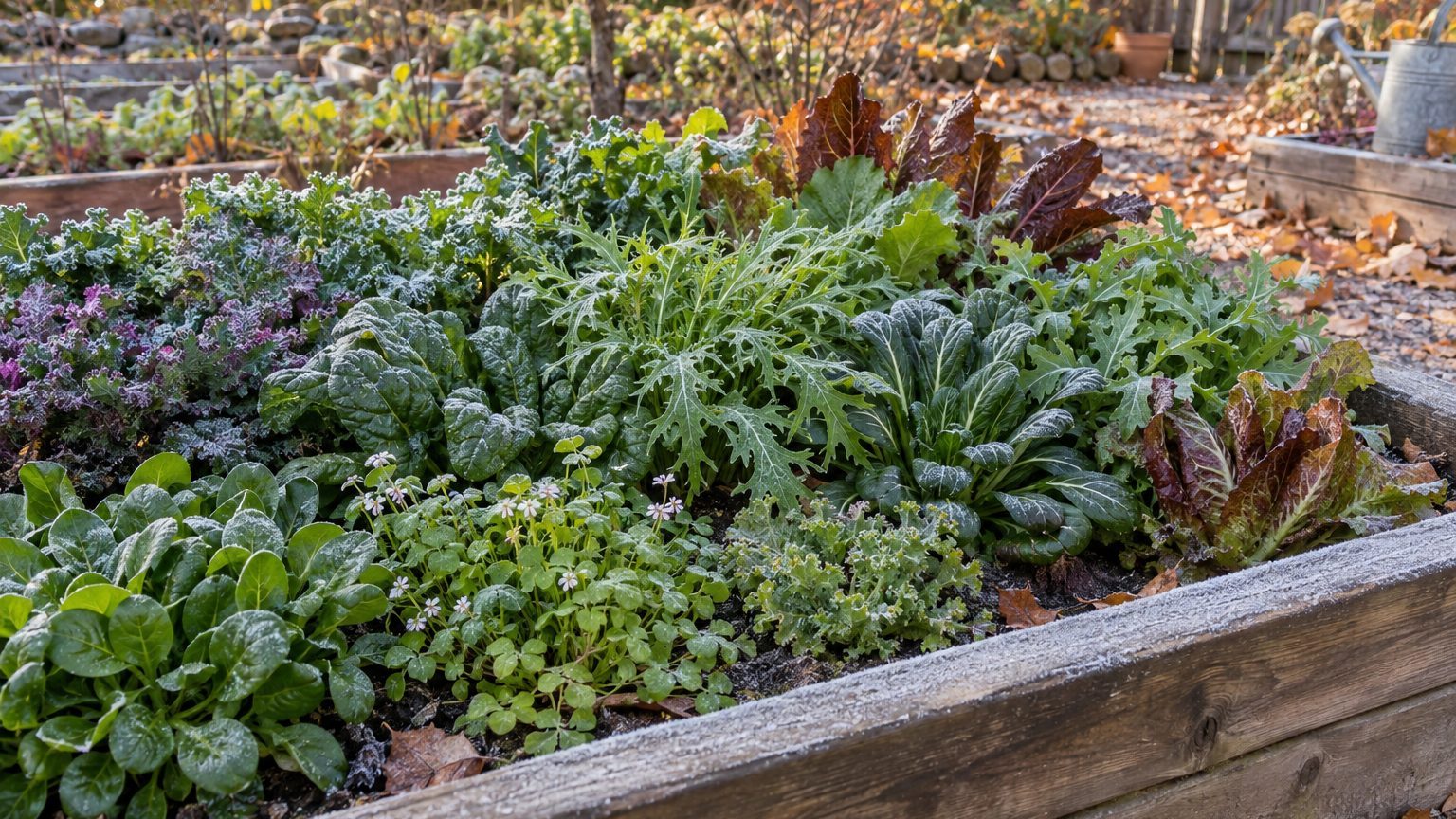

For an uncovered bed, start with corn salad, spinach, claytonia and baby kale. Mizuna, tatsoi, arugula and the chicories sit in the middle, and most lettuce wants a cover. Those crops belong to several plant families and share only a tolerance for cold. For the hardiest of the group, see Corn Salad: The Hardiest Salad There Is. The wider picture is in Winter Salads: What Grows When Lettuce Will Not.
What is actually going on
Why do unrelated plants all handle winter?
The winter salad crops come from at least five botanical families. Arugula, mizuna, tatsoi and kale are mustards (the cabbage family). Spinach is in the amaranth family, alongside beets and chard. Endive, escarole, radicchio and lettuce are all composites, relatives of the sunflower. Corn salad belongs to the valerian family, and claytonia to a small family of its own. The one trait they share is that they stay alive in cold weather.
Each of these plants gets there in a similar way. As temperatures fall, the leaf cells fill with sugars and other dissolved compounds. That lowers the freezing point of the sap and protects the cell walls from ice damage. It is also why many of these greens taste sweeter after a frost. A plant that does this well, like corn salad or spinach, shrugs off a hard freeze. A plant that does it half-well, like most lettuce, gets through a light frost and turns to mush in a deep one.
Because the families differ, so do their weak points. Mustards share flea beetles and clubroot, so a bed that grew cabbage or broccoli this summer is a poor place for mizuna this fall. Spinach and chard share leaf miners. Rotating by family, instead of by crop name, keeps those problems from carrying over.
Why does sowing time matter more than the type?
Cold hardiness gets plants through winter. Day length decides whether they grow. When daylight shrinks to roughly ten hours or less, growth in most salad crops slows to a crawl, even if the plants are perfectly healthy. A bed sown in late summer has weeks of fast growth before that happens. The plants reach harvestable size, then sit in the garden like produce in a refrigerator, and you cut from them through the dark months.
That is why seed packets mislead people in fall. The days-to-maturity number, counted from sowing for all of these direct-sown crops, assumes long, warm days. As days shorten, the same crop takes much longer. Plan on extra time, and sow earlier than the packet suggests. For the varieties trialled in your area, ask your state extension service, since a type that does well in one climate can bolt, sulk or rot in another.
In the garden
The table ranks the main types by how they behave in a typical cold winter. Treat the “uncovered bed” column as a starting point, since a mild winter will carry the middle group further and a severe one will beat some of the hardy group.
| Type | Cold hardiness | Speed | Flavor | Uncovered bed? | What goes wrong |
|---|---|---|---|---|---|
| Corn salad | Very high | Slow, steady | Mild, nutty, soft leaves | Yes | Slow germination in warm soil leaves gaps; small rosettes need patient picking |
| Claytonia | Very high | Moderate | Mild, succulent | Yes | Struggles in summer heat, so late-summer sowings can fail to come up |
| Spinach | High | Moderate | Sweet after frost | Yes | Sown too late, it stalls as tiny plants; sown too early, it bolts |
| Kale, baby leaf | High | Moderate | Sweet, a little earthy | Yes | Flea beetles chew young leaves into lace; cabbage-family disease builds up in repeat beds |
| Mizuna and tatsoi | Moderate to high | Fast | Mild mustard | In milder winters | A hard freeze when plants are wet can blacken leaves; bolts when sown too early |
| Arugula | Moderate | Fast | Peppery | Light frosts only | Damaged by deep cold; turns hot and bitter in stress |
| Chicories (endive, escarole, radicchio) | Moderate to high | Slow | Bitter, sweeter in cold | Some do, with a cover as backup | Rot at the center of tight heads in wet, mild spells |
| Hardy lettuce types | Low to moderate | Moderate | Mild, tender | Rarely | Freeze-thaw cycles turn outer leaves slimy |
Which of these need a cover?
Lettuce and arugula are the usual candidates. A cold frame or a low tunnel of clear plastic or row cover over hoops raises the temperature a few degrees and breaks the wind. That small difference is often all that separates a salad you can pick in January from a bed of slush. Covers also keep rain and snow off the leaves, which matters as much as the cold for crops like the chicories.
Covers bring their own problem. On a sunny winter day, a closed frame heats up fast and cooks the plants, or fosters gray mold if there is no airflow. Vent them on mild, bright days and close them again before evening.
The fast types in the table (mizuna, tatsoi, arugula) suit repeated cutting, which is covered in Cutting Winter Salads So They Regrow. Slow types like corn salad and the chicories reward a gentler, leaf-by-leaf approach. If you can plant only two things, make them corn salad and spinach, since they hold up outside better than anything else in the table.
What it depends on where you are
Some of this carries across the country. The ranking of hardiness is one example: corn salad and claytonia outlast spinach, which outlasts most mustards, which outlast lettuce. The effect of short days is another, because it happens everywhere north of the tropics. And rotating by family works in any garden.
The rest is local, and three things drive it. Season length decides how many weeks you have between sowing and the day growth slows. Summer heat decides whether seed comes up at all, since lettuce and spinach often refuse to germinate in hot soil, and a late-summer sowing in a hot region may need shade cloth and daily watering. Summer rainfall decides how much disease you fight. Where late summers are wet and humid, leaf spots and rot hit young plantings hard. Where they are dry, irrigation is the main job.
The Deep South and the low desert flip the usual picture. Winter there is the main salad season, plants grow through the cold months, and the question is how to get a fall sowing started in leftover heat. Cold northern areas have the opposite problem. Even the toughest crops need a cover for the deepest part of winter, and some beds will sit under snow, which is a fine insulator if the plants are hardy.
For specifics, use the state guides on this site, then check with your state’s cooperative extension service. Extension offices publish planting windows for your region and often report which varieties have been trialled nearby. A call to the county office is quicker than a season of guessing, and local master gardeners know the quirks of local soil and weather that no national chart can.
The mistake that costs the most
Sowing too late costs the most. Gardeners think of winter salads as something to start once summer crops are done, and by the time the bed is cleared, the plants have no time left to grow. They come up as seedlings just as the days shorten, then barely move. You end up with a bed of tiny plants that survive the winter and give you almost nothing to pick.
The plants are not failing. A salad crop that is still small when growth stops stays small until days lengthen in late winter, and then it often bolts before it gives much. The harvest is largely decided by how big the plants are when the days get short. A late sowing wastes seed, space and a season.
The fix is simple: work backward from your first hard freeze. Get the seed in early enough that the plants are close to full size before growth slows, which means sowing earlier than feels natural. Do not wait for the tomato bed. Sow into a spare patch, a container or between rows of late crops, and keep it watered. In hot regions, give the seedlings afternoon shade until the weather breaks.
Then stagger: sow a little every week or two over several weeks, so a bad stretch of weather does not wipe out everything. Your extension service can tell you the last sowing date that works in your area. If you have missed it, sow anyway under a cover and expect a slower, smaller harvest, or hold the seed and start again at the end of winter.
Common questions
What is the easiest winter salad for a beginner?
Spinach. Seed is easy to find, it germinates readily in cool soil, and it tolerates hard freezes. Corn salad is nearly as forgiving, though its small plants take more patience.
Do winter salads need a cold frame?
The hardiest types (corn salad, claytonia, spinach and kale) often get through a winter uncovered. Lettuce, arugula and the chicories do better with a cold frame or low tunnel, and in cold regions every type benefits from one.
Can winter salads grow in containers?
Yes. Containers work well for the fast, shallow-rooted types like mizuna, tatsoi and baby kale. Use a wide pot with drainage and keep it moist, but not soaked, since a waterlogged pot rots roots in cold weather. A pot also moves easily against a south-facing wall or into a porch for extra shelter.
Can I grow watercress through winter?
You can grow it from seed in a tub or tray kept constantly wet with clean water. Gather no watercress from streams or ditches, because water grazed by livestock can carry liver fluke.