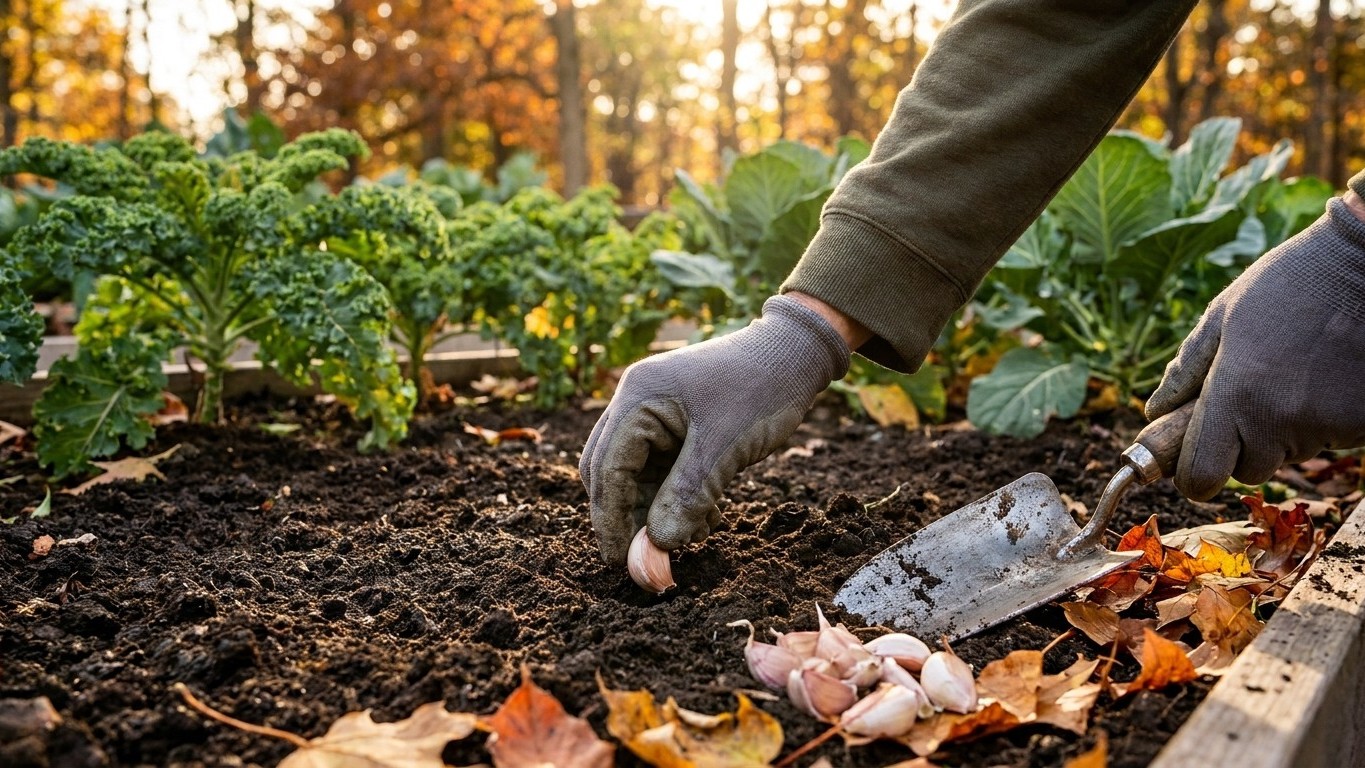

October is one of the best planting months in Georgia’s vegetable garden. The soil is still holding summer warmth while the air finally cools, which is exactly what cold-hardy greens, root crops, and garlic want. It’s also the month to get garlic in the ground, transplant trees and shrubs, and overseed fescue lawns before the first frost arrives sometime between November 13 and December 1.
What goes in the ground in October

The mechanism that makes October work in Georgia is simple: soil temperature lags behind air temperature by several weeks. Even after nights turn crisp, the ground stays warm enough for root development, while the cooler air stops heat-stressing leafy crops the way August does. That combination is why October, not spring, is the real workhorse planting month for a lot of Georgia gardeners.
Direct-sow collards, kale, mustard greens, turnips, radishes, spinach, and lettuce through the first half of the month across most of the state. Carrots and beets can still go in early October, especially in the coastal plain where the growing window runs longer. If you’ve got broccoli, cabbage, or Brussels sprouts transplants on hand, early October is the last realistic window to set them out in south Georgia; in the mountains and north Georgia, that window closed weeks earlier.
Garlic and shallots are the classic October crop statewide. Planting before Thanksgiving gives cloves enough time to root before winter dormancy without pushing top growth that frost can damage. Cover crops like crimson clover and winter rye also go in now to protect bare beds and rebuild soil over winter.
October doubles as prime tree-and-shrub planting season. Cooling air reduces transplant stress while warm soil lets roots establish before winter dormancy fully sets in, which is a real advantage over spring planting into a plant that’s already trying to push leaves. Spring-blooming bulbs like daffodils go into the ground now too, though tulips in the warmer parts of the state (zones 8-9) need a stint in the refrigerator first since Georgia winters often aren’t cold enough to chill them naturally.
The caution matters here: this is a state that spans USDA zones 6a to 9b. North Georgia and the mountains see their first frost weeks before the Atlanta reference point, while the coastal plain runs milder and later. A crop that’s a safe bet in Savannah in mid-October can be a gamble in Blairsville the same week.
What to start under cover
Count backward from the first fall frost window of November 13 to December 1 rather than from the calendar date. Lettuce, spinach, and mâché need roughly 45 to 60 days to reach harvestable size, which means seed started under a cold frame or low tunnel in early October should be picking-ready before the coldest nights hit, and the cover buys extra weeks of harvest afterward.
Cold frames and low tunnels are doing real work this month, not just decoration. They trap daytime heat and slow nighttime heat loss enough to keep tender greens alive several degrees below what they’d tolerate in the open, which is often the difference between a bed that keeps producing into December and one that quits at the first hard frost.
Two failure modes show up every year. Start too early, in warm September-carryover soil, and greens can bolt or turn bitter before the short days of late fall slow them down properly. Start too late, past mid-October in north Georgia, and seedlings run out of daylight and warmth before they size up, leaving you with a bed of stalled, spindly plants that never quite become dinner. The safer play in the mountains is to shift the whole schedule about two weeks earlier than what works in Macon or Albany, since that frost window opens sooner up there.
If you’re starting onion seed for a spring crop, October is also when many Georgia gardeners begin that indoors, since onions started from seed need a long head start compared to sets.
What is ready to pick
Crops planted back in August and September are hitting their stride now. Radishes sown in early fall are ready in as little as three to four weeks, so October brings the first harvest for anything seeded right after Labor Day. Turnip greens, mustard, collards, and the outer leaves of loose-leaf lettuce are all pickable, and cutting the outer leaves rather than pulling the whole plant keeps the harvest going for weeks.
Broccoli planted in late summer often produces its main head this month, and cutting it leaves the plant to throw side shoots for weeks afterward. Sweet potatoes need to come out of the ground before the first frost damages the tubers, and they should be cured in a warm, humid spot for about a week before storage to develop their full sweetness.
October is also pecan season across Georgia, which produces more pecans than any other state. Nuts drop as the shucks split, and gathering them promptly off the ground cuts down on losses to squirrels and rot. Muscadine grapes, a Southeast native, are also finishing their run this month.
Anything left from summer, the last tomatoes, peppers, and eggplant, should be picked before frost even if they’re not fully ripe. Green tomatoes will finish ripening indoors on a windowsill, and pulling the whole plant to hang upside down in a garage is a common trick for stretching that harvest a few extra weeks.
The jobs that matter this month
Garlic planting has a real deadline. Miss the pre-Thanksgiving window and cloves don’t get the root development they need before winter, which shows up as smaller, weaker bulbs the following summer. The same urgency applies to tree and shrub planting: soil that’s still warm now gives roots weeks of establishment time that a spring planting simply doesn’t get.
Mulch matters more this month than most gardeners think. A two to three inch layer over newly seeded beds and new transplants buffers soil temperature swings and holds moisture during the dry spells that often show up in a Georgia fall. It also suppresses the winter weeds that would otherwise get a head start.
Watering rhythm shifts but doesn’t stop. Cooler air means less evaporation, so beds need water less often, but Georgia falls can run surprisingly dry, and newly seeded greens with shallow roots dry out fast if that rhythm gets ignored.
Lawn care is a big October job in Georgia. Cool-season fescue lawns get aerated and overseeded now so grass establishes before winter dormancy, while warm-season lawns like Bermuda and centipede should be left alone and not fertilized, since pushing new growth this late leaves it vulnerable to the first freeze.
Clean up spent summer garden debris now rather than leaving it as winter housing for pests and disease. Turn the compost pile, sharpen and oil hand tools before they sit unused, and check stored onions, winter squash, and potatoes for soft spots. One rotting squash in storage can spread to the whole bin within days.
What not to do in October
The most common mistake is treating a warm afternoon as permission to plant tender crops. A run of 75-degree days in early October doesn’t change the fact that frost is coming within weeks in most of the state; putting in new tomato or pepper transplants now is planting for a harvest that won’t arrive before the cold does.
A close second is skipping the cure on sweet potatoes. Digging them and tossing them straight into storage without that warm, humid resting period leaves them starchy and bland instead of sweet, and more prone to rot in storage.
Late-season nitrogen is a trap for both lawns and trees. Feeding warm-season grass or woody plants a high-nitrogen fertilizer this month pushes soft new growth right when the plant should be shutting down for winter, and that tender growth is exactly what a hard freeze kills first. Save the nitrogen for spring and stick to phosphorus-and-potassium blends, if any, this time of year.
With cold frames and low tunnels, the mistake runs the other direction: uncovering on a mild afternoon and forgetting to close things back up before a colder night rolls in. A single unprotected night can wipe out weeks of careful timing on cool-season greens.
Finally, don’t let fallen pecan and oak leaves sit thick over young greens. A heavy mat of wet leaves blocks light and traps moisture against the crowns of lettuce and spinach, inviting rot faster than any frost would.
Checking this against your own county
A statewide October guide is a starting point, not an instruction sheet. Georgia’s frost dates shift by weeks depending on elevation and region: the mountains and north Georgia freeze well before the Atlanta-area range of November 13 to December 1, and the coastal plain runs later and milder. Before locking in a planting date, check the University of Georgia Extension for county-specific guidance and local frost records, since a plan built for Atlanta can be two or three weeks off for a garden in Rabun County or one down near Valdosta.
Common questions
Is it too late to plant a fall vegetable garden in October in Georgia?
No. Cold-hardy greens, root crops, and garlic all go in comfortably through October across most of the state, and cold frames extend that window even further for tender greens.
Can I still plant tomatoes in October in Georgia?
It’s not worth it. With frost arriving between November 13 and December 1 in most areas, new tomato transplants won’t have time to set and ripen fruit before the cold ends the season.
When should garlic go in the ground in Georgia?
October, with a goal of getting cloves planted before Thanksgiving so they root well ahead of winter dormancy.
Why does frost timing vary so much across Georgia in October and November?
Elevation and latitude drive it. North Georgia and the mountains cool off and freeze weeks earlier than the coastal plain, and the Atlanta-area range of November 13 to December 1 doesn’t apply evenly to a state that spans USDA hardiness zones 6a to 9b.
Gardeners who plant by the Moon can check the October 2026 moon planting calendar, a tradition rather than a proven method.
Related guides
Elsewhere? See what to plant in October in every state and province.