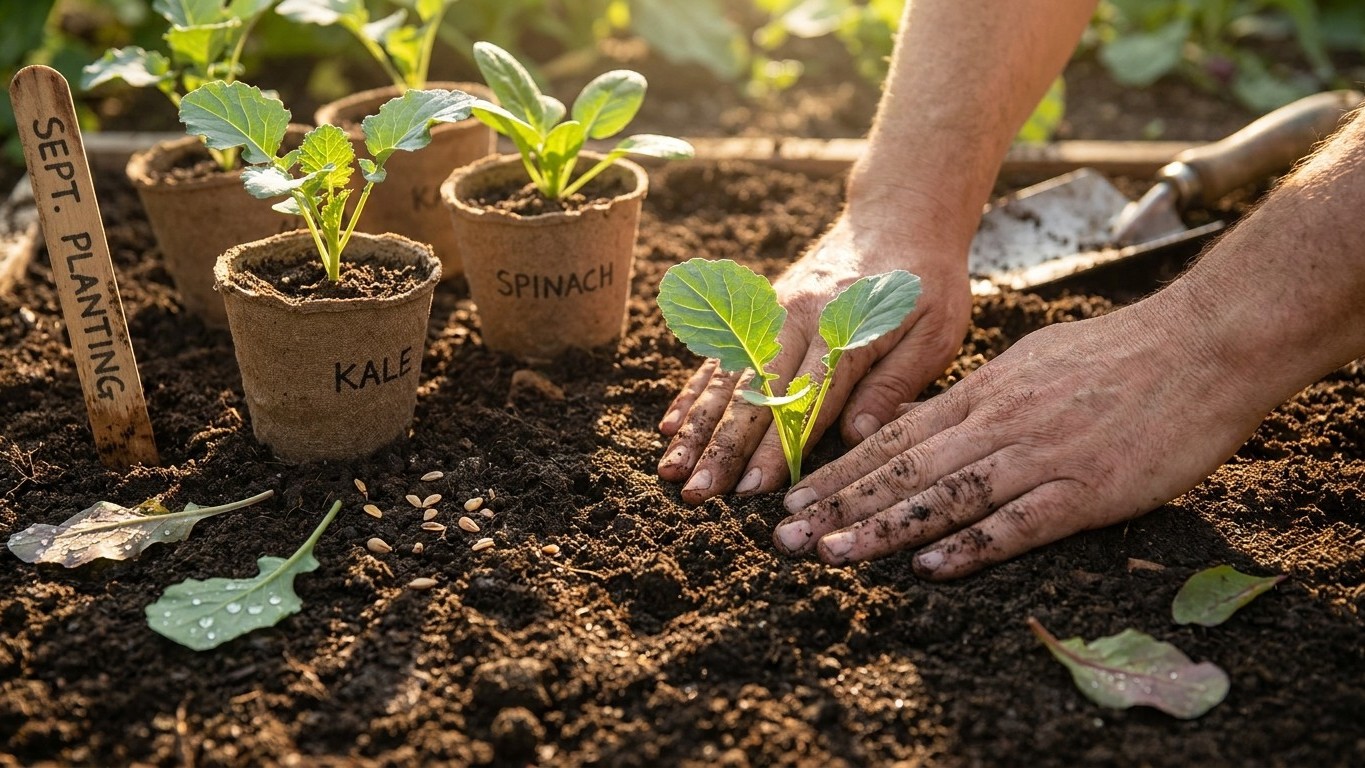

September in Georgia sits squarely in the fall planting window, not the tail of summer. With first frost still ten to thirteen weeks out across most of the state, this is the month to get cool-season greens, root crops, and the last succession of warm-season vegetables into the ground before the window closes.
What goes in the ground in September

The calendar says September, but the soil decides what actually survives. Georgia’s first fall frost lands somewhere between November 13 and December 1 at the Atlanta reference station, and that range is the real clock for this month, not the date on the wall. Count backward from that window and most fall vegetables still have enough time to mature if they go in during the first half of the month.
Direct-sown greens are the safest bet: collards, kale, mustard, turnip greens, and radishes germinate reliably in warm early-fall soil and finish well before frost. Spinach and lettuce do better seeded a little later in the month, once soil temperatures start dropping out of the 80s, since both crops sulk and bolt when the ground stays hot. Beets and carrots can still go in during the first two weeks for a fall harvest, but sown late they run out of daylight before the roots size up.
Bush beans and summer squash are the gamble crops. In the warmer parts of the state, an early-September sowing can sneak in one more harvest before frost. Further north, where cooler nights arrive weeks earlier than the Atlanta average, that same planting risks freezing before it ever produces a full crop. If there is any doubt about local frost timing, skip the warm-season gamble and put that space into a crop that tolerates a light freeze.
| Crop | Method | Timing note |
|---|---|---|
| Collards, kale, mustard | Direct sow | Safe all month, best started early |
| Turnips, radishes | Direct sow | Fast crop, safe through late September |
| Spinach, lettuce | Direct sow or transplant | Better once soil cools mid-to-late month |
| Beets, carrots | Direct sow | Sow first two weeks for full-size roots |
| Bush beans, summer squash | Direct sow | Gamble crop, early month only, warmer zones |
What to start under cover
Broccoli, cabbage, and cauliflower transplants are the crops worth starting under cover this month, and the math behind timing them matters more than the sowing date itself. Work backward from the first fall frost window of November 13 to December 1: most of these crops need four to six weeks as seedlings before they are ready to move outside, plus another eight to ten weeks in the ground to reach harvest size. Add it up and a September start puts harvest right at the edge of that frost window, which is exactly why cover matters, since a cold frame or low tunnel buys the extra two or three weeks these crops need to finish.
Starting too early under cover is the more common failure. Seedlings that sit in small cells for too long become rootbound and leggy, and once they finally go into the garden they stall out instead of growing on. The fix is simple: size the tray and the timing to when the garden bed will actually be free, not to an arbitrary date on a seed packet.
The opposite mistake, starting too late, is just as costly. A tray of broccoli seeded in the last days of the month may not reach transplant size before the ground turns cold enough to slow root growth, and the plants limp into winter undersized. Anyone unsure which side of that line they’re on should start seed now rather than wait, since it is far easier to hold a healthy transplant a few extra days than to rush an undersized one into the ground.
What is ready to pick
September harvest in Georgia is mostly the last wave of summer crops finishing their run. Tomatoes, peppers, and eggplant that set fruit in the heat of midsummer are still ripening, and okra keeps producing as long as pods are picked at three to four inches, before they turn woody. Sweet potatoes planted in spring are bulking up underground but generally aren’t dug until the vines start to yellow, later in fall.
Fig trees and muscadine or scuppernong vines are typically at their peak this month across much of the state, and both are worth checking daily since ripe fruit doesn’t hold long on the plant. Late sweet corn planted in early summer may also be finishing its harvest window, with ears ready when the silks turn brown and kernels run milky when pierced.
Anything seeded from the fall greens list in August should already be producing pickable leaves by now: collards and mustard greens can be harvested a few outer leaves at a time without pulling the whole plant, which stretches the harvest over weeks instead of one cutting. Checking okra and beans every other day matters more than it sounds, since a missed pod turns tough within days in the lingering late-summer heat.
The jobs that matter this month
Clearing spent summer plants is the job that pays off fastest. Pulling out finished bean vines, bolted lettuce, or squash plants past their prime frees up bed space for the fall crops listed above, and it removes the pest and disease pressure that builds up on dying foliage. Leaving that debris in place through September just hands overwintering pests, like squash bugs and cabbage loopers, a place to settle in.
Succession sowing is worth doing every two weeks through the month for fast crops like radishes, turnips, and lettuce, since staggering plantings spreads the harvest out instead of dumping it all at once. Mulching new fall seedbeds also matters more now than it will later, because soil is still warm and dries out fast even as air temperatures start to ease; a light mulch keeps germinating seeds from drying out between waterings.
Pest scouting on new brassica transplants deserves daily attention early on. Cabbage loopers and armyworms move onto tender kale, collard, and cabbage seedlings quickly, and catching an infestation in the first week is far easier than fighting it once it spreads across a bed. Anyone still harvesting tomatoes or peppers should keep staking and tying, since late-season plants sprawling under their own fruit weight snap easily in the first strong fall storm.
This is also the month to divide crowded perennial herbs and flowers while soil is still workable and warm enough for roots to settle before winter, and to start thinking about which beds will sit fallow and could use a cover crop to hold the soil once the last summer crop comes out.
What not to do in September
The most common mistake is treating lingering warm weather as permission to keep planting warm-season crops. A hot spell in the middle of the month doesn’t change the frost math; tomatoes or peppers started now won’t have time to produce before the first frost window arrives in mid-November to early December, and the effort is better spent on fall greens that actually have the season to finish.
Direct-sowing fine seed like carrots or lettuce into bone-dry, still-hot soil is another frequent failure. Both crops need consistent moisture to germinate, and September soil that hasn’t been watered in a few days can bake into a crust that seedlings can’t push through. Watering the bed the day before sowing, and again lightly each day until seedlings emerge, solves this without any extra equipment.
Feeding high-nitrogen fertilizer to fall brassicas late in the month is worth avoiding too. Nitrogen pushes soft, leafy growth right when plants should be hardening off for cooler nights, and that tender new growth is the first thing damaged when temperatures dip. A balanced feed early in the transplant’s life is fine; heavy nitrogen close to frost season is not.
Assuming the whole state runs on the same schedule is the last trap. Georgia’s hardiness range spans zone 6a in the mountains to zone 9b along the coast, based on the USDA Plant Hardiness Zone Map, and a planting choice that’s safe in south Georgia can be weeks too late for the mountains.
Checking this against your own county
A statewide frost window is a starting point, not a fixed instruction. The March 11 to March 29 spring frost range and the November 13 to December 1 fall range both come from a single Atlanta-area weather station, and Atlanta’s airport runs warmer than its surroundings as an urban heat pocket. North Georgia’s higher elevations typically turn cold weeks earlier in fall, while the coastal plain runs milder and later. Local details like elevation and proximity to large bodies of water can shift these windows further. For a planting calendar tuned to a specific county, the UGA Extension is the reliable next stop.
Common questions
Is September too late to plant a fall vegetable garden in Georgia?
No. With first frost typically landing between November 13 and December 1, there are still eight to thirteen weeks of growing season left, plenty of time for fast-maturing greens, roots, and brassica transplants started under cover early in the month.
Can tomatoes still be planted in September in Georgia?
Not for a new planting. Existing tomato plants can keep producing into fall, but starting new tomato transplants this late leaves too little time before frost to set and ripen fruit.
Why do fall brassica seedlings get leggy?
Starting seed too early under cover, before the garden bed is actually free, forces seedlings to sit too long in small cells. They stretch for light and become rootbound, which stalls growth once transplanted.
Does north Georgia follow the same September planting schedule as south Georgia?
No. North Georgia’s higher elevations see frost arrive weeks earlier than the Atlanta-based averages, while the coastal plain stays milder longer. Local extension guidance should override a statewide date whenever the two conflict.
Gardeners who plant by the Moon can check the September 2027 moon planting calendar, a tradition rather than a proven method.