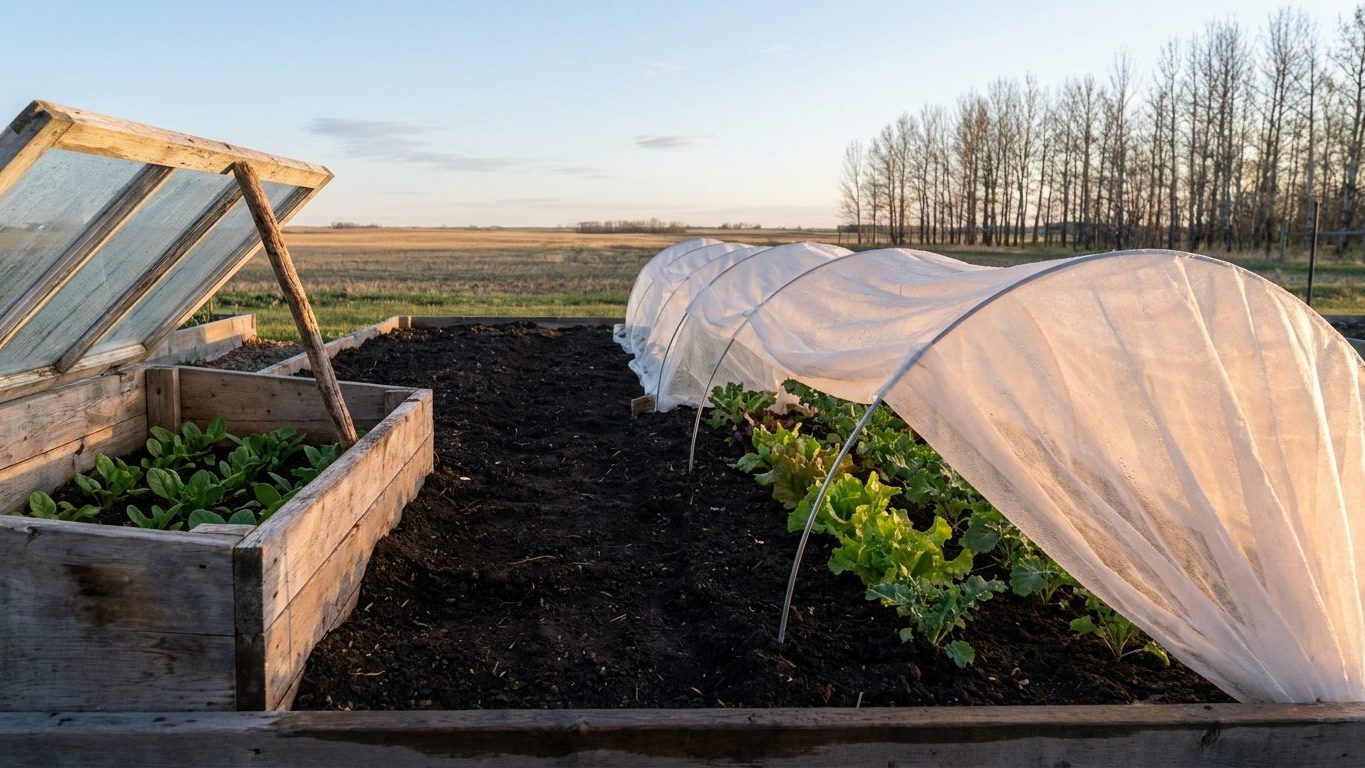

Lightweight row cover, low tunnels and a simple cold frame cover most of what Georgia gardeners need. The state’s trouble is seldom a short season. It is a handful of frosty nights at each end of the year, plus long heat in between. The dates below come from Atlanta’s climate record, so they describe one city, not the whole state.
The short answer for Georgia
Floating row cover and hooped low tunnels do the heavy lifting in Georgia, with cold frames as a useful extra for starting seedlings and holding winter greens. Heavy plastic structures rarely pay off here, except in the north. The reason is in the numbers.
What the frost dates actually say
On the NOAA 1991-2020 Climate Normals for Atlanta, the last spring freeze at 32°F falls between March 11 and March 29. The first fall freeze falls between November 13 and December 1. Both ranges are the 30 to 70 percent probability band, and they are not guarantees. In spring, March 11 is roughly where the odds that the last freeze has already passed reach 30 percent, and March 29 is where they reach 70 percent. In fall, the same band describes the odds that the first freeze has already arrived. A cold night outside those ranges is entirely possible.
That leaves a freeze-free stretch of somewhere between seven and a half and nearly nine months, depending on how much risk you accept. Atlanta’s coldest month has a mean daily minimum of 35.6°F, so the average winter night stays just above freezing. Averages hide cold snaps, though, and those snaps are the whole reason to own a roll of row cover.
Matching the tool to the job
Because the gaps to bridge are weeks, not months, the lightest tools tend to win. A cover that adds a few degrees on a clear March night is often the difference between a lost tomato transplant and a healthy one.
| Tool | Best job in Georgia | Watch for |
|---|---|---|
| Floating row cover | Late-March freezes on transplants; fall cold snaps on peppers and tomatoes | Pests and heat once warm days arrive; it also needs anchoring against wind |
| Low tunnel on hoops | Winter greens, spinach, lettuce, and early spring beds | Overheating on sunny days if the ends stay closed |
| Cold frame | Hardening off seedlings and holding cool-season crops | Needs venting almost daily; sun can cook plants |
| Shade cloth | Stretching spring lettuce into early summer, and starting fall crops in heat | Too much shade makes plants leggy |
The Extending the Growing Season in Georgia overview covers the broader picture. This page sticks to which tools fit the state’s climate.
What will not work here
Sealed plastic tunnels top the list. A clear-plastic structure that works for a gardener in a short-season northern state turns into an oven on a sunny March afternoon in Atlanta, where daytime highs climb quickly even when the last freeze hasn’t happened yet. Close the ends in the morning, forget to open them, and you can cook seedlings that the cold would not have touched. Georgia’s problem is swing: cold nights, warm days, and not much warning between them.
Heated greenhouses for winter vegetables are also hard to justify for most backyard growers in the Atlanta area. With a coldest-month minimum averaging 35.6°F, you are not fighting deep cold most nights. You are guarding against a few dips below 32°F, and a spun-fabric cover or a gallon jug over a pepper plant handles that. Paying for heat to prevent a risk that a $20 roll of fabric handles is overbuilding.
Another common failure is trusting a warm February. Because the last-freeze band does not start until March 11, an early heat spell in February can tempt gardeners to set out tomatoes and squash. On March 11 itself, the odds still favor another freeze ahead. Covers help, but they add only a few degrees, and a hard freeze in the low 20s will get through them. A cover is insurance against a light frost. It is not permission to ignore the calendar.
Warm-season crops will not run into winter just because you cover them. The first fall freeze falls between November 13 and December 1, and a cover can push that date back by a few weeks. But days are shortening by then, and tomatoes and peppers slow down no matter how cozy the cover keeps them. Think of covers as buying you a few more weeks of harvest, not a second summer.
Humidity matters too. Georgia summers are muggy, and row cover left on beds through warm, wet weather traps moisture against the foliage and invites disease. Leaving a cover on after the frost risk ends is one of the most common mistakes. If you want to know when to put it on and when to take it off, When to Cover Your Garden in Georgia walks through the timing.
Finally, do not use Atlanta’s dates as your own if you live in the mountains. They come from one airport station in a city that holds heat, and the next section explains how far that can mislead you.
What changes across Georgia
Georgia is not one garden. The USDA Plant Hardiness Zone Map (2023 edition, built on 1991-2020 data) puts the state anywhere from zone 6a to zone 9b. That is a wide spread, and it means no single answer holds statewide. Those zones rest on one variable only, the average annual extreme minimum temperature, so they tell you what a perennial can survive. They do not tell you when the last spring frost will come. To find the zone for your own address, use the USDA map directly and enter your ZIP code.
The Atlanta figures carry a caution. The airport station sits in an urban heat island, so the freeze dates there run later in fall than in the countryside around it. North Georgia and the mountains freeze several weeks earlier in fall, and the coastal plain runs milder. A reader at altitude should expect the fall protection dates to arrive earlier than the November 13 to December 1 band, and should lean harder on low tunnels and cold frames to carry crops past the first hard freeze. A reader on the coastal plain will need covers less often, and may find shade cloth and heat management matter more than frost protection.
Latitude plays its own part. Atlanta sits at 33.63 degrees north, and that figure belongs to Atlanta, not to the whole state. It matters because day length, not warmth, is what tells an onion to stop making leaves and start making a bulb. Gardeners farther north or south in Georgia get slightly different day lengths, so if you live near the edge of the state, check your own latitude before applying onion timing from another part of Georgia.
Where to check this for your own county
The best next stop is University of Georgia Extension, the state’s land-grant extension service. Its county offices serve every part of Georgia, and the staff there know the local frost patterns, the soils, and which crops have done well nearby.
Two things are worth looking for. The first is a local planting calendar, ideally one written for your county or region, because the spread between north Georgia and the coast means a statewide table will always be off for someone. The second is the list of vegetable varieties trialled in your area. A variety that performs well in a county trial has already been tested against local heat, humidity and disease, which no general recommendation can promise.
A county recommendation beats a state one, and this page is the state one. It is built from a single Atlanta reference station and a statewide hardiness range, so treat it as a starting frame. This page does not carry a county-level calendar, and it does not borrow one from a neighboring state, since planting calendars written for another state’s climate can be off by weeks. If your county office publishes dates that differ from the ones here, follow theirs.
Checking this against your own garden
Your own observations outrank every date on this page. Three signals are worth watching, and none requires equipment.
- Soil warmth by feel. Push your hand a few inches into the bed in the morning. If it feels cold and damp, warm-season seedlings will sit and sulk, cover or no cover. A bed that warms early tells you that you have a sheltered or sunny spot, and one that stays cold is your slow corner.
- The first male flowers on squash. Male blooms open before female ones. Their arrival tells you the plants are growing in conditions they like. If they show up weeks later than a neighbor’s, your garden runs cooler than the calendar suggests.
- First true leaves on seedlings. The first pair of leaves are seed leaves. The true leaves come next, and their timing tells you whether plants under a cover or in a cold frame are growing or merely surviving. Slow true leaves under cover often mean you need more venting or more light.
Keep a simple note each year of when these three things happen, along with the date of your last frost. After two or three seasons you will have a personal calendar that is more accurate than any regional table.
Common questions
Do I need a cold frame in Atlanta?
Not necessarily. A cold frame is handy for hardening off seedlings and keeping lettuce and spinach going in winter, but row cover on hoops does much of the same work for less money. It becomes more valuable the farther north or higher up you garden.
When should I take row cover off in spring?
Once the freeze risk has passed for your area and daytime heat starts building under the fabric. The Atlanta last-freeze band runs from March 11 to March 29, but your own local frost history should decide it. Vent or remove covers on warm days even before then.
Can I grow vegetables through winter in Georgia?
Many cool-season crops can handle Georgia winters, especially under a low tunnel. In Atlanta, the average coldest-month minimum is 35.6°F, which is mild for winter gardening. Farther north and at altitude, expect colder conditions and more need for protection.
Does row cover work in summer?
Standard frost cover is not made for summer heat, and it can trap humidity and heat against plants. Shade cloth is the better tool for summer, particularly for protecting lettuce or starting fall crops while the weather is still hot.