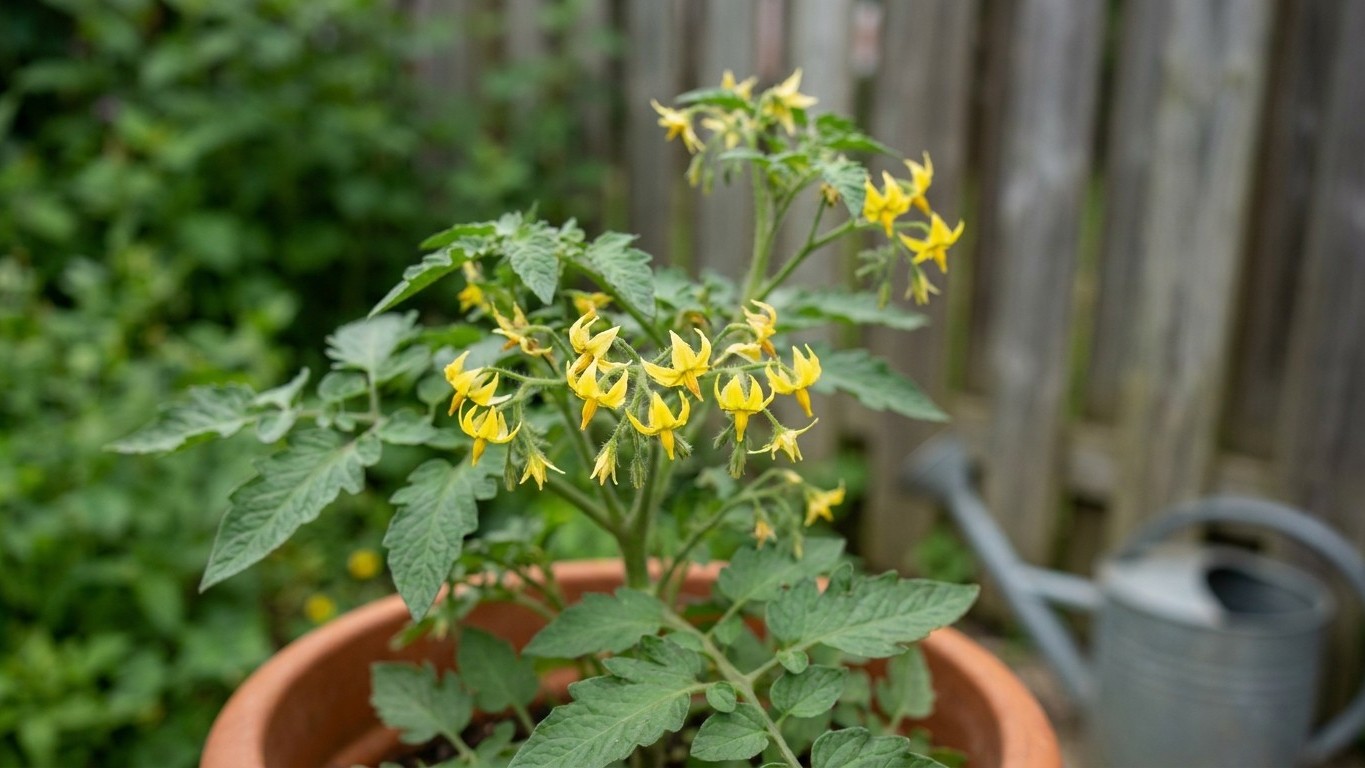

A tomato plant that flowers but never sets fruit is almost always fighting one of three things: temperatures outside the range pollen needs to function, poor pollen transfer inside the flower, or a nitrogen surplus that is telling the plant to keep making leaves instead of fruit. None of these kill the plant. The rest of this page walks through how to tell them apart, what you can still save this season, and what to change so next year’s trusses actually load up with fruit.
What you are looking at

Look at the flower clusters, not the leaves. Healthy tomato flowers open, get pollinated within their fertile window, and the base of the flower starts to swell into a tiny green fruit within a few days. What you are seeing instead is a flower that opens, stays yellow and cheerful for a while, then the petals shrivel and the whole flower drops off at the stem joint, leaving nothing behind. Sometimes you’ll see a small yellow stub still attached where the flower was, but no swelling, no green fruit forming. That dry, papery detachment with an empty stem is the signature of blossom drop, and it’s the core symptom this page is about.
This is different from a few other things gardeners lump in with it. If fruit did form and then the blossom end turned dark and sunken, that’s blossom end rot, a calcium-movement problem, not a fruit-set problem. If fruit set fine but the skin later splits open in rings or streaks, that’s a growth-rate issue tied to irregular watering, covered in our piece on why tomatoes crack and split, and how to stop it happening again. And if the plant looks lush, dark green, and is throwing out flower after flower that all drop, while the lower leaves are pale or yellowing in a pattern, check that against our guide to yellow leaves on tomato plants, since the two symptoms often show up together and point to the same root cause.
Confirm it’s blossom drop before you do anything else: pull one dropped flower apart. If there’s no trace of a swelling ovary at the base, no fruit ever started. That single check rules out early fruit abortion (where a tiny fruit did form and then stopped) and points you toward the causes below.
What actually causes it
Temperature is the most common driver
Tomato pollen is fragile. When nights run too warm, the plant keeps respiring through the dark hours instead of resting, and pollen viability drops before it ever reaches the stigma. When days or nights run too cool, pollen becomes thick and sticky and won’t release properly from the anther. Either direction produces the exact same symptom: a flower that opens normally and drops without setting. This is where the common explanation goes wrong. Most gardeners assume only heat causes blossom drop, so they focus on shading and watering and miss that a stretch of unusually cool nights earlier in the season can cause the identical problem weeks before the fruit would have shown it.
Pollination failure is separate from temperature
Tomato flowers are self-fertile and rely on wind or the vibration from visiting bees to shake pollen loose inside the flower. In a greenhouse, an enclosed porch, or a very still, humid stretch of weather with no breeze and few pollinators, that shake never happens even though the temperature is fine. You’ll see flowers persist longer before dropping in these cases, and the plant otherwise looks completely healthy.
Excess nitrogen tells the plant to skip fruiting
A tomato plant under high nitrogen, especially from over-application of a leaf-growth fertilizer or nitrogen-rich manure, puts its energy into stems and foliage. It will still flower, but hormonally it is not prioritizing seed and fruit production, and flowers abort at a higher rate. This plant usually looks obviously different from the other two causes: dense, dark green, almost bluish foliage with thick stems, sometimes so much leaf growth that it shades its own flower clusters.
Here’s how to tell the three apart without guessing:
| Cause | What the plant looks like | What else you’ll notice |
|---|---|---|
| Temperature stress | Otherwise normal growth, flowers drop fast | Recent stretch of unusually hot nights or cool days |
| Poor pollination | Normal growth, flowers linger before dropping | Still air, enclosed space, few pollinator visits |
| Excess nitrogen | Lush, dark, oversized foliage | Heavy recent feeding or manure application |
What to do now

Be honest about the flowers that have already dropped: that fruit is gone, and there is nothing that brings a shriveled, detached blossom back. Don’t waste time or fertilizer trying to rescue a truss that has already aborted. The plant’s energy is better spent on the flower clusters still forming above it, and that’s where your attention should go.
If you suspect temperature is the cause, there’s not much you can do about the weather itself, but you can reduce the stress the plant is under while it waits out the swing. Keep watering even and consistent, since a plant fighting drought stress on top of temperature stress drops even more flowers. Light afternoon shade during an unusually hot stretch, or a row cover during an unexpected cold snap, can protect the next round of blossoms even if it does nothing for the ones already lost.
If pollination looks like the issue, hand pollination is cheap insurance and takes seconds per cluster. Gently shake or flick each open flower cluster, or run an electric toothbrush against the stem just behind the flower to vibrate pollen loose, in the mid-morning when flowers are open and pollen is dry. Do this every day or two while flowers are open. If you suspect low pollinator traffic is part of it, this is also the moment to check your general growing setup, since the fix is often about airflow and plant spacing rather than the flower itself. Our full guide to growing tomatoes covers spacing and siting if you’re rethinking the setup for next year.
If excess nitrogen is the cause, stop feeding nitrogen immediately and don’t compensate by switching to a bloom booster right away either. Let the plant work through its current surplus. New flowers set after growth slows down will have a much better chance, and that usually takes a few weeks to show improvement, not days.
What does not work
Crushed eggshells worked into the soil are one of the most common home remedies gardeners reach for, and they do nothing for blossom drop. Eggshells break down far too slowly to affect calcium availability in the same season, and blossom drop isn’t a calcium problem to begin with, it’s a temperature, pollination, or nitrogen problem. Foliar calcium sprays have the same issue from a different angle: most soils already contain enough calcium for the plant’s needs, and the real bottleneck in calcium-related tomato problems like blossom end rot is the plant’s ability to move calcium fast enough to where it’s needed, not a shortage of calcium in the ground. Spraying calcium onto leaves doesn’t fix a movement problem, and it does nothing at all for a flower that’s dropping due to heat or lack of pollination.
Adding lime to soil that already has enough calcium is another version of the same mistake, and it carries a real downside: lime raises soil pH, and pushing pH too high can lock out other nutrients the plant does need, creating a second problem on top of the first. Test before you add anything to the soil rather than assuming a nutrient is missing because a symptom appeared.
Blossom set sprays, sold as a hormone treatment to force fruit set, work only in a narrow set of conditions, mainly mild temperature stress, and they don’t address pollination failure or nitrogen excess at all. Treat them as a minor tool for one specific cause, not a general fix, and don’t reach for them before you’ve identified which of the three causes you’re actually dealing with.
Preventing it next time
Of everything on this list, getting nitrogen right matters most, because it’s the one factor entirely within your control regardless of what the weather does. Feed tomatoes with a fertilizer formulated for fruiting vegetables rather than an all-purpose leaf-growth feed, and go by the plant’s appearance rather than a fixed schedule. If the foliage already looks dense and dark, skip a feeding rather than adding more.
Site selection and airflow come second
Plant tomatoes with enough spacing between them that air moves freely through the foliage. Tight spacing traps humidity around the flowers, which both encourages disease and reduces the natural vibration that helps pollen release. If you grow in a greenhouse, high tunnel, or enclosed porch, plan on hand pollination as a routine task rather than an emergency fix, since those environments block the wind and reduce pollinator visits by design.
Choose your planting timing with your local frost and heat patterns in mind rather than a generic calendar date. Extension services differ by state and even by county, so check your local cooperative extension office for the planting window and expected frost dates for your specific area rather than relying on a number from somewhere else. A plant that flowers into a stretch of extreme heat or an unexpected cold spell is set up for blossom drop no matter how well you’ve handled feeding and spacing, so timing the crop to your actual local climate does more preventive work than any single product you could buy.
- Match fertilizer to fruiting stage, not a fixed schedule
- Space plants for airflow, especially in enclosed growing spaces
- Hand pollinate routinely in greenhouses or high tunnels
- Check local frost and heat timing with your cooperative extension office before setting a planting date
Common questions
Will the plant ever set fruit again after dropping flowers?
Yes, a plant that drops one round of flowers usually goes on to set fruit on later trusses once the underlying stress passes. The flowers already lost are gone, but the plant itself isn’t damaged by the process.
My tomato plant has tons of flowers but they’re all falling off, is it dying?
No, blossom drop is a stress response, not a sign of a dying plant. A plant that is otherwise green, upright, and putting out new growth is healthy; it’s just failing to convert flowers into fruit for one of the reasons covered above.
Can I use a fan to help with pollination indoors?
Yes, a small fan run for part of the day near indoor or greenhouse tomatoes mimics the outdoor breeze that normally shakes pollen loose, and many indoor growers use one for exactly this reason. It won’t help if the actual cause is temperature stress or nitrogen excess, so confirm which cause you’re dealing with first.
How long does blossom drop last?
It lasts as long as the underlying cause does. Temperature-driven drop usually eases once a heat or cold stretch passes, while nitrogen-driven drop takes longer to resolve since the plant has to work through the excess before flowering behavior normalizes.